Posted on 05/21/2026 2:08:07 AM PDT by where's_the_Outrage?
Scientists are warning that the collapse of Antarctica’s massive “doomsday glacier” could eventually redraw large parts of America’s coastline, threatening major cities from Florida to California with severe flooding and rising seas.
Researchers say the Thwaites Glacier in West Antarctica is becoming increasingly unstable, raising fears that its eventual collapse could contribute to dramatic long-term sea level rise.
While the glacier itself could add around 65 centimeters (roughly 2 feet) to global sea levels, some scientists worry it could destabilize much larger sections of the West Antarctic Ice Sheet—potentially contributing to sea level rise approaching 3 meters (nearly 10 feet) over time......
Thwaites is the widest glacier on the planet, stretching around 120 kilometers (75 miles), and its basin measures around 192,000 kilometers squared, meaning it is larger than the state of Florida.
Over the years, Thwaites—located in West Antarctica—has been losing ice at an increasing pace, and since 2000 the glacier has experienced a net loss of more than 1 trillion tons of ice.
Such a rise would dramatically alter large stretches of the U.S. coastline, threatening homes, infrastructure, airports and major cities across several states.
(Excerpt) Read more at msn.com ...
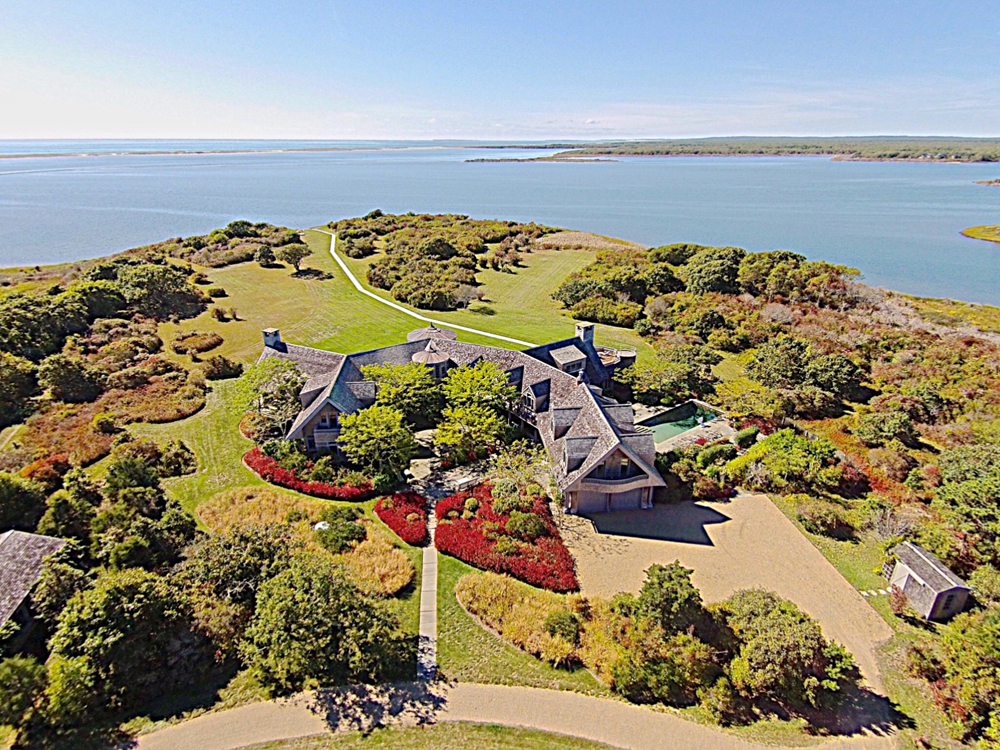
Now let's compare that with the map of where Democrat Party grandees and their assorted Climate Panicans have recently purchased multi-million-dollar shorefront properties, and see if there's a correlation!
Regards,
Liquid water takes up less physical space than ice.
CC
If you fill a glass with ice and water to the top and put a plastic lid on it and let the ice melt the level of the water will drop.

Chicken Little never had is so good.The sky is always falling.
Since the glacier is attached to the landmass and floating in the ocean, if it were to break off and melt, there would be absolutely no effect on water levels. Basic physics that these so called scientists either ignore or slept thru the class.
P.S.-The reason the glacier shows signs of melting is that there is a large cluster of volcanoes underneath it. If we’re talking geologic timescales this is hardly breaking news. So whatever is happening below the Thwaites glacier has been happening for a long, long, long, loooong time.
CC
but is the glacier floating on the water or is it suspended by being attached to the land mass? I don’t know, do you?
1620: The original boulder was a natural feature on the coastline. The exact spot of the original 1620 Pilgrim landing has never been definitively tied to this specific rock, as its landing-site status became popularized over a century later.
1774: An attempt was made to move it to the town square. The rock split in two, with the heavy bottom half left in the ground by the waterfront.
1920 Repositioning: For the 300th anniversary of the landing, the remaining pieces were reunited and permanently placed under a Roman Doric portico designed by architectural firm McKim, Mead & White. The surrounding wharf was redesigned specifically so that the rock would sit naturally at tide level
Sea levels in Massachusetts have actually risen by roughly one foot (12 inches) since that 1920 placement. Because the rock was lowered to the tide line, it is now regularly submerged during high tides, storms, and floods—events that happen much more frequently today than they did a century ago
Sea levels rise and fall naturally - and the Plymouth rock was moved (by man) - so it’s neither a good example of global warming nor a good example of NO global warming.
It looks like the thing called the Thwaites Ice Shelf (which is floating, I believe) is holding back the enormous Thwaites Glacier (which is on land).
So, the concern is that the Ice Shelf might melt.
Which, you know, might (possibly) cause the Thwaites Glacier to melt.
And — I suppose — it could melt absolutely completely. Which seems unlikely, but, hey, it might.
And, once that happened (if it did), there are other nearby glaciers which (who knows?) might subsequently melt.
If all of these things in this unlikely chain of events were to happen, then I guess it would be bad.
So, you know, eat bugs rapidly because that’s the best way to change the weather.
I was just coming to post exactly that picture.
No. Sea levels are not rising. This is just more doom porn by the Gaia Worshipers to further the grift.

“could eventually”
“raising fears”
“could add”
“could destablize”
“may be the next to go”
A heroic Dutchman plugged the dike hole with his finner.
Not a problem.
If the climate freaks were serious, they would start evacuating low-lying areas across the various coastal areas, there would be great heroic efforts displayed, tearing out infrastructure such as asphalt roads and pipes and electrical wire and all that garbage, moving it all inland leaving the now deserted beaches and remaining non-polluting infrastructure to the waves that will sweep over it...
But no...
My hypothesis is that we’ve had climate change multi times historically on this orb we rest upon, and the only difference with this period of climate change and historical climate change is that this is might be the first time the taxpayers were ever fleeced for it.
Pacific Palisades?
They will forever be called hoax deniers.
True, but has always seemed counterintuitive to me.
Disclaimer: Opinions posted on Free Republic are those of the individual posters and do not necessarily represent the opinion of Free Republic or its management. All materials posted herein are protected by copyright law and the exemption for fair use of copyrighted works.