Click here: to donate by Credit Card
Or here: to donate by PayPal
Or by mail to: Free Republic, LLC - PO Box 9771 - Fresno, CA 93794
Thank you very much and God bless you.
Posted on 11/18/2026 11:20:57 AM PST by SunkenCiv
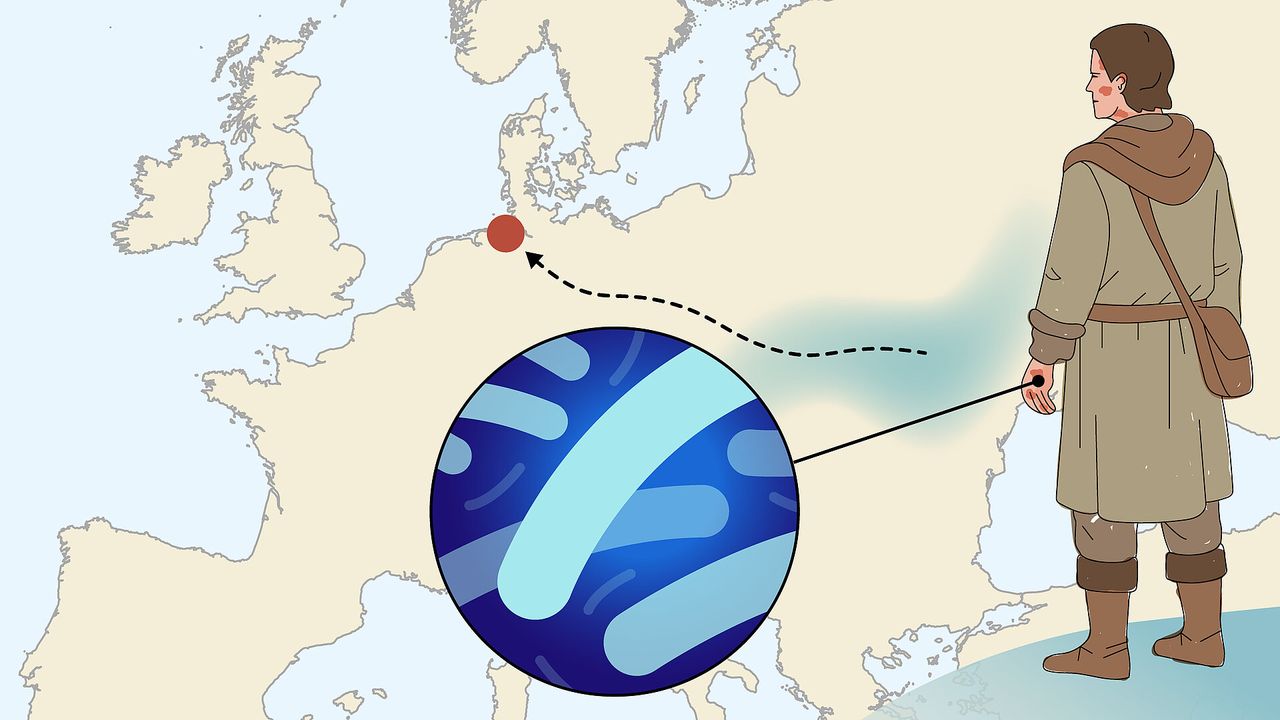
..."Genetic analyses confirm that a man buried at Fallward originated from the Danube region," study first author Daniel Myburgh, an ancient DNA researcher at IKMB, said in the statement. "He was also infected with a very rare leprosy pathogen."
The researchers found the DNA of the bacterium M. leprae in one of the man's teeth and in a foot bone. Because the leprosy DNA was so well preserved, the researchers were able to narrow down the strain that had infected him. This strain of leprosy may have evolved in Egypt around the fourth to second centuries B.C. and had never before been found in Central or Northern Europe, according to the statement.
(Excerpt) Read more at livescience.com ...
|
|
Click here: to donate by Credit Card Or here: to donate by PayPal Or by mail to: Free Republic, LLC - PO Box 9771 - Fresno, CA 93794 Thank you very much and God bless you. |
Archaeologists discovered an unusual strain of leprosy in the skeleton of a man who died in what is now Germany in the fifth century.Image credit: © Petra Horstmann, Cluster ROOTS/Uni Kiel
Well, the good news is there’s a cure for leprosy now...
Zooarchaeologist Wim Van Neer of the Royal Belgian Institute of Natural Sciences and his colleagues examined a collection of 131 ancient Egyptian cat skulls held at the Natural History Museum in Vienna, according to a ZME Science report. The skulls came from mummified felines removed in the nineteenth century from the cemetery site of Beni Hassan in central Egypt. Analysis revealed that 26 of the cats had periodontitis and 24 had missing teeth. Pitting was found on 35 of the skulls, while 19 had perforations in the eye sockets, consistent with infections or nutritional stress. Traumatic injuries such as fractures and puncture wounds were found on 14 of the skulls. Some of the wounds may have been caused by blows from a sharp metal implement or blunt force trauma, while some of the puncture wounds may have been inflicted by other cats, the researchers suggest. The wounds that show signs of healing may have been caused by punishments or fights between animals, they explained. Fatal wounds may have been inflicted as the first step in the mummification process, the researchers added. Van Neer and his colleagues conclude that the animals may have been kept in crowded conditions that contributed to this evidence of disease and violence. Read the original scholarly article about this research in the Journal of Archaeological Science. To read about tomb paintings from Beni Hassan, go to "Emblems for the Afterlife."
ZME ScienceImage credits: Wiki Commons.
Good thing he did not go to Canada for treatment. They would have put him on the MAID program.
Diversity and "Cultural Enrichment" isn't just a 20th century phenomenon
They tried to tell him, enough already with the mummy lovin’.
Is Fauci demanding that samples be sent to China for improvement? Remember, this is just bat leprosy.
Disclaimer: Opinions posted on Free Republic are those of the individual posters and do not necessarily represent the opinion of Free Republic or its management. All materials posted herein are protected by copyright law and the exemption for fair use of copyrighted works.