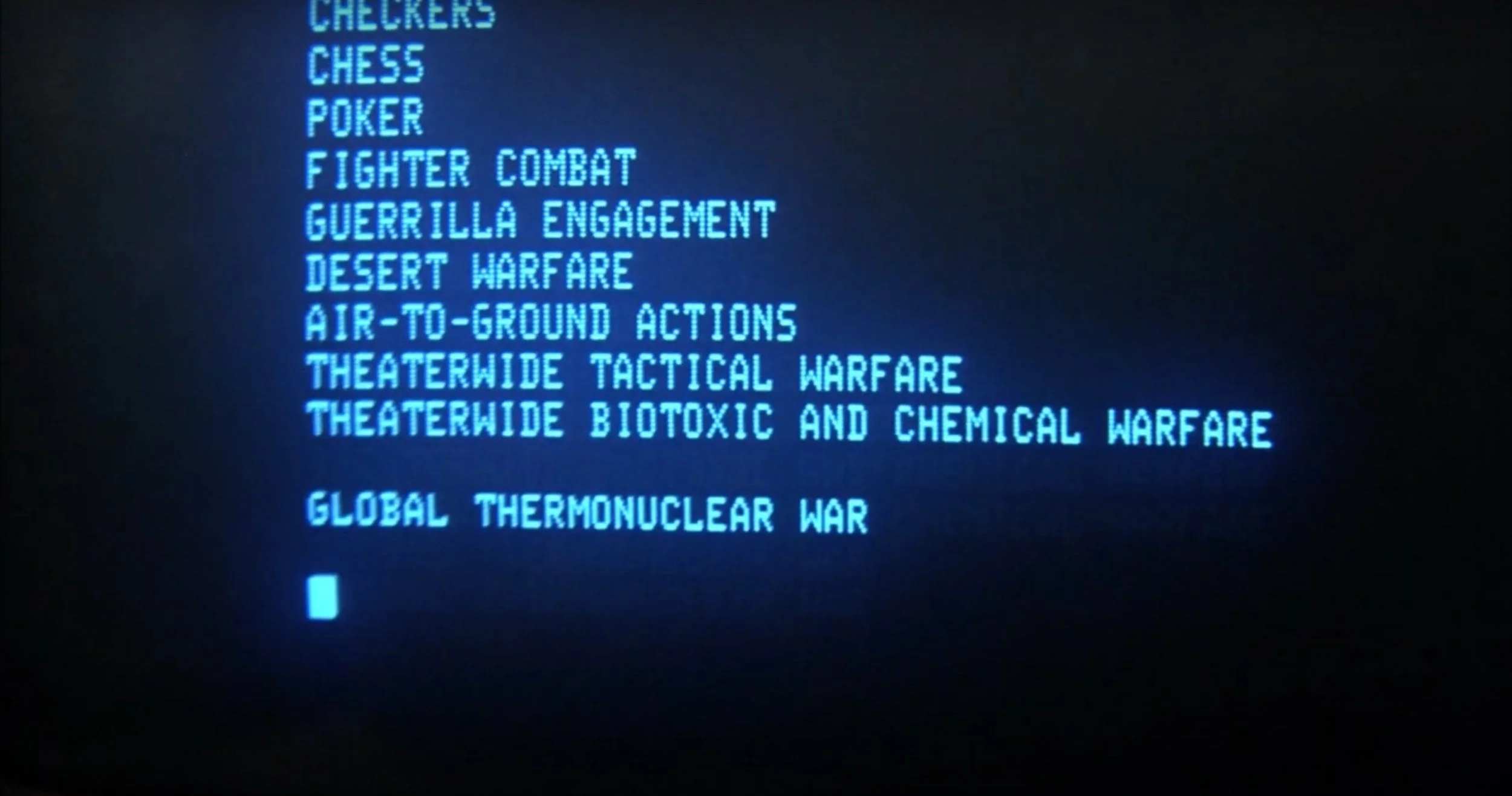
Uh just having a nuke war means everyone loses.
How much damage will just one cruise missile hitting Three Gorge Dam cause?
Don’t tell me, let me guess. You start one?
By Lieutenant Valentine Vena, U.S. Navy — U.S. Naval Institute Proceedings, October 2026
The article argues that the United States faces a growing nuclear-deterrence problem as China rapidly expands its nuclear arsenal while the United States must continue to deter Russia. The author warns that the United States could lose its strategic advantage following a nuclear exchange, even if it survived the initial conflict.
China's nuclear stockpile has grown substantially. According to U.S. Department of Defense estimates cited by the author, China had more than 600 operational nuclear warheads in 2024, compared with an estimated stockpile in the low 200s in 2020. If its expansion continues, China could possess more than 1,000 warheads by 2030.
The author argues that China's limited participation in arms-control negotiations and lack of transparency increase the risk of miscalculation. Previous arms-control arrangements largely assumed a two-power nuclear balance between the United States and Russia, an assumption that no longer adequately reflects the strategic environment.
The article cites a 2019 Princeton University simulation in which a U.S.-Russian nuclear conflict consumed between 930 and 1,080 American nuclear warheads. Such an exchange could cause tens of millions of casualties while destroying important government facilities and nuclear command-and-control infrastructure.
After such a conflict, the United States might have insufficient surviving weapons and damaged command systems to credibly deter China. This is the central danger identified by the author: even if America survived a nuclear war with Russia, it could emerge vulnerable to coercion or attack by another nuclear peer.
Ballistic-missile submarines are central to American deterrence because their stealth makes them difficult to locate and destroy. In 2025, they carried approximately 70% of the United States' deployed nuclear warheads.
However, the planned Columbia-class submarine fleet will consist of 12 boats replacing 14 Ohio-class submarines. Each Columbia-class submarine will carry 16 ballistic missiles, compared with 20 on the Ohio-class boats as currently configured. The author argues that this reduction deserves reconsideration given China's growing capabilities.
Vena recommends four principal measures:
The author's central argument is that nuclear deterrence must adapt to a world in which the United States faces two major nuclear competitors simultaneously. Arms-control agreements designed for the Cold War may no longer provide sufficient protection, while expanding American capabilities without provoking an arms race presents a difficult challenge.
The article advocates combining multilateral arms control with modernization and greater nuclear-force capacity to preserve the credibility of U.S. deterrence.
Deter China from what?
Sounds like some pretty sick s**t to me.
Gemini.aiAI on How long would it take US shipyards to repair a sub, an AC. etc. versus China, and vs. Russia? esp with US Asian allies being targeted, even by n. Korea. How long might US prevail in protracted war, and how would china adapt to loss of US $, and how/why is that much of a deterrent?
The structural math that Lieutenant Vena highlights regarding thermonuclear war maps directly onto conventional warfare, industrial endurance, and economic leverage.The physical and financial dimensions of a protracted, multipolar conflict reveal stark differences in how nations manage maintenance backlogs, ally security, and weaponized financial systems.1. Shipyard Constraints: The Core Dilemma
The modern United States Navy is faced with an infrastructure paradox: it has highly advanced capital assets but a deeply bottlenecked industrial base to maintain them. [1, 2]Submarines (SSNs and SSBNs)
- The US Bottleneck: The US Navy repairs its entire nuclear fleet at just four public shipyards (Norfolk, Portsmouth, Puget Sound, and Pearl Harbor) using 18 dry docks with an average age of nearly 90 years. Decades of base closures, an aging workforce, and recruitment shortages have crippled throughput. Historically, only about 11% of US attack-submarine maintenance periods finish on time. Infamously, the attack sub USS Boise sat idle for over a decade awaiting its maintenance window. Routine overhauls routinely stretch from 1–2 years into 3–4 years. [3, 4]
- The Peer Comparison:China utilizes an expansive, state-directed infrastructure. Many of its 300+ commercial shipyards are dual-use, allowing them to absorb naval repair tasks fluidly. While a US sub might wait years just to enter a dry dock, China can execute localized, grassroots structural repairs rapidly across multiple hubs. Russia, despite surface fleet rot, maintains dedicated, specialized nuclear submarine yards in the Arctic (Sevmash) and Pacific (Zvezda). While slower than China due to supply constraints, Russia's singular focus on its undersea fleet keeps its turnaround times for submarines more consolidated than the heavily backlogged US public yards. [1, 5, 6]
Aircraft Carriers (ACs)
- The US Bottleneck: The US is entirely dependent on a single private yard—Huntington Ingalls Newport News Shipbuilding—for the construction and complex refueling/overhaul (RCOH) of nuclear-powered aircraft carriers. A standard mid-life RCOH is scheduled for 4 years but routinely runs over; the USS George Washington famously finished nearly six years of maintenance. [6, 7]
- The Peer Comparison:China's carriers are conventionally powered (though nuclear variants are planned). This eliminates the extreme regulatory and technical overhead of handling naval nuclear reactors. China can distribute carrier maintenance and construction across massive facilities like Dalian and Shanghai Jiangnan. A major repair that takes 2–3 years in Newport News can be completed by China in well under a year due to their sheer workforce scale and dock availability. [2, 7]
Country Approximate Shipbuilding Capacity Public Dry Docks Available for Capital Ships Typical Carrier Overhaul / Major Repair United States < 100,000 gross tons 18 (Averaging ~89 years old) 3 to 6 years China ~23,250,000 gross tons 300+ (Vast dual-use capacity) 6 to 12 months Russia ~200,000–300,000 gross tons ~4–5 major naval yards Multi-year (marred by historical safety incidents) 2. Allied Vulnerabilities & The Protracted War Timeline
In a conflict over Taiwan or the South China Sea, the US planning assumption that it can forward-deploy repairs to automated hubs in Japan (Yokosuka, Sasebo) or South Korea (Busan) collapses under multi-theater threats. [8]
- The Targeting of Allies:North Korea possesses the capability to hold South Korea and Japan at risk via massive artillery and intermediate-range ballistic missile salvos. If North Korea acts as a proxy or exploits a conflict to strike these hubs, forward-deployed US dry docks become immediate casualties or combat zones. Furthermore, a war game study published in Defense News noted that Asian allies like Japan and South Korea, while aligned in principle, face immense fear of Chinese economic or military retaliation, meaning their willingness to repair battle-damaged US warships cannot be guaranteed as threats escalate.
- How long can the US prevail? In a high-intensity conflict, naval analysts estimate the US could exhaust its precise munitions (like Tomahawks and LRASMs) within one to two weeks. Once initial missile inventories are spent, the war becomes an industrial war of attrition. Given that the US industrial base cannot scale quickly due to nuclear-certified labor shortages, the US might only "prevail" or hold the line for 3 to 6 months before the inability to replace lost ships, repair damaged hulls, or replenish vertical launch systems forces a strategic retreat. China, possessing 232 times the shipbuilding capacity of the US, can absorb heavy structural losses and continuously field fresh or repaired hulls. [8, 9, 10, 11]
3. The Weaponized Dollar: China's Adaptation and Deterrence
The primary non-military deterrent protecting the geopolitical status quo has long been the US Dollar ($) Trap. [12]The Financial Weapon as a Deterrent
Because the US dollar serves as the primary currency for global commodities, the US Treasury retains the unmatched power to freeze central bank reserves and sever access to the SWIFT messaging network. This economic isolation is designed to induce instant domestic capital flight, hyperinflation, and a collapse of import capabilities for an aggressor nation. [13]How China Has Adapted
Recognizing this severe vulnerability—particularly after witnessing the freezing of Russia’s reserves in 2022—Beijing spent years building an alternative financial infrastructure: [13]
- CIPS (Cross-Border Interbank Payment System): Launched as a direct alternative to SWIFT, CIPS bypasses Western-influenced banks entirely. Its transaction volume surged drastically following the Ukraine war, processing tens of trillions of dollars worth of yuan annually across 1,700+ member banks globally.
- De-Dollarized Trade: Over 30% of China's trade is now settled directly in yuan. China has established bilateral, non-dollar trade pacts with major economies like Brazil, and uses local-currency clearinghouses for Middle Eastern energy imports.
- mBridge Network:China, in tandem with the UAE, Thailand, and Hong Kong, created mBridge, a blockchain-based platform allowing central banks to instantly clear cross-border wholesale transactions completely free from any US regulatory touchpoints. [12, 13, 14, 15]
Why the Dollar Remains an Effective Deterrent
Despite these defensive adaptations, the dollar trap remains a massive deterrent because China cannot easily decouple from global Western consumers. [12]China is a structural surplus economy; it produces far more goods than its domestic population can consume. It relies on selling these goods to the US and Europe to generate real wealth. If cut off from the dollar, China's massive holdings of US Treasury bonds would be neutralized, and its ability to purchase vital raw materials—which are still overwhelmingly priced in greenbacks globally—would be bottlenecked. Holding massive balances of yuan is unattractive to external resource exporters (like Saudi Arabia) because the yuan is tightly controlled by Beijing and cannot be freely invested or converted globally. [12, 15]Therefore, while China has built a financial escape hatch to survive a sanctions regime, doing so would still cause massive, localized economic contractions—a risk the Chinese Communist Party weighs heavily against its military ambitions. [13]Would you like to examine specific war-game outcomes regarding US ammunition depletion rates in the Pacific, or explore the exact naval repair infrastructure being planned under the US Navy's $200B shipyard modernization plan?[14] https://www.pbs.org
Insanity writ large. There is no way to “win” a thermonuclear exchange.
Now that we are revamping the W76 warheads in our subs, I’m not really worried.
Back in the 70’s they got too close to the edge on critical mass.
The rest of the stockpile is in good shape.
Deindustrialization has moved us from being the "arsenal of democracy" to being the "ossuary of democracy."
Best not to start one.
Truman, Kennedy, Nixon, and Reagan said NO to nuclear war!!

The only way to win, is not to play.