Skip to comments.
The Phoenicians Were Stranger Than You Think (No AI) [41:12]
YouTube ^
| September 21, 2026
| Nils
Posted on 09/28/2026 6:35:32 AM PDT by SunkenCiv
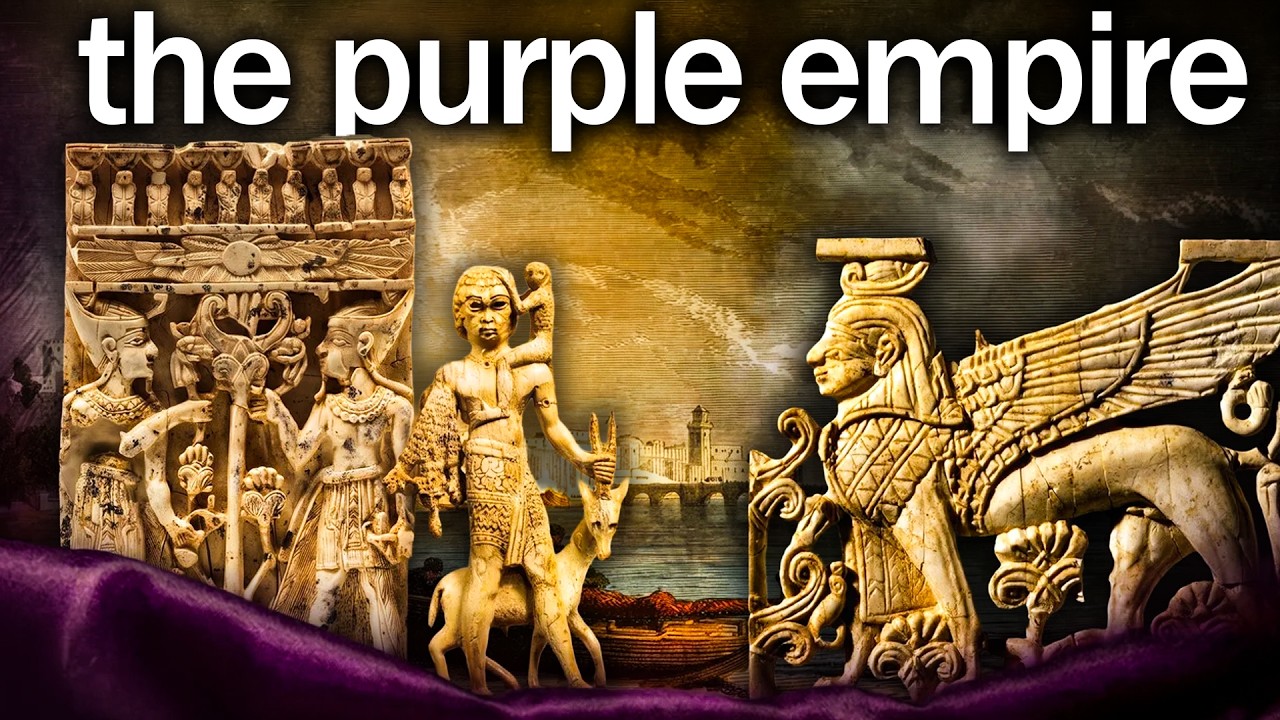
Who were the Phoenicians, really? Let’s look at the civilization behind the ancient Mediterranean’s most mysterious seafaring culture. The Phoenicians Were Stranger Than You Think (No AI) | 41:12
Nils | 47.6K subscribers | 353,198 views | September 21, 2026
(Excerpt) Read more at youtube.com ...
TOPICS: History; Science; Travel
KEYWORDS: ancientnavigation; godsgravesglyphs; murex; phoenicians
Navigation: use the links below to view more comments.
first 1-20, 21-34 next last
Channel Description: Here we cover the strange parts of history from all eras. I am just some dude on the internet. I am no scholar, or historian, but I do enjoy a good old weird history video! Learning as I go.
YouTube transcript reformatted at textformatter.ai *may* follow.
1
posted on
09/28/2026 6:35:32 AM PDT
by
SunkenCiv
To: StayAt HomeMother; Ernest_at_the_Beach; 1ofmanyfree; 21twelve; 24Karet; 2ndDivisionVet; 31R1O; ...
I haven't finished this yet.
I've got the first third or so of the transcript ready, probably post that in a second.
SpaceX Starship Flight 14 is going well, I'd forgotten it was this early and missed the live liftoff.

2
posted on
09/28/2026 6:39:04 AM PDT
by
SunkenCiv
(TDS -- it's not just for DNC shills and jihadists anymore -- oh, wait, yeah it is.)
To: SunkenCiv
Well it didn’t hit us so I guess it’s okay...............
3
posted on
09/28/2026 6:41:41 AM PDT
by
Red Badger
(Iryna Zarutska, May 22, 2002 Kyiv, Ukraine – August 22, 2025 Charlotte, North Carolina Say her name)
To: SunkenCiv
The Phoenicians were very unique and one of the earliest powerhouse empires that expanded across the known world of the time. And they provided the foundation for the Carthaginian Empire as well as key aspects of Greek, Latin and North African civilization. I’ve always thought they’d be a great subject for a Hollywood movie. But I guess trading empires are boring.
4
posted on
09/28/2026 6:42:39 AM PDT
by
Opinionated Blowhard
(When the people find that they can vote themselves money, that will herald the end of the republic.)
To: Opinionated Blowhard; SunkenCiv
Neither the Phoenicians nor the Carthaginians would have been squat without Lebanese cedar. That plant shaped the ancient world.
Teredo worms wouldn’t eat it.
5
posted on
09/28/2026 6:47:45 AM PDT
by
Carry_Okie
(Stupidity is an acquired trait, requiring many years of careful practice)
To: Carry_Okie
People in Arizona are often quite weird. Must be the heat.
To: Colt1851Navy
7
posted on
09/28/2026 6:53:31 AM PDT
by
Carry_Okie
(Stupidity is an acquired trait, requiring many years of careful practice)
(I’m reading and editing up the AI processed transcript, and this guy appears to conform to his own description, above)
Transcript pt 1
So, there’s a civilization that gave the entire Western world its alphabet. Every letter I’m about to say out loud, every letter on your screen right now was more or less made by them, or at least laid the foundations for it. And they themselves did not leave a single sentence behind about them. Not one, which is rather ironic. They can invent writing, yet apparently they didn’t bother to write anything down. These are the Phoenicians. And most of what you’re going to hear today was written down by Greeks, Romans, Assyrians, and Hebrew prophets, which is to say that it was written by their customers, their landlords, and the people who hated them most.
And we’re going to do something a little bit different today. This isn’t the story of a people. It’s rather the story of a people-shaped hole and everything that we’ve managed to reconstruct by looking at the things surrounding it. Because obviously, we don’t have any written record of themselves, or at least very little. So, this is the best that we can do. But to my surprise, we can actually piece together quite the puzzle to figure out one of the strangest ancient civilizations in the world.
And the best place to start is one of the very few times we actually get to watch these guys at work because around 1075 BC, an Egyptian priest named um Waman gets sent on an errand. He works at the temple of Aean at thieves and his boss wants cedarwood, which is good cedar, the kind that only grows on the mountains of what is now Lebanon. So he wanted it to build a sacred barge. So Winnamon um gets sent a merchant ship with a Levantine captain and sails north with a load of gold and silver to pay for it. He does not have a good trip.
First, he stops at a port called Dor, which is at this point being run by a group of the sea peoples called the Tjeker [’Civ’s guess]. I don’t know how to say it. And while he’s there, one of his own crew robs him of all of his gold and silver. Literally his own guy. So now he’s an ambassador of Egypt with no money and a whole crew to feed. He goes on to Byblos anyways which takes a certain amount of nerve and Byblos is run by a prince named uh Zakar Bal and Zakar Ballal is not impressed when has arrived broke without proper credentials representing a country that used to own this coastline and Zacharal’s response is essentially hey that’s nice go home and bring back the money and then we’ll talk which 400 years earlier would have been unthinkable because Egypt gave orders on this coast and the thing about cedar is that it was given as gifts between different heads of states as political gifts, but now it’s a product and there’s a price for it.
And the Egyptian temple leader dude is standing in a foreign harbor being told that it’s not good enough. He needs to send him an invoice and send he does. He sends word back home and then a partial payment arrives. Then Zakarbal has the trees cut. 300 men and oxen move them and takes his fee in gold, silver, linen, rope, oxhides, and 500 rolls of finished papyrus. Then as Winnamon is leaving, he’s ambushed by Tijer ships that were sent to arrest him. Zarkobal steps in to save him. He escapes, gets blown off course by a storm, washes up on Cyprus, is met by an unnamed queen, and then he loses the papyrus. That’s it. We don’t really know what happened to him. So that’s kind of the introduction to these people. Somebody else’s bad day written down by somebody else entirely, ending in a tragic story of one of these Phoenician men.
8
posted on
09/28/2026 6:53:49 AM PDT
by
SunkenCiv
(TDS -- it's not just for DNC shills and jihadists anymore -- oh, wait, yeah it is.)
Transcript pt 2
And that’s a rather interesting tale, but not even close as interesting as the rest of the things that we can piece together about these people. Namely, they made a dye out of rotting sea snails that was worth more than its weight in gold and smelled so bad that the factories literally had to be built on opposite sides of the town. An alphabet that maybe have crossed into Europe as a conversation between two individual men. A three-year voyage around Africa that nobody would repeat for nearly 2,000 years. And a city that looked at Alexander the Great and said, “No.” Oh, and the single most argued about accusation in all of history. So, let’s go find some people who literally left no trace of themselves. Good luck to me.
Okay, so the first problem is that Phoenician is not their word that they use to describe themselves. It’s Greek. It comes from foy. And scholars still argue exactly about what it meant. But one of the things that it did mean was purple, red, or crimson. So either the Greeks named them after the color of their skin or much more likely, and we’ll get into this, they named them after the product that they sold, which is a bit like if the entire English-speaking world had been permanently named the Beige people by the French because of something that we exported in or that they exported in 1300. Wool, textiles, but pretty much wool. So what did they call themselves? Well, the genuine best guess is Canaanite. A whole civilization. And we’re probably going with, yeah, they were probably Canaanites, we think. And add that to the list because I am going to be keeping a list for the rest of this video.
And it gets worse because there’s an actual question about whether the Phoenicians were ever a thing at all in their own heads because these were four cities that were on the coast: Arwad, Byblos, Sidon, and Tyre running north to south. And they were fiercely aggressively independent from one another. They were commercial rivals, but they cooperated when something bigger was coming in to kill them and pretty much never else otherwise. And they all had personalities.
Byblos is the old one, the one with the deepest root, so to speak, because the city has been doing business with Egypt, you know, since like the pyramids were new. Um, Sidon is the manufacturing town with glass and dye and all that stuff. Arwad is the fortified rock off the coast um in the north that mostly wants to be left alone. And then Tyre is the aggressive one, the one that goes west, plants colonies, founds Carthage, and picks fights with empires that it possibly can’t beat.
The Old Testament, which talks about these people constantly, refers to the Tyrians or the people from Tyre. It refers to the Sidonians, Biblians, Arvadite. There isn’t a single reference anywhere in it to a Phoenician nation or a Phoenician state or Phoenician Confederacy because as far as anyone at the time was concerned, well, there wasn’t really one. They were a confederation of traders um rather than a country defined by borders more or less. Pretty much just a bunch of scattered trader colonies. The trade to find their territory, not that actual territory, which is a very strange thing in the ancient world because everybody else on the map is a place and these guys are a business network that happens to have, you know, just a few home bases here and there.
Geographically, the actual homeland is rather small. It was a narrow coastal strip between Lebanon or the Lebanon Mountains, I should say, and then the sea, roughly modern Lebanon, and that’s it. You could drive the length of it in an afternoon and still be home for dinner. And these people colonized the Mediterranean out of it. Classical writers describe themselves as occupying the entire Levantine coast from the Suez of the Gulf of Alexandreda, which is wildly bigger. And the likeliest explanation is that Phoenician got used loosely to basically mean any Semitic guy on a boat.
9
posted on
09/28/2026 6:55:12 AM PDT
by
SunkenCiv
(TDS -- it's not just for DNC shills and jihadists anymore -- oh, wait, yeah it is.)
To: SunkenCiv
The Phoenicians Were Stranger Than You ThinkThey put sliced pineapple on their flatbread?
Regards,
10
posted on
09/28/2026 6:55:25 AM PDT
by
alexander_busek
(Extraordinary claims require extraordinary evidence.)
Transcript pt 3
But the thing that actually gets me about this whole thing or this whole story is the writing or the absence of it. Because these people were literate obsessively. They’re the alphabet guys. They kept histories. They kept mythologies. They kept commercial records, records, temple archives, palace archives, all of it is written on papyrus. And every single bit of it, at least as far as we know of, at least as far as I know of, is gone. We don’t have a single Phoenician manuscript. The great library at Tyre is gone, courtesy of Alexander the Great.
The library at Carthage, gone, courtesy of Rome. When Rome burned Carthage to the ground in 146 BC, the fire went through the archive. And what the archaeologists have dug up since is a big cache of clay seals, the little lumps of clay that you’d stamp onto rolled papyrus document just to kind of, you know, hold it shut kind of deal and burned every single document that were attached to it. So we have the labels of or labels off a library and nothing else. Cool.
But because of that, everything we know is secondhand, namely from the Bible, the Assyrian royal writings, and the Greek and Latin authors, which tells us about their military and commercial dealings because that’s what the neighbors notice and tells us how close to nothing about or tells us close to nothing about how their society actually worked. Their own surviving inscriptions are mostly grave markers. And grave markers give you a name and then a god and then nothing else. Even their kings are mostly just lists.
Literally, they’re just names. No telling you of when they ruled or what they did at any time. So, you can reconstruct who ruled Tyre in what order, but have essentially no idea of what any of them did. Oh, and one more thing, because it’s a good measure of how thoroughly their enemies got to write the record. You know the word Jezebel, the one that means a shameless, scheming, immoral woman? Well, turns out she was actually the princess of Tyre. So, that’s kind of what we’re dealing with.
11
posted on
09/28/2026 6:55:35 AM PDT
by
SunkenCiv
(TDS -- it's not just for DNC shills and jihadists anymore -- oh, wait, yeah it is.)
Transcript pt 4
But, let’s talk about why the Greeks named them after a color. They were named after purple. So, let’s do purple. Tyrian purple was the most valuable dye in the ancient world. And it was made out of sea snails. It was the color of royalty. And I can see why because they took two species of murex, which is a spiky little Mediterranean sea snail about the size of your thumb. And the useful part of it is a gland inside that produces a small amount of clear fluid.
The Phoenician’s own origin story for it, or at least the version that the Greeks recorded anyway, is that um the god Melkart was walking on the beach with his dog in a nymph called Tyrros, and the dog bit into a big sea snail and came back with its whole mouth stained purple. Melkart, being a god and therefore quick, dyed a gown with it and then gave it to her. Great story. The archaeology, however, is less romantic and much more disgusting.
At Sidon, excavations in the early 20th century turned up two enormous heaps of smashed murex shells. Heaps of these little dudes or what was left of them. Literally centuries of raw material. Here at Serreta, they found the same thing along with broken pottery in with a purple residue still on it. And when they ran the chemistry on that residue, it came back as murex purple from the 13th century BC. That’s the earliest proof we have of anyone making this stuff at scale. Ply the Elder, a Roman first-century AD historian who wrote down basically everything anyone would tell him, describes the actual process.
The idea was you break the shells, you extract the glands, you put them in a big tin vat with salt water, and then you heat it for 10 days. And then the strange part is what comes out is actually colorless. It doesn’t come out purple. You have to get it onto the wall and then expose it to the air, and then it turns purple in front of you as it oxidizes. For the true deep Tyrian shade, you dip it twice. I know you weren’t expecting a lesson on how we got the color purple, but there it is.
Now, the quantities of this stuff to make 1 ounce of this dye, you needed thousands of snails. Thousands. And the finished product was worth more than its weight in gold, which sounds more like a figure of speech and is in fact not one. So, this is the business model. You’re harvesting sea snails by the tens of thousands. You’re smashing all of them individually. You were cutting out a gland out of each one of them. And then you were boiling that for 10 days. Somebody’s entire career was that; somebody’s father did that, and his father did that, and at no point in anyone in the family ever go, you know what, maybe we ought to try berries or something else. Being fair to them, it worked.
Now I can do that, of course, but the byproduct of that process is a smell that the ancient sources complain about. And these were not rather squeamish people, being in the Mediterranean and all that fish was abundant. But the rotting shell-less stench off of dye production facilities was so bad that the production sites and the shell dumps had to be built downwind of the city. And this stuff was valuable for well over a thousand years. Purple became the color of royalty right across the ancient world, like I said. And it kept that meaning so hard by the time the Roman imperial times took over the production. And Emperor Nero eventually issued an edict that nobody except the emperor was allowed to wear it at all on pain of death, which for Nero is one of the more lenient afternoons of his life.
12
posted on
09/28/2026 6:55:57 AM PDT
by
SunkenCiv
(TDS -- it's not just for DNC shills and jihadists anymore -- oh, wait, yeah it is.)
To: alexander_busek
Probably cedarapple instead...
13
posted on
09/28/2026 6:56:42 AM PDT
by
SunkenCiv
(TDS -- it's not just for DNC shills and jihadists anymore -- oh, wait, yeah it is.)
Transcript pt 5
But the Phoenicians were also famous for their fabric. They had embroidered, dyed, and patterned textiles that kings eventually collected. Sidonian women were renowned for their weaving, but not one shred of Phoenician cloth has survived anywhere. We know exactly how they made their color because a Roman wrote it down. And we have absolutely no idea what the finished clothing items actually looked like.
And while we’re on the things that they made that you would recognize, how about glass? Sidon was famous for its glass workshops. Strabo, a Greek geography major and historian, also says that the sand from the dunes down the coast between Tyre and Akko were the best sand in the world for making it. And they’ve been at it for a very long time. The diplomatic letters from Egypt mentioned shipments of raw glass coming in from Tyre. And when the divers went down to a shipwreck off the Turkish coast, a Bronze Age trading ship that went down with everything still aboard, part of the cargo was ingots, or ingots of raw glass, I should say, and a Canaanite jar packed with glass beads.
And then somewhere on that coast in the late 1st century BC, somebody works out if you get a blob of molten glass on the end of a tube and then blow down it, the glass inflates. Enter glass blowing. Every bottle, every window pane, every wine glass you have ever held, thanks to these guys.
14
posted on
09/28/2026 6:57:05 AM PDT
by
SunkenCiv
(TDS -- it's not just for DNC shills and jihadists anymore -- oh, wait, yeah it is.)
To: Colt1851Navy
To: SunkenCiv
He works at the temple of Aean Anen (or Amen) at thieves Thebes and his boss wants cedarwood [...]Regards,
16
posted on
09/28/2026 7:02:02 AM PDT
by
alexander_busek
(Extraordinary claims require extraordinary evidence.)
Transcript pt 6
Speaking of which, okay, so the alphabet, a common understanding is that the Phoenicians invented it, which is not quite what happened. It actually starts in the Sinai in the early 2nd millennium BC with something called Proto-Sinaitic. And the idea behind it is one of the cleverest things that any human being has ever come up with, and it’s called the acrophonic principle, which is a horrible phrase for a very simple trick. Here’s the trick. You draw a house, and the word for house is “bite.” So the picture of the house now means the sound “b” or “b.” Yep, that’s it. Instead of a symbol standing for a house or for the idea of a house, the symbol stands for the noise at the front of the word for the house. You do that a couple dozen times, and you have gone from needing to memorize hundreds of signs to needing about, let’s just say, two dozen, which I want to put into perspective because we teach this to 5-year-olds now. And it took humanity about 3,000 years of writing to think of it.
But the Egyptians were probably the inspiration for this. This stuff shows up next to Egyptian hieroglyphic inscriptions at these different sites that they found. And then it develops over time. Of course, up at Ugarit in northern Syria around the mid-14th century, the Canaanite alphabet gets adapted to the cuneiform writing that everybody in Mesopotamia was using, which were like pressed wedges into clay. And at that point, it’s about 30 characters. And we know that because they left spelling books, 22 consonants written right to left. And by the 11th century, that is the Phoenician alphabet. And it turns up carved on the sarcophagus of a king of Byblos named Ahiram, with the letters already in their standardized shapes, which tells you that it had been used for, you know, at least a short while before that.
But here’s one for the list because Byblos has a second writing system before the alphabet became really a thing. Somebody at Byblos was using a script of about 120 signs that scholars call pseudo-hieroglyphic because it looks vaguely Egyptian and it isn’t. We don’t know exactly when it was in use. Proposals range across most of the second millennium BC, but we don’t know how it relates to the alphabet that kind of replaced it. And you know, we can’t read it. People have tried, but it still to this day, as far as I’m aware, is still not deciphered.
But then it travels fast. By the 9th century BC, it’s picked up by Aramaic, Hebrew, Ammonite, Moabite, and Edomite, which is every language in the neighborhood just pretty much takes it. And by 900, it’s on Cyprus and Crete. A century later, it’s in Sardinia in southern Spain because that’s where the Phoenician ships were going. And then around 800 BC, this language reaches Greece.
Now, here’s the part that I think is the most underrated moment in the history of this whole thing because we don’t exactly know where the handover happened, but scholars looking at how it happened tend to think it was a direct exchange between two different individuals, a Greek dude and a Phoenician. Perhaps a priest or a scribe or a merchant or artisan or somebody who was literate or semi-literate that could show the Greek eye. And that leaves open the possibility that two random dudes possibly stuck on a beach somewhere struck up a conversation, and then that’s how the writing system of the entire Western world exists. I don’t know.
And the reason people think it was two guys and not a slow cultural absorption is the vowels. Namely, Phoenician doesn’t have any vowels, and Greek desperately needs them because in Greek you pretty much need vowels or you can’t communicate anything or something like that. So, whoever received this thing kind of had a problem. Phoenician had a few signs for consonants that Greek just simply didn’t have, i.e., sounds that don’t exist in the language. And instead of throwing those signs away, they just kind of got repurposed or they repurposed them as vowels.
Herodotus, the historian, incidentally credits the whole thing to a legendary Phoenician named Cadmus, who supposedly brought letters to the city of thieves in Greece, which of course is a myth. And they were right. Also, just quickly, if you enjoy this kind of video about the weird parts of history, please consider hitting the subscribe button. It really does help out the channel more than what you’d think, and it just takes a second, so I would greatly appreciate it. Thank you so much.
17
posted on
09/28/2026 7:07:02 AM PDT
by
SunkenCiv
(TDS -- it's not just for DNC shills and jihadists anymore -- oh, wait, yeah it is.)
Transcript pt 7 is split across the 2000 word limit on that processor gizmo, and I have to wait 2 hours between uses, and am already using two different browsers.
18
posted on
09/28/2026 7:08:29 AM PDT
by
SunkenCiv
(TDS -- it's not just for DNC shills and jihadists anymore -- oh, wait, yeah it is.)
(Okay, so, I just installed DDGo and finished up #7; one more block to process, about three more parts I think)
Transcript pt 7
But now, let’s talk about what they were doing with all that writing. Everything about these people comes back to one geographic fact. The homeland is a thin strip of coast with mountains directly behind it and not much farmland. Put simply, you cannot grow your way to wealth. No cash crops like tobacco for our American forefathers. But there are two things that the strip has got. It’s got cedar, which of course are these huge rot-resistant trees growing on those mountains. And it’s got the sea. So they built an entire civilization on those two things alone.
And the cedar is what gets them into everybody else’s history books first because quite literally everybody wanted it. Egypt wanted it for boats and stuff, which is how poor Hiram ended up standing up in Byblos with no money. And around 961 BC, a king in Jerusalem wanted it too. That’s King Solomon. And the Tyrian king that he deals with is Hiram. And the arrangement between them is one of the best documented business relationships in the ancient world, mostly because one side wrote it into scripture, i.e., the Bible. Hiram sends timber and more importantly expertise: people like carpenters and stonemasons, bronze maker dudes for the temple and the royal palace in Jerusalem. Solomon pays in food, 20,000 cores of wheat a year, which works out to something like 4.2 million liters or 119,421 gallons for my fellow Americans, or roughly 1 and 3/4 Olympic swimming pools for everybody else of wheat annually, plus 20,000 baths of olive oil and silver on top of that.
So the deal goes about 20 years: seven for the temple and then 13 for the palace. And when it ends, they make a second one. And this is the one that tells you what Tyre actually wanted the whole time. Solomon pays Hiram 120 talents of gold and hands over 20 towns in the region of Galilee, which is all farmland. Tyre had spent its entire existence buying its dinner. And the moment it had an upper hand on a neighbor, it bought the fields instead. They didn’t want a golden statue or an idol of a horse. They wanted the farmland, specifically 20 towns of it.
And the way they did that trade is interesting, too. Through partnerships called “Hbur,” joint ventures where two rulers would pool ships and split the operation, more or less. In the Byblos report, the king of Byblos has a Hbur going with an Egyptian ruler involving 20 ships. And he mentions having 70 vessels under his authority in total, 50 of which are parked down in Sidon. So, 70 ships out of one city in the 11th century BC, which is a rather hard size to wrap my pea-sized brain on. We know roughly what those actually looked like, mostly because the Assyrians carved them on their palace walls. They were broad-beamed cargo ships with a single mast and a square sail and a horse’s head carved on the prow, which is why the Greeks call them “hippo” or horses. There’s a whole Assyrian relief of a fleet of them hauling timber. And I think all of this is happening with no compass because the compass is well over a thousand years away. These men are crossing open water using the coastline, the wind, and the stars.
And there’s a Greek tradition which I’ll explain or I’ll express as a tradition rather than fact that the Phoenicians steered by the little bear i.e. Ursa Minor constellation while the Greeks use the great bear Ursa Major. The little bear is closer to true north and gives you a better heading. Think whether or not that’s true. The Greeks clearly thought that these people were better sailors and the Greeks did not enjoy saying that really about anyone. So then they start going west and this is where it gets rather impressive for these little merchant colony people.
The Phoenicians start trading posts and then colonies right across the Mediterranean. Some in Cyprus, Sardinia, Sicily, Malta, even Ibiza and then Cadiz in southern Spain out past Jialter which was the edge of the known world at least at this point. And then Carthage, which is going to spend the next several centuries becoming the most powerful city in the Western Mediterranean and eventually go to war with Rome three different times. I don’t know a whole lot about those wars, the Punic Wars. However, maybe I can do some digging and make a video on Carthage. Let me know if you want that in the comments. Might be fun, might not be. I don’t know.
Now, they kept going past Jerval. There’s actually a Phoenician site at a place called Mogador on an island on a bay on the Moroccan Atlantic coast running from about 650 to 500 BC. A humble place with small huts and old pottery and all that. And then Herodotus comes back. Herodotus says that Pharaoh Neco around 6,000 BC hired Phoenician crews to sail all the way around Africa. And they did it down the east coast around the bottom up the Atlantic back through Gibraltar. And it took them 3 years because they would stop, plant grain, wait for it to grow, harvest it, and then sail onward.
Now, if that’s true, the next people around the bottom of Africa were the Portuguese in 1498. And then, of course, there’s the Brazil thing, which I’m including because I love a good fake. In the 19th century, an inscription surfaced that supposedly recorded a storm-blown party from Sidon making landfall in northern Brazil. Now, this thing was a forgery and it’s thoroughly debunked, but it’s kind of fun to know that people were trying out there and you can see why somebody made it because it’s exactly what you would want to find if the Phoenicians ever crossed the Atlantic. And there’s no really good reason to think that they did. The evidence would be a few boring pottery things in the dirt like everywhere else.
19
posted on
09/28/2026 7:21:26 AM PDT
by
SunkenCiv
(TDS -- it's not just for DNC shills and jihadists anymore -- oh, wait, yeah it is.)
To: Colt1851Navy
Except the AZ city is pronounced “Penis”, despite its spelling.
20
posted on
09/28/2026 7:38:08 AM PDT
by
yefragetuwrabrumuy
("We come in peace. Don't look too carefully at our menus.")
Navigation: use the links below to view more comments.
first 1-20, 21-34 next last
Disclaimer:
Opinions posted on Free Republic are those of the individual
posters and do not necessarily represent the opinion of Free Republic or its
management. All materials posted herein are protected by copyright law and the
exemption for fair use of copyrighted works.
FreeRepublic.com is powered by software copyright 2000-2008 John Robinson
