Posted on 09/03/2026 6:34:26 AM PDT by MtnClimber
During his campaign for office last fall, our new Mayor Zohran Mamdani promised to make groceries “affordable” for New Yorkers; but he provided few specifics. Some specifics then emerged in late July, when Mamdani issued a big press release on his proposed public grocery store project. We learned that there are plans for five municipally-owned stores — one in each borough of the City — and that the groceries these stores will sell, or at least a “core basket” of them, will be “30% cheaper.” We know that the groceries will be “30% cheaper” because the Mayor’s press release says so multiple times:
Today [July 28], Mayor Zohran Kwame Mamdani, Deputy Mayor for Economic Justice Julie Su and New York City Economic Development Corporation (NYCEDC) announced that a core basket of everyday groceries will be 30 percent cheaper at the five new municipal grocery stores. . . . “A trip to the grocery store shouldn’t spell dread for New Yorkers [said Mayor Mamdani]. That’s why we are guaranteeing a 30% discount on the most common and most critical groceries. . . .”
Well OK, 30% cheaper than what? Remarkably, the Mayor’s press release never says what benchmark will be used to measure the claim of “30% cheaper.” As most everyone (other than our economically illiterate Mayor and Deputy Mayor for “Economic Justice”) knows, basic groceries can sell for remarkably different prices at different stores. Price differentials between stores of 30%, and even much more, are common.
It happens that back a few months ago in February 2026, Consumer Reports commissioned a big study from something called the Strategic Resource Group to compare prices between and among all the big grocery store chains in the U.S. The results of the study are reported in a February 20 article headlined “Most and Least Expensive Supermarkets.” CR says this about the methodology:
Price comparisons were conducted for CR by the Strategic Resource Group, a consultancy in New York. Prices were collected in person from store shelves in late summer 2025. Within metro areas, all prices were collected within a 48-hour period. The amounts shown reflect sale prices and discounts available to shoppers using free store loyalty cards but don’t reflect manufacturer coupons or savings available only through smartphone apps.
To be fair, the study was conducted in six metropolitan areas, and New York was not among them. The areas sampled were Boston, Chicago, Dallas/FW, Denver, LA/Southern California, and Virginia Beach. However, the price differentials between the most and least expensive chains were in the same range in each of the six regions, so there is no reason to think that New York would be much different.
The results:
[T]he difference between the highest- and lowest-priced in each city was more than 33 percent. . . .
The article contains a chart listing all the major national chains, each compared against the largest, Walmart, as the benchmark.
There are some 34 major chains in CR’s chart. Most of the chains have some regional emphasis, and are not present in every city. Here in lower Manhattan, of the chains on the list, the two with the biggest local presence are Whole Foods (a subsidiary of Amazon) and Trader Joe’s (a subsidiary of the Germany-based Aldi). According to CR’s chart, Whole Foods’ average prices were some 39.7% higher than Walmart’s for the same basket of goods, and Trader Joe’s prices were some 24.6% higher.
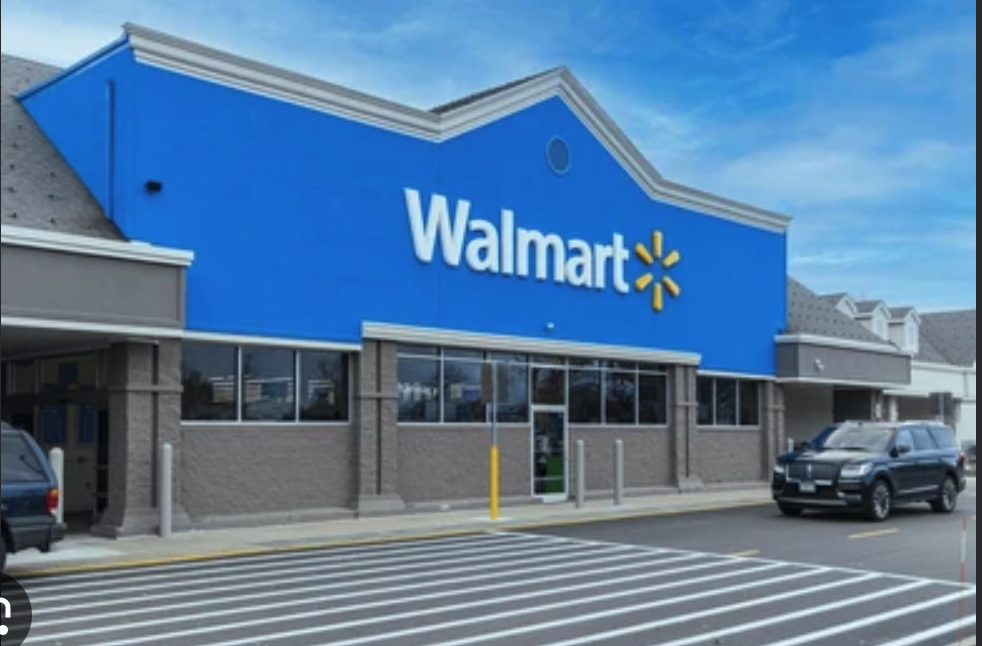
So then, why don’t we New Yorkers get our groceries for about 30% off just by shopping at the local Walmart? That’s because there is not one single Walmart in New York City. And it’s not like Walmart hasn’t tried. But despite repeated efforts over the years, Walmart has been completely and effectively prevented from opening any stores in the City. There isn’t actually any specific statute that bans or targets Walmart by name. It’s just that every time Walmart has picked a site and tried to get a project going, local activists rise up and protest, and get the local politicians on their side, until Walmart backs down. In the most recent years, Walmart has mostly given up trying. But here is an article from from NPR back in 2011 describing the process, headline “New York City Officials To Walmart: Keep Out.” The article describes a City Council hearing held at that time with respect to a very preliminary Walmart plan to develop a store in the (low income) East New York neighborhood in Brooklyn. Excerpt:
And so the flogging began — with testimony from professors about how Walmart can drive smaller stores out of business, and impassioned pleas from small-business owners worried about the competition, and unions concerned about the low wages.
And thus the politicians in New York City, who now suddenly claim to be all about “affordability,” have been completely responsible for forcing their constituents to pay price premiums of easily 30%, by being more responsive to the pleas of special interests like small store owners and labor unions than to the needs of the people for inexpensive groceries. And the 30% may well be understating the premium, because there isn’t a Whole Foods or a Trader Joe’s on every corner, and many people end up shopping at local groceries and bodegas that could easily charge yet an additional 20-30% premium.
The interesting question is how it comes to be that Walmart charging 30% less than other stores is unfair and evil, but the City itself doing the same thing is “social justice,” or something like that. Walmart, through the magic of various kinds of innovations like bulk buying and expert inventory management and logistics can somehow manage to charge 30% less and still make a profit and pay taxes. The City grocery stores are likely to cost a few hundred million taxpayer dollars to get off the ground, and then lose multiple millions of taxpayer dollars per year each. In what world is this a good tradeoff? Once again, I find myself completely unable to comprehend the logic of the Left.
A final point: One of the main opponents of Walmart entering New York City has been the United Food & Commercial Workers labor union, which is the main union for supermarket workers. It’s easy to see how that union could be upset, because Walmart is almost entirely non-union, and could threaten the jobs of their members. However, New York City has very high local minimum wage requirements, which Walmart would be required to comply with. Walmart underprices the competing chains in other cities, like Chicago and LA, that also have high local premium minimum wage requirements. And the other big chains mentioned here, Whole Foods and Trader Joe’s, are also almost entirely non-union. So the argument that keeping Walmart out is needed to protect laborers does not hold up.
So I say to Mayor Mamdani, just end the crazy opposition to Walmart in New York City, and you can get your 30% discount groceries without really having to lift a finger. You can devote your time to other things like collecting the garbage or cleaning up the parks.

|
Click here: to donate by Credit Card Or here: to donate by PayPal Or by mail to: Free Republic, LLC - PO Box 9771 - Fresno, CA 93794 Thank you very much and God bless you. |
You win. It’s only been 18 years for me.
5 Costcos and 8 BJ’s in NYC but no Sam’s Clubs. Because of Unions? But BJ’s apparently isn’t a union shop. Strange. At least they’re getting really cheap hot dogs, cups of soda, pizza and rotisserie chicken.
If Wal Mart gets in this game, then all the dregs of society will be in there with their pajamas tattoos and screaming kids.
The Indian Unified Payments Interface (UPI) system that uses cellphones and QR codes (and not terminals and cards) might be bought to NYC to cut merchant fees.
When the government runs a store, there is no profit motive, and it has access to unlimited funds, courtesy of the taxpayers, to bail it out. So it can sell at a lower price because the folks are paying the bills.
Since this is unfair competition, normal stores will be forced to close and then the government store will be the only one, thus partially fulfilling the communist goal of government-owned means of production.
Many thanks for the morning read!
There was a Walmart in DC not far from the Capitol, but it closed.
The Mafia doesnt want them either.......
Don't go in there, Walmart. You'll be robbed blind, and that's just by the Mayor before the the ferals strip your stores.
Turkey has had government-run food stores for short periods of time when the government felt, not always correctly, that markups were unreasonable.
Opening a business means you have a “business plan”............
balancing income with “outgo,” a list of all your business expenses.
Mamdani’s business w/ a billion dollar govt budget at his disposal constantly replenished with tax dollars that he can increase at will is not quite the same.
It is a balance between cheaper prices and local community/jobs.
Even as a kid, I understood wholesale and retail prices.
Let us consider bread.
I read that Costco sometimes allows members to buy frozen pre-baked dough.
One can buy pizza dough at Aldi’s for $1.19 for a pound as I recollect.
I saw bread at $7/loaf in a New England chain grocery store two years ago.
I buy half-price dated bread from Walmart, put Aldi cheese shreds on it, and bake the slices in my toaster oven. IMO, the slices are far better than the cheese crackers I bought many boxes of.
Hope Mamdani opens them.
Some people have to learn the hard way.
FAFO. Economics wins every single time.
At one time, Washington, DC had Western Market, Central Market, and Eastern Market.
Only Eastern Market survives. Vendors lease space in the city-owned buildings.
Baltimore has Lexington Market, which also has leased spaces.
NYC has Fulton Fish Market. I’m not sure how that operates nowadays.
Maybe Walmart is cheaper, but in an environment reluctant to enforce the laws and prosecute crime, it would be a disaster. Walmarts are the epicenter of crime wherever they exist.
Francis really nailed it, as usual.
Aldi runs a supermarket chain about the best that can be done and has locations in NYC.
I have never been to that garden in Greenwich Village either.
Disclaimer: Opinions posted on Free Republic are those of the individual posters and do not necessarily represent the opinion of Free Republic or its management. All materials posted herein are protected by copyright law and the exemption for fair use of copyrighted works.