Skip to comments.
Why hasn't the Pantheon's dome collapsed? [13:33]
YouTube ^
| June 23, 2023
| Garrett Ryan, Ph.D (as toldinstone)
Posted on 07/12/2026 5:23:35 AM PDT by SunkenCiv
An in-depth look at the construction of Rome's Pantheon and its famous concrete dome. Why hasn't the Pantheon's dome collapsed? | 13:33
toldinstone | 628K subscribers | 662,909 views | June 23, 2023

Chapters:
0:00 Introduction
0:28 The purpose of the Pantheon
1:16 The design
1:58 Roman concrete
2:32 Quarries, contractors, and workforce
4:02 Foundations
4:44 Building the walls
5:41 Relieving arches and buttresses
6:35 Masterworks
8:08 Building the dome
9:51 The portico
10:54 Decoration
12:32 Insane Emperors, Sunken Cities, and Earthquake Machines
(Excerpt) Read more at youtube.com ...
TOPICS: History; Science; Travel
KEYWORDS: godsgravesglyphs; wasitsupposedto
Navigation: use the links below to view more comments.
first 1-20, 21-40, 41-60, 61-76 next last
1
posted on
07/12/2026 5:23:35 AM PDT
by
SunkenCiv
To: 240B; 75thOVI; Adder; albertp; asgardshill; At the Window; bitt; blu; BradyLS; cajungirl; ...
The weekly digest list of topics will show up down below.

2
posted on
07/12/2026 5:25:03 AM PDT
by
SunkenCiv
(The Demagogic Party is just a collection of violent, rival street gangs.)
Transcript [pt 1]
Introduction
The Pantheon remains elusive. Despite its exceptional preservation, its original function is uncertain. And despite centuries of research, there are unanswered questions about how this structure, crowned by the largest unreinforced concrete dome in history, was built.
The Purpose of the Pantheon
The original Pantheon was constructed by Augustus’ friend and advisor Agrippa. Its dedicatory inscription can still be read on the façade of the present temple, but few details are known about the building itself, which was destroyed by fire during the reign of Trajan. Its replacement, the current structure, was completed under Hadrian. On the basis of scattered textual references, most scholars believe that the Pantheon was not, or not just, a temple for all the gods — as its name might suggest — but a place where emperors past and present were revered alongside the gods. At least occasionally, the Pantheon seems to have also functioned as an audience hall where emperors heard cases and imperial decrees were read.
The Design
Whatever its original function, the Pantheon’s design is unique. It consists of a rotunda — a huge circular room crowned by the famous dome — fronted by a colonnaded portico, with a transitional block between. The symmetry of the rotunda, whose interior diameter and interior height are both exactly 150 Roman feet, has impressed architects since the Renaissance. But the awesome impression made by that space, where the checkerboard floor seems to mirror the spiraling coffers of the dome, and the golden seal of the oculus sweeps in majesty over marble walls, is beyond purely mathematical analysis. How did the Romans create this masterpiece?
Roman Concrete
Any answer has to begin with concrete. As I describe in a few of my other videos, Roman concrete was not poured like its modern counterpart, but laid down, almost dry, in thin layers over beds of aggregate. It cured incredibly hard, even underwater — seawater, in fact, made it stronger. It built walls and foundations that were rock-solid and dirt-cheap. And it enabled the creation of vaults and domes that revolutionized architecture.
Quarries, Contractors, and Workforce
By the reign of Hadrian, Roman building technology had reached its peak. Besides concrete of consistently high quality, the builders of the Pantheon had access to bricks of standard sizes, churned out on a semi-industrial scale in Rome’s suburbs. They could also rely on pre-cut columns and shaped blocks of exotic marble, which were shipped to Rome in huge barges from quarries owned by the emperors. The architect of the Pantheon is unknown. Many scholars believe that Apollodorus of Damascus, Trajan’s favorite architect, was responsible. Although this cannot be proven, correspondences between the Pantheon and buildings that Apollodorus is known to have designed are suggestive.
Large structures like the Pantheon were built by experienced contractors. These firms seem to have usually had a core staff of master craftsmen, who directed a shifting cast of day-laborers and seasonal workers over the course of a project. Contrary to what you might assume, most of the laborers were free men, while some of the master craftsmen were slaves. At any given time, there were perhaps two or three hundred men at work on the Pantheon — a considerable number, but a far cry from the thousands involved in building the Colosseum or the Baths of Caracalla. With the usual breaks for winter weather and allowing time for all that concrete to cure, the Pantheon could have finished in six or seven years. The Pantheon’s foundations were made of concrete.
Foundations
Beneath the rotunda, they formed a ring 7.3 meters wide and probably at least 7 meters deep (no sounding has ever reached the footings, so we don’t know for sure). On this mighty mass of concrete, the walls of the rotunda rose, faced with brick. Roman bricks looked more like thick tiles than modern, rectangular bricks. Most of those used in the Pantheon were bipedales or sesquipedales — that is, two feet or one and a half feet square. These were often cut in half to make triangles, whose angles extended into the concrete behind. The concrete fill was set down in the usual way, layer by layer over fist-sized chunks of travertine.
Building the Walls
At intervals of about 1.2 meters, bonding courses of bipedales (the two-foot square bricks) were laid across the thickness of the wall. Notionally, the walls of the rotunda were 6.2 meters thick; but only a few sections were solid all the way through. A series of eight deep recesses — the entrance and seven niches, alternately rectangular and semicircular — indented the interior at floor level, and chambers punctuated the fill above. These had a practical purpose. Although Roman concrete can cure without exposure to air, air facilitates the process. And as Roman concrete sets, it generates heat. The recesses and chambers in the Pantheon’s walls released heat and admitted air, speeding the drying process.
Relieving arches and buttresses
The relieving arches — the parabolas of brick visible on the rotunda’s exterior — seem to have also had a dual function. They helped to direct the gargantuan weight of the rotunda toward the masonry “piers” between the recesses. And since the arches, made almost entirely of brick, set much more quickly than the concrete fill in which they were embedded, they stiffened the structure as it rose. Despite these innovations, the Pantheon’s rotunda settled during construction — you can still see this in the floor, which sags almost half a meter around the edges. As the concrete set, huge cracks appeared in the walls, including one opposite the entrance that was up to 7 centimeters wide. It was likely in response that a buttress was built from the neighboring Basilica of Neptune to brace the structure before the builders embarked on the gigantic challenge of the dome.
[ad text redacted]
3
posted on
07/12/2026 5:26:51 AM PDT
by
SunkenCiv
(The Demagogic Party is just a collection of violent, rival street gangs.)
Transcript [pt 2]
Building the Dome
Building the walls of the Pantheon’s rotunda was a relatively straightforward task. There was nothing straightforward about building the dome. As far as we know, the Romans had never attempted to build a dome of remotely similar scale. Yet, although they lacked a mathematical understanding of the static forces involved, they understood that the dome of the Pantheon, like all domes, was subject to both downward and horizontal thrust — that, in other words, it would tend to fall in and push out. The architect of the Pantheon managed horizontal thrust (that is, prevented the dome from spreading or pushing out the building beneath it) by making the walls of the rotunda extremely thick and embedding the lower third of the dome in their mass. Rings of concrete were laid on top of the dome to further counteract hoop stress. Downward thrust — the dome’s weight — was carefully minimized. As it rose, the thickness of the dome was tapered from 5.9 to only 1.5 meters. The concrete was mixed with progressively lighter aggregates, with only volcanic scoria — so porous and light that it floats on water — used around the oculus. The oculus itself strengthened the dome, both by obviating the need for a structurally dangerous crown and through its masonry rim, which functioned like the keystone of an arch. The lower reaches of the dome could have been built without centering. Scaffolding, however, would have been required to support the rest during construction. We should probably imagine a wooden structure with trusses like those used to support bridges and basilica roofs.
The Portico
Once the rotunda was completed, it was time to construct the portico. This was a traditional colonnaded structure, of a type that the Greeks and Romans had been building for centuries. It was octostyle — that is, had eight columns across the front — with another eight columns behind. As in most Roman buildings, the capitals were Corinthian. Unlike the Greeks, the Romans preferred monolithic columns, cut from a single piece of stone. The Pantheon’s columns are made of Egyptian granite, shipped down the Nile and across the Mediterranean from the quarries of Aswan and Mons Claudianus. The Pantheon’s columns are 40 Roman feet tall. Though impressive enough from the ground, these columns seem to be too short for the building. This fact, together with the existence of a secondary cornice line above the roof of the portico, has led some scholars to speculate that the Pantheon was designed for columns 50 Roman feet tall, which were either lost in transit or diverted to another building project.
Decoration
Once cranes had raised the columns and the Greek marble capitals and pediment blocks into place, the process of decoration began. The portico was roofed with trusses and sheets of cast bronze, from which a vaulted bronze ceiling was suspended, and gilded bronze tiles were laid over the dome. A bronze eagle, carrying a wreath, seems to have been emblazoned on the pediment. The exterior of the rotunda was covered with white marble and stucco, and the interior encrusted with a dazzling array of exotic stones, their rich colors and variety proclaiming the wealth and vastness of the empire. Colossal statues of Augustus and Agrippa were likely displayed in the niches on either side of the entrance. More statues, presumably of gods and emperors, must have stood in the alcoves and aediculae of the interior. The inner face of the dome was patterned with 28 vertical rows of coffers — possibly significant, since 28 was an Archimedean perfect number. The coffers’ brick faces were coated in plaster, and likely decorated with rosettes of gilded bronze, stars for the artificial heaven of the dome. Over the past 19 centuries, the Pantheon has been despoiled, neglected, redecorated, and occasionally even repaired. But alone among the great monuments of the emperors, it remains substantially intact, the most compelling extant witness to the building technology of ancient Rome.
4
posted on
07/12/2026 5:27:26 AM PDT
by
SunkenCiv
(The Demagogic Party is just a collection of violent, rival street gangs.)
To: SunkenCiv
Re “… unreinforced concrete…”
They were brilliant engineers.
5
posted on
07/12/2026 5:36:07 AM PDT
by
NFHale
(The Second Amendment - By Any Means Necessary.)
To: SunkenCiv
Since it was not steel reinforced, Roman concrete tends to be more long lasting than modern concrete though more brittle. Also, the Romans intentionally lightened the concrete used for the dome and they very cleverly put indentations on the inside of the dome called coffers. They also left a hole in the middle. These look like design features but the effect is to use less concrete and make the dome lighter.

6
posted on
07/12/2026 5:55:56 AM PDT
by
FLT-bird
To: NFHale; SunkenCiv
Roman concrete is fascinating. I watched something a while back that explained why modern concrete crumbles and fails, but ancient roman concrete which is unreinforced, still manages to survive.
It still is somewhat of a mystery, but the current belief is that due to the nature of the way they created their concrete was the root of its durability. They didn't mix it all together and homogenize it in a tumbler the way we do today, they laid it down manually, throwing the ingredients like lime randomly via shovelfuls.
These structural inconsistencies created pathways for a low temperature self-healing process following the irregular pathways created during the curing process that baked in the inconsistency of the mixture which were leveraged by natural stresses and processes to actually repair cracks on its own.
(I hope I didn't botch that explanation) I couldn't find the original one I looked at a few years back, but this link describes it:
Why Roman Concrete Lasts for 1000 Years
7
posted on
07/12/2026 6:08:16 AM PDT
by
rlmorel
(Factio Communistica Sinensis Delenda Est)
To: SunkenCiv
Now you did it! Sunday morning following references in this fine article. Down the rathole I went...20 minutes learning about the quarries of Aswan and Mons Claudianus, who lived and worked there, how stones were quarried, shaped and transported, the diet of the workers, trade as far away as India to bring foodstuffs to the quarries, how they got sufficient protein, the high lifestyle of people at the quarries.
To: rlmorel
Fascinating stuff…
Imagine how far along we would be architecturally and engineering wise, if the barbarians hadn’t destroyed all of the Roman knowledge during the dark ages.
And also, if the great library of Alexandria hadn’t burned.
9
posted on
07/12/2026 6:15:23 AM PDT
by
NFHale
(The Second Amendment - By Any Means Necessary.)
To: SunkenCiv
I don’t study Rome but it is clear to me that a kid who is a heavy reader could get hooked on learning about Rome and spend the rest of his life deeply immersed in reading about Rome as the dominate subject of his personal reading and book collecting, it would easily fill a lifetime hobby of nighttime reading, or a PHD career and never get boring or short of more exciting information, or entertainment for pleasure reading.
10
posted on
07/12/2026 6:21:49 AM PDT
by
ansel12
To: SunkenCiv
It’s awe inspiring to visit Rome, Florence, Venice, etc. and see incredible architecture and engineering, craftsmanship and artistry. And then you look at the inscription of when these structures were dedicated…. and then consider context: what tools, what science, what resources, etc. was available to them.
Incredible.
11
posted on
07/12/2026 6:28:31 AM PDT
by
Made In The USA
(One and Two and Three and Four and)
To: ProtectOurFreedom
😁 In childhood, we had a set of encyclopedias. Anything we wanted to know, we’d look up. My problem was, I’d notice something else of interest, and by the time I read it and pulled out a few more volumes to get the related subjects, I’d forgotten what I’d originally wondered about.
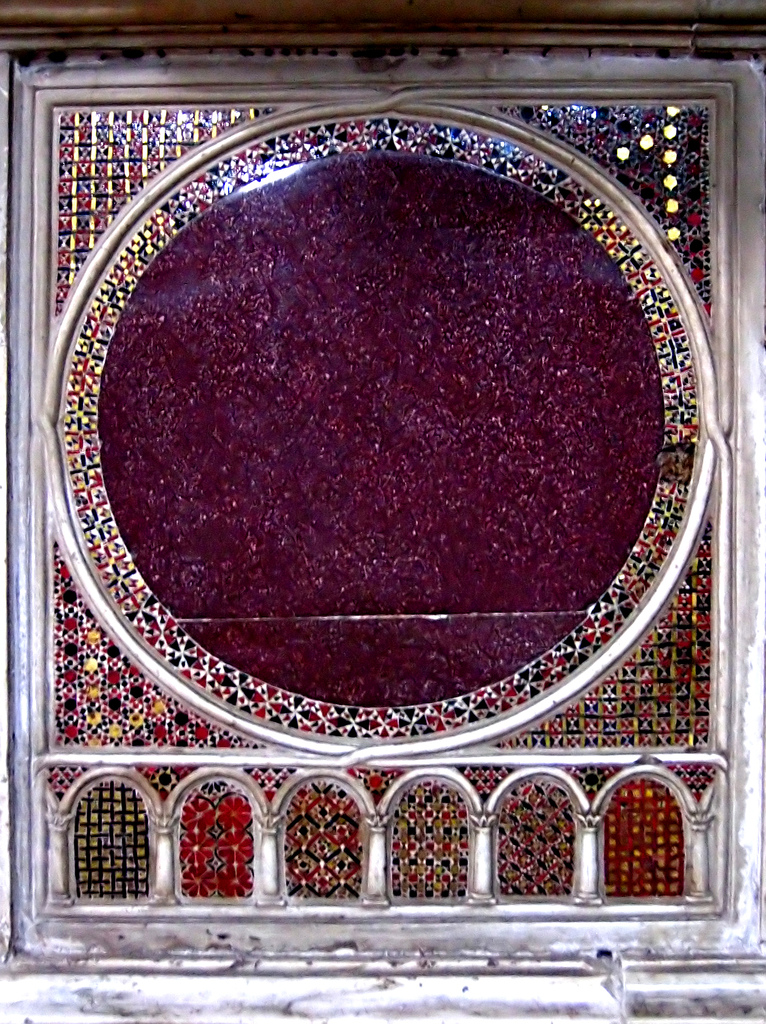
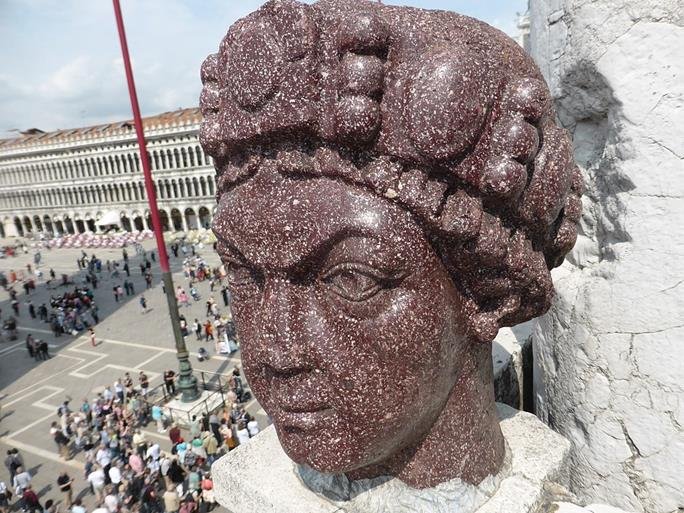
BTW, the quarry of Mons Porphyrites is even more interesting, imho.
Also, the Via Hadrianus — when that was finally surveyed by archaeologists, they found the stashes of original water jugs still in place along its length, and it was apparent that the only time the road may have been used was by its builders.
https://www.selectstone.com/2012/10/01/porphyry/
https://www.world-archaeology.com/features/mons-porphyrites-egypt/
12
posted on
07/12/2026 6:43:14 AM PDT
by
SunkenCiv
(The Demagogic Party is just a collection of violent, rival street gangs.)
To: NFHale
The library was burned by order of the caliph, centuries after Julius Caesar. The myth that Caesar burned is a pernicious falsehood.
13
posted on
07/12/2026 6:44:40 AM PDT
by
SunkenCiv
(The Demagogic Party is just a collection of violent, rival street gangs.)
To: ansel12
I agree. Part of the reason is that despite the loss and destruction over centuries, a remarkable amount of written material has survived, and since they tended to build stuff on a large scale, much of that is available for direct study.
14
posted on
07/12/2026 6:46:45 AM PDT
by
SunkenCiv
(The Demagogic Party is just a collection of violent, rival street gangs.)
To: SunkenCiv
15
posted on
07/12/2026 6:48:12 AM PDT
by
aquila48
(Do not let them make you "care" ! Guilting you is how they control you. )
To: Made In The USA
16
posted on
07/12/2026 6:48:41 AM PDT
by
SunkenCiv
(The Demagogic Party is just a collection of violent, rival street gangs.)
To: NFHale; FLT-bird; rlmorel
17
posted on
07/12/2026 6:49:38 AM PDT
by
SunkenCiv
(The Demagogic Party is just a collection of violent, rival street gangs.)
The other GGG topics added since the previous digest ping, alpha:
- Ancient inscriptions found on summit of Phu Khat Mountain [07/07/2026]
- Ancient inscriptions written in Jesus' language reveal forgotten chapter of early Christianity [07/07/2026]
- An Archaeologist Made a 'Once-in-a-Lifetime' Discovery at the Alamo. Then It Happened Again. [07/07/2026]
- Bayeux Tapestry arrives in UK for first time in 900 years under police guard [07/10/2026]
- A 13,000-Year-Old Comet Catastrophe May Be Depicted In The World's Oldest Temple At Göbekli Tepe [07/11/2026]
- Does This 400-Year-Old Renaissance Painting Show An Animal Behavior Only "Discovered" In 2025? [07/09/2026]
- Egypt uncovers lost Byzantine-era city in the western desert [07/05/2026]
- The First Kiss in Recorded History Took Place 4,500 Years Ago [07/10/2026]
- House of the Faun | Pompeii, Italy | Alexander Mosaic | 4K [13:38] [07/07/2026]
- Inside an Egyptian Tomb, Archaeologists Found a 5,000-Year-Old Stone Disk That Looks Strikingly Like a Modern Hubcap [07/08/2026]
- Inside the secret operation to move the world's most famous tapestry [07/10/2026]
- Massive 2,000-year-old luxurious Roman bathhouse uncovered in the Netherlands [07/07/2026]
- The Roman Gold Mine that Ate Mountains [9:09] [07/11/2026]
- 13,000-Year-Old Bones Found Near SoCal Coast Could Rewrite Human History [07/07/2026]
- The Truth About Odyssey Star Lupita Nyong'o & Her Ridiculous Take on Homer, w/ Victor Davis Hanson [07/09/2026]
- Union and Confederate veterans shake hands during the 50th anniversary reunion at Gettysburg, 1913 [07/05/2026]
- Was Greek Philosopher Diogenes the Cynic the First Anarchist? [07/06/2026]
- What Did Beer Taste Like 3,000 Years Ago? Egyptian Beer Recipe Brewed Using Ancient Yeast [07/07/2026]
- What Happened to the 56 Signatories of the Declaration of Independence [07/05/2026]
- WWII Pilot's Remains Identified More Than 8 Decades After Plane Disappeared During Spy Mission [07/05/2026]
18
posted on
07/12/2026 6:52:37 AM PDT
by
SunkenCiv
(The Demagogic Party is just a collection of violent, rival street gangs.)
Selections from the 'Roman concrete' and 'Pantheon' keywords, sorted:
19
posted on
07/12/2026 6:56:07 AM PDT
by
SunkenCiv
(The Demagogic Party is just a collection of violent, rival street gangs.)
To: SunkenCiv
"...by the time I read it and pulled out a few more volumes to get the related subjects, I’d forgotten what I’d originally wondered about."I remember that well! But, now that old age is upon me, I get to relive that every day. "Now why did I come to the bedroom?"
"...the quarry of Mons Porphyrites"
That was mentioned in the article I was reading: "the only known source of the purple "imperial" variety of porphyry in the world." I'd never even heard of it before. Isn't it beautiful?
Navigation: use the links below to view more comments.
first 1-20, 21-40, 41-60, 61-76 next last
Disclaimer:
Opinions posted on Free Republic are those of the individual
posters and do not necessarily represent the opinion of Free Republic or its
management. All materials posted herein are protected by copyright law and the
exemption for fair use of copyrighted works.
FreeRepublic.com is powered by software copyright 2000-2008 John Robinson