Posted on 07/02/2026 1:20:02 AM PDT by Cronos
A new study compares the carved symbolism of Göbekli Tepe’s Vulture Stone with ritual imagery from the Trypillia culture, suggesting that early farming societies in Anatolia and Eastern Europe may have shared cosmological ideas about time, death, sacred space and the movement of the heavens.
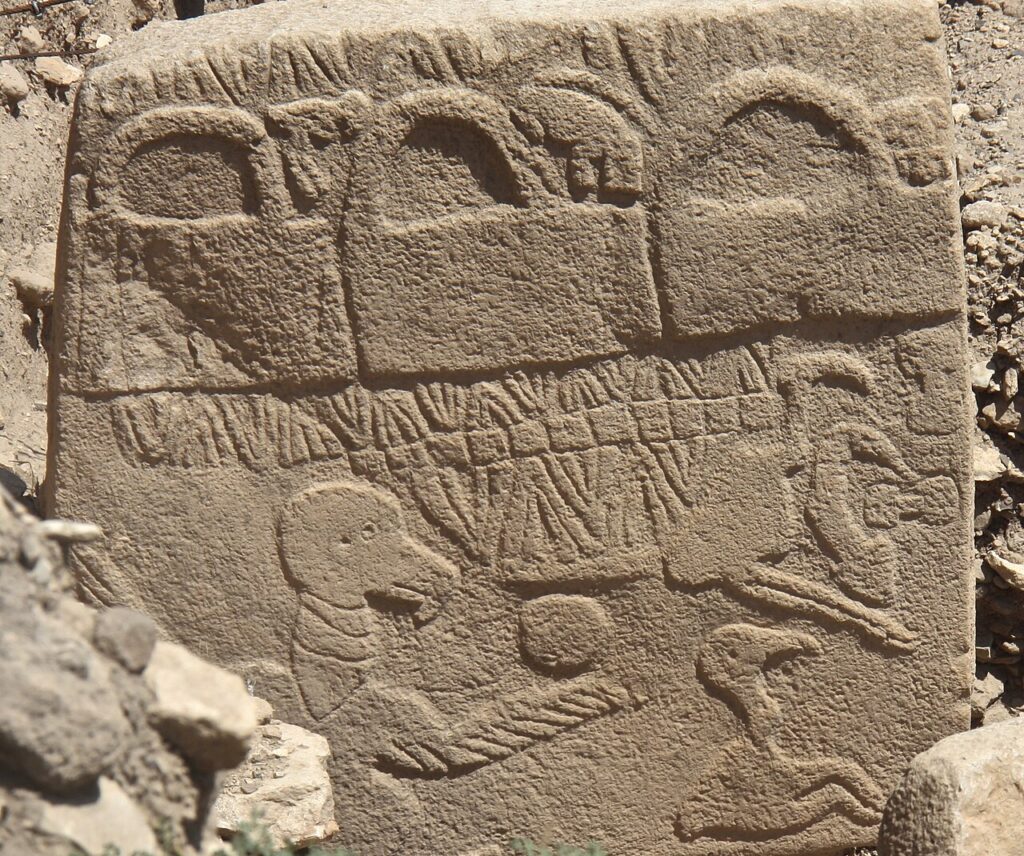
At Göbekli Tepe, the famous Vulture Stone has never been easy to read. Its carved birds, snakes, scorpion, abstract signs and headless human figure have inspired competing interpretations for decades. Was it a scene of death ritual, an astronomical code, a mythic narrative, or something more complex? A new study argues that the answer may not lie in choosing one explanation over another, but in seeing the pillar as part of a wider symbolic system linking architecture, timekeeping and cosmology across early farming societies.
The study, published in the International Journal of Culture and History by Oleksandr Zavalii, focuses on the cosmological aspects of Göbekli Tepe’s T-shaped stelae and compares them with religious symbolism from the Trypillia culture of Ukraine. Its central claim is cautious but ambitious: the carvings at Göbekli Tepe may preserve not isolated symbols, but a structured sacred language involving solar cycles, lunar rhythms, animal imagery, geometry and sacred space.
Göbekli Tepe, dated to the Pre-Pottery Neolithic period, roughly 9600 to 8200 BCE, already occupies a special place in archaeology as one of the earliest known monumental ritual landscapes. Zavalii’s paper revisits several pillars, especially Stele 43, known as the Vulture Stone, along with Steles 33, 18, 20 and 1. Rather than treating the carvings as decoration, the study reads them as components of a broader visual grammar.
On Stele 43, the upper register includes bird figures, three arch-like forms, a central circle, rectangular elements and H-shaped signs. The lower register contains animals more closely associated with the earth or underworld, including a scorpion, snake, boar, waterfowl and a headless human figure. Zavalii suggests that this division may reflect a two-level cosmos, with celestial imagery above and chthonic or mortal imagery below.

It’s Noah. 4 birds sent out. One has the olive.
3 ships...Hebrew Septuagint says sons ship 3
It’s the stern endview of 3 ships each with a opening on top with a roof per Genesis.
Noah had the birds ark.
One son had the cattle ship ark.
Another son had the wild animals ark ship.
Another son had the reptiles ship..per Genesis sequence.
You don’t put cattle and lions on the same boat.
The Animals didn’t suddenly become docile and loved each other and as soon as they got of the ark they became wild again.
Reductio ad absurdam
This is why there are multiple reports of finding arks in different locations. It’s multiple arks.
The Hebrew and Greek Septuagint say “ships sons 3”
There are 27 “V”s on the top and middle.
The earth dried up on the 27th day.
I love vultures. I live in Alabama, and they're always lazily wheeling around in the sky. Over the past year, we've had a terrible bout of Bird Flu that killed almost all of the Black vultures but didn't affect the Turkey vultures very much. So there's hardly been any Black vulture sightings in a while. This week I saw two Black vultures up with the typical Turkeys and were glad to see them back!
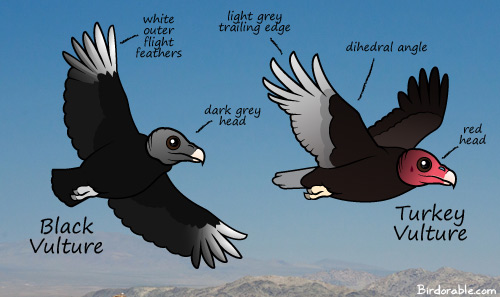
You can tell the difference simply by looking at their wing undersides. Turkey vultures has a light-colored band on the trailing edge that goes from the shoulder to the tip, while Black vultures have a light color only where the “hand” would be, i.e., the end of the wing. And Turkey vultures are bigger than the blacks. If you get a chance to see them close up, Turkey vultures have red colored skin on their heads, while Black vultures have black skin.
no pictures of the Trypilia culture iconography.
I take it they have different diets?
Why weren’t the Turkey vultures affected?
I think both civilizations would put their recently departed onto platforms for the birds to eat before collecting the skulls for household decorations.
I think both civilizations would put their recently departed onto platforms for the birds to eat before collecting the skulls for household decorations.
////////
That’s also a practice of American Plains Indians and likely many other cultures.
Good question. They both eat road kill, dead carcasses, etc. I asked AI. Answer:
Black vultures died in huge numbers because their highly social feeding and roosting behavior created perfect conditions for H5N1 to spread rapidly. They also frequently eat other dead black vultures (high cannibalism rate).
Turkey vultures, being more solitary, less aggressive at carcasses, and less clustered at roosts, simply didn’t give the virus the same transmission opportunities.
And emerging evidence suggests black vultures may also be biologically more susceptible to this strain of H5N1.
Black vultures are rebounding across the Southeast, and Alabama is part of that recovery. The decline you saw locally was real, but the regional population trend is strongly upward again.
Our TVs stay year round but the BVs show up in the spring
The local TVs roost on the old Cold War comms microwave tower up on the mountain.
My dad used to take me up there to see them towards dusk as they all came back for the night.
I did NOT know that -- isn't this similar to the Zoroastrian custom?
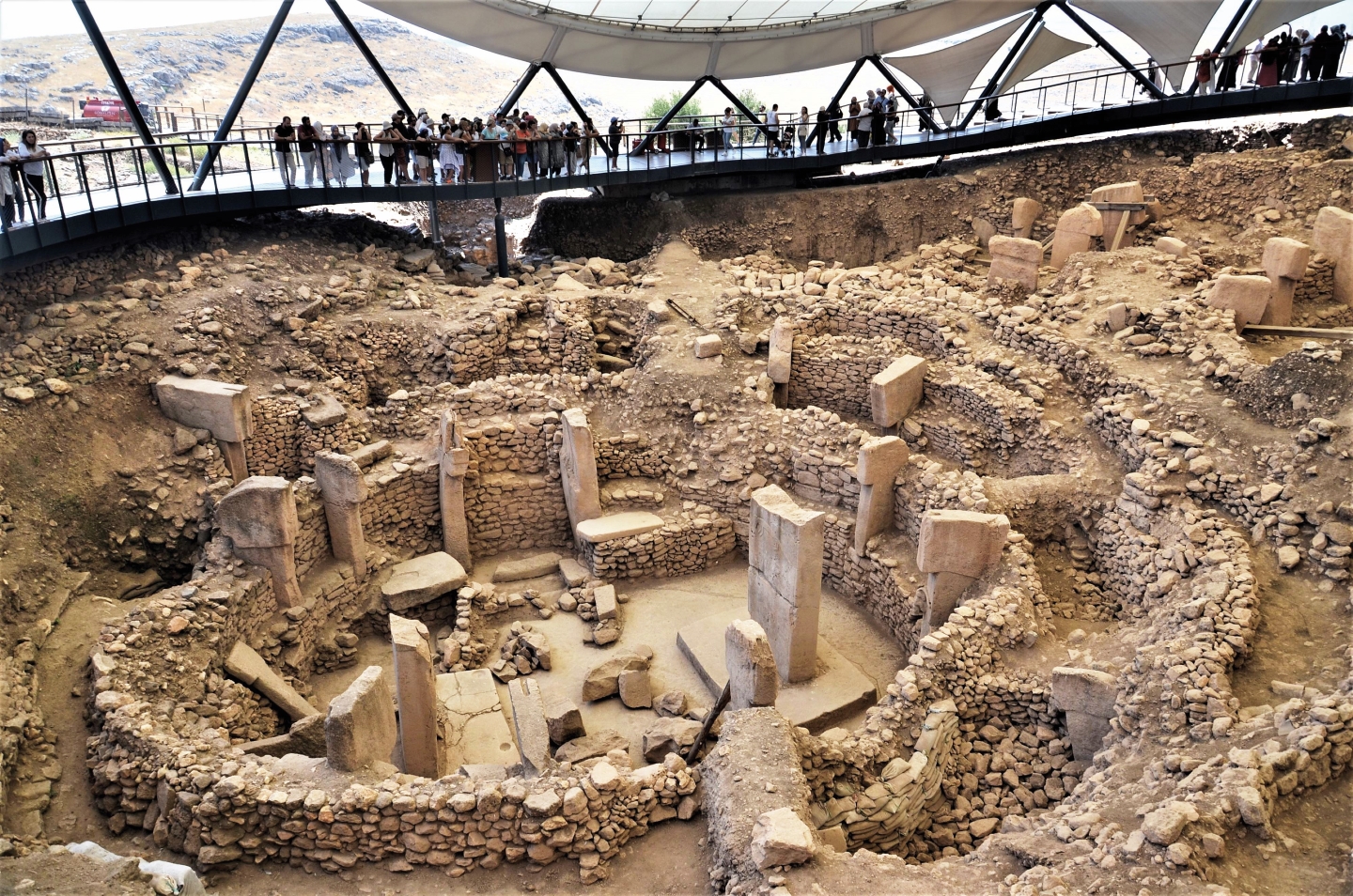
How do structures like that get covered up with stones and dirt?
I am NOT an expert on Gobekli Tepe - I normally focus on periods much later - the Assyrian to neo-Assyrian to Roman period.
From what I understand, Göbekli Tepe was buried deliberately by its own creators about 10,000 to 11,000 years ago. Instead of abandoning the site to nature, ancient hunter-gatherers incrementally packed limestone chips, stone tools, and dirt around the monumental T-shaped pillars.
I don’t fully understand WHY - but then to be fair, WE have a completely different mental map than the people from then - our thoughts, core consciousness is so framed by Christianity that these ancestors are practically alien in their thinking imho
Good call! Excarnation is one of the big three (the others being inhumation and cremation) methods, historically, of post-mortem care. I wonder if there's any trace of ossuaries on any of these sites? Caching the defleshed bones of ancestors is known from the Middle East and elsewhere.
Disclaimer: Opinions posted on Free Republic are those of the individual posters and do not necessarily represent the opinion of Free Republic or its management. All materials posted herein are protected by copyright law and the exemption for fair use of copyrighted works.
