Posted on 06/30/2026 7:56:23 PM PDT by Red Badger
The yen hit a fresh 40-year low against the dollar in Asia on Wednesday morning, keeping traders on high alert for possible currency intervention by the Japanese government.
Ongoing expectations for a gradual pace of interest-rate increases by the Bank of Japan, combined with growing prospects for the Federal Reserve to raise the Fed funds rate this year, are pressuring the yen lower and the dollar higher.
The dollar's fresh 40-year high against the yen is "leaving markets on watch for stronger verbal warnings or outright intervention from Japanese authorities," said Taylor Nugent, senior economist at National Australia Bank, in a commentary.
Japan's Finance Minister Satsuki Katayama on Tuesday renewed her pledge to address excessive yen volatility. "We will take appropriate action on currencies at any time as needed," Katayama said at a news conference. "During the recent online meeting between the Japanese and U.S. finance chiefs, we confirmed that taking decisive steps is included" as an option, she added, suggesting that the Japanese government could step in to prop up the yen.
The yen recently weakened 0.1% to 162.66 per dollar after earlier touching 162.77, the lowest intraday level against the greenback since 1986, according to LSEG data.
"USD-JPY has moved into a new and higher range for external and domestic reasons," Joey Chew, head of Asia FX Research, and Paul Mackel, global head of FX Research, at HSBC Global Investment Research said in a note. "We still think MoF will intervene at some point," they added.
Japan has struggled to stem the yen's persistent weakness. Data from the Ministry of Finance showed Japan spent a record 11.73 trillion yen, equivalent to about $72.47 billion, on currency intervention between April 28 and May 27. But that offered only temporary relief, with the selloff resuming as risk appetite returned amid easing tensions in the Middle East.
Japan's foreign-exchange reserves remain sizable at $1.09 trillion, split between deposits of $162 billion and securities of $932 billion, Wells Fargo Macro Strategy's Chidu Narayanan said in a commentary.
"Deposits alone are sufficient for further intervention, but history shows authorities tend to sell/roll off securities to replenish deposits," the head of Macro Strategy for APAC said. "So, the MoF has plenty of space to intervene again near-term, and in size," Narayanan added.
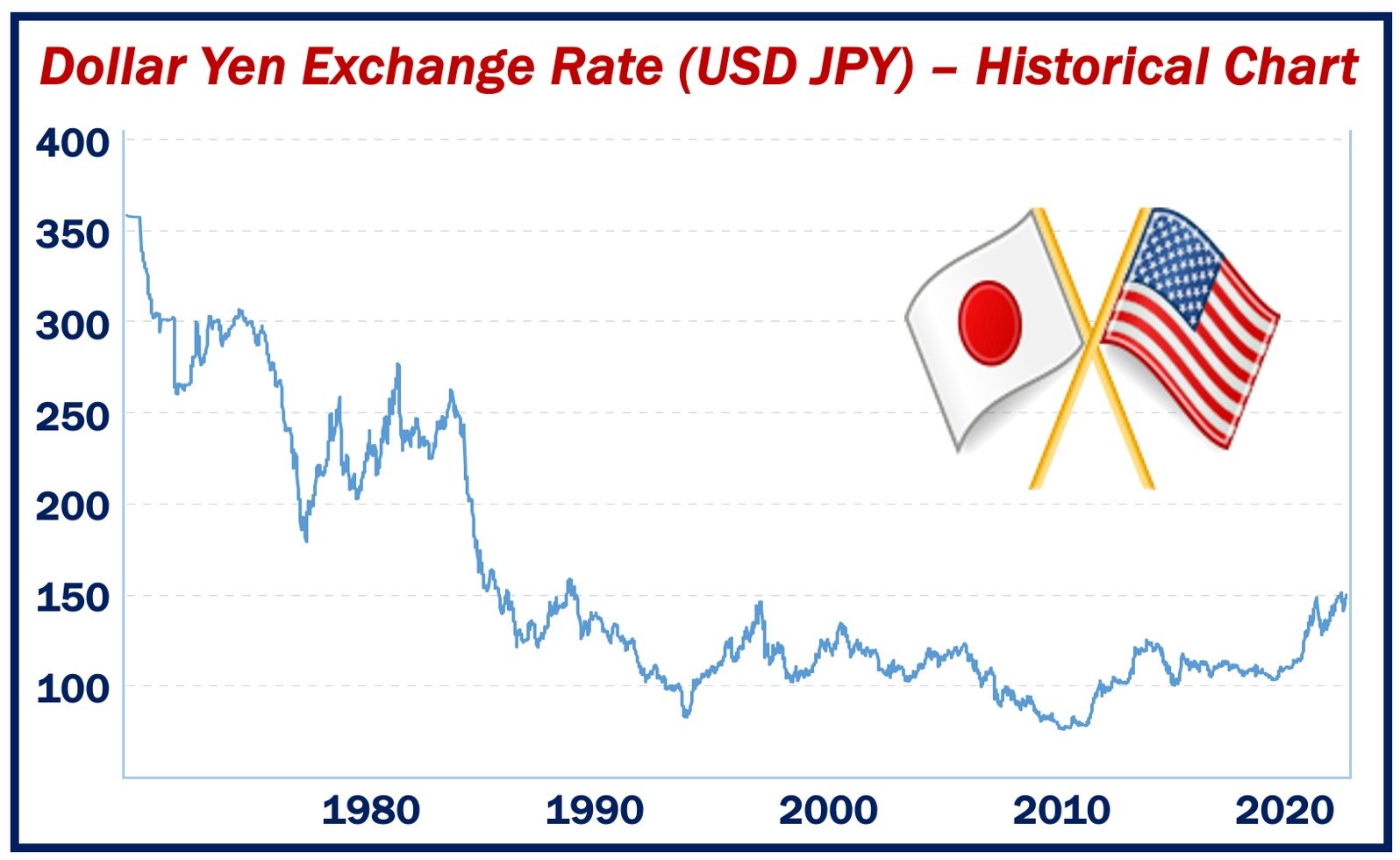
162? It was 250 in the 80s.
In the 80s, when the yen was 250 to the dollar, a Honda Accord was $13K. We get $250 again, $20K Accords would be an inflation antidote.
Another so called “market” balloon 🎈
Nikkei 225 Index
71,833.66
08:49:25 PM
“162? It was 250 in the 80s.”
Till 1971 it was 360.
I was there when it was 300 to a dollar!
“162? It was 250 in the 80s.”
When I came to Japan in May 1985 it was around 260 yen to a dollar . Then when I moved here in Sept. of that year , overnight , while I was on the flight over ( heard the news when we stopped at Anchorage ) it lost 15 or so percent . Continued the drop from there .
When the ratio is about 100 to 1, it makes valuation of Japanese products easy. You can think of a Yen being like a penny.
man, i could just take a flight to Tokyo i suppose.
there is a second hand store there that sells expensive watches like omega and grand seiko in yens.....
then swing by jk alley for a quick date.
That is about the rate around which USD/JPY was hovering when I was there for a while in the mid-90's. You are correct; it made it easier to estimate everything in dollar terms, but it would have been great to have a USD/JPY rate of 162 like it is today since I was being paid in USD while working there for my US-based employer.
I’m confused. Why does the article say a fresh, 40 year low against the dollar when the chart shows otherwise? More journalistic malpractice?
Virtually ALL Honda Accords are built in the USA (Ohio 85% or so, Indiana 15% or so).
The value of the Yen will make no difference at all to the price of an Accord.
Reports of the death of the US dollar are greatly exaggerated.
Samuel Clemens
Disclaimer: Opinions posted on Free Republic are those of the individual posters and do not necessarily represent the opinion of Free Republic or its management. All materials posted herein are protected by copyright law and the exemption for fair use of copyrighted works.