Skip to comments.
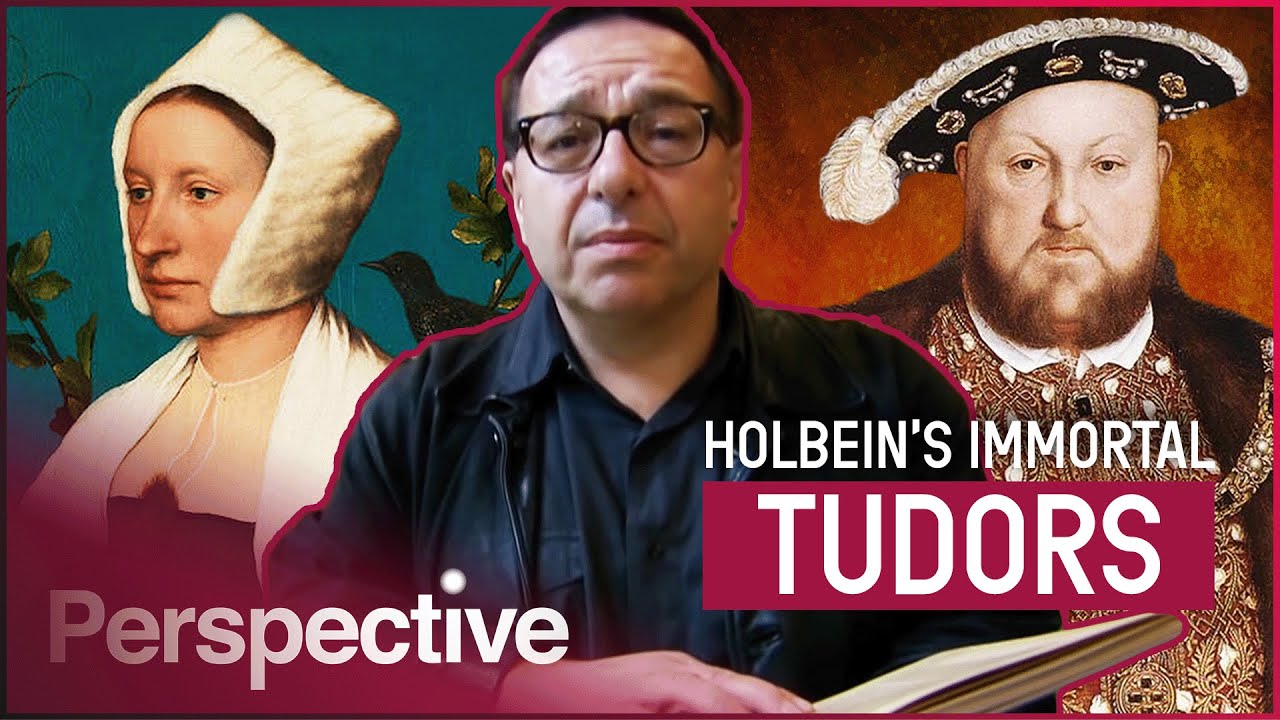
The Unsettling Secrets Hidden In Holbein's Tudor Portraits (Waldemar Januszczak) [59:50]
YouTube ^
| May 22, 2020
| Perspective
Posted on 02/27/2026 9:26:31 PM PST by SunkenCiv
British art historian Waldemar Januszczak shows that Hans Holbein witnessed and recorded the most notorious era in British history. He painted most of the major characters of the 16th century Tudor Era, including the famous image of King Henry VIII. What unsettling secrets lay hidden in his famous paintings? What do his images reveal about Henry's relentless drive to control the English church? The Unsettling Secrets Hidden In Holbein's Tudor Portraits
(Waldemar Januszczak) | 59:50
Perspective | 503K subscribers | 2,592,280 views | May 22, 2020
(Excerpt) Read more at youtube.com ...
TOPICS: History; Science; Travel
KEYWORDS: art; epigraphyandlanguage; godsgravesglyphs; hansholbein; henryviii; holbein; painting; portraits; renaissance; sixwives; thomascromwell; tudors; waldemarjanuszczak
Navigation: use the links below to view more comments.
first 1-20, 21-26 next last
1
posted on
02/27/2026 9:26:31 PM PST
by
SunkenCiv
To: StayAt HomeMother; Ernest_at_the_Beach; 1ofmanyfree; 21twelve; 24Karet; 2ndDivisionVet; 31R1O; ...
2
posted on
02/27/2026 9:27:15 PM PST
by
SunkenCiv
(TDS -- it's not just for DNC shills anymore -- oh, wait, yeah it is.)
To: SunkenCiv
So what are the unsettling secrets?
To: 9YearLurker
Clickbait.
People like secrets and mysteries
4
posted on
02/28/2026 2:52:05 AM PST
by
AZJeep
(sane )
To: AZJeep
Didn’t quite make the PBS documentary cut?
5
posted on
02/28/2026 5:27:55 AM PST
by
Cletus.D.Yokel
(The Democrats' official policy is now, “Hate, Violence and Murder". Change my mind.)
To: SunkenCiv
Have not watched this yet but I saw his documentary on James McNeil Whistler and it was exceptional.
6
posted on
02/28/2026 5:36:38 AM PST
by
edwinland
To: edwinland
I generally like his presentations, erudite but amusing.
7
posted on
02/28/2026 6:03:11 AM PST
by
SunkenCiv
(TDS -- it's not just for DNC shills anymore -- oh, wait, yeah it is.)
Transcript [by YT chapter titles]
Intro
[Music] So this must go there must be, and this would be last.
[Music]
Who do you think that is? I’ll give you a clue: it’s a famous English king. So who is it? Come on, no googling! Who is this stern and bony monarch? Now, you smart people out there, the ones who come here to the National Portrait Gallery, you’ve got it straight away. I know the giveaway, of course, is the nose — the way it’s flattened. There’s something walrus-like about it.
But some of you didn’t get it right, and the reason you didn’t recognize immediately that this is Henry the Eighth is because this isn’t the Henry we’ve all got up here in our imaginations. The Henry who had six wives, who took on the Pope, who destroyed the monasteries — that Henry didn’t look like this. He looked like this. Now, that’s what you call Henry the Eighth. Look at the way he stands, like a Tudor gunslinger at the OK Corral — the mighty torso, the sheer width of the man. This is a king who could change history. That’s the Henry who lives up here in our thoughts: Henry the Terrible, the widest king in Christendom.
And he is the creation of a particularly important artist — an artist who I would argue didn’t just record British history; he actually changed it. He was a funny little man, a German from Bavaria, the genius who looked like a farmer called Johannes or Hance Holbein. This is Holbein’s great gift to the world: the iconic image of Henry the Eighth, which everyone recognizes.
And Holbein didn’t stop there. How do we know what Sir Thomas More, that conscience-filled man for all seasons who stood up to Henry, looked like? Because of Holbein. How do we know what Henry’s unfortunate queens looked like? Because of Holbein. And how do we know what Thomas Cromwell, Henry’s go-to man for destroying the monasteries, really looked like? Because of Holbein.
Holbein didn’t just describe Tudor England; he gave it an extraordinarily active presence, made it feel real. And by making Tudor England immortal, he changed history. Because a slab of history we can envisage so clearly will always trump all those other slabs of history we can’t envisage at all. Why are we so obsessed with Henry the Eighth and his damned wives? Because of Holbein.
8
posted on
02/28/2026 6:44:09 AM PST
by
SunkenCiv
(TDS -- it's not just for DNC shills anymore -- oh, wait, yeah it is.)
Early Life
Holbein was from here, Outs Berg in Bavaria, where he was born in 1497. His father was a painter, and a really good one, Hans Holbein the Elder. He painted religious pictures; this is one of his. He designed stained glass as well, so his son, trained by his father, would have imbibed all these profound Catholic moods from birth.
Here at the Museum in Augsburg, they’ve got one of Holbein the Elder’s finest pictures. This is the Basilica of St. Paul, as it’s called, an altarpiece which tells St. Paul’s story. Over here, he’s having his head cut off on the orders of the Emperor Nero. Apparently, the head bounced three times when it hit the ground, causing three miraculous fountains to spurt from the earth.
But what I really want to show you is this scene on the left because that old man with a straggly beard, that’s actually Holbein the Elder, and below him are his two sons: Ambrosius, the older one with the curly hair, next to him, little Hans Holbein, future painter of Henry the Eighth.
[Music]
9
posted on
02/28/2026 6:44:31 AM PST
by
SunkenCiv
(TDS -- it's not just for DNC shills anymore -- oh, wait, yeah it is.)
Basel
So the dad trains the son to be a painter. When the son is 17, he comes here to Basel in modern Switzerland. Basel was famous for its printing, the European Capital of Books, and that must have been what brought the young Holbein here. He was looking for work as a book illustrator. Basel’s greatest printer was a man called Johann Froben. Froben was both a publisher and a scholar, so he was adventurous and informed, and Holbein was soon working for him.
Froben produced lots of important books, but he’s particularly well known for publishing the work of that celebrated Dutch naysayer Erasmus of Rotterdam. And yes, Holbein painted Erasmus too, tucked up for winter in his study, busily writing. Erasmus actually came to Basel specifically to work with Froben, and it was Froben who published the best edition of Erasmus’s most celebrated work, a hilarious send-up of the modern world called In Praise of Folly.
Just about everyone gets a kicking in In Praise of Folly: young people, women, gamblers, but Erasmus comes down particularly hard on the clergy, the priests, the bishops, and the friars.
Holbein was just 17 when he got hold of a copy of In Praise of Folly, and in the margins, he drew all these funny little drawings. It’s like something a naughty schoolboy might do — draw all over a famous book. This chap here is walking along the road when he sees a beautiful woman, and he’s so busy staring at her that he steps into a basket of eggs. Ah! And this is a monk who’s taken the vow of poverty, so he can only touch money with this weird money-touching implement. However, with his other hand, he can touch whatever he wants. As you can see, it’s impressively rude.
How can a 17-year-old boy know this much already about sex, greed, and human stupidity? The Holbein who emerges here is an instinctive subversive, a mickey-taker who sides with Erasmus to poke fun at the world around him. So a good question is: where did it all go? Did Holbein suppress all this precocious knowledge of the dark workings of men, or did it sometimes poke out and reveal itself? When you’re as talented as this and you’ve got this much speed and inventiveness in your fingers, people quickly notice. So Holbein was soon busy.
10
posted on
02/28/2026 6:44:45 AM PST
by
SunkenCiv
(TDS -- it's not just for DNC shills anymore -- oh, wait, yeah it is.)
Religious Painting
The thing he was really good at was religious painting. This is the dead Christ that the young Holbein painted for the base of a Basel altarpiece. It’s a coruscating piece of religious realism, but he could do Catholic fluffiness as well, like this gorgeous Madonna and Child standing in a niche in Darmstadt. Look at the brilliant foreshortening of Jesus’ hand; Leonardo himself would have been proud of that. So, it was all going spiffing. His religious art was in demand, and the book trade was keeping him busy when along came Martin Luther and his Protestant Reformation. Suddenly, everything changed.
In a Lutheran world, there was no longer much demand for Catholic Madonnas standing ornately in golden niches. The printing industry too began to flounder. Who should it publish, the Protestants or the Catholics? With the publishing world caught in this dangerous crossfire and the religious commissions drying up, Holbein needed to find work somewhere else, and that’s where Erasmus made himself useful.
Erasmus had actually written “In Praise of Folly.” In England, he’d spent several years there teaching at Oxford and Cambridge, and in 1526, Holbein, armed with a letter of introduction from Erasmus, set off looking for work in England. When he gets here to England, he’s in his late 20s, so he’s still a young artist but already very experienced. The unexpected thing, though, about Holbein’s arrival in Henry the Eighth’s England is that the one thing he didn’t have much experience of was painting portraits. In Basel, Holbein had been known chiefly as a religious artist. He painted one or two portraits, yes, and they were really good, but they were exceptions in his output.
England, though, had never had much of an appetite for Madonnas and Christs; that kind of thing was best left to the Italians. In England, the art form that was most esteemed and which seemed most in tune with the national psyche was portraiture. The staircases of England were lined with ancestors showing off their bloodlines. To succeed in England, Holbein needed to change tack.
11
posted on
02/28/2026 6:44:58 AM PST
by
SunkenCiv
(TDS -- it's not just for DNC shills anymore -- oh, wait, yeah it is.)
Sir Thomas More
Erasmus had given him an introduction to one of the most influential men at the court: writer, statesman, theologian, and, as it later transpired, Catholic martyr, Sir Thomas More. Holbein seems to have spent most of his first year in England living in More’s house in Chelsea. He was working on this, a few jury ambitious group portrait of More and his very large family.
[Music] Unfortunately, this is a copy and not a very good one. The original was destroyed by a fire in the 18th century. All that’s left of the real Holbein is a stack of these astonishingly vivid drawings. Oh, [Music] and there is something else, of course: this Holbein’s great portrait of More, which they have here at the Frick Collection in New York.
More was the man who famously stood up to Henry, who refused to accept the King as the new head of the church, so Henry had him beheaded. Now, I was brought up believing that Sir Thomas More was a man of great principle; that’s why the Catholic Church made him a saint in 1935. But more recently, a different Thomas More has been proposed to us in today’s histories. He’s often presented as a demented religious bigot, a cruel slayer of the heretics. That’s what modern novelists and playwrights have been making of More, but it’s not what Holbein makes of him, and Holbein was there.
[Music] I know it’s a cliché, and it’s been said a thousand times, but you really do feel he’s standing there before you: one of the most resolute presences in British art. Just look at the details: the way the velvet has been painted or his perfectly observed skin tones without uttering Vincent’s five o’clock shadow. This sense of actuality is new, not just in British art, but anywhere. These first English portraits of Holbein’s make Doctor Who’s TARDIS sing us back in time to meet a Tudor cast that feels astonishingly present — just there, right in front of us.
[Music]
12
posted on
02/28/2026 6:45:12 AM PST
by
SunkenCiv
(TDS -- it's not just for DNC shills anymore -- oh, wait, yeah it is.)
The Protestant Revolution
Holbein’s first visit to England lasted just two years before the fates conspired to bring him home to Basel. He was busy enough; that wasn’t the issue. But as a citizen of Basel, he could only leave the city for a short time, or he’d lose his citizenship. So, in 1528, he had to come back. It was probably now that he painted his wife and children. He had to leave them behind when he left for England, and as you can see, he’s made them into a holy family, hasn’t he? A suffering Madonna and her infants dreading what lies ahead.
Basel in 1528 was not a nice place to be if you were a painter or a Catholic. Holbein had seen the Protestant revolution arriving in Basel; it was one of the reasons he’d left for England. But in the time he was gone, it had all gotten so much worse.
Basel officially became a Protestant city in 1529. To celebrate, gangs of rabid iconoclasts rampaged through the churches looking for Madonnas to trample and Christs to smash. On the 9th of February 1529, a gang of some 200 angry Lutherans broke into Basel Cathedral and began attacking the art, statues, crucifixes, and paintings. They didn’t stop until all this superstitious idolatry, as they saw it, was destroyed.
There’s no official record of Holbein’s own religious views; not surprisingly, he kept them to himself. But he was born a Catholic in very Catholic Bavaria, and my hunch, based on the odd visual clue here and there, is that he never crossed over fully to the Lutheran side. What is definite is that work was now hard to come by; the iconoclasts had seen to that. In a world without images, there was no longer much need for a painter.
Holbein didn’t leave immediately; there was his wife and children to worry about. But in 1532, having put his affairs in order, he left Basel again and set off once more for England. This time, he’d be working not just in royal circles but for the king himself. And what a king he was! Holbein came to England because he was following the money, as artists do. Getting away from Basel, getting away from the iconoclasts, he came here looking for prosperity and peace. Instead, he found Henry the Eighth.
And for him to be here while Henry beheaded his wives, took on the Pope brutally, and forced his new religion is so damn fortunate it almost feels preordained.
13
posted on
02/28/2026 6:45:25 AM PST
by
SunkenCiv
(TDS -- it's not just for DNC shills anymore -- oh, wait, yeah it is.)
The Steel Yard
Holbein didn’t begin working for the king as soon as he returned to London. His first patrons actually came from here. It’s changed a bit, of course, but in Tudor times, this was a very important location for Holbein because where I’m standing now was the centre of a huge urban complex called the German Steel Yard. The Steel Yard wasn’t a steel yard; it was a city within a city, a kind of German Hong Kong created by German merchants for the purposes of international trade. It had been here since 1320, going bigger and bigger, and the German merchants in here didn’t pay any tolls or customs; they were privileged foreigners. Inside this walled community of theirs, they had warehouses, shops, offices, and taverns. So this was a home from home for Holbein, and when he returned to England in 1532, the rich German merchants of the Steel Yard were his first customers.
This handsome young chap who now hangs in Windsor Castle is Derek Born from Cologne, who supplied the court of Henry the Eighth with military equipment for the army. In Holbein’s time, just like today, if you wanted precision quality and Voss sprung door Technic, you bought German.
The Merchants of the Steel Yard
The paintings that Holbein made of the merchants of the German steel yard seemed to speak a different language from his other English pictures. It’s as if some of that different mindset that had poked out in empresa folly pokes out here as well. This exceptionally fine fellow is Joerg Geese, emergent from Danzig. He’s sitting in his office in the German steel yard, surrounded by the accoutrements of his trade: his pens, his documents, the box in which he keeps his money, and all these details which have been described so perfectly by Holbein have other meanings — secret little messages that have been smuggled into the picture.
In particular, notice the beautiful Venetian vase with its fragile pink carnations. How skillfully Holbein has painted the shifting reflections in the glass and how precariously the vase is balanced on the edge of the table. Whenever you see something on the edge of a table in art, it always means the same thing: isn’t life precarious? It’s the same with the money box; how easily Joerg Geese’s stash of cash could topple. And for the precarious vase, the lovely reflections are all brilliant Holbein reminders of the shortness of life. Just like the reflections in the glass, all this can disappear in an instant. It’s a message that’s always relevant, but it was particularly relevant in the shifting, fracturing England of Henry the Eighth’s.
14
posted on
02/28/2026 6:45:41 AM PST
by
SunkenCiv
(TDS -- it's not just for DNC shills anymore -- oh, wait, yeah it is.)
Our Lady of Caversham
Holbein obviously didn’t know what he was letting himself in for in Henry the Eighth’s England. Had he known, he would surely have turned tail and returned home. You know, between the age of 5 and 11, I used to walk down this road pretty much every day of my life. We lived up there in Caversham in Reading, and this was my way to school every day for six years. Not once in that time did I ever consider the significance of this road.
My school was down here, down the alley. They still love walking down here. The school was a Catholic primary school run by nuns called St. Anne’s, a nice, friendly, ordinary school next door to a church. The church was also called St. Anne’s, and back then, I didn’t know what had actually happened here in Holbein’s time, but I do now.
St. Anne’s Caversham had a famous statue in it. She was called Our Lady of Caversham, and she was said to have miraculous powers. The shrine of Our Lady of Caversham was one of the most visited locations in Tudor England. Pilgrims would travel hundreds of miles to pray to her for help. One of them was the rightful Queen of England, Catherine of Aragon, who came here to Caversham on the 17th of July, 1532, to pray for her husband, Henry the Eighth. It was the Queen’s final plea to her God, begging Him to intervene and stop Henry from divorcing her and marrying Anne Boleyn. Of course, it didn’t work. Henry went ahead with his divorce, he married Anne Boleyn, and made himself the supreme head of a new English church.
And a few years later, he took his revenge on Our Lady of Caversham. On the 14th of September, 1538, a gang of government agents arrived at St. Anne’s and closed down the famous shrine.
15
posted on
02/28/2026 6:45:56 AM PST
by
SunkenCiv
(TDS -- it's not just for DNC shills anymore -- oh, wait, yeah it is.)
Thomas Cromwell
Our Lady of Caversham was bundled into a cart and taken to London. The gold and the silver in which the statue was covered was stripped off and sent to the king, and the actual wooden statue, well, that was burned. The man who organized all this destruction and who jotted off a quick note to his agents to congratulate them on a job well done was, of course, Cromwell. Thomas Cromwell. I bet you were wondering when we’d get to him.
Now, when I was at school, Cromwell was recognized by everyone as a terrible man — Henry the Eighth’s enforcer, the destroyer of the monasteries. In recent years, though, there’s been this big reassessment, and the modern image of him, the one you find today in plays and books, is of a decent and brilliant man who’s trapped in a difficult situation. Cromwell, we’re now told, was an early civil servant who channeled power away from the monarchy and who invented the modern bureaucratic state. These days, we’re encouraged to see Thomas Cromwell as a good guy, but in this film, I’m not going to do that for two important reasons. This is one of them: what Cromwell did to Our Lady of Caversham, the ruination he visited upon England’s artistic past, is unforgivable.
And the second reason for not whitewashing Thomas Cromwell is this whole Holbein’s portrait of him. Just look at him! What a hard and charmless presence. As Piggy eyes that blank expression, Cromwell is surely the least attractive sitter in the whole of Holbein’s art. This was painted at the outset of Cromwell’s campaign against the monasteries in 1533. It shows him in his office with his quills and his documents, inventing the modern bureaucratic state.
According to various conspiratorial whispers doing the rounds, Cromwell actually used Holbein to spy on the German community in the Steel Yard. That’s how Holbein ended up working for the English Court. It’s certainly true that Cromwell had spies everywhere, but was Holbein really thanking him for his assistance in this grim portrayal? Was he really the good guy? And was Thomas More here really the bad guy? Fortunately, because of Holbein, who was actually there, who knew them both, and who happened to be the greatest portraitist of his times, here at the Frick Collection in New York, we’re in a perfect position to decide. So, who is the goodie here and who’s the baddie? Where Holbein stands on the matter is surely pretty obvious.
16
posted on
02/28/2026 6:46:14 AM PST
by
SunkenCiv
(TDS -- it's not just for DNC shills anymore -- oh, wait, yeah it is.)
Court Portraitist
Holbein officially entered the service of the king in 1535. He was paid 30 pounds per year, which even in those days wasn’t very much. Since this was the court of Henry the Eighth, there were immediately problems. Holbein’s first supporter in England, Sir Thomas More, had risen to the rank of Lord Chancellor, but he refused to accept the King’s new position as head of the church. So, Henry had embedded poor Holbein; he had no choice really but to disassociate himself from his first supporter. He needed a new patron, and at some point, probably with the connivance of Cromwell, he managed to get on the good side of Anne Boleyn. How did he do that? With his art, of course. There’s a drawing in the Basel Museum of a magnificent gold table fountain he designed for the King’s new wife. It would have been covered in pearls and rubies, and the water would have flowed from the breasts of the women below.
So, he wasn’t just the court portraitist to earn his 30 pounds a year. Holbein had lots of duties at the court. He designed the royal jewelry, the royal pendants, the royal cutlery, and the royal daggers. He even designed the royal fireplace.
17
posted on
02/28/2026 6:46:37 AM PST
by
SunkenCiv
(TDS -- it's not just for DNC shills anymore -- oh, wait, yeah it is.)
Henry the Eighth
But its chief duty, the one we all know him for today, was to invent a look for Henry the Eighth that was instantly recognizable. Henry needed portraits of himself to hand out to passing dignitaries, people he was trying to impress. So, this wasn’t portraiture as a record of how he actually looked; this was portraiture as a weapon of propaganda. Holbein painted Henry on various occasions.
Henry the Eighth’s extra-wide monarch, ruler of all he surveys, their splendid, of course, jewel-like and perfect, but they’re not exactly revealing, are they?
This is the most celebrated of them: Henry in the classic Henry pose. This is actually a cartoon or preparatory drawing for a life-size mural that Holbein painted in Whitehall Palace. There’s a copy of it in Hampton Court, Henry and his parents welcoming visitors to his privy chamber. Imagine walking into a room and being confronted by this lot, life-sized.
The actual painting, the Holbein mural, was destroyed by a fire in the 17th century; there’s just this drawing left. But one thing you do get from this is a sense of scale. Look how big the king is. Holbein was no longer in the business of telling the truth; instead, he’s invented a Henry the Eighth so imposing and wide that no one dared argue with him. It was a task accomplished in the Mount Seton manner, with constant repetition and huge exaggerations of scale.
18
posted on
02/28/2026 6:46:50 AM PST
by
SunkenCiv
(TDS -- it's not just for DNC shills anymore -- oh, wait, yeah it is.)
Jane Seymour
By the time the Whitehall mural was painted in 1537 and Berlin had had the Henry treatment, accused on trumped-up charges of incest, adultery, and witchcraft, she was beheaded on the 19th of May 1536 while Cromwell watched from the wings. The next day, Henry was betrothed to one of her maids in waiting, the pale and placid Jane Seymour.
Jane Seymour would actually be standing about here in the Whitehall mural in the bit that’s missing. Don’t worry, we know exactly what she looked like because Holbein has also left us a portrait of her. It’s a lovely thing and hangs now in Vienna in the country storage, a museum. But here too, there’s a distance, a lack of touchable humanity. A beautiful queen in beautiful clothes, she’s like one of those precious pendants that Holbein designed for the court — a human jewel.
[Music]
19
posted on
02/28/2026 6:47:01 AM PST
by
SunkenCiv
(TDS -- it's not just for DNC shills anymore -- oh, wait, yeah it is.)
Edward VI
Jane Seymour didn’t last long — just one year — having given birth to the male heir that Henry craved so desperately. She died tragically from complications brought on by the royal birth. The son she bore, the future Edward the Sixth, was also painted by Holbein in this fiercely frontal image. He’s got Henry’s cheeks, that’s for sure, but his real face is hiding in the middle.
With the death of Jane Seymour, that was three wives down and free to go for Henry. But having run out of maids in waiting at court, he widened the search for wife number four by assembling a new list of the best European princesses. Poor Holbein found himself involved intimately in this hunt when he was sent across the channel to paint portraits of Henry’s prospective brides so the king could choose the prettiest. Welcome to the hands of the Holbein dating agency.
Christina of Denmark
The first princess, Christina of Denmark, was just 16 when Henry approached her. Christina was famously beautiful; just how beautiful you can see immediately from Holbein’s superb full-length portrait of her. Although she was so young, Christina was already a widow, having been married briefly to the Duke of Mantua. That’s why she’s wearing black in Holbein’s towering likeness. Apparently, Holbein had just one sitting with Christina in Brussels, which lasted three hours. The drawing he produced in those three hours with his lightning-fast fingers was all he needed to paint this. It’s his finest and most ambitious female portrait.
Not surprisingly, Henry wanted immediately to marry Christina of Denmark — who wouldn’t? But Christina was lucky; she turned him down. [Music] So Holbein was sent back across the channel to search further for prospective brides, and this time it was a German princess, Anne of Cleves, who needed to be examined. Interestingly, Anne of Cleves was painted on paper, presumably so the picture could be rolled up more easily and taken back to England. It was painted with egg tempera, which dries much more quickly than oil paints, so this was done in a hurry.
It’s a peculiar picture; look how she stares straight out at us. You can’t look natural staring like that. Holbein’s art was beginning to stiffen. The king didn’t mind; he liked Holbein’s portrait of Anne so much he married her. But the marriage was a famous disaster. When Henry saw what she really looked like in the flesh rather than in Holbein’s portrait of her, he found her — and this is his word, not mine — repulsive. So the marriage was never consummated and quickly annulled. But at least Anne of Cleves got out of it alive.
Catherine Howard
Not everyone was as fortunate. Cromwell, who’d sent Holbein to Europe to paint, Anne was blamed for the mistake. A few weeks after the wedding, he was accused of treason and beheaded.
[Music] Holbein had fetched up in a historical nightmare. This is Catherine Howard, wife number five. She lasted just over a year before Henry got crazily jealous again, and she too was beheaded.
As for wife number six, Catherine Parr, there is no Holbein portrait of her, so we have no idea what she looked like.
20
posted on
02/28/2026 6:47:17 AM PST
by
SunkenCiv
(TDS -- it's not just for DNC shills anymore -- oh, wait, yeah it is.)
Navigation: use the links below to view more comments.
first 1-20, 21-26 next last
Disclaimer:
Opinions posted on Free Republic are those of the individual
posters and do not necessarily represent the opinion of Free Republic or its
management. All materials posted herein are protected by copyright law and the
exemption for fair use of copyrighted works.
FreeRepublic.com is powered by software copyright 2000-2008 John Robinson
