
Posted on 01/01/2026 4:58:03 PM PST by SeekAndFind
2025 was an extraordinary year for precious metals. Gold, silver, and platinum each outperformed other asset classes, including equities, bitcoin (2024’s best performer), and even indexes tracking artificial intelligence (AI)—one of 2025’s most popular investment themes.
Silver and platinum rose by approximately 170 percent in 2025, while gold returned a highly respectable 73 percent.
Among AI stocks, only Palantir outperformed gold.
Why such stellar performance from assets once derided by governments as “barbarous relics” and shunned by investors as outdated?
The reason I wrote at the start of last year that we should “expect gold to shine in 2025” was because global conditions had fundamentally - and perhaps irreversibly - shifted.
I noted then that the primary factors driving gold prices included shifting geopolitics prompting central bank stockpiling, investor concerns over the creditworthiness of the U.S. government (and, by extension, the dollar), persistent inflation eroding the purchasing power of paper currencies, and widening supply-demand imbalances.
These forces are unlikely to abate in 2026.
As a result, we should expect precious metals—including gold, silver, and platinum—to continue performing well in the coming year. Indeed, deglobalization and the continued push toward resource nationalism and the protection of critical materials lend additional support not only to these metals but also to the broader commodities complex.
In recent years, central banks around the world have reduced their purchases of U.S. Treasury securities—formerly their largest reserve asset—and have instead been stockpiling gold. China, Russia, and India have all been significant buyers, as have many smaller, independent nations eager to remain outside the U.S.–China conflict.
Observing how the United States imposed financial sanctions on Russia following its 2022 invasion of Ukraine, many countries have concluded that dependence on a dollar-dominated financial system is too risky. They fear that the U.S. government may weaponize the dollar system—via financial sanctions or trade policy—and they’re seeking alternatives. Shifting from Treasurys to gold and other metals offers a hedge. A prominent example of efforts to reduce reliance on the U.S. dollar is the development of alternative currencies partially backed by gold reserves, such as those being pursued by BRICS nations.
Beyond geopolitics, foreign central banks are concerned about the deteriorating credit condition of the United States, which has been downgraded by all three major ratings agencies. The federal government holds more than $38 trillion in debt—growing by trillions each year—which cannot realistically be repaid except through issuing more debt.
Heavily indebted governments have few options other than allowing inflation to erode the real value of their obligations. The United States cannot default outright, as the dollar is the global reserve currency, and tax increases have political limits. Inflation, then, becomes a hidden tax, steadily undermining the dollar and diminishing household wealth.
A new generation of Americans has now experienced the painful effects of inflation firsthand. Since 2020, the dollar has lost more than 20 percent of its real value—and over 40 percent since 2000. The lesson of inflation, once internalized during the 1970s, had been largely forgotten after decades of relative price stability. But it’s once again relevant as people around the world lose confidence in government-issued money—paper IOUs that lose value annually.
Gold and silver, long regarded as hedges against inflation, are resuming their traditional role as stores of value amid geopolitical, monetary, and economic uncertainty.
Retail investors are also part of this trend, purchasing both gold-backed paper assets and physical bullion. In the third quarter of 2025 alone, tons of metal held by U.S.-based, publicly traded gold ETFs increased by 160 percent. In the first half of the year, 95 million ounces of silver flowed into silver-backed funds globally—surpassing the total for all of 2024. Costco and other retailers now offer gold and silver coins to a growing number of households, many of whom previously saw no need for anything beyond dollars in their pockets or savings accounts.
Gold supply remains constrained due to high production costs and limited new mine development. Meanwhile, silver and platinum have each faced multi-year supply shortages, though for different reasons. These imbalances are unlikely to ease anytime soon—except in the case of a global recession. With the United States and other nations designating these metals as strategic resources, pressure is mounting to develop new domestic sources—a multi-year process. In the meantime, stockpiling is accelerating.
I don’t expect the metals rally to end soon, as the underlying drivers remain intact. While price gains in 2026 may not match 2025’s dramatic surge, these commodities are still poised to advance. Assuming additional interest rate cuts from the Federal Reserve and other Western central banks—and ongoing government failure to rein in deficits and debt—investor concern about the inflationary effects of loose monetary and fiscal policy will likely persist. This will continue to support gold, silver, platinum, and other commodities and real assets that preserve value against fiat currencies.
I asked grok and he is an AI avatar.
That said, he is informed and it’s interesting - and well done.
Agreed, well done.
Some real human pundits (Maneco, Clive Thompson, others) warn that AG sounds well-researched and authoritative, but 20-30% is untrue or exaggerated. In other words, whomever is behind AG has their own (bullish) agenda.
Agreed, there is an agenda behind it. He is carpet bombing YouTube and X with bullish Silver content and seems to be gunning for the shorts.
This guy explains it well, I think. https://youtu.be/q13Firqv4S0?si=N_ZT_Iq9idOOWVe3
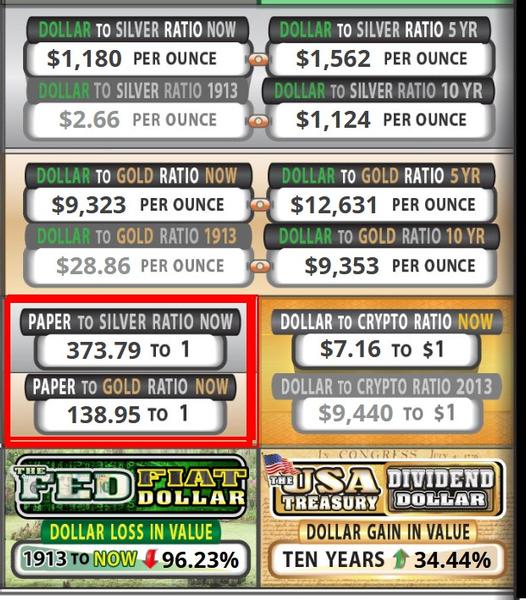
That info is readily available on the US Debt Clock which makes it handy at any point in time. I find it interesting that the dollar to gold ratio now is the same as the dollar to Bitcoin ratio was in 2013!
Interesting, thanks for link.
Could very well be white hats FF.
I watched “his” videos. I didn’t know it was AI.
I wondered why he kept repeating himself over and over, sort of like older versions of Grok did.
So this is the answer.
Listened to it all...
WH prepping us for NESARA/GESARA.
Thanks Karl!
I’m not sure if they are monetizing the X account or if there is a larger agenda.
I make my own decisions with my system, but I’m enjoying the vids
That’s The AG (Asian guy)!
yep ... my bullshit detector is pegged ...
A buddy just told me silver was trading at 72.83, but did not tell me where
he probably meant the silver futures on comex in NYC ...
Why are people buying gold when core inflation is 2.7%, well within historic levels? The answer is that China is taking its trade surplus dollars and buying gold rather than US treasuries, as in the past.
They plan to leverage their slave labor and steal the wages and profits from their own people to strategically offer an RMB backed by gold. This will allow the BRICS countries to avoid US sanctions and undermine the reserve currency status of the USD.
If you are investing in gold, you are betting that slave labor will allow China to destroy the US economy. It’s a reasonable bet they will succeed, but I’m still not buying what is essentially a rock priced by the “greater fool.”
Why are people buying gold when core inflation is 2.7%, well within historic levels? The answer is that China is taking its trade surplus dollars and buying gold rather than US treasuries, as in the past.
They plan to leverage their slave labor and steal the wages and profits from their own people to strategically offer an RMB backed by gold. This will allow the BRICS countries to avoid US sanctions and undermine the reserve currency status of the USD.
If you are investing in gold, you are betting that slave labor will allow China to destroy the US economy. It’s a reasonable bet they will succeed, but I’m still not buying what is essentially a rock priced by the “greater fool.”
You actually believe that core inflation is 2.7%, I would continue this higher than that and 2026 will see inflation come back with a vengeance.
ping
Disclaimer: Opinions posted on Free Republic are those of the individual posters and do not necessarily represent the opinion of Free Republic or its management. All materials posted herein are protected by copyright law and the exemption for fair use of copyrighted works.