I have been saying...

Posted on 12/28/2025 8:00:17 PM PST by Morgana
There was a time when PBS and Sesame Street were considered the most wholesome and educational content for children. However, over the years PBS has moved so far to the left that many conservative parents do not want their children watching anymore. Parents and lawmakers have called for defunding because they don’t want their tax dollars supporting left-wing political and social causes.
One of the original intents of Sesame Street was to present red, green, blue, and yellow monsters so that children could not relate to them on ethnic lines. Very quickly black and later Asian and Latino muppets were added, which was antithetical to the original “color blind” intent of the show. Eventually gay and trans characters were added.
The content consistently promotes identity politics over individual merit, diversity and inclusion as primary values rather than traditional American principles, and liberal social positions on sexuality, gender, and race. The activist framework teaches children to “speak up” and challenge traditional norms.
This directly conflicts with conservative values emphasizing traditional family structures, biological sex distinctions, parental rights and authority, a color-blind merit-based approach, religious freedom and conscience protection, and American founding principles.
Sesame Street posted Pride Month messages celebrating “LGBTQIA+ people,” with the “T” representing transgender. The show has featured same-sex parent families in episodes since 2017, including characters with “two daddies” or “two mommies.” Episode 5132 in 2021 introduced Dave and Frank, a married gay couple raising their daughter Mia.
The “ABC’s of Racial Literacy” initiative launched in 2021 introduced Black Muppets Wesley and Elijah Walker to teach children about “racial justice” and “systemic inequality.”
The problem with teaching young children these concepts is that the instruction presupposes differences in outcomes across ethnic groups are the result of injustice and inequality. Racial literacy is defined by Sesame Workshop as “the knowledge, skills, and awareness needed to talk thoughtfully about race and racism,” along with strategies to “counter or cope with racism” and an understanding of “the role racism plays in society.” This definition assumes racism plays a role in society and leaves no room for debate.
Of course, if debate were allowed, it would involve five-year-olds who have no other basis of knowledge on the subject, which is precisely why many critics argue that liberal agendas in PBS and Sesame Street programming amount to indoctrination rather than education.
Episode 3140, which aired in 1993, featured a racist phone call intended to portray “institutional racism.” One of the show’s human characters, Gina, received an anonymous, disturbing racist call after some evil person was triggered by seeing her and her Black friend playing in the park. The episode led to discussions with Telly, Baby Bear, and Savion about prejudice, unfairness, and how to respond to hateful messages.
While this may have happened to someone, somewhere, at some point, outrage over a Black and a white person being friends is not a normal occurrence that most people experience. The episode represents another example of how liberals take an exception, turn it into the rule, and then use it to justify training, classes, and lessons on how to guard against something that is statistically rare.
In 2021, Sesame Street introduced Ji-Young as the first Asian American Muppet, explicitly as part of a “racial justice initiative” to combat anti-Asian hate, a concept that later became codified during the Biden administration. The premise itself is something of a misnomer, as very few people actually hate Asians. Under official definitions, however, targeting someone because of their race qualifies as a hate crime. Asians are often targeted by muggers and criminals because they are perceived as easy targets.
Other PBS children’s programming has followed similar patterns. Arthur’s episode “Mr. Ratburn and the Special Someone” in 2019 featured gay marriage between a teacher and his partner Patrick. Work It Out Wombats! in 2023 featured lesbian couple Duffy and Leiko raising daughter Louisa. The Clifford the Big Red Dog reboot in 2019 included LGBTQ characters. Odd Squad featured a same-sex wedding episode. Postcards from Buster aired “Sugartime!” in 2005, showing children with lesbian mothers. PBS digital content included a “Let’s Learn” segment featuring drag queen Lil’ Miss Hot Mess reading “The Hips on the Drag Queen Go Swish, Swish, Swish.”
PBS news and documentary programming has addressed transgender issues directly. A 2015 FRONTLINE documentary, “Growing Up Trans,” explored transgender children receiving puberty blockers and hormones, featuring children as young as four to six who were transitioning. Covering these issues on a news program is fine, but the reporting was not critical, not balanced, and did not interview a single doctor or psychologist who opposes affirming a delusion.
The show’s description stated that it was “exploring the experiences of transgender children and their families as they navigate new medical options for gender transition at younger ages, covering the emotional struggles, choices, and the pioneering nature of these kids and parents.” The portrayal was openly pro–sex change for young children, even referring to the adults involved as “pioneers.”
PBS programming on abortion includes multiple FRONTLINE documentaries supporting abortion access, such as “The Abortion Divide,” which presented abortion as a healthcare choice. PBS NewsHour coverage includes regular segments supporting abortion “rights,” a framing that presupposes that women have the right to kill babies, and criticizing restrictions on abortion. Shows such as Kentucky Tonight have featured Planned Parenthood representatives advocating for abortion as “health-saving and life-affirming.”
Little to no content explicitly promotes traditional two-parent biological families as ideal, religious faith or Judeo-Christian values, American founding principles or patriotism, traditional gender roles, or marriage between a man and a woman.
Conservatives argue that taxpayer-funded programming should not promote contested moral positions that run contrary to the religious beliefs of many taxpayers. Specific concerns include the use of public funds to normalize same-sex relationships, teaching children about trans without parental consent, promoting notions of racism, violating the show’s color-blind intent, and airing Pride celebrations that conflict with traditional values and religious teachings.
There was never a time when I would have allowed my child to watch Sesame Street, I had turned against TV as a young teen and never wanted TV in my own home, and least of all PBS.
I thought they were already defunded in the big beautiful bill
The way Sesame Street went downhill, I’m surprised Bert and Ernie haven’t gotten married yet.
They should be at this point.
Ping pong 🏓🏓🏓
Maybe this is a little off topic. My mom died in 2014. I have always thought we only have one Mother because to go through that pain twice would kill you.
As Western Civilization degenerated into decadence, even such exemplary icons sank to the bottom.
Strong morality, integrity, and intelligence are necessary to resist the downward pull of the forces of decay when decadence infects a civilization. Some have it. Some do not.
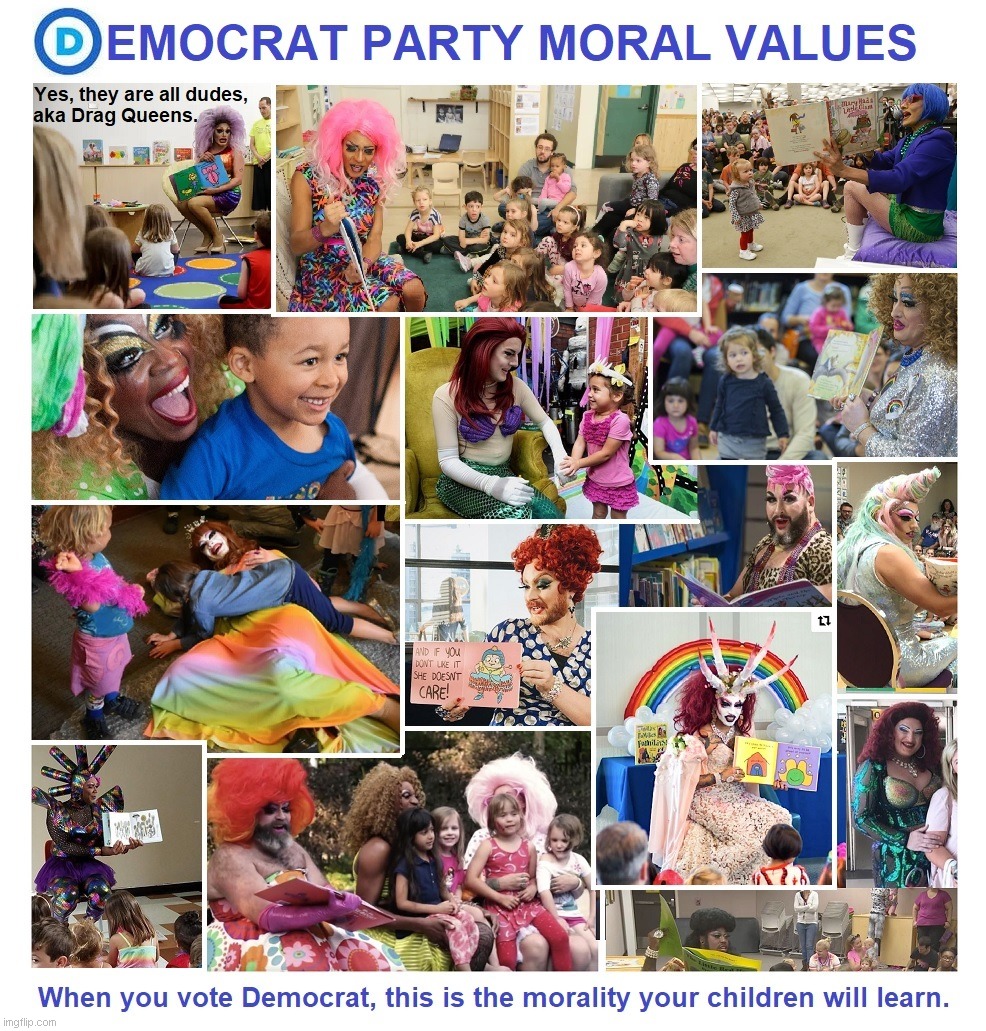
It’s sickening looking at those pictures. I am SO GLAD that my children are grown up.. what little of Sesame Street they were exposed to was back in the late 80s and early 90s, before it became so blatantly obvious.
Same.
No tv for my kids growing up in 80s and 90s and 00s
Never was an exmplary Icon
The fast camera cuts screwed with attention of children.
I’ve always thought that Sesame St was a little left leaning even from its inception. For one thing, they always depicted daily life from a gritty urban perspective. That means a lot of “diversity” in representing a lot of different cultures, races, and ethnicities. Not that these are leftist in themselves, but leftism definitely had an easy “in” with this environment.
In Jonathan Cahn’s compelling book, The Return of the Gods, he explores the fascinating resurgence of ancient deities and their influence on our modern world. Cahn dives deep into how the gods (demons) of old—Baal, Molech, and Ishtar—have returned in various forms, subtly yet profoundly impacting our lives today. Understanding the connection between these ancient entities and contemporary issues offers valuable insights into the spiritual dynamics at play in our society. For an interested student of the Bible, it is intriguing to understand that the same demonic influences that shaped the world during the lives of Elijah, Elisha, David, etc continue to impact our world today. The situations we face today are more spiritual than many would like to admit.
Baal, known as the god of fertility, weather, and storms, was a major deity in the ancient Near East. Worshiping Baal involved rituals and sacrifices to ensure agricultural prosperity and favorable weather. However, Baal’s influence went beyond just the physical realm. His followers believed that he could bring success and power, often leading them to engage in morally questionable practices to gain his favor.
Cahn suggests that the spirit of Baal is alive and well in today’s society, manifesting through our relentless pursuit of materialism and the abandonment of traditional moral values. The modern-day obsession with success, wealth, and power often leads us to forsake ethical principles, mirroring the ancient practices associated with Baal worship. Cahn further elaborates that Ishtar’s influence always preceded the destruction of a society, as her worship would pave the way for Baal. By promoting sexual immorality and the breakdown of societal norms, Ishtar’s spirit would weaken the moral fabric of a culture, making it more susceptible to Baal’s corrupting influence. This sequence often led to societal decay and eventual collapse, demonstrating a clear pattern throughout history.
Molech, another ancient deity, is infamously associated with child sacrifice. His worshipers believed that offering their children as sacrifices would bring prosperity and favor from the god. This brutal practice represented the ultimate form of devotion, reflecting a profound level of spiritual deception and moral corruption.
Cahn draws a stark parallel between Molech and contemporary issues like abortion and the exploitation of children. He argues that the spirit of Molech is evident in the disregard for the sanctity of life and the willingness to sacrifice innocent lives for personal or societal gain. This serves as a powerful reminder of the destructive consequences of abandoning godly principles and embracing practices that devalue human life.
Ishtar, the goddess of love, fertility, war, and sexuality, was a complex deity embodying both sensuality and conflict. Her worship often involved sexual rituals and acts of violence, reflecting her dual nature. Ishtar’s influence permeated various aspects of ancient society, from intimate relationships to warfare.
Cahn’s exploration of Ishtar extends to her associations with gender and sexual identity. Ishtar was known for her fluidity, often depicted as both male and female, and worship practices included androgynous priests and gender-bending rituals. This aspect of Ishtar’s worship can be seen as a precursor to contemporary discussions on gender fluidity and the LGBTQ+ movement.
According to Cahn’s book, Ishtar (Astoreth) intentionally sought to diminish the role of masculinity in men and glorify the power of women and nonbinary identities. Her worshippers dedicated a month-long series of parades and other rituals to worship Ishtar in the month we now know as June. In America, Father’s Day has been celebrated since June 19, 1910. Further, June has been recognized as Men’s Mental Health Month since 1994. Cahn argues that Ishtar aims to draw focus away from men and fathers in the family unit, using this time to parade her confusion of blurred gender identity on society in order to weaken and make it vulnerable.
Cahn posits that the spirit of Ishtar is alive in today’s culture, seen in the normalization of sexual immorality and the celebration of gender fluidity. He links the breakdown of traditional family structures, the rise of promiscuity, and the increasing visibility of LGBTQ+ identities to the ancient influence of Ishtar. The modern acceptance and promotion of diverse sexual orientations and gender identities can be seen as a reflection of Ishtar’s ancient characteristics.
When and by whom?
I have never considered EITHER of them wholesome or educational for anyone.
🛐🛐🙏🙏✝️✝️
I remember MAD magazine put out an article on how to spot a liberal. One sign: they watch PBS.
Were they ever “on the rails”?
Sesame Street belongs to Netflix, home of Perversion Programming classified as TV-Y7
Disclaimer: Opinions posted on Free Republic are those of the individual posters and do not necessarily represent the opinion of Free Republic or its management. All materials posted herein are protected by copyright law and the exemption for fair use of copyrighted works.