Posted on 11/15/2025 7:42:28 PM PST by DoodleBob
Soccer may be the world’s most popular sport, but in the U.S., its rise to mainstream status has been anything but smooth. Despite steady growth, the game still faces hurdles that have slowed its acceptance, from cultural disconnects and stiff competition from other major sports to challenges in youth development and infrastructure.
While more Americans are embracing the sport, breaking into the country’s deeply rooted sports culture remains an uphill battle. The question isn’t whether soccer can thrive in the U.S., but what it will take to finally cement its place among the nation’s biggest sports.
16. Resistance to Adopting International Soccer Culture
While American soccer fans have embraced some aspects of international soccer culture, there’s resistance to fully adopting foreign traditions. This includes a hesitancy to incorporate non-English chants and a wariness of hooliganism. The desire for an “authentic” soccer experience sometimes leads to misguided attempts at replicating negative aspects of European fan culture.
15. Oversaturation of Sports Market in America
The American sports landscape is already crowded with established leagues like the NFL, NBA, MLB, and NHL. Soccer faces stiff competition for viewership, sponsorships, and talent. With limited time and resources, many sports fans are reluctant to add another major sport to their regular viewing habits.
14. Time Zone Differences for International Matches
Major international soccer tournaments often occur at inconvenient times for American viewers due to time zone differences. The 2022 World Cup in Qatar, for instance, had matches kicking off as early as 5:00 AM EST, making it challenging for U.S. fans to watch live. This scheduling conflict reduces engagement and hinders the sport’s growth in America.
13. Difficulty in Developing Technical Skills
American youth soccer often focuses on repetitive cone drills rather than dynamic, game-like scenarios that emphasize decision-making. This approach hinders the development of crucial technical skills needed for high-level play. Shifting to more engaging training methods could significantly improve player development and competitiveness.
12. Lack of Soccer-Specific Infrastructure
Despite recent progress, America still lags behind in soccer-specific infrastructure. While MLS teams are building more dedicated stadiums, like NYCFC’s upcoming Etihad Park in Queens, the overall number remains limited compared to other sports. This shortage of proper facilities hinders player development and fan engagement, potentially slowing soccer’s growth in the US.
11. Stigma of Soccer Being a “Kids’ Sport”
Soccer in America often struggles to shed its image as primarily a youth activity. Many adults view it as a sport for children, not a serious professional endeavor. This perception limits soccer’s growth and appeal among older demographics, hindering its ability to compete with established American sports leagues.
10. Preference for High-Scoring, Action-Packed Games
Americans tend to favor sports with frequent scoring and constant action. NBA games average over 220 points, while NFL games typically see 40-50 points. Soccer’s low-scoring nature, often with 1-0 or 2-1 results, doesn’t align with this preference for high-octane entertainment that keeps viewers engaged throughout.
9. Absence of College Soccer Pipeline to Pros
Unlike other American sports, college soccer doesn’t serve as a significant pipeline to professional leagues. The NWSL’s recent elimination of the college draft further weakens this pathway, making it harder for young talent to transition to the pros. This lack of a clear developmental route discourages many aspiring players.
8. Limited Success of U.S. Men’s National Team
Despite recent improvements, the USMNT’s international performance remains inconsistent. In 2025, they’ve won two friendlies but face tough competition in the CONCACAF Nations League and Gold Cup. Their FIFA ranking of 16th reflects progress, but they still lag behind soccer powerhouses, dampening widespread enthusiasm.
7. Complex Rules and Officiating for New Fans
Soccer’s rules, particularly offside and advantage, can be confusing for newcomers. The sport’s continuous play and reliance on referee discretion often lead to controversial calls, frustrating American viewers accustomed to clear-cut rulings and video reviews in other sports. This complexity can deter casual fans from fully engaging with the game.
6. Insufficient Media Coverage and TV Deals
Despite recent progress, soccer still lacks comprehensive media coverage in the U.S. The 2025 MLS Media Day showcased efforts to increase visibility, including a new docuseries on Apple TV+. However, compared to other major sports, soccer’s media presence remains limited, hindering its growth and mainstream appeal.
5. Perception of Soccer as a “Foreign” Sport
Soccer is often viewed as a “foreign” sport in America, with over 60% of American sports enthusiasts showing no genuine interest. Despite its global popularity, soccer struggles to compete with established American sports like baseball, football, and basketball. This perception hinders its acceptance as a mainstream sport in the U.S.
4. Lack of Homegrown Soccer Superstars
While MLS has produced talented players, the U.S. lacks a true homegrown soccer superstar to captivate the nation. The most promising young talent, like Christian Pulisic, often leaves for European leagues early in their careers, hindering the development of local icons that could inspire widespread interest in the sport.
3. Scheduling Conflicts with Other Major Sports
Major League Soccer faces significant scheduling challenges, competing for viewers with established American sports leagues. The MLS season overlaps with the NFL, NBA, and MLB, making it difficult to attract consistent audiences. Additionally, international tournaments and breaks disrupt the MLS schedule, further complicating efforts to build a loyal fanbase.
2. Absence of Promotion and Relegation in MLS
Major League Soccer’s closed system lacks the excitement of promotion and relegation found in European leagues. Without the threat of demotion or the thrill of ascension, MLS teams have less incentive to improve, and lower-division clubs are denied pathways to the top. This structure limits competitiveness and fan engagement, hindering soccer’s growth in America.
1. Pay-to-Play Youth Soccer System
The pay-to-play model in American youth soccer creates a significant barrier to entry for many talented young players. With average annual costs of $1,188 per child, families unable to afford these fees are often excluded from high-level youth soccer programs. This system limits the talent pool and hinders the development of potentially elite players from diverse socioeconomic backgrounds.
I AM carrying more body fat than Kelce, but I’m not a professional athlete. Also, I’m a lot older than he is.
As for your challenge, Kei Kamala is 41, and is still active with FC Cincinnati. Lionel Messi is 38, and plays for Intermiami. Years ago, Robert Warzycha played for Columbus Crew as a 42 year old. It happens.
The only sports I’m interested in are those where I participate.
Watching is lame.
Costs less than going to a college football or NFL game, but the newer arenas have upped their game in that regard.
Girl here too. Socker is boring, hate football but have a wonder;ful time watching Rugby on tv. Apparently no rules. They can run backward or forward, steal the ball, shove people on the ground, etc. There are referees, but they just seem to watch, occasionally blow a whistle. Saw it at my daughter’s houuse and she thought it was terrifically funny too.
Of course the stands are full of cheering fans who seem to know what’s going on.
Good for you! I’m beyond my playing years. Gardening, yardwork, and walking are my big participation sports. Now I’m a cheerleader for those who play.
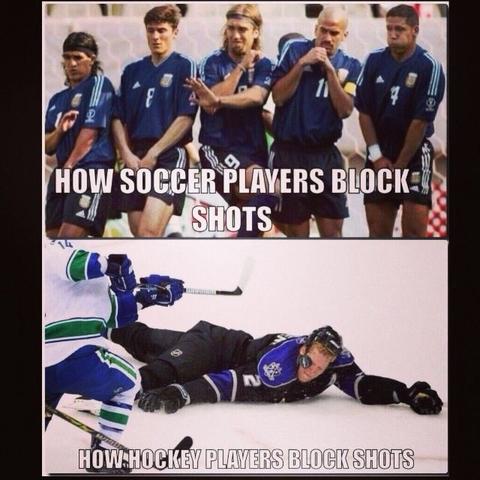
You realize those hockey players have lots of padding in sensitive places, don’t you?
My father played rugby when he was in Japan w the marines. Crazy
Rough
And my brother in law at fordham
That’s a sport
Rugy is the only one that I watch. No clue wtf they are doing, but LMAO watching them go everywhere, apparently no rules. Other sport I watch is golf. Tried to play so I know how hard it is. My vision sucks, so I literally cannot find the ball.
Rugby is quite the sport. I haven’t watched it much, but it is entertaining.
As far as 3rd world Eurowienie/Eurosexual sports go, cricket is more interesting than soccer.
In a total acceptance kind of way. It teaches players how to throw down their arms and run for their lives. American football can also get pretty faggy, playing with a t*rd shaped ball trying to get it into another man's end zone, but in a total humiliation kind of way. American football is really violent tribal warfare practice, a team sport reserved for the world's dominate super power. Like tribal warfare, total submissive emasculation of the losers in public is part of it. That is why leftists have always loved soccer, and despised American football. Although lately, leftists are increasingly drawn into the faggy parts of it, and have set out to ruin the sport from the inside.
Number 8 is a direct result of number 13. To my knowledge we have never had a true striker who is a threat to go around a defender or make a quick move with the ball to get space for himself and quickly get off a dangerous shot.
The article attributes #13 to how young players are trained in the US. I'm not so sure that's it.
JJ! 👍
American prefer ‘linear’ sports. Baseball and football are linear. You start at Point A and your objective is to get to Point B. So is rugby, and cricket, for what’s that worth. The route to the objective is more circuitous in basketball, hockey and soccer, none of which is American in its origins.
I know they are trying to have soccer academies here, but the American game is still lacking. We just can’t seem to get our act together.
Funniest one recently was an allergy drug with a warning to not take it if you're allergic to it.
The main problem soccer has it that the flaws that make it boring have not yet been improved by Americans - after all, we took cricket and made it into something worth playing and watching as baseball, and took rugby (not a bad game) and made it better as football (exploiting the forward pass helped a lot).
Major problems with soccer:
1). yellow card (means nothing) / red card (means everything) system - replace with a penalty box like hockey
2) silly restrictions on hand balls, that essentially require players to act as if they have no upper limbs - penalize any player catching a ball, but allow them to bat the ball with closed fits for both passing and shooting
3). the insane tie-breaking shoot-out system, which in most cases is just a guessing game between the goalie and the shooter - instead, do something like alternating short (2 minute) 3-on-3 (+ goalie) half-court periods, or else again something more like what they do in hockey.
Or keep it as it is, and wait for people to get excited about zero-to-zero draws decided when a goallie guesses left on a penalty shot that goes right in the tie-breaker..
Disclaimer: Opinions posted on Free Republic are those of the individual posters and do not necessarily represent the opinion of Free Republic or its management. All materials posted herein are protected by copyright law and the exemption for fair use of copyrighted works.