Posted on 03/19/2024 8:55:25 PM PDT by nickcarraway
Biotech company, Pluri, launches branch dedicated to cell-based coffee grown in labs to cut coffee production’s water usage by 98%.
In the ever-evolving landscape of biotechnology, Israeli company Pluri (formerly Pluristem) has ventured into a new realm – developing lab-cultivated coffee.
The impetus for venturing into the coffee sector stemmed from alarming projections indicating a potential 50 percent loss of arable land suitable for coffee-bean growing due to the adverse impacts of climate change.
Cultivated coffee is part of the company’s new PluriAgtech arm dedicated to innovative food technology.
The company’s trajectory in cellular agriculture traces back over two decades, primarily rooted in leveraging placenta cells for a myriad of health and therapeutic purposes.
However, as CEO and President Yaky Yanay points out, the realization dawned that the scope of Pluri’s potential transcended the confines of the pharmaceutical sector.
“Everything on this planet is built from cells. We are built from cells, our animals, our plants—everything is built from cells,” he said. “We understood that with the same technology and methods that we have, we can actually increase our proposition quite significantly.”
This fundamental understanding propelled Pluri to explore new avenues, culminating in strategic partnerships within the cultivated meat industry.
“We understood that cellular agriculture, as we propose, can be probably one of the most promising solutions for that problem,” Yanay notes.
Sustainable coffee production
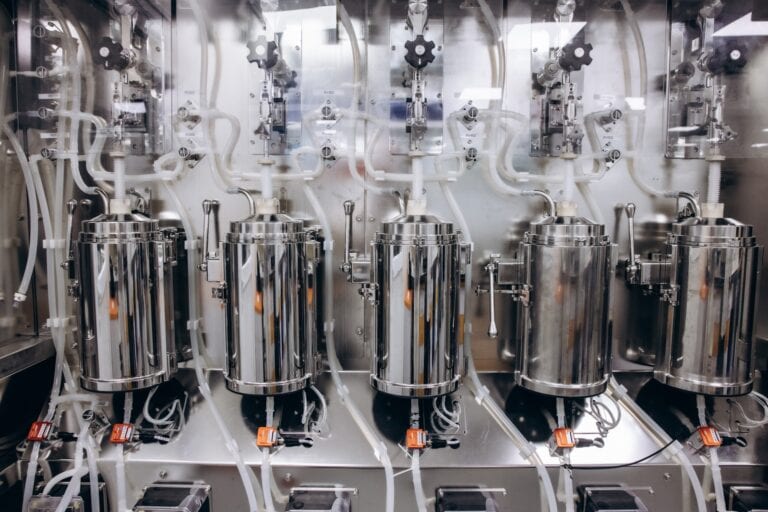
With a resolute focus on sustainability, Pluri’s innovative approach to coffee production involves harnessing bioreactor technology to cultivate coffee cells with minimal environmental impact.
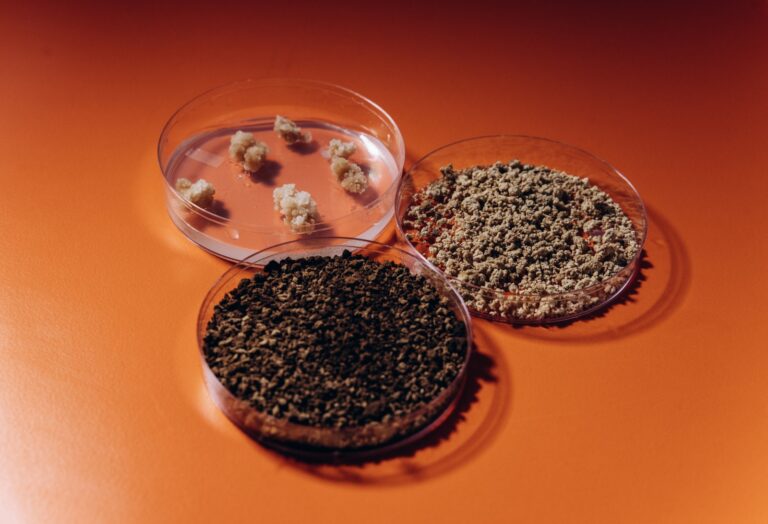
The growing process begins by extracting coffee cells from the plant’s beans and leaves. These cells are placed into bioreactors to grow what Michal Ogolnik, head of Pluri’s coffee vertical, refers to as coffee “slivers.”
“The bioreactor simulates real-world conditions. It gives the plant the biomass that it
needs, which is mainly water and glucose, and maintains the temperature and other things that it needs in order to grow,” she elaborates.
A significant leg-up on mother nature is that, whereas coffee plants only yield fruit a few times a year, bioreactors can yield coffee slivers all-year-round.
Once these slivers have been dried and roasted — in a way that is entirely distinct from the methods used for traditional coffee beans — the slivers can be ground and brewed into everyone’s favorite bean juice pick-me-up.
Pluri’s technology boasts remarkable water efficiency, requiring a mere 2% of the water typically consumed in traditional coffee farming — an essential feature in mitigating the escalating challenges posed by climate change.
Moreover, beginning from a cellular level enables the preservation and enjoyment of endangered coffee species.
“In the coffee industry, there are a lot of species that are vanishing because of the weather,” says Ogolnik. “We are able to keep them and maintain them.”
As well, Yanay points out that it presents the potential for flavor profiles that have been customized on a cellular level to meet evolving consumer preferences.
"It opens a new world that we can modify,” he says.
“We can offer new kinds of coffee that you’re not familiar with because we’re working on the cellular level. We can control the acidity levels, for example, in a way that would be impossible with today’s regular process of growing coffee.”
Far beyond java
Yanay envisions a future where cellular agriculture will address a myriad of agricultural needs.
“At the beginning of the year, we initiated our ag-tech vertical, which will be responsible for developing unique agricultural products from cells. We are very disciplined in our strategy, working with partners to identify and solve problems,” Yanay tells ISRAEL21c.
“Coffee has garnered significant interest from major players, but there are many more applications we hope to unveil over time. We cannot reveal everything now, but we see a new way of supporting crops, focusing on species and specific industries facing challenges like climate change and food security.”
Cellular agriculture allows countries without suitable climates for crops like coffee to explore new possibilities.
“We can use reactors to grow quite a lot of things: meat, fish, coffee and more,” Yanay adds. “It’s a brand new world, and if you want to grow your own food, that’s something to consider seriously.”
How is this bad?
Not even if I have to start growing it in my own greenhouse.
Besides growing coffee does not "use up" water. The water just recycles naturally.
Something you can not say for this process.
Why even bother with water? The grounds will taste much better without water.
What is it made out of?
>> How is this bad?
I’d have to try it to tell. I am no coffee snob, just a plain old Folger’s guy, but I drink lots of coffee and plenty of it!
This *might* answer the thorny question of how to be self sufficient in coffee when the stuff hits the fan.
will this count towards our 3-cup-per-year limit?
Ya, no real info in the “article”.
Who knows?
“How is this bad?”
they left out the step where they genetically modified the coffee bean cells to be immortal, namely, be able to replicate forever; that is, the coffee beans cells are genetically tweaked into a form of cancer ... so, hey, enjoy your lab-made cancer coffee!

To be self sufficient in coffee, have connections??
I seem to remember they tried proabition once.
Moonshine or Coffee?
I'll stay with My Coffee (Mike Lindell coffee). Best coffee out there. ☕
I know a guy whose beer comes from a lab. He whistles and gives a hand signal and the lab goes and gets it.
My Lab has never been trainable to that level of usefulness.
She won’t even drink beer/ale. [Good for her...]
They’re trying to take him out like they do all who stand with DT, aren’t they??
I like my whole bean Dunkin and my percolator.
Not much whole bean choices out there.
Curious. How do you get Lindell coffee, online? I would like to taste it.
Use to use the coffee maker, but I wanted the beans. Seem so much fresher.
“....adverse impacts of climate change.”
But what about the adverse impacts of racism? That must fit in somewhere, too?
And what about the adverse impacts on underserved communities. Must not forget that.
My coffee is dark roast from Columbia. I refuse to change.
Disclaimer: Opinions posted on Free Republic are those of the individual posters and do not necessarily represent the opinion of Free Republic or its management. All materials posted herein are protected by copyright law and the exemption for fair use of copyrighted works.