Skip to comments.
How dangerous are volcanoes in Germany?
YouTube ^
| June 8, 2022
| DW Documentary
Posted on 07/05/2022 7:42:05 AM PDT by SunkenCiv
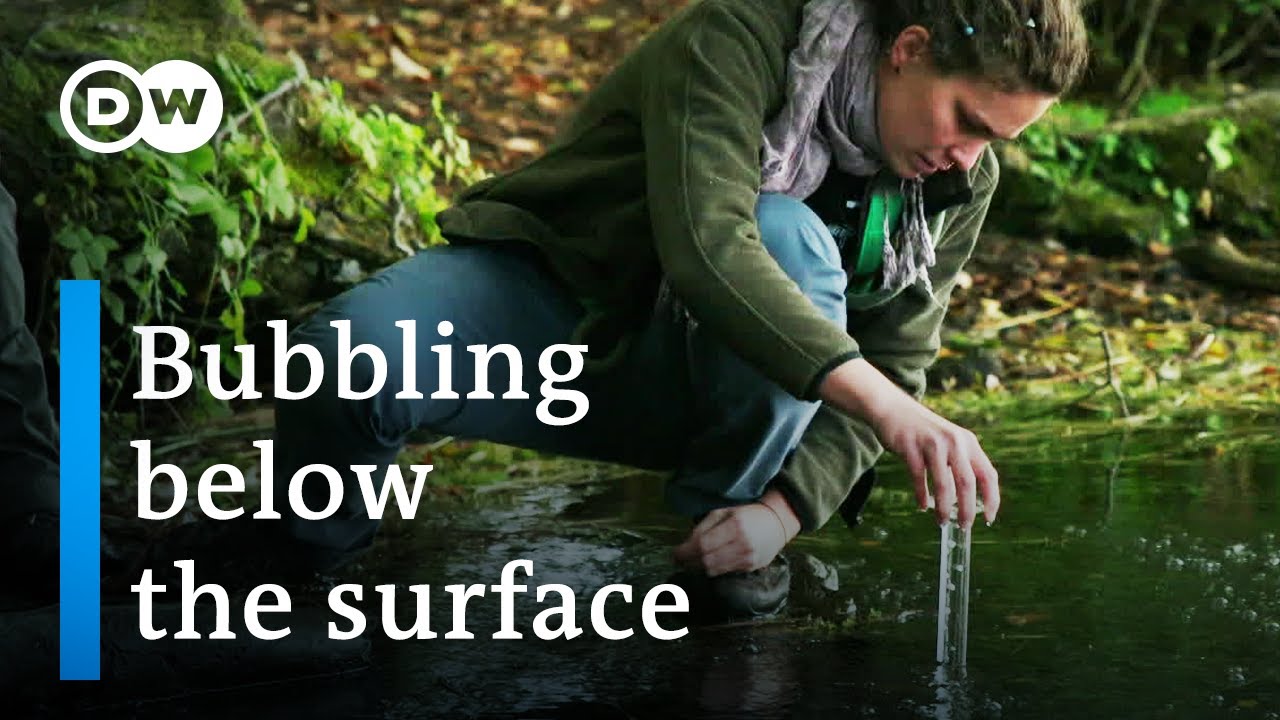
The Volcanic Eifel is a peaceful region in western Germany. For hundreds of thousands of years, volcanic forces raged here, before settling down. But could these natural forces reawaken?
Today's Volcanic Eifel was formed from cooled lava and volcanic ash. But deep below the surface, the earth is still bubbling. In fact, there are many indications that the rumbling underground is actually hot magma making its way to the Earth’s surface. How great is the danger of another eruption here in the Eifel, by far the youngest volcanic area in Central Europe?
On the shores of the region’s Laacher See, a special phenomenon is attracting the attention of scientists. Here, carbon dioxide gas bubbles rise. They come from a huge magma chamber at a depth of about 40 kilometers - the so-called "Eifel Plume". What do these bubbles tell us about the processes in the Earth's interior? Scientists are certain that the volcanoes will reawaken at some point. But when and where will it happen? To find out as precisely as possible, scientists are constantly listening - all the way down to the depths of the Earth.How dangerous are volcanoes in Germany? | DW Documentary | June 8, 2022
(Excerpt) Read more at youtube.com ...
TOPICS: Science
KEYWORDS: catastrophism; germany; volcano; volcanoes
Navigation: use the links below to view more comments.
first previous 1-20, 21-40, 41-55 next last
To: SunkenCiv
There are a lot of hot springs in Germany. These can be found in places that have the word “Bad” (bath) in front of their names, like Bad Kreuznach in the state of Rheinland-Pfalz.
21
posted on
07/05/2022 8:06:59 AM PDT
by
Rufii
To: Buttons12
Heh, could be.
https://volcano.si.edu/volcano.cfm?vn=210020
OTOH:
Why 1/3rd of France is Almost Empty
March 22, 2022
RealLifeLore
https://www.youtube.com/watch?v=hTgwv6Ic3fA
Transcript
0:29 which is why it’s so surprising that nearly a third of the country here is basically just an empty void...
1:01 ...if you take a map of france and you draw a diagonal line from the port city of l’ove on the english channel over to straight through the center of marseille on the mediterranean you’ll cut the country roughly in half and yet sixty percent of the french live to the east of this line while only forty percent live to the west of it a fact that can be seen...
1:23 ...but what’s far more interesting than that line are these lines in between them is a stretch of france nearly 1 000 kilometers long and about 400 kilometers wide on average nearly one-third of france’s entire territory that’s about the same size as belarus within this large zone the population density of people is only about 30 persons per square kilometer...
3:39 ...for most of history france was by far the most populous country on the european continent during the medieval period more than one out of every four people in europe were french and even by the 17th century it was still one out of every five during the french revolutionary and napoleonic wars france was still the most populous nation in europe and they had a higher population than even the entirety of russia and nearly double the population of the united kingdom. in fact at the time of napoleon france was the fourth most populous country in the entire world lagging only behind china india and japan...
4:42 during the revolutionary and napoleonic wars nearly 2 million french citizens were killed...
4:58 ...during the first world war france lost 10 [percent] of its entire active male population. in just four years 1.3 million french were killed during the war
5:32 was also rapidly urbanizing and the population was becoming highly centralized around just a few key population centers...
22
posted on
07/05/2022 8:07:31 AM PDT
by
SunkenCiv
(Imagine an imaginary menagerie manager imagining managing an imaginary menagerie.)
To: COBOL2Java
I live not too far from Middletown, CT, which is the epicenter of the steamed cheeseburger revolution here in Connecticut. The originator was a place called "Jack's Lunch" but has since closed but many other restaurants in the area have kept up the tradition.
I've never actually had one but there is much talk about steamed cheeseburgers in these parts and one of these days, I'm going to take a trip up that area and try one out.
They do have a kit available that you can order by mail so you can cook these at home but I'm thinking I would like my first steamed cheeseburger to be professionally made.

23
posted on
07/05/2022 8:07:53 AM PDT
by
SamAdams76
(3,425,994 active users on Truth Social)
To: SunkenCiv
Damm that Moon and its tides! We need Moon Control! Lets send the moonbats!!

24
posted on
07/05/2022 8:08:23 AM PDT
by
Seruzawa
("The Political left is the Garden of Eden of incompetence" - Marx the Smarter (Groucho))
To: Red Badger; Monkey Face; crusty old prospector
We’re all living on top of extinct volcanoes and their lava floes, apart from those of us living next to, say, Vesuvius, Etna, or the Cascade range. :^) That said, volcanologists are often wrong.
25
posted on
07/05/2022 8:10:17 AM PDT
by
SunkenCiv
(Imagine an imaginary menagerie manager imagining managing an imaginary menagerie.)
To: Rufii
Sounds great, I could use a soak.
26
posted on
07/05/2022 8:11:06 AM PDT
by
SunkenCiv
(Imagine an imaginary menagerie manager imagining managing an imaginary menagerie.)
To: Seruzawa
27
posted on
07/05/2022 8:12:28 AM PDT
by
SunkenCiv
(Imagine an imaginary menagerie manager imagining managing an imaginary menagerie.)
To: SunkenCiv
They make a lot of statements that are only taken seriously because all context is removed or at least hidden in lower paragraphs. Our lifetime is not really at question here. And neither is the life time of the next 10 generations. Volcanoes and earthquakes will happen. They will appear more often near where they have occurred in the past. But sometimes they will pop up where they did not ever exist before. We can only watch. Most often, we get plenty of warning. These scientists also get plenty of money, especially if they scare the right people.
28
posted on
07/05/2022 8:13:19 AM PDT
by
poinq
To: SunkenCiv
There’s a churning, bubbling hot mess cauldron of disaster beneath and within Germany - but it isn’t volcanoes.....
29
posted on
07/05/2022 8:14:56 AM PDT
by
Gaffer
(EA)
To: SunkenCiv
Same schools as the Climatologists go to......................
30
posted on
07/05/2022 8:16:01 AM PDT
by
Red Badger
(Homeless veterans camp in the streets while illegal aliens are put up in hotels.....................)
To: Rebelbase
Let’s not make a mountain out of a Mole Hill....................
31
posted on
07/05/2022 8:22:09 AM PDT
by
Red Badger
(Homeless veterans camp in the streets while illegal aliens are put up in hotels.....................)
To: SunkenCiv
To: Red Badger
THERE IS NO SUCH THING AS AN EXTINCT VOLCANO
—
That’s because of the well known fact that the Earth’s crust does not move and the volcanic plumes stay stationary according to unnamed sources in Rio Linda.
33
posted on
07/05/2022 8:24:48 AM PDT
by
PIF
(They came for me and mine ... now its your turn)
To: SunkenCiv
The following volcanoes belong to the Eifel, sorted by height in metres (m) above sea level (Normalhöhennull, NHN)[1]:
Ernstberg (also: Erresberg), 699.9 m (2,300 ft), county of Vulkaneifel – west
Scharteberg, 691.4 m (2,270 ft), county of Vulkaneifel; with the Eifel Transmitter (SWR) – west
Prümscheid, 681 m (2,230 ft), county of Vulkaneifel – not volcanic (eponymous quartzite ridge; other summits being the Scharteberg and Dietzenley)
Hochkelberg, 674.9 m (2,210 ft), county of Vulkaneifel; with a transmission mast on its south summit – Tertiary
Nerother Kopf, 651.7 m (2,140 ft), county of Vulkaneifel; with the castle ruins of the Freudenkoppe – west
Dietzenley, 617.6 m (2,030 ft), county of Vulkaneifel; with a wooden observation tower – west
Arensberg, approximately 590 m (1,940 ft), county of Vulkaneifel – Tertiary
Hochsimmer, 587.9 m (1,930 ft), county of Mayen-Koblenz – east
Gänsehals, 573.3 m (1,880 ft), county of Mayen-Koblenz – east
Engelner Kopf, 575.1 m (1,890 ft), county of Ahrweiler (near Kempenich-Engeln) – east
Hochstein, 563 m (1,850 ft), county of Mayen-Koblenz – east
Steineberger Ley, 557.8 m (1,830 ft), county of Vulkaneifel; with a Volcano Information Platform (observation tower) – Tertiary
Rockeskyller Kopf, 554.6 m (1,820 ft), county of Vulkaneifel – west
Hoher List, 549.1 m (1,800 ft), county of Vulkaneifel; with the Hoher List Observatory – west
Wartgesberg, approximately 475 m (1,560 ft), county of Vulkaneifel (near Strohn) – west
Veitskopf, 428.1 m (1,400 ft), county of Ahrweiler; near Laacher See; with an observation tower, the Lydia Tower – east
Ettringer Bellberg, 427.5 m (1,400 ft), county of Mayen-Koblenz (south of Ettringen) – east
Karmelenberg, 372.5 m (1,220 ft), county of Mayen-Koblenz – east
Mayener Bellberg, 363.2 m (1,190 ft), county of Mayen-Koblenz (north of Mayen) – east
Korretsberg, 295 m (970 ft), county of Mayen-Koblenz (near Kruft) – east
[1] GeoViewer of the Federal Office of Geoscience and Resources
http://www.infogeo.de/home/kartenserver?lang=1
To: Wally_Kalbacken
You’d think that an Appalachian volcano would be smushed and folded as to be unrecognizable but there are some columnar basalt structure still visible, mainly as small pieces of float on the ground.
35
posted on
07/05/2022 8:30:58 AM PDT
by
Rebelbase
(Crush, smash and obliterate the Liberal New World Order)
To: Red Badger
36
posted on
07/05/2022 8:33:04 AM PDT
by
Rebelbase
(Crush, smash and obliterate the Liberal New World Order)
To: Rebelbase
37
posted on
07/05/2022 8:36:41 AM PDT
by
musicman
(The future is just a collection of successive nows.)
To: Rebelbase
38
posted on
07/05/2022 8:36:48 AM PDT
by
Red Badger
(Homeless veterans camp in the streets while illegal aliens are put up in hotels.....................)
To: Red Badger
39
posted on
07/05/2022 8:37:32 AM PDT
by
Seruzawa
("The Political left is the Garden of Eden of incompetence" - Marx the Smarter (Groucho))
To: tired&retired
40
posted on
07/05/2022 8:41:24 AM PDT
by
SunkenCiv
(Imagine an imaginary menagerie manager imagining managing an imaginary menagerie.)
Navigation: use the links below to view more comments.
first previous 1-20, 21-40, 41-55 next last
Disclaimer:
Opinions posted on Free Republic are those of the individual
posters and do not necessarily represent the opinion of Free Republic or its
management. All materials posted herein are protected by copyright law and the
exemption for fair use of copyrighted works.
FreeRepublic.com is powered by software copyright 2000-2008 John Robinson