Posted on 05/09/2022 10:32:01 AM PDT by Red Badger
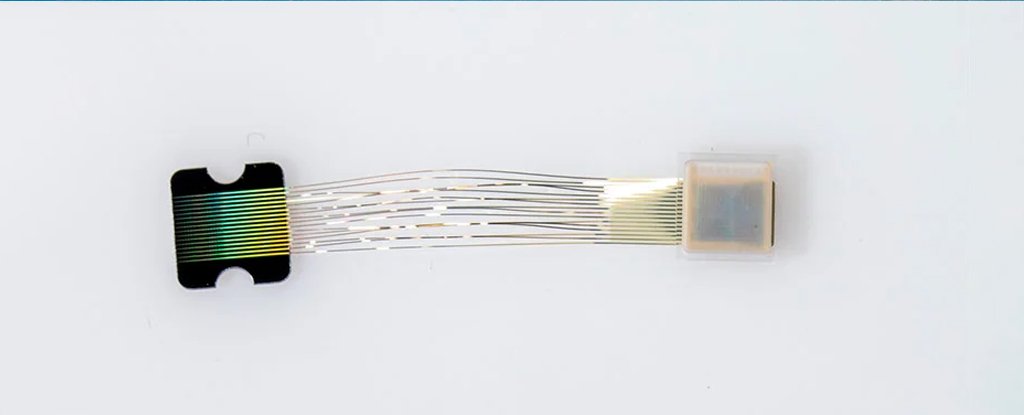
Neuralink prototype device from 2019. (Neuralink)
The human brain is said to be the most complex biological structure ever to have existed. And while science doesn't fully understand the brain yet, researchers in the expanding field of neuroscience have been making progress.
Neuroscientists have made substantial inroads towards mapping the complex functions of the brain's 85 billion or so neurons and the 100 trillion connections between them. (To put this astronomical number into perspective, there are upwards of 400 billion stars in the Milky Way galaxy.)
Enter Neuralink, a Silicon Valley start-up backed by Elon Musk that has developed a neuroprosthetic device known as a brain-computer interface. Among other things, Musk claims this chip could cure tinnitus, the neurological condition that causes ringing in your ears, within five years. But is this possible?
Elon: Neuralink will definitely cure tinnitus. Future devices will include 10,000-100,000+ electrodes https://t.co/jnIife7GT6
— Neura Pod (Neuralink Updates) (@NeuraPod) April 24, 2022 What is Neuralink? The coin-sized Neuralink device, called a Link, is implanted flush with the skull by a precision surgical robot. The robot connects a thousand miniature threads from the Link to certain neurons. Each thread is a quarter the diameter of a human hair.
The device connects to an external computer by Bluetooth for continuous communication back and forth.
In future, Neuralink prostheses might help people with various kinds of neurological disorders where there is a disconnection or malfunction between the brain and the nerves that serve the body. That includes people with paraplegia, quadriplegia, Parkinson's disease, and epilepsy.
Since its establishment in 2016, Neuralink has been recruiting top-class neuroscientists from academia and the broader research community to develop the technology to treat these conditions.
Neuralink's monkey can play Pong with his mind In April 2021, the company released a remarkable proof-of-concept video. It showed a nine-year-old macaque monkey called Pager successfully playing a game of Pong with his mind, by having an implanted Neuralink device connected to a computer running the game.
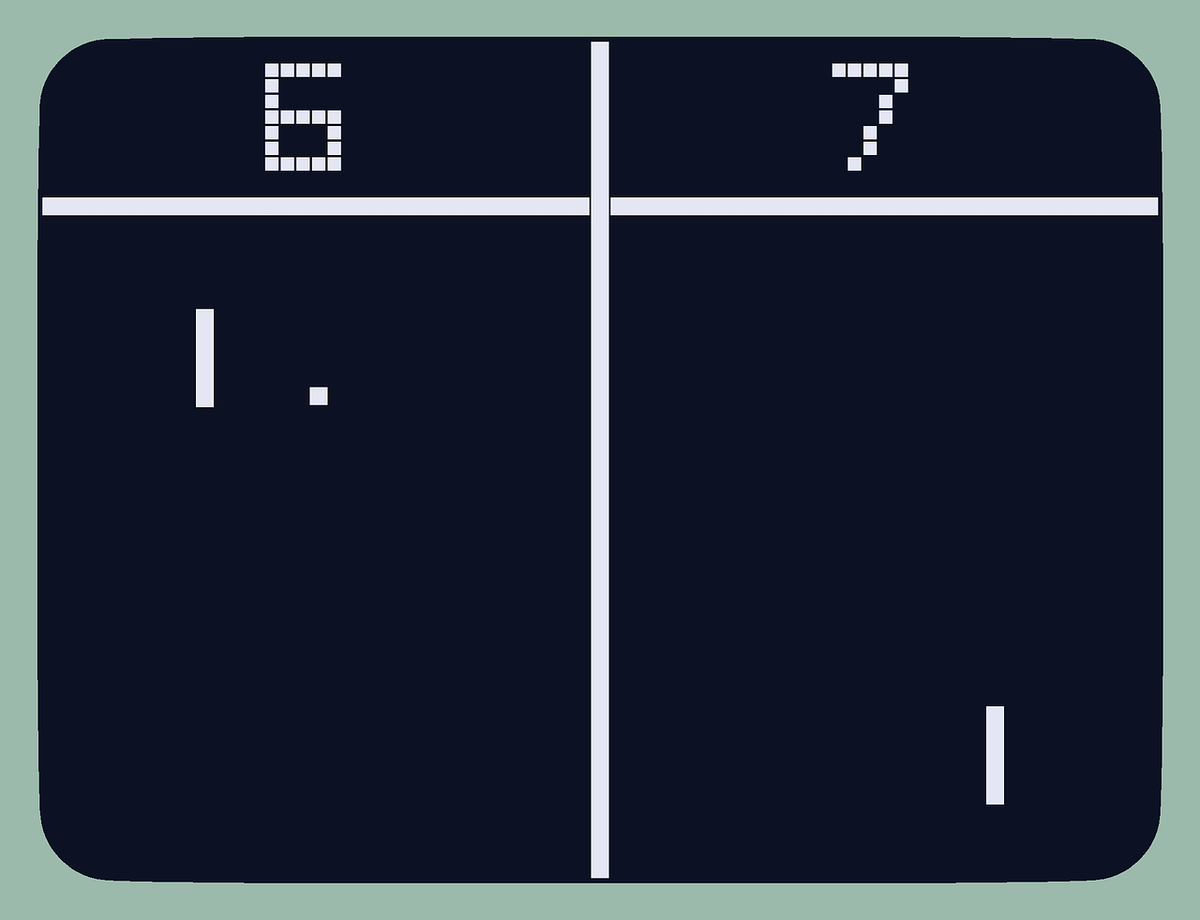
Pager the monkey played the computer game Pong with his mind. (Pixabay.com)
Pager was shown how to play Pong using a joystick. When he made a correct move, he'd receive a sip of banana smoothie.
As he played, the Neuralink implant recorded the patterns of electrical activity in his brain. This identified which neurons controlled which movements.
When the joystick was disconnected, Pager was able to play the game and win using only his mind.
Human trials to further develop the Neuralink prototype are expected to commence towards the end of 2022, contingent on United States Food and Drug Administration (FDA) approval.
Neuralink's monkey can play Pong with its mind. Imagine what humans could do with the same technology https://t.co/6C6EJU3H5x via @ConversationEDU
— David Tuffley (@DavidTuffley) April 14, 2021 Musk's tinnitus claims Elon Musk has claimed the Neuralink device could cure tinnitus by 2027.
Tinnitus is a neurological condition that manifests as a ringing or buzzing in the ears in the absence of an external source.
Tinnitus is a common problem, caused when the nerve that connects the inner ear with the brain, known as the vestibulocochlear nerve, is damaged due to prolonged loud noise, injury, or deficiencies in blood supply.
A cure for tinnitus has proven elusive. Treatment currently centers on masking the sound or learning to ignore it.
At present, the Neuralink prosthesis connects to the cerebral cortex, the surface layer of the brain. This is where the device can remedy damage to the brain's ability to process motor sensory input or output.
Are Musk's claims credible? These claims might appear grandiose. Yet the underlying science is not controversial.
Neural implants have been helping people since the early 1960s when the first cochlear implant was placed in a person with impaired hearing. There has been much progress in the 60 years since then.
Neuroscientists are broadly optimistic the device has potential to treat tinnitus. It may also be useful in treating obsessive compulsive disorder, repairing brain injuries, and treating conditions such as autism or degenerative diseases of the nervous system using deep brain stimulation.
As Paul Nuyujukian, director of the Brain Interfacing Laboratory at Stanford University, observes:
We are on the cusp of a complete paradigm shift. This type of technology has the potential to transform our treatments. Not just for stroke, paralysis, and motor degenerative disease, but also for pretty much every other type of brain disease.
What do we need to be cautious of? The FDA categorizes Neuralink as a class III medical device, the riskiest category. Before human trials start, Neuralink must successfully clear the rigorous FDA regulatory controls.
To be approved, the company must provide exhaustive clinical trial data from non-human test subjects (such as Pager the monkey) to conservatively justify moving to the next phase. Some monkeys have died during Neuralink's tests, and critics have raised animal welfare concerns.
The approvals process for human testing could take some time.
The regulators will be looking for unintended negative consequences of the device, such as depression. Also of interest will be how practical it is to remove or repair a device should it malfunction, and how to manage the risk of brain injury or infection.
Once FDA-approved, Neuralink will enlist human volunteers and the next round of trials will proceed.
How long it will be until the device is commercially available and how much it will cost is anyone's guess. It could be years and with a price tag that puts it out of reach for all but the wealthy.
So it's wise to not hold out false hope for an affordable implant in the short term. David Tuffley, Senior Lecturer in Applied Ethics & CyberSecurity, Griffith University.

CAN YOU HEAR ME NOW?????......................
RING!!!!....................
I eagerly await any successful treatment or cure of tinnitus.
Turn that damn thing down.
“Neuroscientists have made substantial inroads towards mapping the complex functions of the brain’s 85 billion or so neurons and the 100 trillion connections between them.”
I’ve conjectured that, if you insisted on analogizing a human brain to a digital computer, it would be operating with digital “words” each consisting of a few hundred “bits”, where a bit could take on up to 85 billion different values.
Not to say that my conjectures amount to much. Well, sometimes they do.
I’m very cautious about the idea of an electromagnetic network literally inside the brain. That’s much more intimate coupling to brain tissue than a cell phone held to the ear, which itself is a prime suspect in many brain cancers.
Field strength is the inverse square of distance, but if there is literally no distance...
If a chip in my head would cure tinnitus, I’m ready.
I haven’t given up on hearing loss treatments either, there’s always research underway.
If there was a cure for tinnitus the Veterans Administration would be using it as tinnitus is the largest disability of Veterans. If anything worked I would use it.
It's okay, Neurolink will solve that too. You'll be the perfectly optimized level of excited.

I noticed that my own intermittent tinnitus could be reliably reproduced by taking ibuprofen (Motrin) at night to help me sleep. So, I stopped taking ibuprophen. The tinnitus went away. But maybe that's just me.
William Shatner is a long time sufferer of Tinnitus.
Most definitely, Reno...I rec’d a military-grade dose of it in 2012 and 10 years later it still a royal pain. My VA-supplied Neuromonics device (and Valium) often come to the rescue but when they don’t—it’s nap time nearly all day.
I am hoping Elon Musk will restore my hearing. Wow! That would be wonderful.
If I drink enough Tequila I don’t notice it.
All NSAID meds agrivate tinitus to one degree or another.
I was hoping the next generation of hearing aids would have adjustable/tuneable active noise generation to try and mask the invading noises. I have everything from M-1 cannon fire and Ma-deuce to screaming hydraulic pumps and FT-4A turbine exhaust going in my head, sometimes all of them at the same time. This thing should retrofit over the MK-Ultra chip and assume all of its functionality as well.

This was Elon's prototype. He named it Lor.

"In April 2017, Neuralink announced that it was aiming to make devices to treat serious brain diseases in the short-term, with the eventual goal of human enhancement, sometimes called transhumanism.[14][6][15] Musk had said his interest in the idea partly stemmed from the science fiction concept of "neural lace" in the fictional universe in The Culture, a series of 10 novels by Iain M. Banks.[15][16] Musk defined the neural lace as a "digital layer above the cortex" that would not necessarily imply extensive surgical insertion but ideally an implant through a vein or artery.[17] He said the long-term goal is to achieve "symbiosis with artificial intelligence",[18] which he perceives as an existential threat to humanity if it goes unchecked.[18][19] He believes the device will be "something analogous to a video game, like a saved game situation, where you are able to resume and upload your last state" and "address brain injuries or spinal injuries and make up for whatever lost capacity somebody has with a chip."[20] " I see the benefit to assisting people with brain injuries, but the talking with AI is a little creepy. (And yet I still like him!)
Disclaimer: Opinions posted on Free Republic are those of the individual posters and do not necessarily represent the opinion of Free Republic or its management. All materials posted herein are protected by copyright law and the exemption for fair use of copyrighted works.