Posted on 03/29/2022 11:10:04 AM PDT by Red Badger
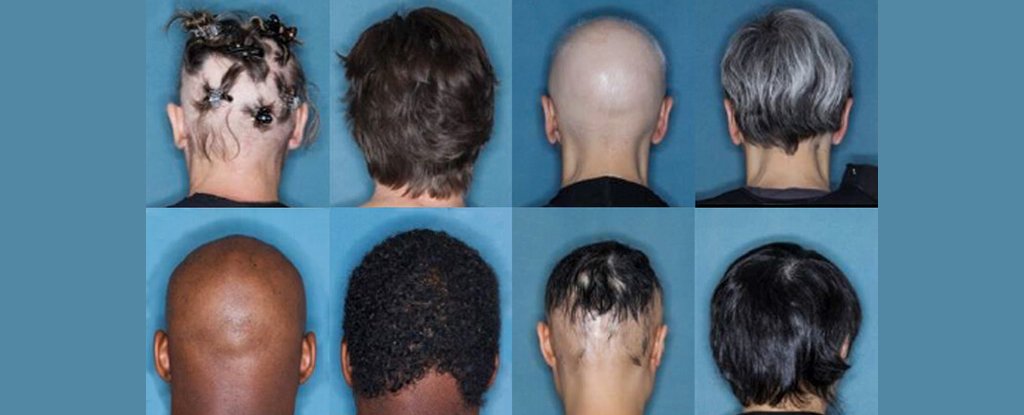
Some of the before-and-after pictures from the trial. (Yale)
Rheumatoid arthritis and a severe form of hair loss called alopecia areata might not seem like they have much in common. One causes joint pain and swelling, while the other leads to dramatic, patchy loss of hair.
But in both cases, the immune system has decided that the body's own cells are a threat – in alopecia, this leads to the immune system attacking the hair follicles, while in arthritis, it's attacking tissues in the joints.
Excitingly, however, a new study of a phase three clinical trial has shown that the treatments for these two conditions could also be similar, with an arthritis drug called baricitinib effectively treating alopecia areata in one-third of patients.
This isn't a silver bullet for those with alopecia areata, but it is an exciting medical development that will hopefully soon be available for patients as a treatment option.
"Alopecia areata is a crazy journey, marked by chaos, confusion, and profound sadness for many who suffer from it," says Yale dermatology researcher Brett King.
"These large, controlled trials tell us that we can alleviate some of the suffering from this awful disease."
The reason this works is because of a protein called Janus kinase or JAKs. These enzymes are part of a signaling pathway called JAK-STAT, which is involved in a lot of areas, including the immune system.
JAK-inhibitors like baricitinib are able to tone down this immune response in some patients, allowing the hair follicles to begin growing back.
The trials were double-blinded, randomized, placebo-controlled trials, making them the gold standard for analyzing how baricitinib works for those with severe alopecia.
The researchers split 1,200 patients into three groups. Participants were either given a placebo, 2 milligrams of baricitinib, or 4 milligrams of baricitinib for 36 weeks. Those that got given 4 milligrams of baricitinib had the most dramatic results, with over one-third percent of those patients experiencing significant hair growth.
The trial used something called a Severity of Alopecia Tool (SALT) to be able to evaluate the drug's effectiveness. The score goes from 0 (no hair loss) to 100 (complete scalp hair loss).
At the start of the trial, all participants had a SALT score of over 50, and by the end of the trial, around 35 percent of the patients on 4 milligrams of baricitinib had a score of 20 or less – an exciting result.
Around 20 percent of patients on 2 milligrams of baricitinib also ended up with a score of 20 or less.
"The primary outcome was a SALT score of 20 or less at week 36. A SALT score of 20 or less has been identified as a meaningful treatment outcome for patients with severe alopecia areata," the team writes in their study.
"Most patients in whom the primary outcome was met had SALT scores of 10 or less at week 36."
Unfortunately, this was not free of side effects for all patients, with the researchers reporting a range of symptoms in the test groups compared to the controls, including worse acne, upper respiratory tract infections, headaches, UTIs, and elevated cholesterol levels.
In addition, due to the drug's capability to disrupt the immune system, it can also lower the immune system's capabilities to defend the body from actual threats, with increased infections previously having been seen in those using the drug for arthritis.
With that in mind, though, very few participants in the new trial dropped out due to side effects, suggesting that they were tolerable overall.
More research is currently ongoing to confirm the safety and efficacy over the long term, but this is an exciting result.
The funder for this research was Eli Lilly and Company, a pharmaceutical company that manufactures baricitinib under the brand name Olumiant, currently prescribed for treating rheumatoid arthritis.
With the phase three results from this trial now finalized, and the results looking promising, we could soon be seeing this drug remarketed to treat severe hair loss as well – hopefully providing relief for many patients.
The research was published in The New England Journal of Medicine.
G.I. Jane would agree.
My brother in law has suffered with alopecia since he was in his young 20’s. Everyone has grown used to him without hair for roughly 40 years. If he suddenly started growing it again, I don’t think any of us would know how to handle it. We would be thrilled for him, of course, but it would take some getting used to.
I have been balding since my early 30’s and now am 67.
I swore I’d never go bald, but apparently my follicles had other ideas..............
Wasn’t Rogaine supposed to be effective for this?
It is in a minor way...................
Alopecia is coming among black women because they destroy their hair with chemical treatments and tight braids.
Makes sense. Rheumatoid arthritis and alopecia are both (usually) autoimmune conditions. The clot shot has been shown to do severe damage to the innate immune system, so expect to hear of an (unexplained!) increase in problems involving the immune system. There’s already anecdotal evidence of cancers thought to be under control or in remission roaring back to life. The next few years are gonna be wild.
I wondered about that.
Note to Chris Rock:
Alopecia is no joke.
No, Rogaine and Propecia are good for Androgenetic Alopecia (Male Pattern Baldness), this is for Alopecia Areata which is hair loss caused by autoimmune problems.
Disclaimer: Opinions posted on Free Republic are those of the individual posters and do not necessarily represent the opinion of Free Republic or its management. All materials posted herein are protected by copyright law and the exemption for fair use of copyrighted works.