Posted on 11/17/2021 12:19:21 PM PST by Red Badger
Three years ago, a family in Boston was thrown into chaos during the small hours of the morning. A man, who moments ago had been sleeping soundly next to his wife, was on the floor convulsing, and nobody knew why.
He was confused, uttering nonsensical words and tried to resist being taken by ambulance to Massachusetts General Hospital. There, through a painstaking diagnostic process, doctors discovered an unwelcome brain guest.
On examination, the unfortunate man's heartbeat and breathing were slightly elevated, but toxicology and chest X-rays showed no abnormalities. There was no physical evidence to suggest an underlying chronic disease, no history of illness or unusual behavior in the lead up to the event, nor any known family history of neurological problems.
"The patient also had blood in his mouth, presumably from biting his tongue," writes physician Andrew Cole in a newly published case report.
The 38-year-old man was treated with lorazepam for the seizures, but it took yet more work to find out what had caused them in the first place.
A number of conditions can lead to seizures, or symptoms that look like them. Anything that disrupts blood flow to the brain can cause them, so checking out the entire circulatory system is important. Tests revealed the man's liver, which regulates the chemicals in our bloodstream, and kidneys, which remove waste from the blood and regulate blood pressure, were both functioning properly.
Momentary loss of blood to parts of the brain (ischemic attacks), drugs, migraines, and psychiatric events can also produce seizure-like symptoms, but the toxicology tests and the fact the man had been in perfect health previously, ruled these out.
"Obtaining the clinical history is key," explains Cole. "The most powerful tool in the evaluation of a possible seizure is additional information."
The patient's history did provide a clue. He had migrated from a rural area of Guatemala 20 years ago.
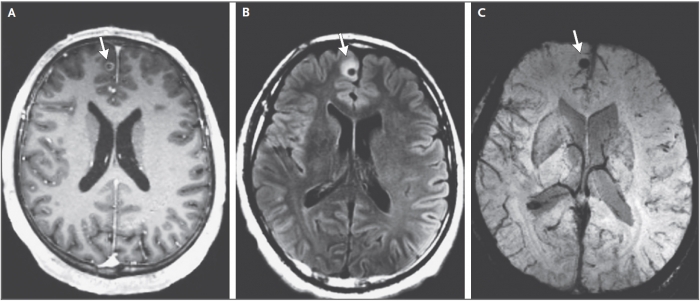
MRI scans focusing on one of the three brain lesions (arrow). (Cole et al, NEJM, 2021)
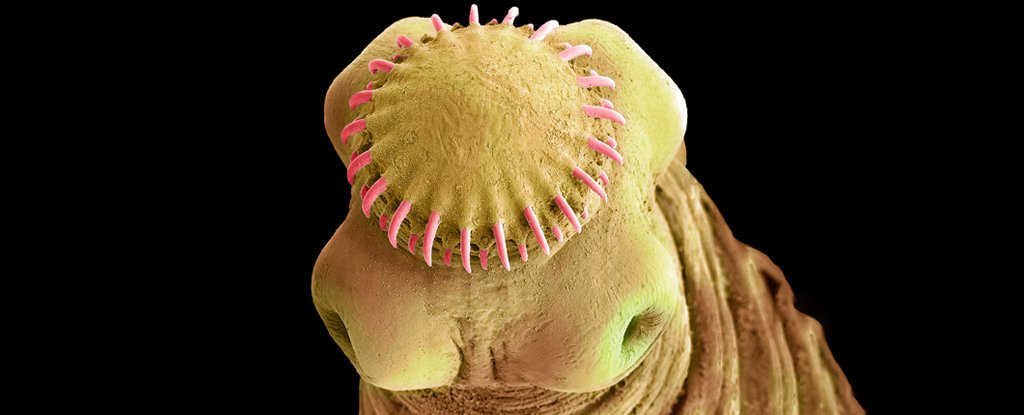
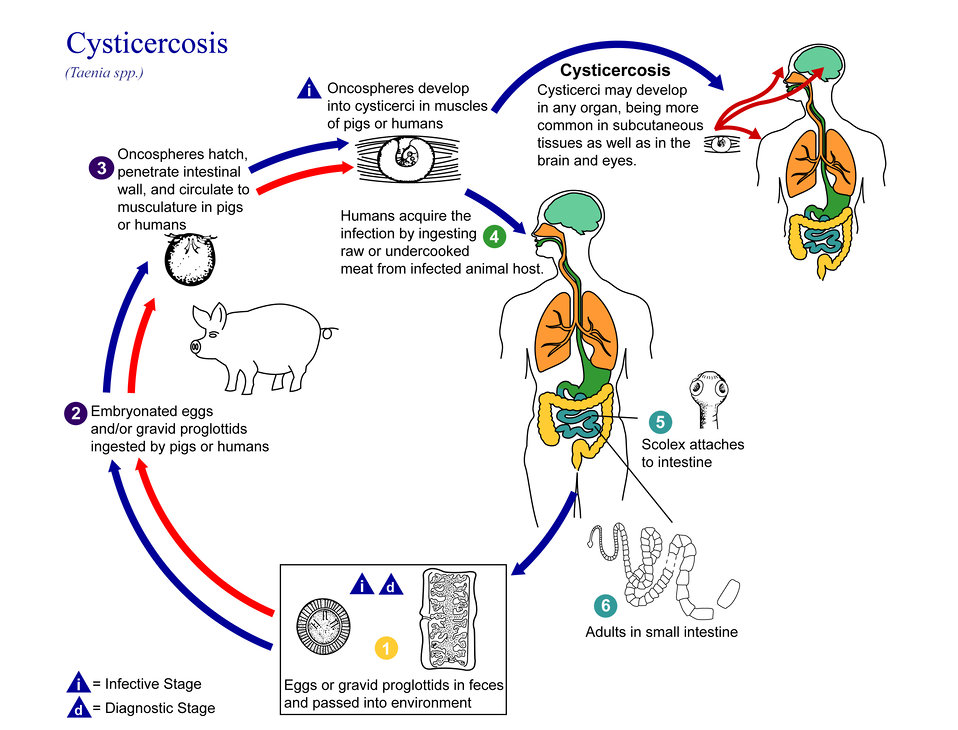
Brain scans revealed three calcified lesions. Given their presentation and the patient's history, the doctors concluded they were cysts belonging to the parasitic pork tapeworm (Taenia solium). These white, ribbon-like worms rely on human hosts to reach the adult phase of their lifecycle, where they latch onto the small intestine with dozens of little hooks
Here, the flatworms feast on surrounding nutrients and can grow up to a shocking eight meters long. This is the stage they're able to sexually reproduce if they get lucky – otherwise they'll reproduce asexually. Their eggs hitch a ride on our feces out to the rest of the world. They can then survive in the environment for up to two months as eggs, in the hope of being eaten by another animal.
Pigs are the most common intermediate host, but sometimes other humans or even the originally infected human eat the tapeworm eggs, too. They hatch in the intestines of their devourer and the resulting larva bore their way into the bloodstream, preferably to nest in tasty pig muscles that can then transport them back to humans who've eaten undercooked meat.
However, the resulting cysts the larva form can develop in any organ, and it is these that cause the most severe problems – especially if they establish themselves in the brain.
(Alexander J. da Silva/Melanie Moser/CDC)
This condition is called neurocysticercosis and it's the leading cause of acquired epilepsy in many parts of the world – including Latin America and sub-Saharan Africa. Thousands of people in the US alone are thought to present cases not unlike this one each year.
Neurocysticercosis is a preventable disease, but despite its prevalence and severity, relatively little resources have been devoted to combating it, leading the CDC to class it as a neglected tropical disease.
Preventatives include thorough hand washing, cooking and handling meat safely, and prompt treatment for people with intestinal tapeworms.
Some cases of neurocysticercosis require surgery to remove a problematic cyst from the brain, as in a recent case of a 25-year-old Australian woman, who experienced persistent headaches and blurred vision. As the cysts can form in different parts of the brain, symptoms can vary greatly.
As for this case, the man was treated with anti-inflammatory, anti-seizure, and two antiparasitic medications. He was released from the hospital with no remaining symptoms after five days, and remains seizure free three years later.
However, he'll likely need to continue taking the anti-seizure medication.
"The issue of when to stop the medication is problematic, because the calcified lesion will remain in perpetuity," says Cole.
This case study was reported in The New England Journal of Medicine.
Then cook it again...................
Then feed it to the hounds.....

I wonder how many food service jobs he had.
God knew what he was doing when he told his followers not to eat pork!!!
Was he treated with ivermectin?
I came across that medical term years ago when I was a medical transcriptionist. I thought the doctor was stuttering at first and then spent 20 minutes researching what I was hearing. I rarely heard the term again, which is surprising since I live in the Phoenix area and we have tons of Hispanics. TB, on the other hand, was an ongoing patient issue at the last hospital I worked at.
Grilled the pork chops a bit too much tonight. Glad I did after reading this article.
Hafta check his nappies.
CONCLUSIONS: Despite current guidelines recommending use of albendazole with or without praziquantel for neurocysticercosis, our case (as well as 4 other cases documented in the recent past) suggest a possible use of ivermectin as potential therapy for neurocysticercosis. We recommend continued research regarding other cases of ivermectin use in similar patients and even comparison studies with albendazole with or without praziquantel in terms of efficacy and side effects in order to better treat this international endemic.Can you believe that? The doctor went against CURRENT GUIDELINES (probably the "gold standard" of care) and used IVM to treat his patient with great success. It doesn't sound like he had his license revoked, either.
Where have heard this story before? Except for getting your license revoked for even merely MENTIONING IVM or suggesting it might be efficacious, much less using it.
Why is it OK to go off-label and use IVM to treat Neurocysticercosis, but strictly verboten to do the same thing to treat COVID?
He was confused, uttering nonsensical words and tried to resist being taken by ambulance to Massachusetts General Hospital. Sounds like Biden
A very well armed scolex.
THIS is exactly the reason why we need to irradiate our foods.............
I’m glad I had Cheerios for breakfast…..
Disclaimer: Opinions posted on Free Republic are those of the individual posters and do not necessarily represent the opinion of Free Republic or its management. All materials posted herein are protected by copyright law and the exemption for fair use of copyrighted works.