
Posted on 05/25/2021 5:38:28 AM PDT by Homer_J_Simpson




During the war, the government paid between $20 and $25 for Springfield and Enfield pattern rifle muskets. These were the primary weapons of the infantry. The Sharps was a carbine and unsuitable for infantry due to it’s short range. Late in the war, infantrymen would buy the Henry repeating rifles and the Army would provide the ammunition. In 1864 a few regiments were re-equipped with Spencer 7 shot repeating rifles. When looking to keep 800,000 men armed, a few dollars price difference adds up quickly.
correction to my last post. In 1862 the Army paid $15 to $20 for a rifle musket. By 1864, inflation had driven the price up to as hi as $25. By mid 1863 the Springfield arsenal and it’s 21 contractors were capable of manufacturing all the the weapons the Army required. The purchase of Enfield and other European weapons was ended.,

Mary Chesnut’s Diary, Edited by Isabella D. Martin and Myrta Lockett Avary
Governor Samuel J. Kirkwood to the Senate of the Sate of Iowa, May 27, 1861 (The Governor has contracted for the purchase of coats, pants, hats, shirts, drawers, socks and shoes for the Iowa regiments.)
https://civilwarnotebook.blogspot.com/2014/08/governor-samuel-j-kirkwood-to-senate-of.html
Major-General Benjamin F. Butler to Lieutenant-General Winfield Scott, May 27, 1861 (Treating fugitive slaves as contraband of war is getting complicated.)
https://civilwarnotebook.blogspot.com/2017/09/major-general-benjamin-f-butler-to.html
Rutherford B. Hayes to Sardis Birchard, May 27, 1861 (“I heard a good war sermon today on the subject, ‘The Horrors of Peace’!”)
https://civilwarnotebook.blogspot.com/2014/05/rutherford-b-hayes-to-sardis-birchard_7.html
Charles Eliot Norton to Arthur H. Clough, May 27, 1861 (“As events have turned out nothing could have been more fortunate than the bombardment of the fort, and the lowering of the national flag before the force of a rebellious State.”)
https://civilwarnotebook.blogspot.com/2014/11/charles-eliot-norton-to-arthur-h-clough_28.html
Diary of William Howard Russell: May 27, 1861 (“If words mean anything, all the Southern people are determined to resist Mr. Lincoln’s invasion as long as they have a man or a dollar.”)
https://civilwarnotebook.blogspot.com/2016/08/diary-of-william-howard-russell-may-27.html
Colonel Thomas J. Jackson to Mary Anna Morrison Jackson, May 27, 1861 (“I suppose you have heard that General Joseph E. Johnston, of the Confederate army, has been placed in command here.”)
https://civilwarnotebook.blogspot.com/2014/03/colonel-thomas-j-jackson-to-mary-anna.html
Diary of John Beauchamp Jones: May 27, 1861 (“We leave Montgomery day after to-morrow. The President goes to-day — but quietly — no one, not connected with the Government, to have information of the fact until his arrival in Richmond.”)
https://civilwarnotebook.blogspot.com/2015/01/diary-of-john-beauchamp-jones-may-27.html
Sure, but if repeating rifles could give a regiment the fire-power of a brigade, a brigade the power of a division...?
Seems like somebody would want to do the math?
Somewhere I read that Lincoln himself was interested in better weapons, and that Jefferson Davis' personal security guards were armed with Sharp's rifles, and yet somehow the ideas never went much further...
What you say is true. However the effective range of Henry or Spencer weapon is considerably shorter (100-150 yds. vs 300-400 yds.) than the Springfield or Enfield weapons. The ability to manufacture millions of rounds of copper or brass cased cartridges had not be developed by war’s end.
Ah... range & ammunition, both important concerns.
Got it.

The Diary of George Templeton Strong, Edited by Allan Nevins and Milton Halsey Thomas
Diary of William Howard Russell: May 28, 1861 (A New Orleans yachtsman wants a British flag to fly so he can inspect the U.S.N. blockaders. Russell also tells a story of NOLA justice purchased.)
https://civilwarnotebook.blogspot.com/2016/08/diary-of-william-howard-russell-may-28.html
Diary of John Beauchamp Jones: May 28, 1861 (Jones learns his wife, children, cat, and parrot all made it safely to Richmond.)
https://civilwarnotebook.blogspot.com/2015/02/diary-of-john-beauchamp-jones-may-28.html

Continued from May 15 (reply #25).
https://freerepublic.com/focus/f-chat/3958133/posts#25

William J. Cooper, Jr., Jefferson Davis, American


The Diary of George Templeton Strong, Edited by Allan Nevins and Milton Halsey Thomas
Major-General Benjamin F. Butler to Lieutenant-General Winfield Scott, May 29, 1861 (Butler reports his plans for Newport News.)
https://civilwarnotebook.blogspot.com/2017/09/headquarters-departmentof-virginia-may.html
Diary of William Howard Russell: May 29, 1861 (Mr. Russell describes the problem of “the Hebrews,” “one of the evils which afflicts the Louisianians.”)
https://civilwarnotebook.blogspot.com/2016/08/diary-of-william-howard-russell-may-29.html
Diary of Judith W. McGuire: May 29, 1861 (Judith can’t go home and learns that Yankee soldiers have been searching her home for weapons.)
https://civilwarnotebook.blogspot.com/2014/12/diary-of-judith-w-mcguire-may-29-1861.html
Diary of Judith W. McGuire: May 29, 1861 – Night (More on the woes of secessionist Alexandrians.)
https://civilwarnotebook.blogspot.com/2014/12/diary-of-judith-w-mcguire-may-29-1861_7.html
Diary of John Beauchamp Jones: May 29 and 30, 1861 (On the way to Richmond. Former U.S. Secretary of War Floyd describes his treachery while in that office.)
https://civilwarnotebook.blogspot.com/2015/02/diary-of-john-beauchamp-jones-may-29.html
Bttt.
5.56mm
Bttt.
5.56mm
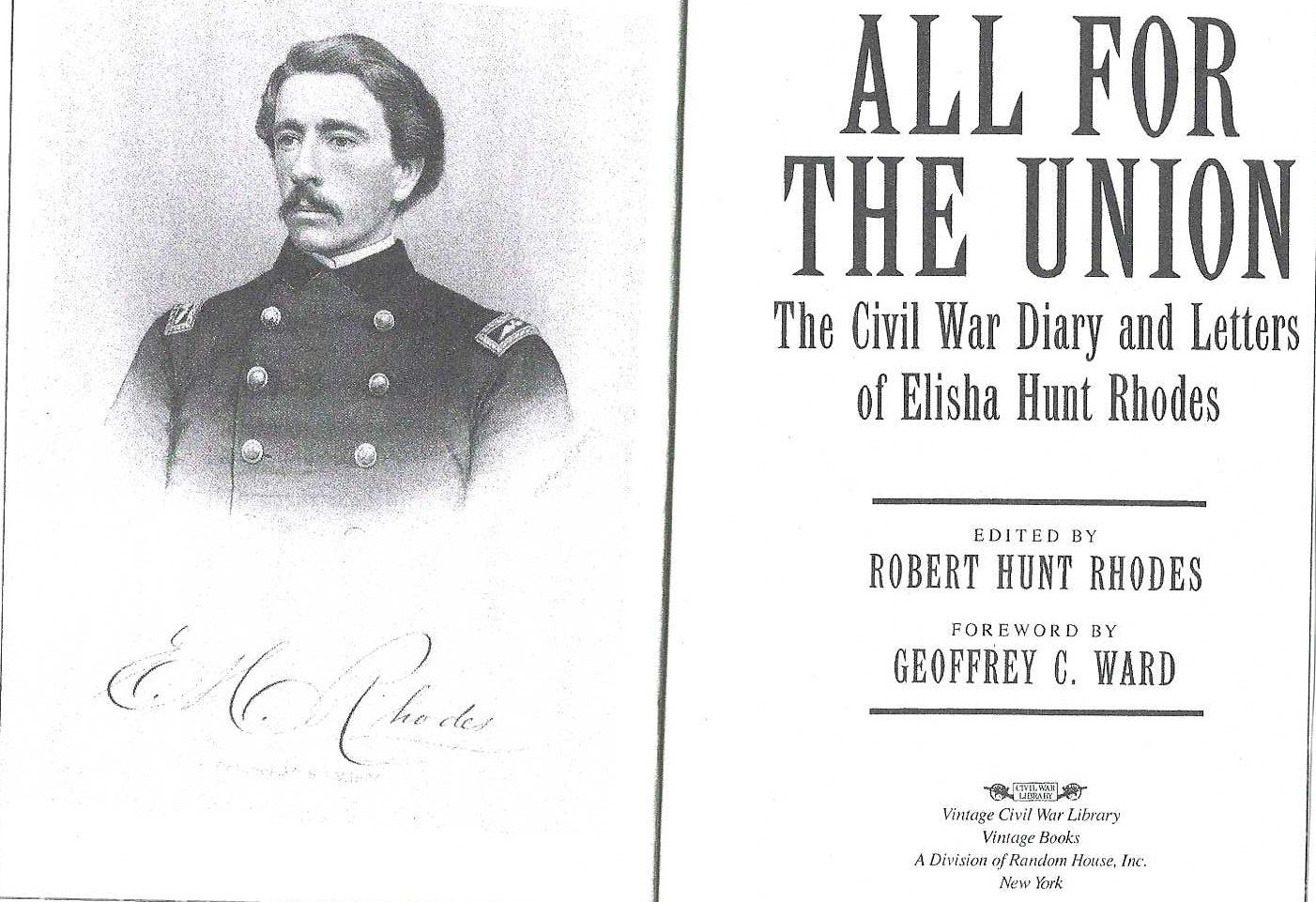


All for the Union: The Civil War Diary and Letters of Elisha Hunt Rhodes, edited by Robert Hunt Rhodes

The Diary of George Templeton Strong, Edited by Allan Nevins and Milton Halsey Thomas


The Civil War Papers of George B. McClellan: Selected Correspondence 1860-1865, edited by Stephen W. Spears
Simon Cameron to Major-General Benjamin F. Butler, May 30, 1861 (“Your action in respect to the negroes who came in your lines from the service of the rebels is approved.”)
https://civilwarnotebook.blogspot.com/2017/09/simon-cameron-to-major-general-benjamin.html
Ulysses S. Grant to Jesse Root Grant, May 30, 1861 (“I have tendered my services to the Government and go today to make myself useful, if possible, from this until all our National difficulties are ended.”)
https://civilwarnotebook.blogspot.com/2013/09/ulysses-s-grant-to-jesse-root-grant-may_4.html
Gideon Welles to Gustavus V. Fox, May 30, 1861 (Malingering will not be permitted in the Navy Department.)
https://civilwarnotebook.blogspot.com/2018/08/gideon-welles-to-gustavus-v-fox-may-30.html
Brigadier General Irvin McDowell to Mary Custis Lee, May 30, 1861 (Gen. McDowell assures Mrs. Lee that her Arlington home will be safe in Union hands.)
https://civilwarnotebook.blogspot.com/2013/10/brigadier-general-irvin-mcdowell-to.html
Diary of William Howard Russell: May 30, 1861 (Russell visits the site of the 1815 Battle of New Orleans.)
https://civilwarnotebook.blogspot.com/2016/08/diary-of-william-howard-russell-may-30.html
Charlotte Cross Wigfall to Louise Wigfall, May 30, 1861 (The Wigfalls traveled from Montgomery to Richmond with President Davis.)
https://civilwarnotebook.blogspot.com/2015/07/charlotte-cross-wigfall-to-louise_11.html
Today’s posts:
First entry from Elisha Hunt Rhodes, reply #35
George Templeton Strong, #36
George B. McClellan, #37
Links to 6 items from Civil War Notebook, #38

With Lincoln in the White House: Letters, Memoranda, and Other Writings of John G. Nicolay, 1860-1865, edited by Michael Burlingame
Disclaimer: Opinions posted on Free Republic are those of the individual posters and do not necessarily represent the opinion of Free Republic or its management. All materials posted herein are protected by copyright law and the exemption for fair use of copyrighted works.