Posted on 11/09/2020 11:12:37 AM PST by Red Badger
(J. Tregoning, The Lancet, 2020)
==========================================================================
A new flu vaccine grown in plants has been put to the test in two large-scale clinical trials, a first for vaccine research.
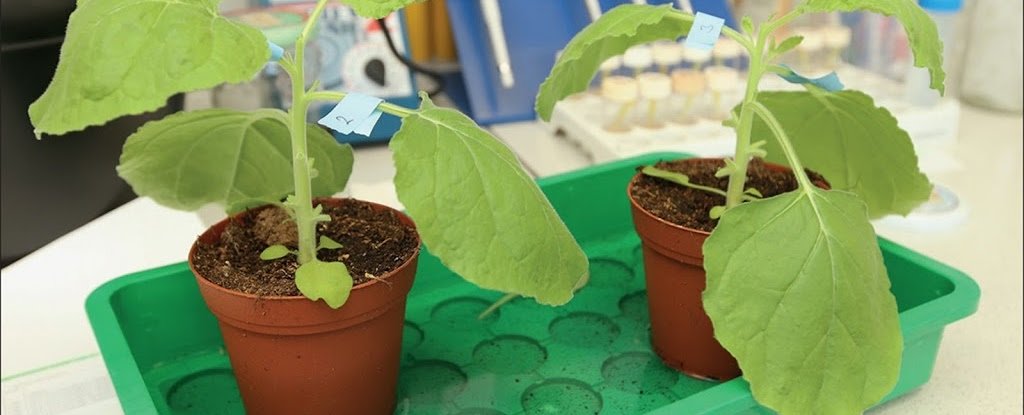
The vaccine contained virus-like particles which resembled circulating flu strains, extracted from native Australian tobacco relatives that were genetically instructed to produce the viral proteins.
The two trials combined involved nearly 23,000 people and the results suggest that the plant-derived vaccine is not only safe, but comparable to current commercial flu vaccines.
"To the best of our knowledge, these studies and the clinical development programme that preceded them are the largest demonstration to date of the potential for a plant-based platform to produce a human vaccine that can be safe, immunogenic, and effective," the research team wrote.
Every year, the vaccines that protect us against influenza have to be reformulated for the next flu season, which is a huge undertaking.
The influenza virus is a chameleon of sorts, constantly changing the protein molecules it displays on its outer surface, and this has researchers feverishly looking for ways to improve our current vaccine technology.
Most influenza vaccines are currently made using virus particles grown in and harvested from chicken eggs or lab-grown cells, which takes months even after scientists work out which flu strains (and surface proteins) they need to target.
Plants, which can be engineered to produce select proteins and cultivated at scale, could be an alternative, helping to boost our capacity to produce seasonal flu vaccines.
The technique might also help to overcome complications encountered in the way current flu vaccines are manufactured that sometimes renders vaccines less effective.
In this system, the researchers used an Australian relative of the tobacco plant, Nicotiana benthamiana, engineered to produce just the outer shell of influenza viruses. These virus-like particles are then extracted and purified under strict conditions to make a flu vaccine.
The researchers tested their plant-derived vaccine in two clinical trials, funded by the Canadian biotech company which developed the technique, and no major safety concerns were reported.
Phase III trials testing safety and efficacy like this are usually one of the last hurdles vaccines need to clear before they can be approved for widespread use.
But keep in mind that even if a flu vaccine is approved as safe and effective, any manufacturer needs to be able to produce millions of doses every year, which could be a challenge for vaccine-producing plants.
The first trial involved more than 10,100 adults from Asia, Europe and North America, aged 18 to 64 years, and it was designed to show that the vaccine could prevent 70 percent of people in the trial from developing flu-like or other respiratory illnesses in one flu season.
Although this high benchmark was not reached in the trial, the vaccine did protect about a third of people from flu strains circulating in the 2017-2018 Northern Hemisphere winter that were a match for the viral particles in this vaccine.
That result might sound low, but the efficacy of commercial flu vaccines often varies year to year depending on how well a vaccine matches the different flu strains circulating that winter.
The researchers concluded, based on data collected during 2017-2018, that their plant-derived vaccine provided a "broadly similar" level of protection as commercial vaccines used in that particularly long flu season, which is a fair result.
The second study recruited another 12,700 people aged 65 years and over. This is quite important because elderly people's immune systems tend to wane with age, making them more vulnerable to contracting infections.
"Like other influenza vaccines, antibody responses to the [plant-derived] vaccine also diminished with age," the researchers said.
The plant-derived vaccine stimulated less of an antibody response in older people, a somewhat expected result, but it did activate a substantial increase in immune cells ready to respond to flu-like infections.
Promisingly, the protection the vaccine granted people from flu-like illnesses in the 2018-2019 flu season was still on par with a commercially available flu vaccine used that season.
"The field of plant-derived vaccines has grown a lot in the past 28 years, since it was first shown [in 1992] that viral proteins could be expressed in plants," John Tregoning, an infectious disease researcher from Imperial College London, said in a commentary about the latest trial results.
"This is the first time a plant vaccine has been tested in a [human] clinical trial," Tregoning added. "It is a milestone for this technology and sows the seeds for other plant-based vaccines and therapeutics."
If all goes well, this research might one day give us another way to manufacture seasonal flu vaccines that could also be scaled up in the event of another flu pandemic.
In their paper, the researchers claim that their plant-based system can produce the first doses of a newly designed flu vaccine within two months of identifying an emerging influenza strain.
But there is likely still a long road ahead navigating regulatory approvals for this vaccine, so watch this space.
The research was published in The Lancet.
Climate change was not getting much traction, but "COVID19" ( AKA EVENT 201) hit the jackpot .
a socialist dream come true brought to us by the Globalist Cabal
Cognitive bias
it makes people believe whatever they want, based upon their own false interpretations.
no one has ever seen an electron, but there are people who have interpreted pixels on a screen to make themselves believe they have seen an electron
I may not have seen an electron but I have felt one (actually multiple ones). It was a shocking experience.
And beer is full of vitamin P.
that was my point, no one has seen God either, but I have way more faith in God than Dr Fauci, Bill and Melinda Gates and john Hopkins university owned by bloomberg when they tell me to trust someone who has scammed me to painfully cram their swab up my nose and wear a mask long term, (hypoxia has been dissgoogled)
that was my point, no one has seen God either, but I have way more faith in God than Dr Fauci, Bill and Melinda Gates and john Hopkins university owned by bloomberg when they tell me to trust someone who has scammed me to painfully cram their swab up my nose and wear a mask long term, (hypoxia has been dissgoogled)
There’s an echo in here.
Disclaimer: Opinions posted on Free Republic are those of the individual posters and do not necessarily represent the opinion of Free Republic or its management. All materials posted herein are protected by copyright law and the exemption for fair use of copyrighted works.