Posted on 08/24/2007 5:31:58 AM PDT by Lucky9teen
Action Heroes - One Liners
The 1980s were the golden age of the one-liner, with the films of Arnold Schwarzenegger, Sylvester Stallone, Chuck Norris, and Clint Eastwood, and the ascension of such screenwriters as Steven E. de Souza and Shane Black, who penned many of the decade's high-concept action and buddy movies (Die Hard, Commando, and Lethal Weapon chief among them). Yet, like many action film conventions, the one-liner has roots in other genres. In the landmark Western The Searchers (1956), John Wayne growled, "That'll be the day," prompting Buddy Holly to immortalize the catchphrase in a hit single the following year. And not only did the James Bond franchise give us "Bond—James Bond," but lines such as "Shocking! Positively shocking!"; "He had to fly"; and "He got the boot" prove that Bond also gave action films their penchant for punning. Throughout the series, Bond's cheeky dialogue defuses the emotion of a given scene, just as the one-liner does throughout the action genre.
Such glibness lays bare the action hero's core reticence. "I ain't got time to bleed," insists Predator's Jesse Ventura, who would repurpose the line for the title of his book, "I Ain't Got Time To Bleed: Reworking the Body Politic From the Bottom Up". Less quoted but even more germane is the declaration by Road House's Patrick Swayze, "Pain don't hurt." A contradiction, yes, but one that defines both the action hero and, more literally, one of the genre's most iconic roles: the title character of The Terminator.
That 1984 movie inaugurated Arnold Schwarzenegger's signature, "I'll be back." In this case, the one-liner is funny only in hindsight, as the cyborg comes right back, fully armed and with a pickup-truck-of-mass-destruction to boot. Reversing the typical action-sequence structure, the quip is the set-up, the violence is the punch line. There is nothing especially remarkable about "I'll be back" (it is not, after all, Cobra's "You're the disease, and I'm the cure," a line noted by the press six months before the film's 1986 opening). Even so, "I'll be back" distills the action movie's ritualistic appeal. The pleasure of hearing it said from movie to movie is the same as hearing a story told time after time.
Many one-liners are bad, if treasured, puns (Arnold put his stamp on "You're fired" long before Donald did). Others display a wit that we might grudgingly concede ("Barbeque, huh? How do you like your ribs?"). The one-liner is also remarkably versatile. It spans the grandiose ("I'm going to show you God does exist"; "I'm your worst nightmare") to the minimalist ("Get off my plane"; "Whoah"). It ranges from the functional ("Dead or alive, you're coming with me") to the iconic ("Go ahead … make my day"). And while some are uninspired ("It's time to die"), others are absurd ("I have come here to chew bubble gum and kick ass—and I'm all out of bubble gum"), self-referential ("No sequel for you"), and sardonic ("Go ahead … I don't shop here").
Most one-liners articulate the hero's self-regard (or in Harry Callahan's case, regard for his .44 Magnum), and why shouldn't they? The action genre is primarily an exercise in hero-worship.
"Yippee Ki Yay Mother F***er!!"
~ John McClane
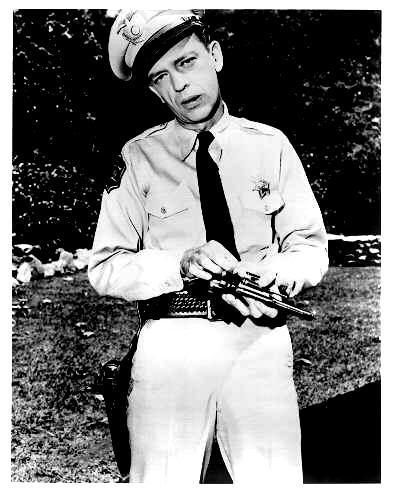

Unfair question...only Chuck Norris is capable of locating and applying a roundhouse kick to anyone who votes against him...
As for my favorite one-liner from the movies...
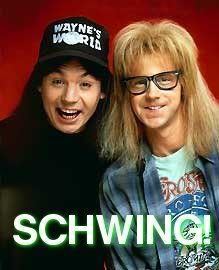


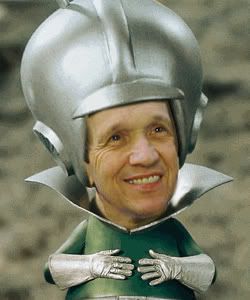


Mernin’, Star!

I see we both like Wonder Woman! heehee
She’s a classic : )
YKHIKYG?
The things we do for...raisybrow
There was a massive outcry against the plan to build a power line across a nature preserve. The public couldn’t bear the tension.
Tinker Bell was arrested for being suspiciously high. But in the end she was only fined for glittering.
What did the minister say to the underdressed layman? “No shoes, no shirt, no service”


Disclaimer: Opinions posted on Free Republic are those of the individual posters and do not necessarily represent the opinion of Free Republic or its management. All materials posted herein are protected by copyright law and the exemption for fair use of copyrighted works.