Posted on 06/22/2026 11:26:28 AM PDT by ProtectOurFreedom
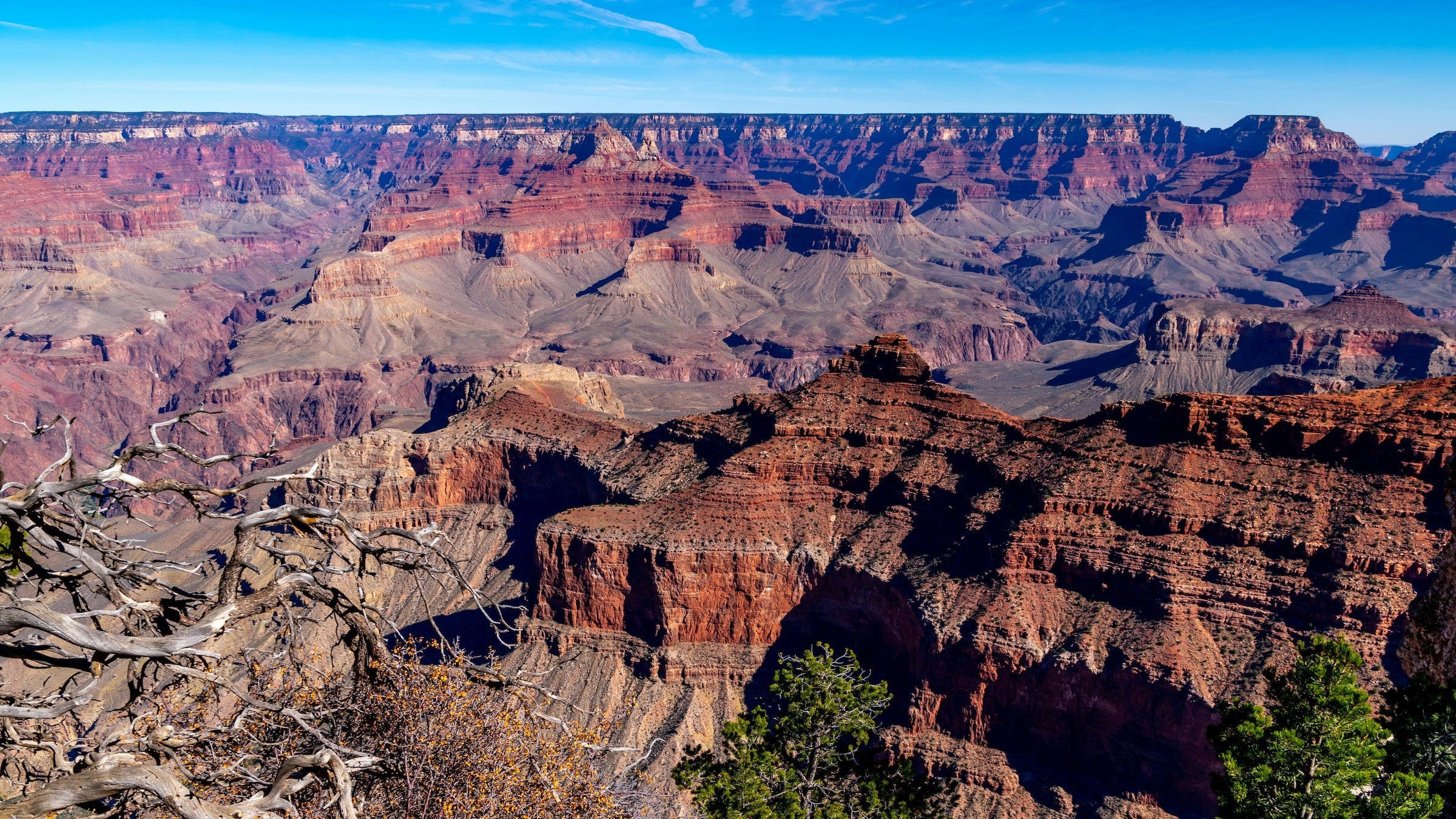
Three hikers died of suspected heat illness in less than a week in Grand Canyon National Park, the National Park Service said on Friday, bringing the total number of heat-related deaths this June to four.
In a news release on June 19, the NPS said that park personnel had responded to two separate incidents in the Inner Canyon that resulted in three deaths. On June 12, a 72-year-old male hiker passed away on the South Kaibab Trail after showing symptoms of heat illness. On June 16, two more hikers, a 67-year-old man and a 68-year-old woman, died on the North Kaibab Trail; while the investigation in that case is still ongoing, the park service said that the deceased “appear to have succumbed to symptoms of heat-related illness.” First responders discovered all three of the hikers dead when they arrived.
The incidents occurred just weeks after an 18-year-old man died of suspected heat illness on the Bright Angel Trail. According to the Park Service, the visitor was attempting to dayhike to the Colorado River and back, a common goal that the park nevertheless discourages.
Temperatures in and around the Grand Canyon are set to soar in coming days. The National Weather Service has issued an extreme heat watch for the park for June 22 through 23, when temperatures could reach as high as 111 degrees at Phantom Ranch. In its bulletin, the NWS said that hikers shouldn’t descend farther than 1.5 miles from trailhead, and that they should be either out of the canyon or posted up at the Havasupai Gardens or Bright Angel campgrounds between 10 a.m. and 4 p.m.
There were 16 confirmed deaths from hyperthermia in Grand Canyon National Park between 2007 and 2023, according to NPS mortality data released through a Freedom of Information Act Request.
In a June 18 press release citing “a recent influx of heat-related incidents,” the park urged hikers sensitive to heat—including “children under eight, adults over 65, and individuals with pre-existing medical conditions”—to consider rescheduling their hikes for a less sweltering time of year.
I was descending Mission Peak in Hayward, CA a few years back. I went up in the late morning on the north side and descended the south side in the blazing afternoon sun. I felt heat trouble coming on and ran out of water. No shade, just blazing sun. I was starting to get real worried. Since then, I take a LOT of water with me.
If it is going over 85F, I won't even set out any more (I'm turning 75 in five weeks). Better to wait for a cooler morning.
72,67,68. What the hell were they thinking?
Yeah but it’s a dry heat!!
They weren’t which isn’t unusual. Stupidy comes on all ages.
Amen to talking water, etc.
Your V8 engine is killing people!
Repent!
Yeah, like 400 degrees in my oven is a dry heat also.
I’ve never heard it called a “heat illness” before. Dehydration? Yes. Heat exhaustion? Yes. Heat stroke? Yes.
Old hippies wanting to be one with nature
On June 12, a 72-year-old male hiker passed away on the South Kaibab Trail after showing symptoms of heat illness. On June 16, two more hikers, a 67-year-old man and a 68-year-old woman, died on the North Kaibab Trail; On their bucket list I guess.
No kidding, I did the Grand Canyon in June when i was 25 and got a bit nervous towards the end. Down is easy, up not so much.
A park ranger at Canyonlands told me that they had to rescue a lot of Europeans each year. They simply are unprepared for the heat. I see people on hiking trails without hats and only maybe a small bottle of water frequently. There are signs everywhere about this but these idiots don’t listen.

“Heat stroke” is certainly most common.
“””””I often carry three liters on day hikes (only rarely have I needed half that).”””””
As someone who always liked solo backpacking and camping I take into consideration being injured and delayed while away from camp and my goods, your backup water is a good idea.
If you get hurt and it takes you an extra long time and more exhausting effort to get back from your hike, you have some margin built in to get you through the tough return trip.
I can just picture them lying on the ground in heat stroke convulsions with just barely enough consciousness to cross off “Kaibab Trail.”
“I see people on hiking trails without hats and only maybe a small bottle of water frequently. There are signs everywhere about this but these idiots don’t listen.”
I’ve seen the same on the peak of Mt. Lassen at 10,500 feet. People arriving in the afternoon in flip-flops, t-shirts, no water. Unbelievable.
I hiked up to Yosemite Falls in January 1974 in one of our periodic California droughts. I left before sunup and got to the top very early (3,000 foot climb). It had been unseasonably warm, high 60s and low 70s, but I knew about winter storms in the Sierras, so I had full winter gear and was ready for anything. People were arriving in flip-flops, t-shirts, and no water! In January when storms can blow in and temps drop quickly.
People are amazing. Like you said, signs everywhere, too.
I did that in 1989 and it didn't seem like any big deal. Of course, I was 34 and it was early October.
It’s a funny thing, you think you can keep doing what you used to be able to do. The mind stays the same while the body deteriorates. RIP.
I remember my own hike into the canyon when I was 15. We had a high that day of 108, and a low in the 30's. Thunderstorms rolled in and we had waterfalls of rain running off cliffs pouring down onto the trail at random locations, with a dozen or more mudslides we had to carefully climb over. At the top there was a lot of hail on the ground. All we had for warmth were raincoats (rubber, this was pre-goretex), which were nearly useless over our shorts and T-shirts. It pays to be prepared!
Disclaimer: Opinions posted on Free Republic are those of the individual posters and do not necessarily represent the opinion of Free Republic or its management. All materials posted herein are protected by copyright law and the exemption for fair use of copyrighted works.