
Posted on 06/30/2025 5:36:43 AM PDT by Red Badger
Caffeine sparks an ancient enzyme that helps cells survive stress and repair damage, revealing a new link between your coffee and long-term health. Credit: Shutterstock
Scientists have discovered that caffeine doesn’t just perk up your brain—it energizes your cells in a way that could slow aging.
By flipping on an ancient fuel-sensing enzyme called AMPK, caffeine indirectly taps into a powerful longevity pathway that helps cells manage stress, repair damage, and live longer.
Caffeine’s Cellular Anti-Aging Mystery Uncovered
A new study from the Cellular Ageing and Senescence laboratory at Queen Mary University of London’s Center for Molecular Cell Biology reveals how caffeine—the world’s most popular neuroactive compound—might do more than just wake you up. The study in the journal Microbial Cell shows how caffeine could play a role in slowing down the aging process at a cellular level.
Caffeine has long been linked to potential health benefits, including reduced risk of age-related diseases. But how it works inside our cells, and what exactly are its connections with nutrient and stress responsive gene and protein networks has remained a mystery—until now.
In new research published by scientists studying fission yeast—a single-celled organism surprisingly similar to human cells—researchers found that caffeine affects aging by tapping into an ancient cellular energy system.
Fission yeast is also known as “mini-human” due to its similarities with human cells.
A few years ago, the same research team found that caffeine helps cells live longer by acting on a growth regulator called TOR (Target of Rapamycin). TOR is a biological switch that tells cells when to grow, based on how much food and energy is available. This switch has been controlling energy and stress responses in living things for over 500 million years.

Fission Yeast - Fission yeast cells in which the glucose transporter Ght5 is fluorescently labelled with Green Fluorescent Protein (GFP). Credit: Olga Xintarakou, Queen Mary University of London
Ancient Energy Switches: TOR & AMPK
But in their latest study, the scientists made a surprising discovery: caffeine doesn’t act on this growth switch directly. Instead, it works by activating another important system called AMPK, a cellular fuel gauge that is evolutionarily conserved in yeast and humans.
AMPK (AMP-activated protein kinase), is a cellular energy sensor that plays a vital role in maintaining metabolic balance. Indirect inhibition of AMPK, through the widely used anti-diabetic drug metformin, has already attracted attention for its beneficial effects.
“When your cells are low on energy, AMPK kicks in to help them cope,” explains Dr. Charalampos (Babis) Rallis, Reader in Genetics, Genomics and Fundamental Cell Biology at Queen Mary University of London, the study’s senior author. “And our results show that caffeine helps flip that switch.”
Interestingly, AMPK is also the target of metformin, a common diabetes drug that’s being studied for its potential to extend human lifespan together with rapamycin.

Caffeine Mechanism - How caffeine affects cells. Credit: Queen Mary University of London
Metformin Links and DNA Repair Boosts
Using their yeast model, the researchers showed that caffeine’s effect on AMPK influences how cells grow, repair their DNA, and respond to stress—all of which are tied to aging and disease.
“These findings help explain why caffeine might be beneficial for health and longevity,” said Dr. John-Patrick Alao the postdoctoral research scientist leading this study. “And they open up exciting possibilities for future research into how we might trigger these effects more directly—with diet, lifestyle, or new medicines.”
Sip Your Way to Longevity? So, the next time you reach for your coffee, you might be doing more than just boosting your focus—you could also be giving your cells a helping hand.
Reference:
“Dissecting the cell cycle regulation, DNA damage sensitivity and lifespan effects of caffeine in fission yeast”
by John-Patrick Alao, Juhi Kumar, Despina Stamataki and Charalampos Rallis, 24 June 2025, Microbial Cell.
DOI: 10.15698/mic2025.06.852
You and Keith Richards.
Hopefully the two of you will have plenty of things to talk about or it could get lonely.
“Coffee GOOD this week!.................”
Lol, it keeps flipping back and forth doesn’t it. I always listened to my body. Your body tells you what you need or not. When I wake up and my body screams “COFFEE!” then it is good...
When I wake up ... then it is good...
lol, True... Priorities are important.
They didn't. That's why they're all dead.
Hmmm. I thought coffee came from South America.. (?)

It’s a pity then, because I’m ADHD and have a paradoxical reaction to caffeine. It makes me tired.
CC
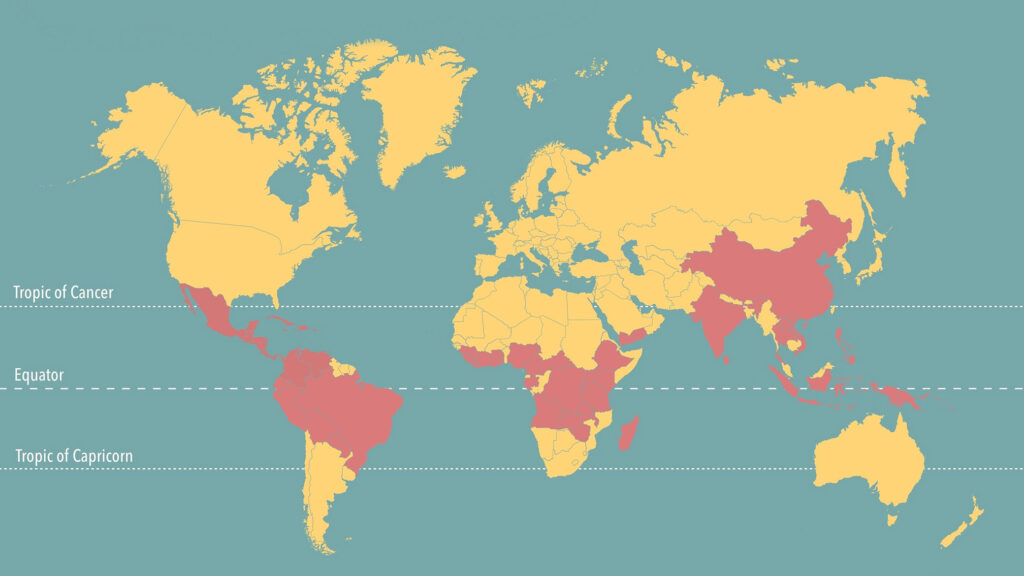
South America does indeed produce coffee but it was brought by the Europeans. Coffee is also grown in Asia. There was an attempt to grow coffee in the US in the 1800's but it didn't work out.
It is grown in Central and South America however it originated in Africa.
There are lots of plants that have caffeine, including many tea plants native to Europe that were historically brewed.
Goose grass or Galium aparine is a widely cultivated salad plant in Europe. It’s part of the coffee family and its beans can be made into a nice mild coffee .
https://en.wikipedia.org/wiki/Coffee#History
History
Main article: History of coffee
Legendary accounts
Main article: Kaldi
There are multiple anecdotal origin stories which lack evidence. In a commonly repeated legend, Kaldi, a 9th-century Ethiopian goatherd, first observed the coffee plant after seeing his flock energized by chewing on the plant.[5] This legend does not appear before 1671, first being related by Antoine Faustus Nairon, a Maronite professor of Oriental languages and author of one of the first printed treatises devoted to coffee, De Saluberrima potione Cahue seu Cafe nuncupata Discurscus (Rome, 1671), indicating the story is likely apocryphal.[12][13][5] Another legend attributes the discovery of coffee to a Sheikh Omar. Starving after being exiled from Mokha (a port city in what is now Yemen), Omar found berries. After attempting to chew and roast them, Omar boiled them, which yielded a liquid that revitalized and sustained him.[1]
Unless you have a heart arrhythmia or hypertension, there have been exactly zero studies showing nicotine is harmful, in and of itself.
Catching leaves on fire and sucking smoke? Yes, that’s a problem. As probably is repeatedly inhaling vapor or anything else.
Addictive? Yes.
I haven’t ever met a doctor who railed against coffee.
It’s full of antioxidants and greatly lowers bowel diseases.
I have never seen a doctor who has helped in any way. None. Ever.
Reaching for the second cup of coffee now - despite my doctor telling me to limit to one cup/day.
Coffeeeeeeee!
Already had my early morning quad shot espresso. Getting be time for another.
Disclaimer: Opinions posted on Free Republic are those of the individual posters and do not necessarily represent the opinion of Free Republic or its management. All materials posted herein are protected by copyright law and the exemption for fair use of copyrighted works.