Posted on 02/19/2025 11:41:46 AM PST by Red Badger
Thutmose was the husband of Hatshepsut, the most powerful female pharaoh.
The Pharaoh's body was moved to the Valley of the Kings after being stolen by tomb raiders.
Image credit: AlexAnton/Shutterstock.com
The tomb of King Thutmose II has finally been discovered in Egypt, more than a hundred years after the Pharaoh’s mummified body was found elsewhere. The last of the lost tombs belonging to the kings of the 18th Dynasty, Thutmose II’s burial site is also the first royal tomb to be found in Egypt since Howard Carter unearthed Tutankhamun in 1922.
Ruling from roughly 1550 BCE to 1292 BCE, ancient Egypt’s 18th Dynasty was marked by military success, imperial expansion, and the construction of glorious monuments. Among the most celebrated pharaohs from the period are Thutmose I and Thutmose III, both of whom were renowned warrior kings.
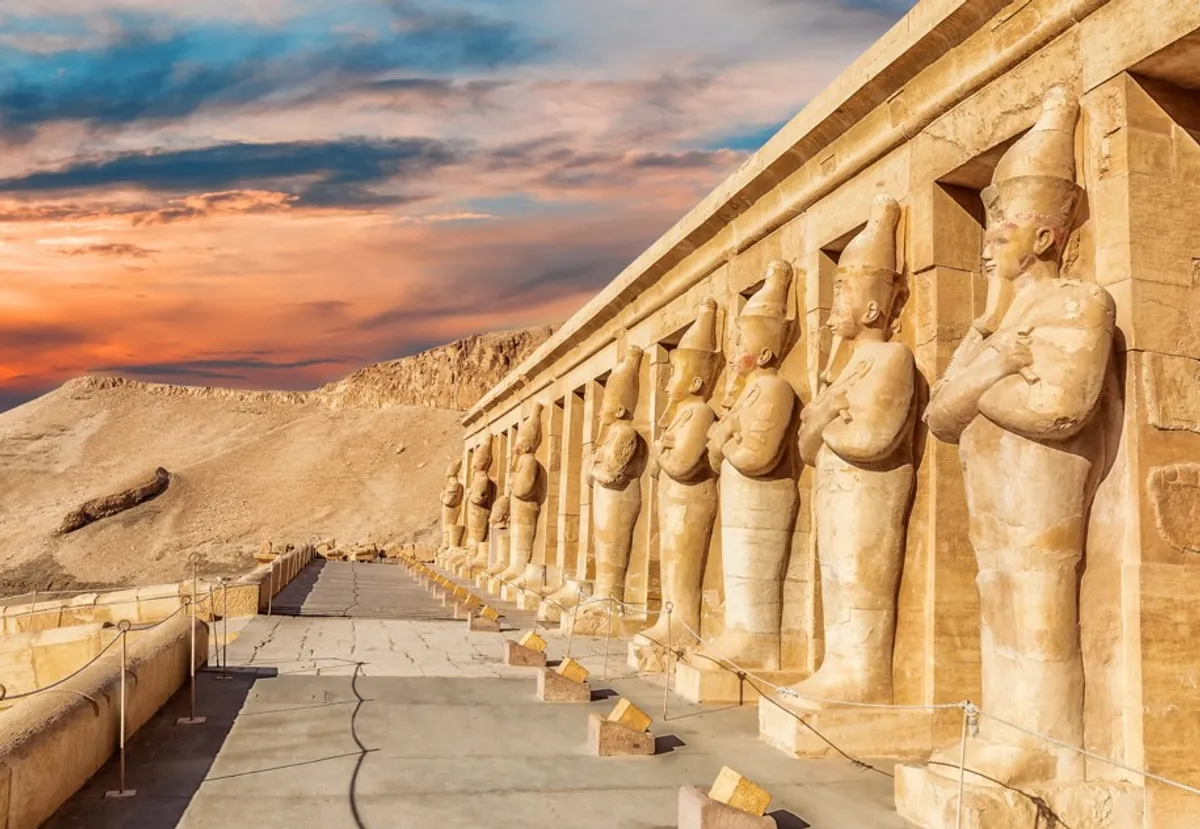
Sandwiched between these two great leaders was the relatively obscure Thutmose II, who is thought to have reigned for just five years before his death at the age of 30-ish in 1479 BCE. Little is known about his royal achievements, although his tomb-less body was found in the 19th century at the mortuary temple of Deir el-Bahari.
It’s thought that the King’s mummy was moved to the site after being removed from its original resting place by grave robbers, leaving archaeologists with few clues as to the location of the tomb – until now.
In a statement announcing the discovery, the Egyptian Ministry of Tourism and Antiquities explained that Thutmose II's tomb was found in the Mount of Thebes area, a few kilometers west of Luxor and the Valley of the Kings. The entrance to the tomb was actually located three years ago, yet archaeologists originally thought that it belonged to a royal wife, as it was so close to the burial sites of some of Thutmose III’s spouses.
However, after unearthing alabaster vessels bearing inscriptions with Thutmose II’s name on them – along with the label of “deceased king” – researchers realized that a relic previously known as tomb C4 was in fact the Pharaoh’s eternal container. Unfortunately, the tomb was extensively damaged by an ancient flood and many of the grave goods appear to have been removed at the time of the deluge, yet sections of the funerary book of Imydwat were identified on pieces of mortar within the tomb.
Recounting the journey of the sun god Ra through the 12 levels of the underworld, this text is found in most of the royal tombs in the Valley of the Kings, and was intended to assist the expired pharaohs in the afterlife.
In his living days, Thutmose II did make one significant contribution to ancient Egyptian history by marrying his half-sister Hatshepsut. This union enabled her to become the greatest female pharaoh of all time after her husband’s death, only for her name to be erased from the records by her stepson Thutmose III, who she kept from the throne for several decades.
Dr Mohamed Ismail Khaled, Secretary-General of Egypt's Supreme Council of Antiquities, explained that Hatshepsut’s name was also found on Thutmose II’s tomb, and suggests that she may even have performed his burial rites.
The mummy of Thutmose II is currently housed in the National Museum of Egyptian Civilization, while Hatshepsut was buried in the Valley of the Kings.
Could be. https://thebiomedicalscientist.net/2019/01/07/ten-plagues-egypt
Unwrapping ThutII, they were quite surprised to find he wore linen Fruit of the Tomb jockey shorts.
Did a beautiful job with his makeup
I couldn’t tell
Still Hawt(is that wrong....)
Compared to Thutmose I the sequel didn’t age well.
I wonder if they will now cut of his SS checks.
Canopic jars.
CC
And look at Egypt now ...
We may never know for sure unless we find a stele with both their names on them..............
Buried with a donkey
He’s my favorite honky!
That looks too much like Joe Biden for me. Gives me the creeps.
I visited Luxor and the Temple of Hatshepsut some years back. Having made a study of the Exodus long ago, I concluded to my own satisfaction anyway, that it occurred in approx 1449 BC. This fits also with Solomon and the building of the Temple 480 years later. Also lines up with many other important dates in Israels timeline.
I believe that Thutmose III was the Pharaoh mentioned in Exodus 2:23 and thereby making Amenhotep II as the Pharaoh of the Exodus.
I understand the dates are all over the place from different scholars. I also believe Hatshepsut is the one who pulled Moses from the water.
Did they find anything close to the amazing grave goods discovered in King Tut’s tomb?
Nope, it was trashed. The only other ancient Egyptian tomb that was still loaded up was not of a pharaoh, and discovered in 1905. The second big Tut tour (uh, 10 or so years ago) included a ballustrade from the vanished city of Ahketaten and some sumptious treasures from that tomb, along with plenty of Tut stuff (just not the gold mask).
Amazing Mummies: King Tut’s Great Grandparents
A. R. Williams
March 3, 2016
https://www.nationalgeographic.com/history/article/160303-king-tut-tomb-treasures-yuya-tuyu
The Magnificent Tomb and Treasures of Forgotten Couple Yuya and Tuya
Natalia Klimczak
Updated 20 September, 2016
https://www.ancient-origins.net/ancient-places-africa/magnificent-tomb-and-treasures-forgotten-couple-yuya-and-tuya-006683
#15 Thutmose importance.... 🤰 <- mummy... 😁
How did they not know the place would be flooded?
It is a desert so why build where there is a possibility of a flood.
Disclaimer: Opinions posted on Free Republic are those of the individual posters and do not necessarily represent the opinion of Free Republic or its management. All materials posted herein are protected by copyright law and the exemption for fair use of copyrighted works.