Posted on 12/22/2023 7:25:04 AM PST by lightman
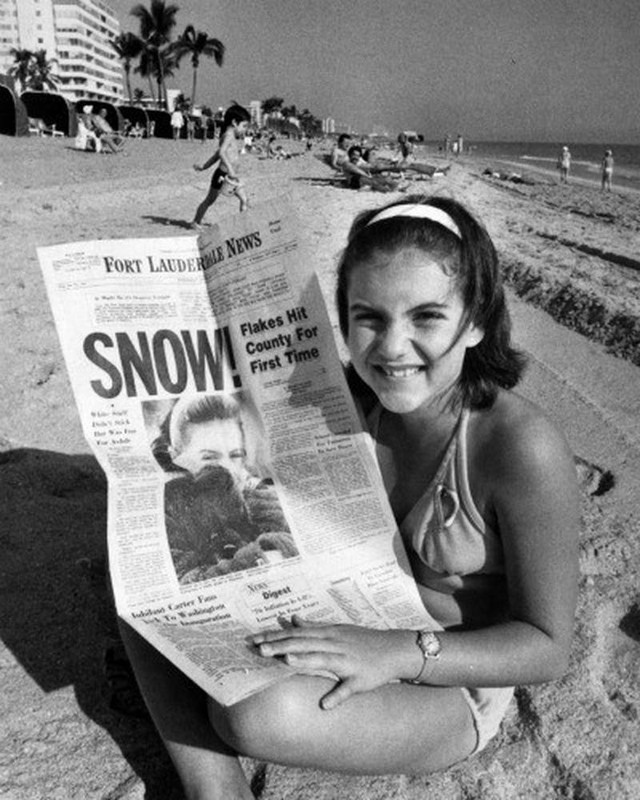
Why is the connection between snow and Christmas so strong? Experts say it’s because songs, stories and images come back year after year and have created the tradition of an idealized white Christmas holiday.
Christmas tales and carols have long since invoked images of silver bells, horse-drawn sleighs, and, of course, snow. The association of snow with the holiday and its yuletide charm, for those celebrating across the United States, is not due to a consistent white winter wonderland, however. In fact, nearly half of the contiguous U.S. historically has had a 50% chance or less of actually seeing a white Christmas.
So where do the dreams of this "white Christmas" originate from?
Experts have suggested that the abundant snowfall and associated imagery surrounding the holiday are so intertwined as a result of the traditional songs, stories and artwork that for generations have romanticized white Christmases, many of which were created during a time known as the "Little Ice Age."
The Little Ice Age was a period of unusual cold weather in the Northern Hemisphere that spanned from the early-14th century through the mid-19th century (1300 through 1850), as several mountain glaciers across the world expanded, according to Britannica. Mean annual temperatures across the Northern Hemisphere dropped by 1.1 degrees Fahrenheit (0.6 degrees Celsius) relative to the average temperature between 1000 and 2000 A.D.
This period of time also happened to overlap with one iconic writer's lifetime. Charles Dickens was born in 1812 in Portsmouth, England, at the tail end of the Little Ice Age and just before the Victorian era, which would oversee a transformation in Christmas traditions. His classic holiday tale, A Christmas Carol, written in 1843, was one such famous work that helped shape imagery around the highly anticipated and festive occasion.
Philip Allingham, professor emeritus at Lakehead University in Thunder Bay, Ontario, and expert in Dickens' Christmas books, quoted Dickens biographer Peter Ackroyd as claiming that the imagery of a snowy Christmas is "a mere accident of history."
"In view of the fact that Dickens can be said to have almost singlehandedly created the modern idea of Christmas, it is interesting to note that in fact during the first eight years of his life there was a white Christmas every year; so sometimes does reality actually exist before the idealized image," Ackroyd wrote in his biography Dickens.
While a white Christmas is a bit more of a hit or miss now for England, the well-known story of Ebenezer Scrooge spirited away by the ghosts of Christmas Past, Present and Future, with its painted scenery of families celebrating in warm, jovial homes as the weather grows severe outside, "has preserved the Christmas customs of olde England and fixed our image of the holiday season as one of wind, ice and snow ...," Allingham wrote.
Across the pond, American artwork also immortalized the widespread winter wonderlands of Christmas Past, making them more of a quintessential part of this time of year.
The New York-based printmaking firm of Currier and Ives created multiple lithographic prints during the mid- to late-19th century depicting winter scenes that "have become synonymous with the ideal of a classic American Christmas," according to Ohio Memory, a collaborative project between the Ohio History Connection and the State Library of Ohio. The iconic images often portrayed snowy landscapes in the countryside, large manors and horse-drawn carriages.
A few years earlier, "A Visit from St. Nicholas," was published anonymously in the Troy, New York Sentinel in 1822, according to the New York Historical Society Library. Theologian and Hebrew scholar Clement Clarke Moore has generally been accepted as the author of the poem, and although the piece doesn't go into great detail on the weather, it does briefly note the blanket of snow on the rooftops.
Outside of the Little Ice Age, people who celebrated the holiday continued to dream of a white Christmas even as time of a cooler climate ebbed away along with some areas' chances for snow come Christmas Day, arguably making the occasion of falling snow even more fanciful.
From Norman Rockwell, an American artist born in the late 1800s who created iconic paintings of New England winters and Christmases, to songwriters into the mid-1900s, the ideal Christmas existed in a winter wonderland, further popularizing the imagery.
Pop culture further heralded that nostalgic and romantic notion, starting with Bing Crosby's classic 1942 rendition of “White Christmas” and building with more songs like "Let It Snow!" and movie favorites It's A Wonderful Life, The Grinch Who Stole Christmas and Christmas Vacation.
Over the decades, the sharing and retelling of these stories, art pieces and music embedded themselves into the holiday traditions passed down through the generations, reminding all who celebrated of the white Christmases that generations before used to know.
Also, fruit trees produce way better if they have gotten their required Chill Hours. So White Christmas can be a very good sign.
Songs like “Jingle Bells,” “Winter Wonderland,” Frosty the Snow Man” and “Sleigh Ride,” none of which mention Christmas, are probably popular around Christmas because it comes at the start of snow season. In the snowbelt, no one feels like singing those songs in February and March.
An ancestor of ours was Ives of Currier and Ives. My sister has one of their originals which isn’t scenic, but of children. It hung in Grandpa’s farmhouse.
Looks like here in Southeast Alaska we’re going to have a “Wet” Christmas. Lots of rain. No snow worth mentioning yet and none in the forecast.
Wrong true meteorological winter starts 12/1 and runs until 2/28.
Next silly question from the nitwits?
“white Christmas” or “White Christmas”?
Hmm….
***at the Piggly Wiggly***
Reminds me of living out West and my wife telling a co-worker that she used to shop at Piggly Wiggly.
They asked What is that? as the main grocery chain in that area was Humpty Dumpty.
It’s white privilege, don’t you know. We can’t have that ...
Interesting piece, thanks for posting!
I’m surprised our gentle author doesn’t tell of how Irving Berlin was inspired to write “White Christmas” whilst sitting by a swimming pool in Los Angeles (something like that). I think if you hear a rendition that includes the intro that info is provided, but don’t have time to look.
I also remember hearing that “Sleigh ride” was composed in beastly hot weather during summer in New York.
So two of the popular classic tunes are truly based on longing for the refreshingly cold weather!
Merry Christmas FRiends!
[Intro]
The sun is shining, the grass is green
The orange and palm trees sway
There’s never been such a day
In Beverly Hills, L.A
But it’s December the twenty-fourth
And I am longing to be up North:
I’m dreaming....
Here in Eastern Washington we have zero snow. Should have several feet by now. All the local ski resorts are closed.
Its just a typical El Nino year.
I can see how that’s a problem. We can have a cold and snowy winter here, or not. This year it has been mild. One weekend some years ago I took a drive up to Wisconsin in January. There hadn’t been a flake of snow and I felt sorry for the snowmobile rental places and cross-country skiing shops.
#9 Minnesota, which is a great location to be guaranteed a white Christmas.
Not this Christmas. It will be raining and 43°!!
Two essentially snowless winters in succession in south central Pennsylvania.
The lawn mowing contractors mostly switch to snow removal contracting during the winter.
Imagine two winters of zero or negligible income.
It’s definitely a risky business. My lawn guy works like a mad man spring through fall and then goes to Mexico for the winter.
In Ottawa people paid in advance and the snow removal people take the risk of how much snow they would plough.
If it stops snowing in Ottawa, I really will believe in Global Warming !
‘Round here many of the contractors charge a retainer fee which includes a set number of plowings; usually with a higher charge for snow above a certain depth.
Contracts are generally for automatic service at 2 - 4 inches.
Disclaimer: Opinions posted on Free Republic are those of the individual posters and do not necessarily represent the opinion of Free Republic or its management. All materials posted herein are protected by copyright law and the exemption for fair use of copyrighted works.