Skip to comments.
Iranian Regime tv Channel One hacked while it was airing Khamenie speech
various
| 10-8-22
Posted on 10/08/2022 1:05:38 PM PDT by nuconvert
Iranian Regime national tv Channel One hacked about an hour ago. During a broadcast of Khamenie speech, a red crosshair appeared over his face and chanting of Women. Life. Freedom. There was writing to the side saying "Rise up. Join us". Also 4 photos at the bottom of the screen of young people killed and additional writing: "The blood of our youth is dropping from your paws".
Also, there was a huge banner in the middle of Tehran highway today that read: We are no longer afraid of you. We will fight.
Also, attempted attack on IRI ambassador in Denmark. Her bodyguard was stabbed. Diplomatic Security intervened before the attacker could stab the ambassador.
TOPICS:
KEYWORDS: basij; deathtothemullahs; denmark; ebrahimrigi; erdogan; iran; iranprotests; iraq; irgc; iri; israel; khameini; khamenei; kurdistan; lebanon; mahsaamini; mullahloversonfr; mullahsmustbekilled; najisharifizindashti; protests; qudsforce; raisi; receptayyiperdogan; shahrammaroufmola; syria; turkey; yemen; zahedi
Navigation: use the links below to view more comments.
first previous 1-20 ... 2,061-2,080, 2,081-2,100, 2,101-2,120 ... 2,401-2,406 next last
2,081
posted on
05/25/2026 1:30:34 AM PDT
by
AdmSmith
(GCTGATATGTCTATGATTACTCAT)
To: AdmSmith
Every retired General and Col. I’ve seen & read thinks we should go back to military attacks on Iran.
I agree.
I do think Trump was asked by Saudis to hold off until after hajj, which means after May 29th. Giving people a day or 2 to pack up & leave, June 1st sounds good.
2,082
posted on
05/25/2026 7:35:03 AM PDT
by
nuconvert
( Warning: Accused of being a radical militarist. Approach with caution.)
To: nuconvert
2,083
posted on
05/25/2026 8:49:47 AM PDT
by
AdmSmith
(GCTGATATGTCTATGATTACTCAT)
2,084
posted on
05/25/2026 9:00:25 AM PDT
by
AdmSmith
(GCTGATATGTCTATGATTACTCAT)
To: AdmSmith
Probably not the right time
2,085
posted on
05/25/2026 9:06:47 AM PDT
by
nuconvert
( Warning: Accused of being a radical militarist. Approach with caution.)
To: AdmSmith; nuconvert; BeauBo; dennisw; adorno; PIF; blitz128; USA-FRANCE; BroJoeK; rodguy911
NYT “citing US officials briefed on the matter, reported on May 20 that Israel developed a plan to free former Iranian President Mahmoud Ahmadinejad from house arrest in order to lead regime change in Iran.[36] The officials and one of Ahmadinejad’s associates added that Israeli airstrikes injured Ahmadinejad on February 28 and derailed the plan.[37] Israeli strikes reportedly killed three of Ahmadinejad’s security detail on February 28.[38]”
Last I knew anything about Ahmadinejad was at the time of the captivity of our Iran Embassy staff when the Ayatollah Khomeini returned and took over the country. He was one of the young “Turks” who was directly involved in the original capture. Given the harm to his security detail and himself recently, why would he even want to cooperate with Israel? More important, how has he developed and changed in all those years so that Israel would even consider him a good source for leading Iran regime change?
2,086
posted on
05/25/2026 1:04:01 PM PDT
by
gleeaikin
(Question Authority: report facts and post their 'links" in your messages.)
To: PIF; blitz128; dennisw; nuconvert
“American officials themselves have told Iran in multiple messages that “Trump’s tweets are primarily for domestic American propaganda and media consumption” and “should be disregarded.” The “largely negotiated” deal claim therefore has no basis.”
What a way to improve the negotiating climate? Tell the other side we are twisting truth or reality for our “domestic American propaganda and media consumption”. Saying this about “Trump’s tweets” is certainly not going to increase his credibility either at home or abroad. What a tactic, and what great secret keepers we have as well. Negotiations full speed ahead!
2,087
posted on
05/25/2026 1:23:17 PM PDT
by
gleeaikin
(Question Authority: report facts and post their 'links" in your messages.)
Iran Update Special Report, May 25, 2026
The United States and Iran continue to hold fundamentally different positions on most major issues within the US-Iran “agreement.” Iran has not publicly committed to removing its highly enriched uranium (HEU) stockpiles or to halting uranium enrichment in Iran, reinforcing broader uncertainty around the negotiations. Iran has so far been unwilling to transfer its HEU stockpile outside Iran, and officials and media consistently assert that any US demand for zero enrichment—or even a return to Joint Comprehensive Plan of Action (JCPOA) — level enrichment at 3.6% — is a red line for Iran.[1] US President Donald Trump said on May 25 that any deal with Iran must be “great and meaningful,“ and explicitly rejected “anything like the JCPOA.”[2]
These two positions on the nuclear issue are fundamentally at odds, even as talks continue and the United States has offered various concessions to attempt to get Iran to give up on aspects of its nuclear program. Unspecified mediators also told the Wall Street Journal on May 25 that the United States is seeking firm upfront nuclear commitments and fears that Iran may delay on these commitments.[3] US officials have reportedly offered sanctions relief in return for Iran handing over its HEU stockpile, according to a senior US official, but unspecified mediators told the Wall Street Journal that Iran still seeks ”clearer guarantees” on sanctions relief and access to frozen assets.[4] An Iranian delegation, led by Parliament Speaker Mohammad Bagher Ghalibaf, met senior Qatari officials in Doha on May 25, reportedly to discuss negotiations, including Iran's HEU stockpile and access to frozen assets, though no concrete outcomes have been publicly confirmed.[5] Iranian Foreign Affairs Minister Abbas Araghchi and Central Bank Governor Abdol Nasser Hemmati attended the meeting too.[6]
Saudi state media has continued to portray the talks in a positive light, even while public positions have so far failed to change. Saudi media stated on May 25 that a draft US–Iran memorandum of understanding (MOU) outlines a phased deal involving a renewable 60‑day ceasefire, continued nuclear talks, regional de‑escalation, restoration of navigation in the Strait of Hormuz, gradual sanctions relief, and partial release of frozen Iranian assets.[7] Saudi media did not elaborate as to whether or not either side had agreed to any of the provisions in the draft. Saudi media also reported that Iran is willing to transfer its HEU stockpile to the People's Republic of China (PRC) but is seeking guarantees from the PRC before continuing with the agreement with the United States.[8] These outlets have previously been premature when discussing Iran's threshold for agreement when it comes to its nuclear program, however. Islamic Revolutionary Guards Corps (IRGC)-affiliated media swiftly denied the Saudi media report on the MOU terms.[9]
Iran has continued to claim that it and Oman control the Strait of Hormuz as territorial waters. Iranian officials are attempting to reframe transit tolls as “protection fees” to give Iran's protection racket the veneer of legality. The Strait of Hormuz is an international waterway under international law. Iran is claiming that the strait is territorial waters and under the administration of “coastal” states. It is notable in this context that Iran does not define the United Arab Emirates (UAE) as a coastal state, even though the UAE borders the strait.[10] The Iranian Ministry of Foreign Affairs spokesperson has attempted to reframe transit tolls as ”protection fees” and “environmental fees,” but both of these are tolls, and neither is legal in an international waterway.[11] Iran remains the only power that has threatened civilian shipping in the Strait of Hormuz during this war, meaning that its “protection fee” is a protection racket that ships must pay to avoid Iranian attack. US officials are explicitly against any fee system in the Strait of Hormuz, and this issue remains a core disagreement in ongoing talks.[12]
US President Donald Trump urged on May 25 the leaders of Saudi Arabia, Qatar, Pakistan, Egypt, Turkey, and Jordan to join the Abraham Accords.[13] Trump said that Saudi Arabia and Qatar should be the first countries to do so and added that a failure to join the Abraham Accords “shows bad intention.”[14] Turkey, Egypt, and Jordan currently recognize Israel but are not members of the Accords.[15]
Hezbollah drone operators have likely developed a rudimentary tactical approach to coordinate multiple small first-person view (FPV) drone strikes in a short period of time. Hezbollah has posted at least three separate examples of these operations, which they call “swarm” attacks. Normal Hezbollah FPV drone attacks have a simple three-step process: first, a drone conducts reconnaissance. Next, commanders evaluate the drone footage in real-time to determine and select possible targets. Finally, a second drone executes the strike. The “swarm” attacks appear to employ three or more drones operating in a staggered but near-simultaneous manner.[16] The first drone selects and strikes its target.[17] The second drone then takes footage of the first drone's target, likely to conduct a hasty battle damage assessment (BDA) to determine whether a re-strike is necessary.[18] A Hezbollah drone in a “swarm” attack in Biyyadah on May 15 re-struck a Humvee, for example, after an earlier drone struck the same target.[19] This footage also serves a propaganda role, and Hezbollah is releasing this footage publicly.[20] The second drone then conducts its own strike.[21] The Hezbollah drone operators repeat this process for each drone thereafter.[22] This system is extremely rudimentary and would either require a single commander to coordinate the attack or a preset, prioritized list of strikes that cannot be dynamically changed.
Hezbollah will likely attempt to overcome the shortcomings of this tactical approach. The requirement for a single commander and subsequent drones to execute the BDA slows Hezbollah's targeting cycle and will prevent it from executing simultaneous attacks with drones. Hezbollah, as a learning military organization, will not be satisfied with these constraints and will seek to improve its approach, especially as the IDF develops new countermeasures.[23]
Hezbollah has illustrated this tactical approach in its publicly released video footage on at least three occasions. Hezbollah posted footage of several drones striking an IDF border post in northern Israel on May 12, which Israeli media and Hezbollah subsequently called a “swarm attack.”[24] Israeli media expressed concern over the increasingly complex Hezbollah capabilities in this instance.[25] Hezbollah also posted footage on May 24 showing an attack using several FPV drones to target Israel Defense Forces (IDF) vehicles and positions in Rachaf, Bint Jbeil District, on May 21.[26] Rachaf is adjacent to Haddatha, where Hezbollah recently fought a protracted engagement with IDF forces on May 20 and 21.[27]
Iranian President Masoud Pezeshkian ordered the Communications Ministry on May 25 to end the internet shutdown that Iran began in response to the January 2026 protest movement.[28] Internet access is expected to return to the pre-January “status quo.”[29] ISW-CTP has continuously assessed that Iran's prolonged internet shutdown posed severe economic damage and accelerated unemployment, which likely increased pressure on regime stability.[30] The Iranian Supreme National Security Council (SNSC) has not yet approved Pezeshkian’s order. An IRGC-affiliated media outlet questioned Pezeshkian’s ability to rescind the shutdown order, given that the SNSC originally issued the order.[31]
The Shia Coordination Framework is reportedly divided over a US proposal to disarm Iranian-backed Iraqi militias and dissolve or integrate the Popular Mobilization Forces (PMF). The PMF is an Iraqi state security service that includes many Iranian-backed Iraqi militias that answer to Iran instead of the Iraqi prime minister.[32] A framework source told Iraqi media on May 25 that some framework members with armed wings threatened to leave the framework if it supports a US proposal to dissolve the PMF, while others expressed a willingness to disarm and engage with Iraqi politics in exchange for securing “senior positions” within the Iraqi government.[33] Multiple Iranian-backed Iraqi militias, including Kataib Hezbollah, the Badr Organization, and Asaib Ahl al Haq, have political wings that are part of the framework and control some PMF brigades.[34] The details of this US proposal are unclear at the time of this writing. This report comes as an Iraqi committee comprised of Iranian-backed Badr Organization head Hadi al Ameri, Prime Minister-designate Ali al Zaydi, and caretaker Prime Minister Mohammad Shia al Sudani is reportedly close to finalizing an “executive plan” to disarm the Iraqi militias.[35] The plan includes the confiscation of militias’ medium and heavy weapons and the restructuring of the PMF, according to a senior Iraqi political official speaking to regional media on May 9.[36] The United States has pressured the Iraqi federal government to curb Iranian influence in Iraq, including via militia disarmament, since early 2025, but has intensified its efforts in recent months due to militia attacks against US and foreign targets in Iraq and the region during the war.[37]
https://understandingwar.org/research/middle-east/iran-update-special-report-may-25-2026/
2,088
posted on
05/25/2026 10:50:17 PM PDT
by
AdmSmith
(GCTGATATGTCTATGATTACTCAT)
The US said it launched new strikes on southern Iran, targeting Iranian missile sites and boats attempting to place mines.
The strikes were taken in “self-defense” and were designed “to protect our troops from threats posed by Iranian forces”, US Central Command said in a statement. Central Command spokesperson Capt Tim Hawkins said the US military “continues to defend our forces while using restraint during the ongoing ceasefire” between the two countries.
https://www.bbc.com/news/articles/cvgzzn4y1n8o
2,089
posted on
05/25/2026 11:16:40 PM PDT
by
AdmSmith
(GCTGATATGTCTATGATTACTCAT)
2,090
posted on
05/26/2026 12:24:57 AM PDT
by
AdmSmith
(GCTGATATGTCTATGATTACTCAT)
Iran Update Special Report, May 26, 2026
Iran and the United States have not bridged key differences on all the major demands in the US-Iran talks. Iranian officials said that they are unwilling to discuss their nuclear program on May 25, and Iranian regime media on May 25 insisted that the United States observe Iran's right to enrich uranium on Iranian territory.[1] Mediators and US officials added that the United States will not provide economic relief to Iran without serious commitments from Iran on its nuclear program.[2] This represents a major impasse in talks because Iran refuses to discuss its nuclear program without economic relief. US President Donald Trump stated on Truth Social on May 26 that Iran's highly enriched uranium (HEU) must be “immediately turned over” to the United States or else destroyed where it is within Iran or at another “acceptable location” with verification.[3] The two sides remain far apart on the Strait of Hormuz, as well, which is discussed in greater detail below.
Granting Iran economic relief by unfreezing funds or removing sanctions would likely decrease Iranian military reconstitution timelines. Iran reportedly demanded that the US immediately release the first half of frozen Iranian assets upon signing the agreement and the second half of the assets within 60 days, according to Islamic Revolutionary Guards Corps (IRGC) media on May 26.[4] The exact amount of these assets is unclear.[5] The Iranian Foreign Affairs Ministry spokesperson explicitly said that Iran would use its unfrozen assets to reconstitute and improve the ballistic missile and drone programs.[6] Iranian officials have also called for the United States to lift the US Navy blockade and sanctions on oil as part of the deal for at least 30 to 60 days.[7] Detailed reconstitution timelines do not exist in the open-source, and intelligence leaks about these timelines are impossible to judge on their own merits due to the lack of context provided in leaks.[8] ISW-CTP has previously assessed that Iran would likely need a longer period of time to reconstitute its missile program than it did after the June 2025 strikes because the combined force struck many more production targets than Israel did in June 2025.[9] This relative assessment — as well as any more detailed assessment — relies on various assumptions about the amount of funds Iran can put towards reconstitution and rebuilding of its military forces, among other factors. Unfreezing funds or dropping sanctions gives Iran relatively more funds to put towards reconstitution.
Iran is also refusing to reopen the Strait of Hormuz and using force to ensure the recognized traffic separation scheme remains closed. Iranian officials continue to state Iran will only re-open the strait to civilian ships under “Iranian arrangements,” and Supreme Leader Mojtaba Khamenei’s guidance to the Iranian government on May 25 said Iran must leverage the strait for economic gain.[10] This position directly contradicts the US position on freedom of navigation, because freedom of navigation through an international waterway has no ”arrangements” imposed by another state. Iran has forced vessels to proceed through the strait using its territorial waters and an illegitimate (but unmined) traffic separation scheme by mining the recognized traffic separation scheme (which is in an international waterway) and threatening to fire at any vessel that uses it.
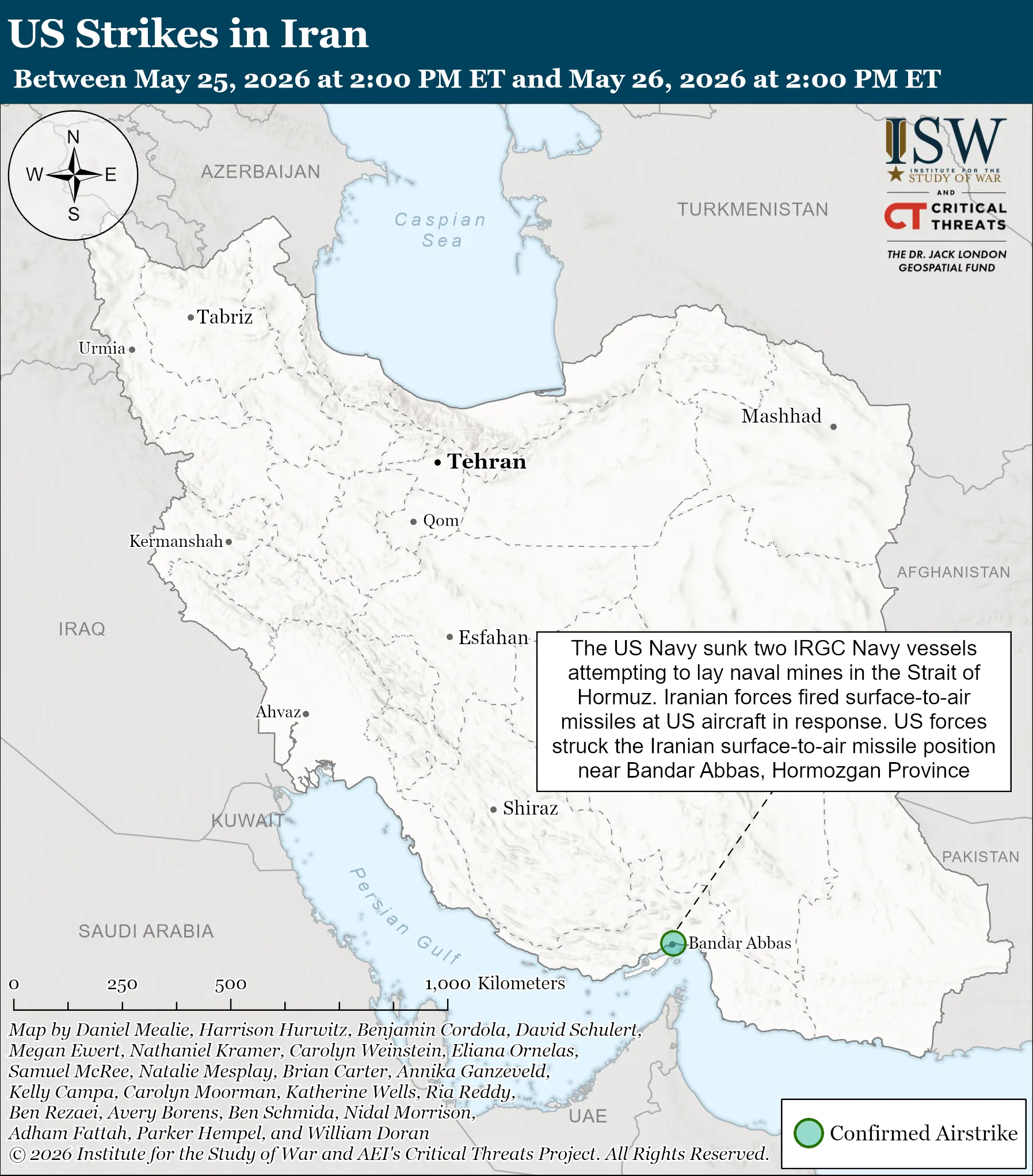
Iran used force again on May 25 to maintain its illegitimate traffic separation scheme when it attempted to deploy mines in the Strait of Hormuz.[11] US Navy aircraft sank the two IRGC Navy vessels responsible for the mine-laying effort. Iran fired at the US Navy aircraft with surface-to-air missiles, but the surface-to-air missile batteries were subsequently struck as well.[12] Iran then separately likely fired an unspecified projectile at and struck the water line of a vessel 60 nautical miles east of Muscat in the Sea of Oman on May 26.[13]
US Central Command (CENTCOM) denied reports that it had resumed Project Freedom and that US forces were escorting vessels through the strait.[14] US President Donald Trump halted the project on May 5 to pursue US-Iran negotiations after announcing the start of it on May 4.[15]
Iranian Supreme Leader Mojtaba Khamenei released a statement on May 26 reaffirming the regime's commitment to the principles of the Islamic Revolution and his father's grand strategy – namely, a commitment to the destruction of Israel, the expulsion of US forces from the region, and the formation of a “new Islamic civilization” united against the United States.[16] Khamenei emphasized that “Death to America [and Israel]” will again be the slogan of Iran and the Islamic world.[17] Khamenei stated that Iran defeated US and Israeli forces in the recent war and highlighted the “martyrs” of Iran's partners and proxies in the region, particularly Hezbollah in Lebanon.[18] Khamenei emphasized the need to unite the Islamic world to “solve the problems” of the region, including preventing the presence of US forces.[19]
The Iranian regime has restored some international internet access to Iran, amid growing public discontent with the regime's economic mismanagement. Iranian President Masoud Pezeshkian ordered the Communications Ministry on May 25 to end the internet shutdown that Iran began in response to the January 2026 protest movement.[20] Internet monitor NetBlocks reported on May 26 that Iran has “partially” restored international internet access and that citizens have gradually increased their internet connectivity.[21] The internet shutdown has exacerbated problems with Iran's already struggling economy, which has been one of Pezeshkian’s main domestic policy concerns.[22] Pezeshkian has previously emphasized the importance of financial gains from negotiations as necessary for Iran to pay for the estimated $300 billion USD in losses from the war with the United States and Israel, for example.[23] There are still restrictions on internet access, however. NetBlocks reported that the popular messaging platform WhatsApp is restricted, Iran's heavily monitored domestic intranet remains active, and that some users are still offline.[24] The Iranian Supreme National Security Council (SNSC) has not yet publicly approved Pezeshkian’s order. Anti-regime media previously reported that the SNSC, led by hardliner Secretary Mohammad Bagher Zolghadr, expressed concern about the potential for renewed protests due to worsening economic conditions.[25] Internet monitor Filter Watch reported during the internet shutdown in the most recent protest wave that the regime would whitelist select individuals to permit them internet access, rather than allow internet access for all Iranians.[26]
The IDF has increased its airstrikes and expanded its ground operations against Hezbollah targets in Southern Lebanon and the Bekaa Valley in response to continued Hezbollah attacks against the IDF in southern Lebanon and northern Israel in recent days. Israeli Prime Minister Benjamin Netanyahu said on May 25 that he has told the IDF to increase its operations against Hezbollah.[27] Netanyahu separately stated on May 26 that the IDF is “seizing dominant terrain” and “fortifying” the IDF buffer zone in southern Lebanon to protect northern Israeli communities from Hezbollah attacks.[28] The IDF has conducted over 270 strikes in Lebanon between May 24 and 26.[29] The IDF struck over 100 Hezbollah weapons depots, headquarters, and observation posts in southern Lebanon and the Bekaa Valley overnight between May 25 and May 26, and around 10 command centers and weapons depots in Tyre on May 25.[30] Lebanese media reported at least 100 IDF strikes in Lebanon on May 24, marking the first time the IDF has conducted at least 100 strikes in a 24-hour period since the start of the temporary ceasefire on April 16.[31] The IDF’s strikes have remained geographically limited to southern Lebanon and the Bekaa Valley.[32] ISW-CTP has not observed any reports of strikes in the vicinity of Beirut since the IDF’s targeted strike in Beirut's southern suburbs on May 6 that killed Hezbollah Radwan Force Commander Ahmad Ghaleb “Malik” Balout.[33]
https://understandingwar.org/research/middle-east/iran-update-special-report-may-25-2026-2/
2,091
posted on
05/26/2026 8:58:28 PM PDT
by
AdmSmith
(GCTGATATGTCTATGATTACTCAT)
To: nuconvert
The Achilles’ heel of the GCC during any war with Iran was never oil. It was, and will always be water. The Gulf runs on desalination. Millions of people, critical industries, military bases, hospitals, and entire cities depend on a fragile network of desalination plants concentrated along the coastline. The IRGC knows this. And because they know it, they see it, and use it, as leverage. So if Trump genuinely wants to reassure Saudi Arabia and the GCC during any future military confrontation with Iran, then the United States must establish a very clear strategic deterrence doctrine specifically around water infrastructure.
Two principles should be established publicly and unequivocally:
1) Any Iranian military or IRGC attack against desalination facilities in the GCC - even if limited and without major physical damage - must trigger immediate retaliation against Iranian critical infrastructure, specifically water, electricity, and telecommunications infrastructure inside the Islamic Republic. Immediate, painful, proportional retaliation that creates real deterrence.
2) If Iran succeeds in causing major damage to desalination capacity, disrupting the production of water for civilian populations in any GCC country, then this should be treated as the equivalent of a strategic WMD attack.
Why? Because in the Gulf, water is life. Disabling desalination at scale is not merely an infrastructure strike; it is an attack on the survival of entire urban populations. And once you frame it that way, deterrence changes entirely. The objective here is not escalation. The objective is prevention.
Right now, the IRGC believes the water vulnerability of the Gulf countries gives it strategic leverage. Trump's job should be to remove that belief completely.
https://x.com/AimenDean/status/2059516272652738803
2,092
posted on
05/27/2026 11:18:30 AM PDT
by
AdmSmith
(GCTGATATGTCTATGATTACTCAT)
Iran Update Special Report, May 27, 2026
Senior Iranian officials continue to frame Iranian control over the Strait of Hormuz as a strategic necessity and core element of Iranian deterrence against the United States and Israel. Supreme Leader Adviser Ali Akbar Velayati described the strait on May 27 as Iran's “ultimate leverage” and the “real guarantee” of a US-Iran agreement's “survival.”[1] Velayati’s remarks may reflect the Iranian regime's belief that Iran's ability to threaten international shipping and energy markets would make the United States less willing to withdraw from any potential agreement or conduct further military operations against Iran. Velayati’s comments reflect the degree to which senior Iranian leaders are coalescing around the notion of Iranian control over the strait as a key pillar of leverage. His comments are also consistent with ISW-CTP’s assessment that Iran views control of the strait as essential to rebuilding deterrence against the United States and Israel after the degradation of Iran's other deterrent capabilities, particularly Iran's ballistic missile capabilities.[2]
Iranian officials continue to insist that Iran will “reopen” the strait to civilian shipping under “Iranian arrangements,” which reflects the broader Iranian effort to institutionalize control over traffic through the waterway and directly contradicts the US demand for freedom of navigation.[3] Iranian media circulated a reported draft US-Iran agreement in which Iran would “restore” shipping through the strait while continuing to manage maritime traffic jointly with Oman.[4] The reported draft proposal also stipulates that military vessels would be barred from transiting through the strait. Iran has not explicitly barred military vessels from passing through the strait in past draft proposals, but Iranian officials and media have repeatedly publicly stated this restriction.[5] The United States rejected the draft proposal in Iranian media as a “complete fabrication,” but the circulation of the proposal in Iranian media nevertheless reflects Iran's continued effort to secure recognition of its sovereignty over the strait in any agreement with the United States.[6] Iran has used naval mines and attacks on commercial vessels to force vessels to transit through Iran's illegal and unrecognized traffic separation scheme in Iranian territorial waters, effectively forcing vessels to recognize Iran's control of the strait.[7] Iranian officials have cited the UN Convention on the Law of the Sea to attempt to justify charging vessels a fee for transiting through Iranian territorial waters.[8] These vessels are not only coerced into using Iran's traffic separation scheme, but the fees that they pay to Iran are part of an Iranian protection racket in which vessels pay to avoid Iranian attacks.[9] Any arrangement in which maritime traffic can only pass through Iran's traffic separation scheme with Iranian approval contradicts the US demand for freedom of navigation, and such an arrangement would significantly undermine US interests and establish a dangerous precedent for the freedom of navigation in international waterways. US President Donald Trump emphasized on May 27 the importance of freedom of navigation through the strait and stated that “nobody is going to control” the strait.[10]
Conflicting reports about the draft US-Iran agreement, as well as public statements from both sides, highlight continued disagreements on other key issues between the United States and Iran. The Iranian media readout of the reported draft proposal stated that Iran would continue to manage traffic through the Strait of Hormuz in exchange for the United States lifting its naval blockade and withdrawing military forces from Iran's vicinity.[11] The readout omitted any reference to Iran's nuclear program, sanctions relief, or frozen assets. Iranian officials have repeatedly demanded that the United States release half of Iran's frozen assets immediately upon signing an agreement and release the remainder within 60 days, however.[12] The Associated Press, citing two regional officials, contrastingly reported that Iran agreed to “give up” its highly enriched uranium (HEU) stockpile.[13] The officials added that negotiators would discuss how Iran would “give up” its HEU stockpile in a 60-day negotiation period following the signing of an initial agreement.[14] A US official reiterated to the Associated Press that the United States will not provide sanctions relief to Iran unless Iran relinquishes its stockpile.[15] Iranian officials, however, continue to demand economic concessions in an initial agreement while postponing nuclear negotiations until a later phase.[16] Supreme National Security Council Deputy Secretary Ali Bagheri Kani reiterated Iran's right to enrich uranium on May 27 and stated that negotiators are not currently discussing Iran's HEU stockpile.[17] Bagheri Kani suggested that the United States and Iran would not be able to reach a preliminary agreement if both sides tried to reach an understanding on nuclear issues because “differences of opinion [are so big].”[18] Iran's proposed sequencing of concessions would require the United States to surrender key sources of leverage before negotiations over Iran's nuclear program begin, which would significantly reduce US leverage in any future nuclear negotiations.
Iranian media outlet Nour News published an op-ed that emphasized the need for Iran to convert its recent “military victory” into broader political success, which reflects a belief within the regime that Iran emerged from the recent conflict in a position of strength.[19] Iran's maximalist and uncompromising negotiating positions reflect the Iranian regime's effort to translate its perceived success in the war into long-term strategic and political gains. The article argued that Iran must pursue “rapid diplomatic exploitation of military gains,” which supports ISW-CTP’s assessment that Iranian leaders believe they won the conflict and are therefore negotiating from a perceived position of strength.[20] The op-ed called for clear and tangible objectives, including war compensation and guarantees against future attacks, both of which Iranian officials have previously raised as “preconditions” in negotiations.[21] The article also warned that renewed conflict will remain inevitable unless Iran transforms its perceived military success into “sustainable mechanisms.”[22] Iran likely views recognition of its control over the Strait of Hormuz as one such mechanism. It is unclear who currently controls Nour News or what the outlet's current affiliation is. Nour News was previously affiliated with former Supreme National Security Council Secretary Ali Shamkhani, but the combined force killed Shamkhani during the recent war.
An Israeli open-source intelligence analyst posted satellite imagery that shows Iranian reconstitution efforts at the Yazd Missile Base in Yazd Province since the start of the US-Iran ceasefire in April 2026.[23] These reconstitution efforts corroborate ISW-CTP’s assessment that Iran is exploiting the ceasefire period to reconstitute its military capabilities at the tactical and operational levels.[24] The satellite imagery between April 5 and May 22 reveals Iranian efforts to reopen the base's tunnel entrances, clear rubble and debris, build new roadways, and replace missiles and missile launchers.[25] The combined force struck the Yazd Missile Base at least five times during the conflict, including a strike on March 27 directly after Iranian forces launched missiles from the base.[26] The Iranian Foreign Affairs Ministry spokesperson stated on May 26 that Iran would use any unfrozen assets that Iran secures in a potential US-Iran agreement to further reconstitute and improve Iran's ballistic missile and drone programs.[27] ISW-CTP previously assessed that granting Iran economic relief by unfreezing funds or removing sanctions would likely decrease Iranian military reconstitution timelines.[28]
The Iranian regime appears to be setting conditions to further securitize Iranian society, likely in response to the regime's concerns about US-Israeli “hybrid warfare” tactics and potential internal unrest. The regime defines hybrid warfare as “the use of all domains of power, including information, electronic, cultural, social, and military operations, by hostile actors to destabilize Iran.”[29] The Iranian Intelligence Ministry released a statement on May 27 outlining perceived US-Israeli hybrid warfare efforts, including economic pressure, attempts to incite ethnic and religious conflict, border incursions by alleged Israeli-affiliated armed groups, sabotage, and weapons smuggling.[30] The statement accused Farsi-language anti-regime media outlets of inciting political, social, labor, ethnic, and religious unrest.[31] The ministry warned that it will confront any actors who attempt to provoke unrest.[32] The ministry claimed that the United States and Israel's current priority is to incite social unrest around economic grievances.[33] Iranian President Masoud Pezeshkian similarly claimed during a meeting with Tehran’s Chamber of Commerce on May 27 that Iran's adversaries have shifted their focus to undermining Iran's economy.[34] Pezeshkian described the economy as the “main battlefield” of the current conflict.[35] These statements are notable given recent anti-media reporting that the Iranian Supreme National Security Council (SNSC) convened an emergency session in late April during which SNSC members discussed the potential for renewed protests triggered by worsening economic conditions.[36]
Shia National Movement leader Moqtada al Sadr announced on May 27 the dissolution of his Saraya al Salam militia and the “full integration” of the militia's members into the Iraqi state.[37] Sadr added that civilian entities affiliated with Saraya al Salam will be “transformed” into a non-militia “structure” without bases, weapons, or uniforms.[38] It is unclear whether Saraya al Salam will also cede control of the Popular Mobilization Forces (PMF) brigades it controls, including the 313th, 314th, and 315th brigades.[39] The PMF is an Iraqi state security service that includes many Iranian-backed Iraqi militias that answer to Iran instead of the Iraqi prime minister.[40] This announcement comes after a senior Iraqi political official told regional media on May 9 that an Iraqi committee comprised of Badr Organization head Hadi al Ameri, Prime Minister-designate Ali al Zaydi, and caretaker Prime Minister Mohammad Shia al Sudani was close to finalizing a plan to disarm Iraqi militias.[41] The United States has pressured the Iraqi federal government to curb Iranian influence in Iraq, including via militia disarmament, since early 2025, but has intensified its efforts in recent months due to repeated militia attacks against US and foreign targets in Iraq and the region during the war.[42]
https://understandingwar.org/research/middle-east/iran-update-special-report-may-27-2026/
2,093
posted on
05/27/2026 10:52:05 PM PDT
by
AdmSmith
(GCTGATATGTCTATGATTACTCAT)
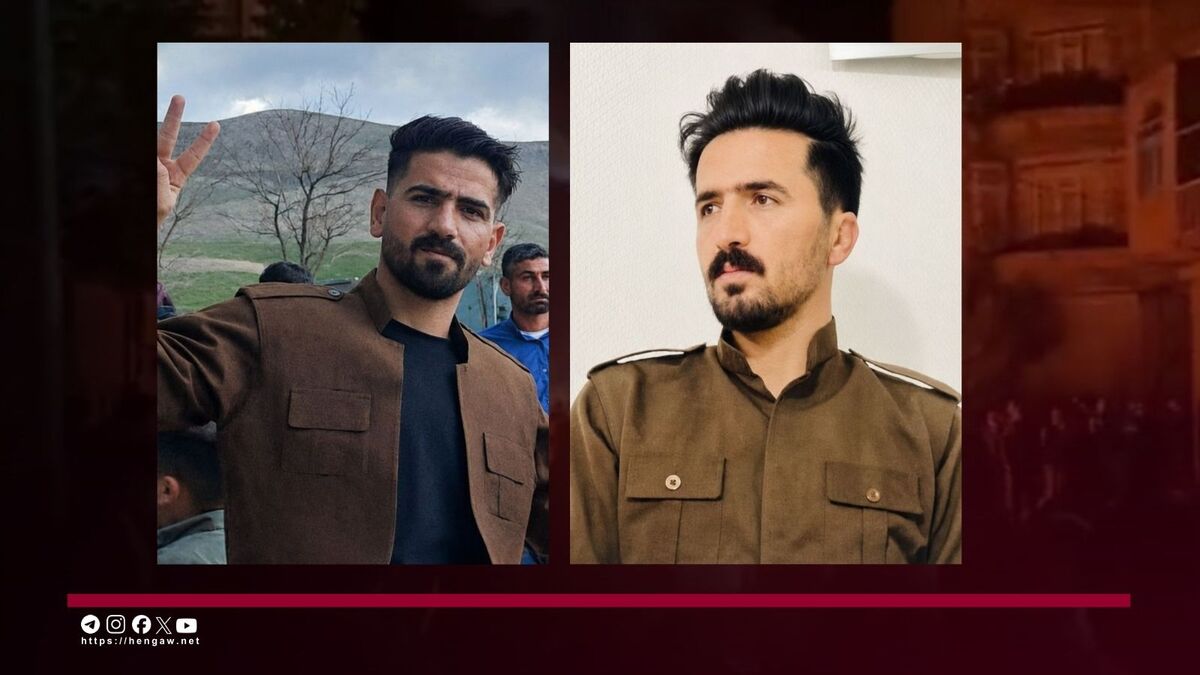
IRGC forces kill Kurdish activist brothers Meysam and Mojtaba Veisi in Dalahu.
Meysam Veisi and his brother Mojtaba Veisi, two prominent Kurdish activists, followers of the Yarsan faith, and founders of the Kurdish library in the Dareh Deraz neighborhood of Kermanshah (Kermashan), were killed after Islamic Revolutionary Guard Corps (IRGC) forces surrounded their safe house in a village in Dalahu County and opened direct fire on the residence. Another civilian who owned the house remains missing, and his fate is still unknown.
https://hengaw.net/en/news/2026/05/article-159
https://en.wikipedia.org/wiki/Yarsanism
2,094
posted on
05/28/2026 11:23:09 AM PDT
by
AdmSmith
(GCTGATATGTCTATGATTACTCAT)
Iran Update Special Report, May 28, 2026
Western media reported on May 28 that US and Iranian negotiators have reached a 60-day memorandum of understanding (MoU), but the US and Iranian leaders who must approve the agreement—US President Donald Trump and Iranian Supreme Leader Mojtaba Khamenei, respectively—have not approved the “agreement” at this time. The details of the reported “agreement” are also unclear based on the wording and sourcing of the leaks of the agreement.[1] Two unspecified US officials told Axios on May 28 that US and Iranian negotiators have reached a 60-day MoU to extend the ceasefire and launch negotiations on Iran's nuclear program.[2] The officials claimed that Iranian negotiators received the “necessary approvals” from “senior leadership” to sign the deal. Islamic Revolutionary Guards Corps (IRGC)-affiliated Tasnim News Agency, citing a source close to the negotiating team, denied that an MoU has been “finalized,” however.[3] An unspecified source also told Israeli media that Mojtaba has not yet approved the “agreement.”[4]
The US officials told Axios that Iran would allow “unrestricted” shipping through the Strait of Hormuz, stop imposing tolls and harassing vessels in the strait, and remove naval mines within 30 days, while the United States would lift its naval blockade on Iranian ports.[5] The officials did not specify how the MoU defines “unrestricted” shipping. Iranian officials have repeatedly described the strait as “open” to shipping while forcing vessels to receive Iranian permission to pass through the strait and to use Iran's illegal traffic separation scheme.[6] Iranian officials have also claimed that Iran is charging vessels “protection fees” and “environmental fees” instead of “tolls.”[7] The ambiguity around these terms makes it unclear whether Iranian negotiators have actually committed to any concessions in the reported MoU.
Even if Iranian negotiators did offer some concessions, it is far from clear that senior decision-makers in Tehran, including Mojtaba Khamenei and IRGC Commander Major General Ahmad Vahidi, are willing to make such concessions. Mojtaba’s recent public statements indicate that he is not willing to give up Iranian control over the Strait of Hormuz.[8] IRGC-affiliated media has also insisted that Iran must receive economic relief—including the release of some of Iran's frozen assets—before Iran will discuss its nuclear program.[9] ISW-CTP continues to assess that Vahidi and his inner circle are currently dominating Iranian decision-making. The US officials told Axios that the United States would discuss sanctions relief and the release of Iran's frozen assets during the 60-day negotiations period, in contrast to the Iranian regime's demand for immediate economic relief upon the signing of an agreement. If Iranian negotiators did agree to postpone the discussion of economic relief to the 60-day negotiations period, this would indicate that Iranian negotiators may not be aligned with Mojtaba and Vahidi. Anti-regime media, citing a source close to the negotiations, reported on May 28 that there are doubts among unspecified individuals about Iranian Parliament Speaker Mohammad Bagher Ghalibaf and the negotiating team's coordination with Mojtaba, which further suggests that the terms in the reported US-Iran MoU may not reflect the positions of key Iranian leaders in Tehran.[10]
The IRGC is using force to try to create the reality that Iran controls the Strait of Hormuz. US Central Command's (CENTCOM) recent military strikes against Iran are part of an effort to deny Iran the ability to create such a reality. Iranian state media claimed on May 28 that the IRGC Navy issued a “stern warning” to four vessels that attempted to pass through the Strait of Hormuz without Iranian permission.[11] The report claimed that the IRGC Navy seized two of the vessels and forced the other two vessels to turn around.[12] US CENTCOM reported on May 28 that US forces intercepted five Iranian one-way attack drones that threatened US forces and commercial shipping in the strait.[13] CENTCOM added that US forces struck an Iranian drone launch site in Bandar Abbas, Hormozgan Province, that was preparing to launch a sixth drone.[14] It is possible that the Iranian drones were targeting the vessels that Iranian media claimed attempted to transit through the strait without coordinating with Iran. Iran has repeatedly used force, including attacks on commercial vessels and naval mines, to force vessels to transit through its illegal traffic separation scheme and comply with Iranian transit regulations. US forces recently struck two IRGC Navy mine-laying vessels on May 25. Iran responded to the US strikes by launching a ballistic missile at an unspecified US airbase in Kuwait, but Kuwaiti air defenses intercepted the missile.
ISW-CTP is tracking initial IRGC-affiliated media reporting of Iranian missile attacks launched from southern Iran targeting US naval vessels in an unspecified location in the Persian Gulf as of 3:58 PM ET on May 28.[15] ISW-CTP will provide further analysis about these reports on May 29.
The United States is taking steps to prevent Iranian efforts to establish a protection racket in the Strait of Hormuz. The US Treasury Department sanctioned the Persian Gulf Strait Authority (PGSA) on May 27 and warned that any actor that cooperates with the PGSA could face sanctions.[16] The PGSA is an organization that Iran established to formalize its control over the strait and force commercial vessels to pay tolls and coordinate their movements with Iran.[17] US Treasury Secretary Scott Bessent also threatened to economically target any actors, including Oman, that directly or indirectly facilitate tolls in the strait.[18] Bessent’s comments follow multiple reports that Iran has discussed establishing a system with Oman to jointly collect tolls from vessels that transit through the strait.[19]
The Iranian Parliament re-elected Mohammad Bagher Ghalibaf as parliament speaker for his seventh consecutive term in the Iranian Parliament's annual presidium election on May 25.[20] It is very rare, if not unprecedented, for parliamentarians to oust the incumbent parliament speaker during the annual presidium election, and it would have therefore been noteworthy if parliamentarians had voted to remove Ghalibaf. Ghalibaf’s removal would have been particularly notable given the role he has played in leading Iran's negotiating delegation in recent months. Ghalibaf won 235 votes from the 285 parliamentarians who voted. The other two candidates for parliament speaker were ultraconservative Paydari (Stability) Front candidate Mohammad Taghi Naghdali and Sunni candidate Osman Salari, who received 29 and seven votes, respectively.[21] Parliament also re-elected Ali Nikzad and Hamid Reza Haji Babaei as deputy parliament speakers.[22] Ghalibaf has served as parliament speaker since 2020, before which Ali Larijani held the position for 12 years.[23]
https://understandingwar.org/research/middle-east/iran-update-special-report-may-28-2026/
2,095
posted on
05/29/2026 10:40:14 AM PDT
by
AdmSmith
(GCTGATATGTCTATGATTACTCAT)
Iran Update Special Report, May 28, 2026
Western media reported on May 28 that US and Iranian negotiators have reached a 60-day memorandum of understanding (MoU), but the US and Iranian leaders who must approve the agreement—US President Donald Trump and Iranian Supreme Leader Mojtaba Khamenei, respectively—have not approved the “agreement” at this time. The details of the reported “agreement” are also unclear based on the wording and sourcing of the leaks of the agreement.[1] Two unspecified US officials told Axios on May 28 that US and Iranian negotiators have reached a 60-day MoU to extend the ceasefire and launch negotiations on Iran's nuclear program.[2] The officials claimed that Iranian negotiators received the “necessary approvals” from “senior leadership” to sign the deal. Islamic Revolutionary Guards Corps (IRGC)-affiliated Tasnim News Agency, citing a source close to the negotiating team, denied that an MoU has been “finalized,” however.[3] An unspecified source also told Israeli media that Mojtaba has not yet approved the “agreement.”[4]
The US officials told Axios that Iran would allow “unrestricted” shipping through the Strait of Hormuz, stop imposing tolls and harassing vessels in the strait, and remove naval mines within 30 days, while the United States would lift its naval blockade on Iranian ports.[5] The officials did not specify how the MoU defines “unrestricted” shipping. Iranian officials have repeatedly described the strait as “open” to shipping while forcing vessels to receive Iranian permission to pass through the strait and to use Iran's illegal traffic separation scheme.[6] Iranian officials have also claimed that Iran is charging vessels “protection fees” and “environmental fees” instead of “tolls.”[7] The ambiguity around these terms makes it unclear whether Iranian negotiators have actually committed to any concessions in the reported MoU.
Even if Iranian negotiators did offer some concessions, it is far from clear that senior decision-makers in Tehran, including Mojtaba Khamenei and IRGC Commander Major General Ahmad Vahidi, are willing to make such concessions. Mojtaba’s recent public statements indicate that he is not willing to give up Iranian control over the Strait of Hormuz.[8] IRGC-affiliated media has also insisted that Iran must receive economic relief—including the release of some of Iran's frozen assets—before Iran will discuss its nuclear program.[9] ISW-CTP continues to assess that Vahidi and his inner circle are currently dominating Iranian decision-making. The US officials told Axios that the United States would discuss sanctions relief and the release of Iran's frozen assets during the 60-day negotiations period, in contrast to the Iranian regime's demand for immediate economic relief upon the signing of an agreement. If Iranian negotiators did agree to postpone the discussion of economic relief to the 60-day negotiations period, this would indicate that Iranian negotiators may not be aligned with Mojtaba and Vahidi. Anti-regime media, citing a source close to the negotiations, reported on May 28 that there are doubts among unspecified individuals about Iranian Parliament Speaker Mohammad Bagher Ghalibaf and the negotiating team's coordination with Mojtaba, which further suggests that the terms in the reported US-Iran MoU may not reflect the positions of key Iranian leaders in Tehran.[10]
The IRGC is using force to try to create the reality that Iran controls the Strait of Hormuz. US Central Command's (CENTCOM) recent military strikes against Iran are part of an effort to deny Iran the ability to create such a reality. Iranian state media claimed on May 28 that the IRGC Navy issued a “stern warning” to four vessels that attempted to pass through the Strait of Hormuz without Iranian permission.[11] The report claimed that the IRGC Navy seized two of the vessels and forced the other two vessels to turn around.[12] US CENTCOM reported on May 28 that US forces intercepted five Iranian one-way attack drones that threatened US forces and commercial shipping in the strait.[13] CENTCOM added that US forces struck an Iranian drone launch site in Bandar Abbas, Hormozgan Province, that was preparing to launch a sixth drone.[14] It is possible that the Iranian drones were targeting the vessels that Iranian media claimed attempted to transit through the strait without coordinating with Iran. Iran has repeatedly used force, including attacks on commercial vessels and naval mines, to force vessels to transit through its illegal traffic separation scheme and comply with Iranian transit regulations. US forces recently struck two IRGC Navy mine-laying vessels on May 25. Iran responded to the US strikes by launching a ballistic missile at an unspecified US airbase in Kuwait, but Kuwaiti air defenses intercepted the missile.
ISW-CTP is tracking initial IRGC-affiliated media reporting of Iranian missile attacks launched from southern Iran targeting US naval vessels in an unspecified location in the Persian Gulf as of 3:58 PM ET on May 28.[15] ISW-CTP will provide further analysis about these reports on May 29.
The United States is taking steps to prevent Iranian efforts to establish a protection racket in the Strait of Hormuz. The US Treasury Department sanctioned the Persian Gulf Strait Authority (PGSA) on May 27 and warned that any actor that cooperates with the PGSA could face sanctions.[16] The PGSA is an organization that Iran established to formalize its control over the strait and force commercial vessels to pay tolls and coordinate their movements with Iran.[17] US Treasury Secretary Scott Bessent also threatened to economically target any actors, including Oman, that directly or indirectly facilitate tolls in the strait.[18] Bessent’s comments follow multiple reports that Iran has discussed establishing a system with Oman to jointly collect tolls from vessels that transit through the strait.[19]
The Iranian Parliament re-elected Mohammad Bagher Ghalibaf as parliament speaker for his seventh consecutive term in the Iranian Parliament's annual presidium election on May 25.[20] It is very rare, if not unprecedented, for parliamentarians to oust the incumbent parliament speaker during the annual presidium election, and it would have therefore been noteworthy if parliamentarians had voted to remove Ghalibaf. Ghalibaf’s removal would have been particularly notable given the role he has played in leading Iran's negotiating delegation in recent months. Ghalibaf won 235 votes from the 285 parliamentarians who voted. The other two candidates for parliament speaker were ultraconservative Paydari (Stability) Front candidate Mohammad Taghi Naghdali and Sunni candidate Osman Salari, who received 29 and seven votes, respectively.[21] Parliament also re-elected Ali Nikzad and Hamid Reza Haji Babaei as deputy parliament speakers.[22] Ghalibaf has served as parliament speaker since 2020, before which Ali Larijani held the position for 12 years.[23]
https://understandingwar.org/research/middle-east/iran-update-special-report-may-28-2026/
2,096
posted on
05/29/2026 10:40:14 AM PDT
by
AdmSmith
(GCTGATATGTCTATGATTACTCAT)
Iran Update Special Report, May 29, 2026
US President Donald Trump called for the Strait of Hormuz to “immediately open” without tolls and with the removal of mines. Iran's demands for “control” of the Strait of Hormuz directly contradict Trump's position. These Iranian demands would be a fundamental change to long-held international maritime law and are at odds with the free flow of commerce. Trump stated on Truth Social that Iran must “immediately open” the strait with no tolls and remove remaining mines.[1] Trump's definition of an “open” strait is different from Iranian officials’, however. Trump's statement refers to the pre-war version of the strait – one in which international shipping was unencumbered by Iranian threats to fire at ships or mine waterways and Iranian efforts to disrupt shipping by moving traffic separation schemes and charging tolls on transiting vessels. Iranian officials and media continue to state that an “open” strait is one in which the IRGC Navy escorts vessels through an unrecognized traffic separation scheme in Iranian territorial waters, whether vessels pay a toll or not. Iranian Foreign Affairs Ministry spokesperson Esmail Baghaei stated on May 29 that the strait has been and will continue to be under Iran's “special measures,” including the blockage of commercial vessels that Iran deems “hostile” through coordination with Iranian authorities.[2] Parliament's National Security and Foreign Policy Committee Chairman Ebrahim Azizi also stated on May 29 that Iran will pursue “management of the Strait of Hormuz” permanently.[3] IRGC-affiliated outlet Fars News Agency reported on May 29that Iran is preparing for arrangements to monitor ships, provide services, and ensure security in the strait.[4] All of these positions are at odds with the free flow of commerce on the ocean. The regime's English-media outlet Press TV argued on May 29 that the Iran's sovereignty over the strait is “non-negotiable” and represents a vital strategic tool for Iran to deter future US military action against Iran.[5]
Iran can try to establish its unrecognized traffic separation scheme for the Strait of Hormuz either by obtaining US and then International Maritime Organization (IMO) recognition of its traffic separation scheme or, failing that, by force. The IMO recognizes traffic separation schemes, which are governed by the 1972 Convention on the International Regulations for Preventing Collisions at Sea (COLREGS).[6] President Trump's statement opposes the recognition of Iran's traffic separation scheme.[7] This means that Iran would need to fire at or otherwise threaten ships in the strait in order to enforce its rules if Iran agreed to Trump‘s demands. Iran has repeatedly used force, including attacks on commercial vessels and naval mines, to force vessels to transit through its illegal traffic separation scheme and comply with Iranian transit regulations since March 4.[8] US efforts to blockade Iranian ships and ports and US strikes against Iran are part of an effort to prevent Iran from enforcing the coercive actions.
The IRGC is using force to try to create the reality that Iran controls the Strait of Hormuz. US Central Command (CENTCOM) has continued to respond to Iranian efforts, most recently by issuing a notice to mariners and airmen on May 29 that the US Navy will conduct military operations north of the Musandam Peninsula in the Strait of Hormuz.[9] The US Navy will target any vessels “engaged in, or supporting, mine-laying activities.”[10] The notice added that Iran continues to attempt to impede safe navigation and mine clearance in the strait.[11]
Iranian officials continue to indicate that Iran will not accept US President Donald Trump's most recent demands regarding Iran's nuclear program. Trump stated on Truth Social on May 29 that Iran must commit to not producing a nuclear weapon and agree to “destroy” or move its highly enriched uranium (HEU) stockpile.[12] Iranian officials have indicated that Iran will not agree to these demands and therefore have refused to make concessions, however.[13] Iranian Parliament's National Security and Foreign Policy Committee Chairman Ebrahim Azizi stated on May 29 that Iran does not intend to transfer its enriched uranium stockpile to a third country.[14] The committee's spokesperson Ebrahim Rezaei also stated that Iran opposes suspending uranium enrichment or moving its HEU from Iranian territory because Iran is “victorious” and should make “maximum demands” of the United States.[15] Hardliner Parliamentarian and member of the Iranian negotiating team Mahmoud Nabavian stated on May 29 that Iran has the right to conduct nuclear research, development, and production without the interference of the United States, because it is a member of the Non-Proliferation of Nuclear Weapons (NPT) agreement.[16] Islamic Revolutionary Guards Corps (IRGC)-affiliated Tasnim News Agency also denied Western media reports on May 29 that Iran and the United States had agreed to a 60-day memorandum of understanding (MoU), adding that the sides did not reach a final agreement and that there was no discussion of Iran's nuclear program. Tasnim added that Iran has ”repeatedly emphasized” that Iran will not accept any agreement until the United States has ”clarified” the status of Iranian frozen assets.[17]
The United States is continuing to apply economic pressure on Iran by targeting the networks that facilitate its illicit oil trade. The Iranian regime heavily relies on the oil trade to generate revenue.[18] The US Treasury Department sanctioned five front companies supporting the Iranian Armed Forces General Staff-controlled Sepehr Energy Jahan Nama Pars Company on May 28, for facilitating Iranian oil shipments, including exports to the People's Republic of China.[19] The US State Department also sanctioned three entities and an individual linked to Iran's petrochemical products trade and designated eight entities and eight vessels as blocked property for transporting Iranian petroleum or petrochemical products on May 28.[20]
CENTCOM denied Iranian claims that Iranian air defense systems downed US aircraft near Bushehr Province in southern Iran on May 28.[21] CENTCOM confirmed that all US air assets are accounted for. IRGC-affiliated media claimed that it intercepted a “hostile aircraft” over the Persian Gulf near Jam City, Bushehr Province, on May 28.[22]
The Wall Street Journal reported on May 29 that the United Arab Emirates (UAE) conducted dozens of airstrikes targeting Iran in coordination with the United States and Israel during the US-Israeli air campaign.[23] The Wall Street Journal added that Saudi officials complained to the United States in early April that UAE strikes increased the risk that Iran would target regional energy facilities.[24] Unspecified people familiar with the matter told the Wall Street Journal that the UAE began strikes in the “early days” of the war and continued them through the day after the April ceasefire announcement.[25] It is unclear on which day the UAE strikes began based on this reporting, but Iran first struck Gulf energy infrastructure on March 1, when it hit a structure at Jabel Ali Port‘s oil terminal in Dubai, UAE, and Ras Tanura Refinery in Dhahran, Saudi Arabia.[26] This means that for Iran's first attacks on energy to have been in retaliation for UAE strikes, the UAE would have had to take part in the air campaign beginning on February 28 or early on March 1. Iran also targeted the UAE with 346 projectiles on February 28, which was the first day of the war.[27]
Hezbollah has adapted to increasing IDF night operations by fielding thermal camera-equipped first-person view (FPV) drones that enable nighttime attacks. The IDF initially began conducting more operations at night due to the risks of FPV attacks during the day. Hezbollah published a video of a thermal camera-equipped FPV drone that struck and wounded two IDF soldiers near Iskandarounah in southern Lebanon at night on May 23.[28] Hezbollah has increased nighttime drone attacks, according to an IDF soldier speaking to the Wall Street Journal. Hezbollah's thus far limited deployment of thermal camera-equipped FPV drones is likely an adaptation to IDF night operations, as many Israeli units in Lebanon have begun to operate at night to avoid the daytime threat posed by FPVs.[29] This new capability will force the IDF to further adapt to Hezbollah's nascent nighttime FPV drone capabilities as well as to continue to combat daytime FPV drone attacks. The soldier who spoke to the Wall Street Journal warned that the IDF currently does not have a solution to Hezbollah's adaptation “beyond covering weapons and equipment with [anti-drone] nets.”[30]
Hezbollah appears to be dictating the pace of adaptation to the IDF at this time by quickly overcoming relatively rudimentary Israeli countermeasures. Israeli media observed in early April 2026 that Hezbollah was “increasingly” deploying fiber-optic drones, which suggests that Hezbollah began the war relatively more reliant on radio-controlled drones.[31] The increasing Hezbollah reliance on fiber optic drones also indicates that Israeli electronic countermeasures may have pressured Hezbollah to begin using fiber-optic drones. Hezbollah, without the Israeli employment of electronic warfare, would have no reason to shift to fiber-optic drones. The IDF has adapted to fiber optic drones through a series of rudimentary passive defenses, none of which are particularly effective as presently implemented by tactical units.[32] Hezbollah published FPV footage from May 15, for example, that shows an IDF position where IDF soldiers deployed nets over top but not around their vehicles, making it easy for the drones to fly under the nets and detonate.[33] The drones also forced the IDF to operate increasingly at night, but the emergence of drones equipped with thermal cameras will also negate that IDF countermeasure.[34]
Iran has continued to use the ceasefire to reconstitute its ballistic missile force by restoring access to missiles and launchers buried in underground missile bases. The US-Israeli air campaign blocked the entrances to many underground bases to prevent missile crews from firing, but CNN reported on May 27 that satellite imagery shows that Iran has excavated at least 50 of 69 tunnel accesses at 18 underground missile bases.[35] Iran has used construction equipment to reopen the entrances and restore access roads.[36] Excavating these bases is part of a wider effort to reconstitute tactical units in the ballistic missile force and make them combat effective again. Other reconstitution activities—like reorganization of operational-level commands and regeneration of logistics networks, for example—need to take place for the units to be capable of executing their mission of massing and sustaining fire against US and Israeli targets.[37]
ISW-CTP continues to assess that Iran's ability to regain access to missiles and launchers stored in underground bases and restore some capacity to fire missiles does not mean that Iran has reconstituted its broader ballistic missile program, however. US-Israeli airstrike campaign aimed to generate qualitative effects across Iran's entire missile program (not just the operational force), including the assets that sustain it.
Israeli and Lebanese military officials discussed Lebanon's efforts to disarm Hezbollah in a round of security talks at the Pentagon on May 29.[40] These talks are the first direct military talks between Lebanon and Israel since 1993.[41] Israeli and Lebanese diplomatic officials have met at least three times in Washington, DC, over the past two months to discuss an end to the Israel-Hezbollah conflict.[42] Diplomatic officials are set to meet at the US State Department on June 2 and 3 to continue talks.[43]
https://understandingwar.org/research/middle-east/iran-update-special-report-may-29-2026/
2,097
posted on
05/30/2026 1:01:06 AM PDT
by
AdmSmith
(GCTGATATGTCTATGATTACTCAT)
2,098
posted on
05/30/2026 1:02:04 AM PDT
by
AdmSmith
(GCTGATATGTCTATGATTACTCAT)
To: nuconvert
Iran's Crypto-Fueled War Economy. The decentralized nature of cryptocurrency makes it an ideal vehicle for sanctions evasion and an increasingly vital pillar of Iran's wartime economy. Iran's rapidly expanding cryptocurrency economy, which is closely tied to the Islamic Revolutionary Guard Corps (IRGC). Reports indicate that even amid ongoing U.S.-Israeli airstrikes targeting major Iranian cities and infrastructure, the country's largest digital asset platform, Nobitex, continues to operate. It serves both as a retail gateway for ordinary Iranians seeking access to foreign currency and as a crucial pillar of Iran's financial architecture, enabling cross-border value transfers beyond traditional banking channels. Although Iran has refrained from legally or officially adopting cryptocurrency, it has increasingly supported the industry, albeit in a controlled manner, as a potential revenue source and sanctions-busting apparatus.
https://gulfif.org/irans-crypto-fueled-war-economy/
2,099
posted on
05/30/2026 1:13:39 AM PDT
by
AdmSmith
(GCTGATATGTCTATGATTACTCAT)
To: AdmSmith
That was eye opening. I had read that crypto mining had almost ceased due to damage caused during war.
2,100
posted on
05/30/2026 1:41:27 AM PDT
by
nuconvert
( Warning: Accused of being a radical militarist. Approach with caution.)
Navigation: use the links below to view more comments.
first previous 1-20 ... 2,061-2,080, 2,081-2,100, 2,101-2,120 ... 2,401-2,406 next last
Disclaimer:
Opinions posted on Free Republic are those of the individual
posters and do not necessarily represent the opinion of Free Republic or its
management. All materials posted herein are protected by copyright law and the
exemption for fair use of copyrighted works.
FreeRepublic.com is powered by software copyright 2000-2008 John Robinson