
Posted on 10/28/2025 2:57:39 PM PDT by ebb tide
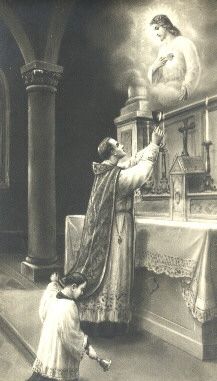
Chicago’s Blase Cupich has asserted that the Traditional Latin Mass was “more of a spectacle rather than the active participation of all the baptised”.
In a reflection on the liturgical reforms which came from Sacrosanctum Concilium, one of the four constitutions of the Second Vatican Council, the cardinal argued that the document drew on scholarly research which revealed “adaptations that were introduced over time, which incorporated elements from imperial and royal courts.” The reform, he contends, aimed to purify the liturgy of “these adaptations … to enable the liturgy to sustain the Church’s renewed sense of herself.”
Cardinal Cupich made plain that the renewed liturgy is not simply a matter of external form but of ecclesial identity and mission. He emphasised that the measure of authenticity in Eucharistic celebration lies in concern for those in need — it is this “criterion by which the authenticity of our Eucharistic celebrations is judged.” He went further still, describing the Mass not merely as ritual but as “the locus of solidarity with the poor in a fractured world.”
The cardinal made his remarks in the context of the Council’s renewed vision of the Church. He cited the papal letter Dilexi Te, noting that “the Second Vatican Council represented a milestone in the Church’s understanding of the poor in God’s saving plan”, a theme initially marginal in the preparatory documents but brought to prominence by Pope John XXIII when he declared that “the Church presents herself as she is and as she wishes to be: the Church of all and in particular the Church of the poor.”
Cardinal Cupich recalled how Cardinal Lercaro, Archbishop of Bologna, declared in December 1962, “This is the hour of the poor, of the millions of the poor throughout the world.”
According to the cardinal, the liturgical renewal aimed to restore simplicity and sobriety to worship so that the Church might more clearly present herself as the Lord’s own rather than the servant of worldly power.
He wrote: “The liturgical reform benefited from scholarly research into liturgical resources, identifying those adaptations … which had transformed the liturgy’s aesthetics and meaning, making the liturgy more of a spectacle rather than the active participation of all the baptised.” Purifying those adaptations was, he argued, essential if the Eucharist was to regain its proper meaning.
The statement forms part of a broader discussion over the post-conciliar reform of the Roman Rite, which in the 1960s replaced the Tridentine Mass with the revised form of the liturgy commonly known as the Novus Ordo Missae. The reform followed the 1963 Constitution on the Sacred Liturgy, Sacrosanctum Concilium, the first document of the Second Vatican Council, which called for the “full, conscious and active participation” of the faithful in the Church’s worship.
Pope Paul VI introduced the new Mass in 1969, saying it would enable the faithful to take part more fully in the Eucharist. The change marked the most significant alteration to the Roman Rite in centuries, revising key prayers and rubrics that had been in place since the sixteenth century.
The Traditional Latin Mass, codified by Pope Pius V after the Council of Trent, continued in limited use but saw a revival after 2007 when Pope Benedict XVI allowed wider celebration under Summorum Pontificum. That provision was later restricted by Pope Francis’s 2021 motu proprio Traditionis Custodes.
Cardinal Cupich’s remarks came in the same week that Cardinal Raymond Burke celebrated a Solemn Pontifical Mass in the Traditional Latin Rite at St Peter’s Basilica, an event attended by clergy and faithful from around the world.
Reverential silence during the Mass of the Ages equates to maximum participation by lay Catholics present and assisting.
“Participation” during the typical diocesan Novus Ordo mass, by comparison, is a shadow.
Humans are the only species capable of mystical thought. At the core of every religion is the ritual expression of mystical thought that brings comfort to its adherents. The Latin mass with its cadences, rhythm and content splendidly addressed those mystical needs. Cupich should note that people are not attending dry, woke services whatever the rational.
He wrote: “The liturgical reform benefited from scholarly research into liturgical resources, identifying those adaptations … which had transformed the liturgy’s aesthetics and meaning, making the liturgy more of a spectacle rather than the active participation of all the baptised.” Purifying those adaptations was, he argued, essential if the Eucharist was to regain its proper meaning.
I don’t think the Douay–Rheims Bible needs to be transformed, or the book ‘Catechism of the Catholic Church’.
The “Latin Mass”, offered “ad orientam”, is all about God
The “New Mass”, PARTICULARLY when celebrated facing the people, is all about the master of ceremonies running the show.
Cupich is right, the TLM is a wonderful and beautiful Spectacle.
Kudos for turning this silliness into a rhetorical triumph.
All liturgies are spectacles, and some are more spectacular than others. While working years ago in Italy, I saw some un-spectacular televised Novus Ordo masses without music and such in Italian. Even Cupich would have been bored.
A long time ago, in a galaxy far, far away, Catholic clergy were actually Catholic. Give these new-age clowns enough room, and pretty soon the mass will have advertising.
Soupy talkin’ out of his ass. As per usual.
VII became the church of the poor.... the poor victims.
I blame Cupich.
Wrong! The Mass is about the re-presentation of the one Sacrifice of the Lord and the worship of God.
What I have to say is too vulgar.
My 23YO son frequently attends Mass there. Our hope is that he falls in love with one of the many young women there.
A “spectacle” that sustained the faith of millions for 1700 years. The bogus ordo has caused the destruction of the Church in just fifty four years. Cupich is a disgrace, and an ignoramus.
Disclaimer: Opinions posted on Free Republic are those of the individual posters and do not necessarily represent the opinion of Free Republic or its management. All materials posted herein are protected by copyright law and the exemption for fair use of copyrighted works.