
Posted on 10/27/2013 12:45:15 PM PDT by Gamecock
October 2006 – It is a mark of our changing times that many people have only a vague idea who Martin Luther is. Most of us have heard his name but we’re not sure where he’s from or what he did or when he lived. Some of us even get him mixed up with someone else. I would venture to say that most of us are aware of the fact that Martin Luther was a religious leader who managed somehow to get a whole denomination named after himself. And some of us are probably aware that Martin Luther had something to do with the Protestant Reformation. The musicians among us are certainly aware that it was Martin Luther who penned the words to the famous hymn A Mighty Fortress is Our God. But that’s about it.
October 29, 2006 is Reformation Sunday. It is always celebrated on the last Sunday of October because it was on October 31, 1517 that an obscure monk named Martin Luther nailed his 95 theses on the door of the castle church in Wittenberg, Germany. Historians tell us that Martin Luther had no idea that he would ever start a movement, much less a reformation, much less a denomination. When Martin Luther nailed his theses on the wall, he was simply following the accepted custom of the day. He was a young professor at the University of Wittenberg and the door of the castle church was like the University bulletin board. Anyone could tack anything up there for public comment and discussion. So when Martin Luther nailed his 95 theses on the door, he was simply doing what any young professor would do. He was putting forth his ideas for public consideration and public debate. From that day sprang forth a movement which would change the course of world history. When Martin Luther nailed those theses on the church door, he ignited a spark which burst into a flame which spread across Europe and which is still burning today. We call it the Protestant Reformation.
If you read the 95 theses today, they seem to be rather arcane and out of date and obsolete, which in fact they are. The things Martin Luther was writing about were burning issues back then, but most of those abuses have long since faded away. For the most part his 95 theses are just relics of history that are of interest mainly to biblical and historical scholars.
Martin Luther was right. The true treasure of the church and the only treasure the church has is the gospel of the Lord Jesus Christ. That is primary and everything else is secondary. And that is why it is a terrible and dreadful thing when the church for any reason elevates that which is secondary over that which is primary, thus obscuring the gospel of Christ. That is what Martin Luther was trying to say back in 1517. That is what the Protestant Reformation is all about. He was arguing that the gospel is the center of the church and that the gospel is the primary truth of the church and that the gospel is what the church is all about and therefore anything, no matter how good and right, which obscures the gospel is wrong and bad and needs to be changed or removed.
Life in a monastery meant getting up in the morning between 1-2 A.M. They would begin their day at that early hour with prayer and singing, followed by a time of meditation, followed by another time of prayer and perhaps another time of singing. Later they would have breakfast and then they would have morning prayers. After the prayers they would work all morning. After lunch came another time of prayer and singing followed by a brief nap. Then came more prayers and singing and meditation and the sacraments. After all that, they would have the evening meal after which they would have prayer again and singing again and then only later in the evening would they finally go to bed. It was a rigorous, difficult schedule. It meant that your life was filled with religious ritual, religious ceremony, the sacraments, penance and a lifestyle of poverty and austerity.
So he joined the monastery in order to save his soul. For years Martin Luther was a good monk in the Augustinian monastery. He kept the rituals. He kept the schedule. He wore the cowl and he truly believed that if he did that, eventually he would gain admission to heaven. I emphasize that he truly believed this because that is what the church taught. But in his quiet moments—-that we all have when we think about the things we have heard and learned during the day-—he knew that something was wrong. The thought that gripped Martin Luther, the thought that eventually struck terror into his soul, was the thought that up in heaven there was a God who was holy and good and righteous and how could he, a sinner, ever be reconciled to a God who was truly holy and good and pure and righteous?
Martin Luther, with total seriousness of heart and purpose, would go day by day into the confessional and there to his fellow priests he would confess all the sins he remembered. Sometimes by his own admission he would spend six hours a day in confessing his sin. I don’t know if you’ve ever tried to confess your sins but it’s not an easy thing to do because you usually confess the big ones really quick and then it takes longer to get the small ones. But if you are really, really dedicated you’ve got to reach inside your soul to find out all those small sins that are tripping you up.
If you try to do what Martin Luther did, you will truly discover what Martin Luther discovered. Trying to confess your sins in order to be forgiven will only lead you to despair and further guilt. Why? Because Martin Luther discovered that no matter how hard he tried he could not remember all his sins. There were some secret sins and some hidden sins and some forgotten sins that were buried deep in his subconscious. He knew they were there but he didn’t know what they were. And because he didn’t know what they were, he couldn’t confess them. But if he couldn’t confess them he could never be forgiven. Even though Martin Luther confessed and confessed and confessed he never found the forgiveness that he sought.
When he would go to his fellow monks for confession, they would listen to him talking about all those little tiny sins and they would say, “God is not angry with you. You are angry with God.” The head of his order, the godly Johann Staupitz would hear Martin Luther’s confessions and he would say, “Bring me some real sins to confess. If you’re going to take this much time you ought to have some real sins to confess. Don’t bring me these little peccadilloes.”
When he got to Rome, he was sadly disappointed. First he was surprised, then shocked, then sickened. Coming from the simple, peasant religion of Germany to the full flower of religion in Rome was an enormous culture shock. What he saw there was a disregard for the fundamental truths of the Christian faith. He found priests who were so drunk they couldn’t finish the mass. He found other priests who would give 70-100 masses a day, just running through it as fast as they could. He found in certain quarters of Rome priests who had broken their vows of celibacy. He even heard that there were some priests who bragged that they were righteous because they confined themselves to women. He was scandalized by the veneration of relics—-the teaching that by venerating the relics of the early church you could release a soul from purgatory. It sickened him. His biographer Roland Bainton says that when Martin Luther got to Rome he concluded that “If there were a Hell, Rome was built upon it.”
Martin Luther could not see how saying prayers over some stairs could have anything to do with a righteous and holy God.
He went back to Germany, now more troubled than ever before, and began to investigate the way of mysticism. At an earlier stage he had poured himself into his work doing all that he could. He hoped that by doing religious things he could commend himself to God. Now he went the other direction at the advice of his superiors. He began to investigate the love and grace and mercy of God. Their advice was simple. Trust in God. Steep yourself in him. Let yourself be enveloped by the love of God. Actually, that was not bad advice. It helped Martin Luther for a while.
But as he began to do that and as he began to study the life of mysticism, the question plagued his mind, What if God is not really righteous? What if God is not really just? What if there is some capricious Being in heaven who in cruelty sends some men to Hell and in grace picks out some for Heaven? Who could love a God like that? By his own admission he said, “Love God? I hated him.”
Martin Luther took out his Hebrew and his Latin and his Greek and the church fathers and began to study the Bible. He was assigned first to teach the book of Psalms and then to teach the book of Romans and then to teach the book of Galatians. It was during those years of studying and teaching the Bible that he made the great discovery which was to change him and then the church and then Europe and then the world. One of the interesting things about Martin Luther’s life is that we don’t know when really the great change took place. We know exactly when and where he was struck by lightning in the year 1505, but we don’t know, because he never told us exactly, when or where or under what circumstances the great change came. We just know that in one of those years when he was teaching the Bible there was a tremendous change.
I am not ashamed of the gospel, because it is the power of God for the salvation of everyone who believes: First for the Jew, then for the Gentile. For in the gospel a righteousness from God is revealed, a righteousness that is by faith from first to last, just as it is written: “The righteous will live by faith.”If you have your Bibles open, circle three statements in those two verses because this is what Martin Luther was studying. “I am not ashamed of the gospel” in verse 16. And in verse 17 “a righteousness from God” and “by faith from first to last.” Martin Luther the monk became Martin Luther the Bible student. The torture of his soul and the years of self-examination finally brought him to Romans 1:16-17. As he read those words, it dawned on him at last: In the gospel the righteousness of God is obtained by faith from first to last.
As Martin Luther began to study, suddenly the light flooded in. Here are his own words:
I greatly longed to understand Paul’s Epistle to the Romans and nothing stood in the way but that one expression “the justice of God” because I took it to mean that justice whereby God is just and deals justly in punishing the unjust. My situation was that, although an impeccable monk, I stood before God as a sinner troubled in conscience and I had no confidence that my merit would assuage him. Therefore, I did not love a just and angry God, but rather hated and murmured against him. Yet I clung to the dear Paul and had a great yearning to know what he meant.
Night and day I pondered until I saw the connection between the justice of God and the statement that “the just shall live by his faith.” Then I grasped that the justice of God is that righteousness by which through grace and sincere mercy God justifies us through faith. Thereupon I felt myself to be reborn and to have gone through open doors into Paradise. The whole of Scripture took on a new meaning. Whereas before “the justice of God” had filled me with hate, now it became inexpressibly sweet in greater love. This passage of Paul became to me a gate to heaven. (Roland Bainton, Here I Stand, 49-50)This was Martin Luther’s Highway to Heaven.
My thoughts are best explained by Amy Farrah Fowler.
I don’t object to the concept of a deity but I’m baffled by the notion of one that takes attendance.
http://www.youtube.com/watch?v=UBTlbO8Kto0
Tweeted the article. Thanks for the post
Martin Luther’s Highway to Heaven
I don’t think Luther is in heaven unless he had a deathbed conversion back to Catholicism that we don’t know about. LOL!
Martin Luther deservers a lot of credit and respect for what he attempted to do but in truth he failed. The Catholic church was not reformed nor was Biblical Christianity restored.
From our human short lived view point it seems a long time ago but from the great sweep of history leading to and ending with “thy kingdom come” it is but a moment.
As Jesus said, “This good news of the kingdom will be preached in all the inhabited earth for a witness to all the nations....and then the end will come”.
Martin Luther should become a Saint.
Good Reformation Sunday post. Thanks.
" Should the Queen be unable to prevent the divorce, she must accept the great evil and most insulting injustice as a cross, but not in any way acquiesce in it or consent to it. Better were it for her to allow the King to wed another Queen, after the example of the Patriarchs, who, in the ages previous to the law, had many wives ; but she must not consent to being excluded from her conjugal rights or to forfeiting the title of Queen of England."Or maybe the Luther who did not believe that sin could seperate us from God?
No sin can separate us from Him, even if we were to kill or commit adultery thousands of times each day.No thanks, I will stick with Our Lord and His Teachings:
Jesus said to them, “Amen, amen, I say to you, unless you eat the flesh of the Son of Man and drink his blood, you do not have life within you.
Whoever eats my flesh and drinks my blood has eternal life, and I will raise him on the last day.
For my flesh is true food, and my blood is true drink Whoever eats my flesh and drinks my blood remains in me and I in him.
Just as the living Father sent me and I have life because of the Father, so also the one who feeds on me will have life because of me.
This is the bread that came down from heaven. Unlike your ancestors who ate and still died, whoever eats this bread will live forever.”
Ouch. I say that with humility as one who has posted sans paras myself.
Ouch.
Oops, my post got all jumbled up. Here it is again, fixed:
“No sin will separate us from the Lamb, even though we commit fornication and murder a thousand times a day. Do you think that the purchase price that was paid for the redemption of our sins; by so great a Lamb is too small? Pray boldly—you too are a mighty sinner.”
Luther’s critics often quote this statement. The Catholic scholar Jared Wicks has correctly pointed out, “One needs to be on the lookout for Luther’s rhetorical flights, and to be judicious in discriminating between the substance of his message and the linguistic extremes with which he sometimes made his points.”[33] The above statement is a perfect example. The point Luther is making is not to go out and murder or fornicate as much as possible, but rather to point out the infinite sacrifice of Christ’s atonement. There is no sin that Christ cannot cover. His atonement was of an infinite value. That this statement was not to be considered literally is apparent by Luther’s use of argumentum ad absurdum: do people really commit fornication and murder a thousand times a day? No. Not even the most heinous God-hating sinner is able to carry out such a daily lifestyle.
Secondly, one must recall the recipient of this letter: Phillip Melanchthon. No historical information exists that indicts Melanchthon of ever murdering or fornicating, even once. The Lutheran writer W.H.T. Dau presents the absurdity of the arguments put forth by Roman Catholic authors along these lines:
“‘Be a sinner, and sin bravely, but believe more bravely still’- this is the chef d’oeuvre of the muck-rackers in Luther’s life... What caused Luther to write these words? Did Melanchthon contemplate some crime which he was too timid to perpetrate? According to the horrified expressions of Catholics that must have been the situation. Luther, in their view, says to Melanchthon: Philip, you are a simpleton. Why scruple about a sin? You are confined in the trammels of very narrow-minded moral views. You must get rid of them. Have the courage to be wicked. Make a hero of yourself by executing some bold piece of iniquity. Be an ‘Uebermensch.’ Sin with brazen unconcern; be a fornicator, a murderer, a liar, a thief, defy every moral statute,- only do not forget to believe in the Lord Jesus Christ. His grace is intended, not for hesitating, craven sinners, but for audacious, spirited, high minded criminals…Can the reader induce himself to believe that Luther advised Melanchthon to do what he himself knew was a moral impossibility to himself because of his relation to God?…What brave sin did Melanchthon actually commit upon being thus advised by Luther?”[34]
On the other hand, Luther ends by saying, “you too are a mighty sinner” so “pray boldly.” Here, Luther points out the seriousness of sin. While Christ’s sacrifice and work are infinite enough to cover the most heinous of sins, any sin in a person’s life makes them a “mighty sinner” in need of a savior. A little sinner winds up in Hell just as the mighty sinners do, thus we are all really mighty enough sinners to deserve damnation.
That Luther’s words should not be taken literally is clear from statements he made elsewhere about heinous sin:
“Works only reveal faith, just as fruits only show the tree, whether it is a good tree. I say, therefore, that works justify, that is, they show that we have been justified, just as his fruits show that a man is a Christian and believes in Christ, since he does not have a feigned faith and life before men. For the works indicate whether I have faith. I conclude, therefore, that he is righteous, when I see that he does good works. In God’s eyes that distinction is not necessary, for he is not deceived by hypocrisy. But it is necessary among men, so that they may correctly understand where faith is and where it is not. As Paul says, we ought not to trust a faith which is false, as when someone believes he is a part of the church although he meanwhile still whores [I Cor. 5:11]. In this I see that he is not a good tree and when he glories saying, “I am a part,” I can argue against him, “You are not part of the church, because your works are evil.” Therefore, those works are also evidence to himself and to others about him whether he has the true faith. For those who glory that they are Christians and do not show this faith by such works, as this sinful woman does, but persist up to the present and live in open sins, in whoring and adultery, are not Christians at all. For the Christian shows his life and that he has been made a Christian by love and good works and flees all vices. We should not be a part of the church in number only, as the hypocrites, but also by our works, so that our heavenly Father may be glorified. Love merits forgiveness of sins, that is, love reveals that his sins have been forgiven.”[35]
For Luther, outward sins like murder and adultery were obviously bad. But these were only a symptom of unbelief, which is the root of all outward sin. In a sermon on Luke 18, Luther discusses the faith of the Publican as compared to the works of the Pharisee:
“Now let us better see and hear what the Lord says to this. There stands the publican and humbles himself, says nothing of fasting, nothing of his good works, nor of anything. Yet the Lord says that his sins are not so great as the sins of the hypocrite; even in spite of anyone now exalting himself above the lowest sinner. If I exalt myself a finger’s breadth above my neighbor, or the vilest sinner, then am I cast down. For the publican during his whole life did not do as many and as great sins as this Pharisee does here when he says: I thank thee God that, I am not as other men are; and lies enough to burst all heaven. From him you hear no word like: “God, be thou merciful to me a sinner!” God’s mercy, sympathy, patience and love are all forgotten by him, while God is nothing but pure mercy, and he who does not know this, thinks there is no God, as in Psalm 14:1: “The fool hath Said in his heart, There is no God.” So it is with an unbeliever who does not know himself. Therefore I say one thing more, if he had committed the vilest sin and deflowered virgins, it would not have been as bad as when he says: “I thank thee God, that I am not as the rest of men, extortioners, unjust, adulterers, or even as this publican.” Yes, yes, do I hear you have no need of God and despise his goodness, mercy, love and everything that God is? Behold, these are thy sins. Hence the public gross sins that break out are insignificant; but unbelief which is in the heart and we cannot see, this is the real sin in which monks and priests strut forth; these lost and corrupt ones are sunk head and ears in this sin, and pretend to be entirely free from it.”[36]
In the above statement, one can see Luther’s brilliance with language and theological insight. How many of us think of unbelief as an extreme heinous sin? Compared to blatant fornication or murder, unbelief seems to us as not so bad. Luther though realizes that unbelief is a sin against a holy God, and thus more heinous than any amount of murder or adultery. A sin against a perfect infinite being deserves a perfect infinite punishment. All of us are indeed, mighty sinners.
http://tquid.sharpens.org/sin_boldly.htm#a2
This blog: http://beggarsallreformation.blogspot.com/, has good answers for many of the accusations Catholics make against Luther. They can’t help it, since, if not for Luther, they’d still be in a position wherein Kings are made to tremble before their Popes, and “heretics” who dare to think that salvation comes from God, and not through the Pope, were burned at the stake. Now they’re just a bunch of guys wishing for the good old days.
Paragraphs are your friend.
That Luther’s words should not be taken literally is clear from statements he made elsewhere about heinous sin:
That Luther’s words should not be taken literally is clear from statements he made elsewhere about heinous sin:
That Luther’s words should not be taken literally is clear from statements he made elsewhere about heinous sin:
That Luther’s words should not be taken literally is clear from statements he made elsewhere about heinous sin:
That Luther’s words should not be taken literally is clear from statements he made elsewhere about heinous sin:
That Luther’s words should not be taken literally is clear from statements he made elsewhere about heinous sin:
hehehehehehehe..................
“Paragraphs are your friend.”
But Catholics sure aren’t!
No sin can separate us from Him, even if we were to kill or commit adultery thousands of times each day.
No sin can separate us from Him, even if we were to kill or commit adultery thousands of times each day.
No sin can separate us from Him, even if we were to kill or commit adultery thousands of times each day.
No sin can separate us from Him, even if we were to kill or commit adultery thousands of times each day.
“Those pious souls who do good to gain the Kingdom of Heaven not only will never succeed, but they must even be reckoned among the impious; and it is more important to guard them against good works than against sin.” (Wittenberg, VI, 160, quoted by O’Hare, in ‘The Facts About Luther, TAN Books, 1987, p. 122.)
“I confess that I cannot forbid a person to marry several wives, for it does not contradict the Scripture. If a man wishes to marry more than one wife he should be asked whether he is satisfied in his conscience that he may do so in accordance with the word of God. In such a case the civil authority has nothing to do in the matter.” (De Wette II, 459, ibid., pp. 329-330.)
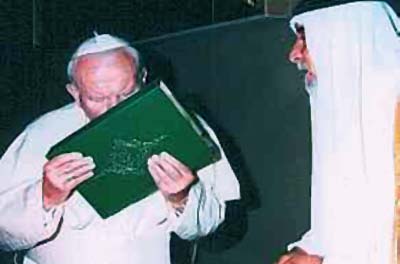 Careful who you troll! Kissy kissy!
“Jews are young devils damned to hell.” (’Luther’s Works,’ Pelikan, Vol. XX, pp. 2230.)
Disclaimer: Opinions posted on Free Republic are those of the individual posters and do not necessarily represent the opinion of Free Republic or its management. All materials posted herein are protected by copyright law and the exemption for fair use of copyrighted works.