Skip to comments.
Was John Paul II Euthanized? (red herring alert!)
Yahoo News ^
| February 21, 2007
| JEFF ISRAELY
Posted on 09/23/2007 11:27:13 AM PDT by NYer
In a provocative article, an Italian medical professor argues that Pope John Paul II didn't just simply slip away as his weakness and illness overtook him in April 2005. Intensive care specialist Dr. Lina Pavanelli has concluded that the ailing Pope's April 2 death was caused by what the Catholic Church itself would consider euthanasia. She bases this conclusion on her medical expertise and her own observations of the ailing pontiff on television, as well as press reports and a subsequent book by John Paul's personal physician. The failure to insert a feeding tube into the patient until just a few days before he died accelerated John Paul's death, Pavanelli concludes. Moreover, Pavanelli says she believes that the Pope's doctors dutifully explained the situation to him, and thus she surmises that it was the pontiff himself who likely refused the feeding tube after he'd been twice rushed to the hospital in February and March. Catholics are enjoined to pursue all means to prolong life.
The article, entitled "The Sweet Death of Karol Wojtyla" (using the Pope's birth name) appears in the latest edition of Micromega, a highbrow Italian bi-monthly that has frequently criticized the Vatican's stance on bioethics. The author, who heads the anesthesiology and intensive care therapy school at the University of Ferrara, says she decided to revisit the events around John Paul's death after the Vatican took a hard line in a controversy last year in Italy over euthanasia. Indeed her accusations are grave, questioning the Catholic Church's strictly traditional stances on medical ethics, including the dictum from John Paul's own 1995 encyclical Evangelium Vitae to use all modern means possible to avoid death.
Recalling the Vatican's medical reports during John Paul's last days, Pavanelli writes: "I'm surprised that I myself failed to critically examine the information. I let my perceptions conform to the hope of recovery and the official version, without confronting the clinical signs that I was seeing." While the Vatican had expressed most of its concern about breathing difficulty, which was alleviated with a tracheotomy, Pavanelli says a readily apparent loss of weight, and an apparent difficulty to swallow, was not being addressed. "The patient had died for reasons that were clearly not mentioned. Of all the problems of the complicated clinical picture of the patient, the acute respiratory insufficiency was not the principal threat to the life of the patient. The Pope was dying from another consequence of the effects on the [throat] muscles from his Parkinson's Disease... not treated: the incapacity to swallow."
The Vatican quickly fired back this week. John Paul's longtime doctor Renato Buzzonetti, who now monitors Pope Benedict XVI, said that doctors and John Paul himself all acted to stave off death. "His treatment was never interrupted," Buzzonetti told the Rome daily La Repubblica. "Anyone who says otherwise is mistaken." He added that a permanent nasal feeding tube was inserted three days before the Pope's death when he could no longer sufficiently ingest food or liquids. Buzzonetti did not specifically respond to Pavanelli's claim that John Paul needed a tube weeks, not days, before he eventually died.
The polemics come just as the Vatican again weighed in on euthanasia. The Church's doctrinal office released a one-page document, approved by Benedict, that denounced the cutting off of food and water to patients in a vegetative state even if they would never regain consciousness. This reaffirmed John Paul's stance in 2004 during the battle over ending artificial feeding for the severely brain-damaged Terri Schiavo, who was later taken off her feeding tube and died.
"The administration of food and water even by artificial means is, in principle, an ordinary means of preserving life," said the Vatican ruling, which came in response to questions from the U.S. Catholic Bishops Conference about what constitutes ordinary and extraordinary life support.
The issue of euthanasia and the Church heated up in Italy last year after a man named Piergiorgio Welby, who'd been on life support for nine years from the effects of muscular dystrophy, asked for the right to die. Eventually, the life support was suspended and he died. But when his wife, a practicing Catholic, asked for a funeral in Church, the Vatican refused. Pavanelli says that this episode prompted her to revisit John Paul's death.
The medical aspects of the Pope's final days are clearly difficult to verify from afar, and the Vatican is convinced that the actions of the both its doctors and its Pope were in absolute good faith. Of course, medical opinions can often vary. So too can those on bioethics.
TOPICS: Catholic; Moral Issues; Religion & Science
KEYWORDS: euthanasia; feedingtube; johnpaul; jpii; stoopidjournalist; time; vatican
Navigation: use the links below to view more comments.
first 1-20, 21 next last
1
posted on
09/23/2007 11:27:18 AM PDT
by
NYer
To: Salvation; narses; SMEDLEYBUTLER; redhead; Notwithstanding; nickcarraway; Romulus; ...
The following commentary by Diogenes at Catholic News Service, puts the article into focus.
Jeff Israely of Time magazine is at it again, this time acting as megaphone for an Italian doctor, Lina Pavanelli, who claims that the death of Pope John Paul II was an example of euthanasia.
That's a sensational charge, and you'd expect the author to have some solid evidence. So what does Israely tell us about the doctor's investigation?
She bases this conclusion on her medical expertise...
Oh, good. She's not just any old doctor; she's one with expertise!
... and her own observations of the ailing pontiff on television, as well as press reports and a subsequent book by John Paul's personal physician.
In other words Dr. Pavanelli is providing a diagnosis for a patient she never met. But she did see him on TV, so what more could you ask?
Why would a mass-circulation magazine take this story seriously? The giveaway comes just past halfway through the Time article:
The polemics come just as the Vatican again weighed in on euthanasia.
Right. The Vatican has only recently issued a statement declaring that the use of a feeding tube to sustain comatose patients is morally obligatory in most cases. Euthanasia proponents in Italy were annoyed with that statement, and Pavanelli, writing in a magazine known for its opposition to Church teaching on the subject, claimed that by the Vatican's standards, John Paul II should have had a feeding tube installed several weeks before his death.
Offense is sometimes the best defense, and if you claim that the Pope chose to end his own life, that claim, no matter how absurd, will distract some attention from the Church's moral reasoning.
But the argument won't fly. The Pope did have a feeding tube installed, in his last days. Before that, the tube was unnecessary because-- summon up your medical expertise and see if you can follow this-- he was eating by himself.
2
posted on
09/23/2007 11:29:33 AM PDT
by
NYer
("Where the bishop is present, there is the Catholic Church" - Ignatius of Antioch)
To: NYer
3
posted on
09/23/2007 11:31:01 AM PDT
by
wagglebee
("A political party cannot be all things to all people." -- Ronald Reagan, 3/1/75)
Comment #4 Removed by Moderator
To: NYer
"
Catholics are enjoined to pursue all means to prolong life." There is but one way to prolong life, and that is through the Holy Spirit. The shenanigans of men are nothing but theater, and cannot prolong life one second.
5
posted on
09/23/2007 12:06:07 PM PDT
by
editor-surveyor
(Turning the general election into a second Democrat primary is not a winning strategy.)
To: NYer
6
posted on
09/23/2007 12:28:51 PM PDT
by
Scotswife
To: NYer
Can someone clear up the opening premise for me? I thought it was appropriate to refuse extraordinary treatment (feeding tubes, ventilator start-up, etc.) and accept the natural passing of life.
Are Catholics required to actively RESIST death?
7
posted on
09/23/2007 12:42:12 PM PDT
by
trimom
To: trimom
“Are Catholics required to actively RESIST death?”
Not from what I’ve read...but I posted the document in post #6 if you want to see if that is in there.
It appears to me this doctor has misrepresented what the church considers to be “euthenasia”.
She is arguing against a false premise.
8
posted on
09/23/2007 12:54:55 PM PDT
by
Scotswife
To: NYer
Of course not — in answer to the titled question.
Where do these journalist get their whimsy titles?
9
posted on
09/23/2007 2:25:47 PM PDT
by
Salvation
(†With God all things are possible.†)
To: trimom
Are Catholics required to actively RESIST death? The Catechism of the Catholic Church states:
2278. Discontinuing medical procedures that are burdensome, dangerous, extraordinary, or disproportionate to the expected outcome can be legitimate; it is the refusal of "over-zealous" treatment. Here one does not will to cause death; one's inability to impede it is merely accepted. The decisions should be made by the patient if he is competent and able or, if not, by those legally entitled to act for the patient, whose reasonable will and legitimate interests must always be respected.
Keywords bolded - emphasis mine. Read More
10
posted on
09/23/2007 2:33:37 PM PDT
by
NYer
("Where the bishop is present, there is the Catholic Church" - Ignatius of Antioch)
To: trimom
The Catechism of the Catholic Church
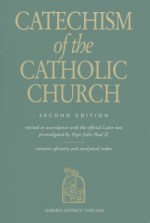
Euthanasia
2276 Those whose lives are diminished or weakened deserve special respect. Sick or handicapped persons should be helped to lead lives as normal as possible.
2277 Whatever its motives and means, direct euthanasia consists in putting an end to the lives of handicapped, sick, or dying persons. It is morally unacceptable.
Thus an act or omission which, of itself or by intention, causes death in order to eliminate suffering constitutes a murder gravely contrary to the dignity of the human person and to the respect due to the living God, his Creator. The error of judgment into which one can fall in good faith does not change the nature of this murderous act, which must always be forbidden and excluded.
2278 Discontinuing medical procedures that are burdensome, dangerous, extraordinary, or disproportionate to the expected outcome can be legitimate; it is the refusal of "over-zealous" treatment. Here one does not will to cause death; one's inability to impede it is merely accepted. The decisions should be made by the patient if he is competent and able or, if not, by those legally entitled to act for the patient, whose reasonable will and legitimate interests must always be respected.
2279 Even if death is thought imminent, the ordinary care owed to a sick person cannot be legitimately interrupted. The use of painkillers to alleviate the sufferings of the dying, even at the risk of shortening their days, can be morally in conformity with human dignity if death is not willed as either an end or a means, but only foreseen and tolerated as inevitable Palliative care is a special form of disinterested charity. As such it should be encouraged.
Dying pope didn't ask for euthanasia - doctor
'Pope didn't seek euthanasia'
(Vatican) Commentary on Artificial Hydration and Nutrition
Vatican says no to euthanasia even in the case of “vegetative states”, there is still a person
World Leaders Gather for First International Anti-Euthanasia Conference
Largest Ever International Euthanasia and Assisted Suicide Symposium - Toronto Nov. 30 (Pro-Life)
Czech Parliament Unlikely to Legalize Euthanasia
University conference to focus on life, death (Abortion, Stem Cell Research, Euthanasia)
Wisconsin Pro-Life Group Wants to Help Patient Targeted by Euthanasia
A Threat to the Disabled ... and to Us All (Euthanasia)
House Backs CHAMP Act Pro-Life Groups Opposed On Abortion, Euthanasia
Pro-Life Group Tells House to Oppose CHAMP Act Over Euthanasia Worries
Louisiana Attorney General Won't Drop Hurricane Katrina Euthanasia Case
Neighbor's Complaints Succeed in Evicting Dignitas from Residence (Swiss Euthanasia Company)
Treatment of Depression Decreases Suicide Study Indicates: Findings Linked to Euthanasia ...
MEPs call for radical rethink on euthanasia
Nurses in Katrina Euthanasia Case Offered Immunity for Grand Jury Testimony
Pope Benedict sees abortion, euthanasia as "attacks on peace"
Spain Government Wants to Legalize Euthanasia Based on Woman's Case
Euthanasia Robs Dying of Opportunities for Reconciliation, Family Connections
Respectable Baby Killing.....legalizing euthanasia for ill and disabled newborns.
Church of England Does Not Support Infant Euthanasia
Church of England Supporting Euthanasia? [Commentary / Analysis]
Church supports baby euthanasia
British Doctors Recommend Euthanasia for Disabled Newborn Babies[UK]
Euthanasia? How Can a Secular Society Claim Anyone is “Better Off Dead”?
Bishop Fabbro on Voting: Abortion and Euthanasia are Priority over War and Death Penalty
Doctor Charged in Katrina Deaths Denies Committing Murder, Euthanasia
Swiss Euthanasia Group Demands Assisted Suicide for the Depressed
Nations Move to Ban Suicide Counseling; Euthanasia Movement Complains
Haleigh Poutre Almost Victim of Euthanasia, Now Making Good Progress
Why the Christian Worldview Matters (Euthanasia)
Belgium Palliative Care Workers Unable to Kill Patients Due to Shortage of Euthanasia Drug
Selling Death: Euthanasia, Assisted Suicide Advocates Market Their Agenda
Pro-Euthanasia Documentary Wins EBU Festival Award
We Need Non-Voluntary Euthanasia, Says British Expert
Neighbors of Switzerland Euthanasia Clinic Tired of Constant Corpse Removal
'Do-it-yourself' euthanasia clinic to open in Britain
Euthanasia Case Hinges on Jurisdiction Questions
Netherlands Plans Expansion of Child Euthanasia Policy
Dutch Set to Expand Euthanasia Guidelines
Active euthanasia in New Orleans: An urban legend in the making?
11
posted on
09/23/2007 2:39:50 PM PDT
by
Salvation
(†With God all things are possible.†)
To: editor-surveyor; trimom
"Catholics are enjoined to pursue all means to prolong life." This is false. Just straight-out false. I am amazed that so-called "journalists" can publish stuff like this.
For the short answer: in the case of patients with terminal illness, what every person has a right to is "ordinary care": nutrition, hydration, pain management, hygienic and comfort care.
Patients (or next of kin making choices for mentally incapacitated or incommunicative terminal patients) have a right to either choose additional care IF it is deemed to be beneficial, OR decline any additional treatment/care if it is futile, painful, burdensome, etc.
At no point can be death be directly and deliberatel intended, either by act or by omission; but it is permitted to simply accept at some point that death is inevitable, while continuing with simple "ordinary care" until the end. For instance, a person dying of cancer can just be allowed to die of cancer, but NOT be made to die of starvation and dehydration.
For a fuller answer in context, go to The Ethical and Religious Directives of the USCCB and scroll down to Part V: Issues in Care for the Dying.
12
posted on
09/23/2007 3:02:17 PM PDT
by
Mrs. Don-o
(Whatever things are true, whatever are noble, just, pure, lovely--- brethren, think on these things.)
To: Mrs. Don-o
Notable that the comment comes from a probable advocate of death; one that believes that the world is overpopulated, and the best remedy is to take the lives of innocent babies.
13
posted on
09/23/2007 3:31:42 PM PDT
by
editor-surveyor
(Turning the general election into a second Democrat primary is not a winning strategy.)
To: NYer; Simul iustus et peccator; Disgusted in Texas; B Knotts; ChinaGotTheGoodsOnClinton; corbos; ...
+
Freep-mail me to get on or off my pro-life and Catholic Ping List:
Add me / Remove me
Please ping me to all note-worthy Pro-Life or Catholic threads, or other threads of interest.
14
posted on
09/23/2007 3:33:10 PM PDT
by
narses
(...the spirit of Trent is abroad once more.)
To: NYer
Well, to be fair, she probably slept at a Holiday Inn last night.
15
posted on
09/23/2007 4:47:58 PM PDT
by
blu
(All grammar and punctuation rules are *OFF* for the "24" thread.)
To: NYer; Salvation; wagglebee
A few days ago I got this in an email (apparently excerpted from the respected Italian paper La Repubblica):
‘Pope did NOT request euthanasia’
Vatican City - Doctors assisting Pope John Paul II in his final days never suspended medical treatment and the Pontiff did not ask them to do so, his personal physician confirmed.
Pro-euthanasia activists in Italy have incorrectly said the Holy Father refused medical treatment such as artificial respiration and feeding because he wanted to be allowed to die.
The Catholic Church forbids euthanasia. However, the church’s Catechism states medical procedures that are “burdensome, dangerous, extraordinary or disproportionate to the expected outcome” may be discontinued with the permission of the patient or family.
Food and water may never be discontinued, because they are ordinary forms of nourishment, even if administered by a feeding tube.
Renato Buzzonetti, the late Holy Father’s long-time doctor, said the Pope’s last words, “Let me go to the house of the Father”, should not be interpreted as if he had asked doctors to stop treating him.
“That sentence was an act of very high prayer ... an almost unique example of his attachment to the faith of the Lord and at the same time to life, which John Paul II deeply loved until the very last moment,” Buzzonetti said in an interview with newpaper La Repubblica.
16
posted on
09/23/2007 5:44:01 PM PDT
by
baa39
To: baa39
But leave it to the lamestream media to misinterpret those last words!!!!Arghhh!
17
posted on
09/23/2007 8:32:16 PM PDT
by
Salvation
(†With God all things are possible.†)
To: Salvation
Really, it’s almost predictable how they have to twist everything. It reminds me of how Christopher Hutchins somehow in his pathetic and bitter mind manages to rationalize that Mother Teresa was only working in her own self-interest and as a propaganda tool for the Church. Yeah, right, he could not live ONE day in her life of sacrifice and poverty.
18
posted on
09/23/2007 9:32:50 PM PDT
by
baa39
To: NYer; narses
19
posted on
09/24/2007 4:31:56 AM PDT
by
8mmMauser
(Jezu ufam tobie...Jesus I trust in Thee)
To: NYer
Speaking of euthanasia, in the event that TIME magazine is still gasping along on life-support, can someone do that rag - and all the rest of us - a huge favor, and PULL THE DAMN PLUG ALREADY??????
Navigation: use the links below to view more comments.
first 1-20, 21 next last
Disclaimer:
Opinions posted on Free Republic are those of the individual
posters and do not necessarily represent the opinion of Free Republic or its
management. All materials posted herein are protected by copyright law and the
exemption for fair use of copyrighted works.
FreeRepublic.com is powered by software copyright 2000-2008 John Robinson
