May 12, 2005
Thursday of the Seventh Week of Easter
Psalm: Thursday 22
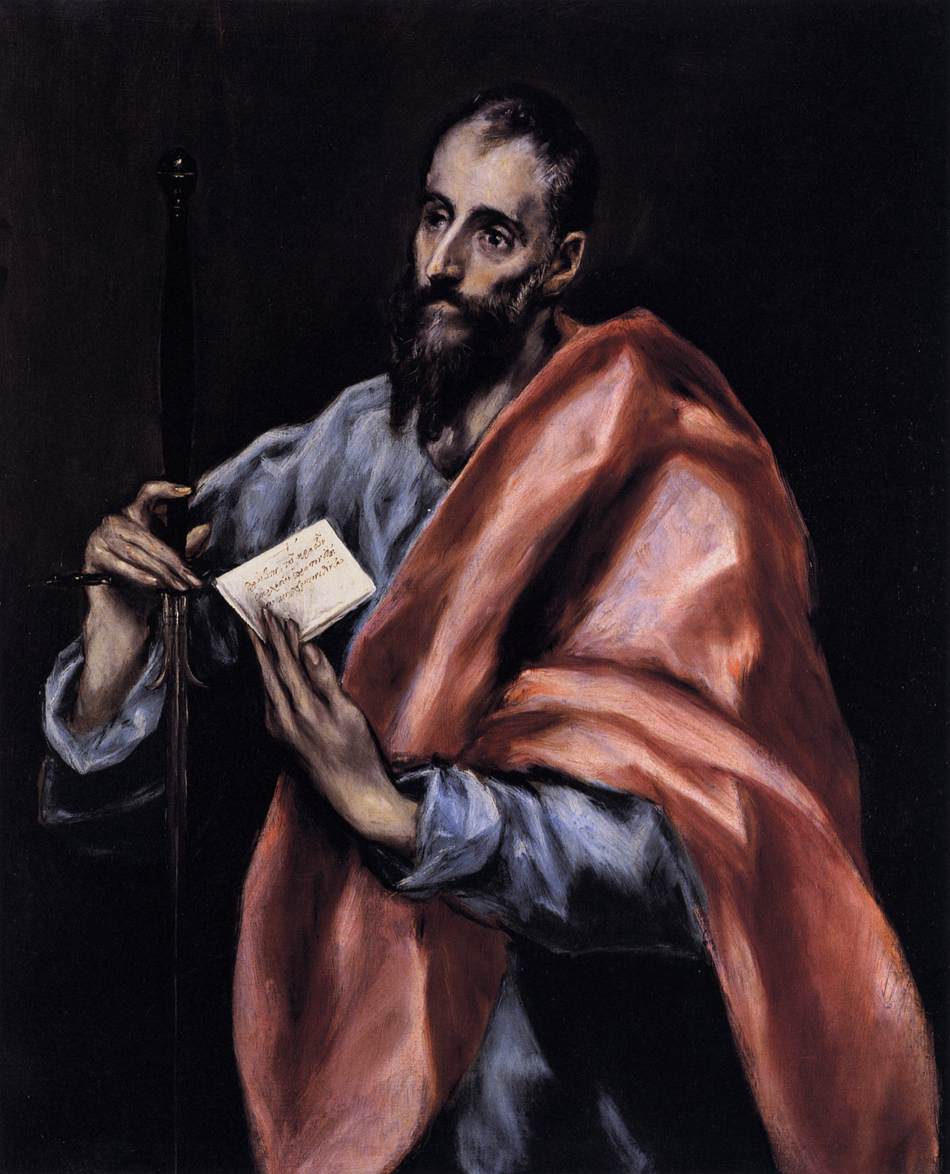
Reading IActs 22:30; 23:6-11
Wishing to determine the truth
about why Paul was being accused by the Jews,
the commander freed him
and ordered the chief priests and the whole Sanhedrin to convene.
Then he brought Paul down and made him stand before them.
Paul was aware that some were Sadducees and some Pharisees,
so he called out before the Sanhedrin,
"My brothers, I am a Pharisee, the son of Pharisees;
I am on trial for hope in the resurrection of the dead."
When he said this,
a dispute broke out between the Pharisees and Sadducees,
and the group became divided.
For the Sadducees say that there is no resurrection
or angels or spirits,
while the Pharisees acknowledge all three.
A great uproar occurred,
and some scribes belonging to the Pharisee party
stood up and sharply argued,
"We find nothing wrong with this man.
Suppose a spirit or an angel has spoken to him?"
The dispute was so serious that the commander,
afraid that Paul would be torn to pieces by them,
ordered his troops to go down and rescue Paul from their midst
and take him into the compound.
The following night the Lord stood by him and said, "Take courage.
For just as you have borne witness to my cause in Jerusalem,
so you must also bear witness in Rome."
Responsorial PsalmPs 16:1-2a and 5, 7-8, 9-10, 11
R. (1)
Keep me safe, O God; you are my hope.or:
R.
Alleluia.Keep me, O God, for in you I take refuge;
I say to the LORD, "My Lord are you."
O LORD, my allotted portion and my cup,
you it is who hold fast my lot.
R.
Keep me safe, O God; you are my hope.or:
R.
Alleluia.I bless the LORD who counsels me;
even in the night my heart exhorts me.
I set the LORD ever before me;
with him at my right hand I shall not be disturbed.
R.
Keep me safe, O God; you are my hope.or:
R.
Alleluia.Therefore my heart is glad and my soul rejoices,
my body, too, abides in confidence;
Because you will not abandon my soul to the nether world,
nor will you suffer your faithful one to undergo corruption.
R.
Keep me safe, O God; you are my hope.or:
R.
Alleluia.You will show me the path to life,
fullness of joys in your presence,
the delights at your right hand forever.
R.
Keep me safe, O God; you are my hope.or:
R.
Alleluia.
GospelJn 17:20-26
Lifting up his eyes to heaven, Jesus prayed saying:
"I pray not only for these,
but also for those who will believe in me through their word,
so that they may all be one,
as you, Father, are in me and I in you,
that they also may be in us,
that the world may believe that you sent me.
And I have given them the glory you gave me,
so that they may be one, as we are one,
I in them and you in me,
that they may be brought to perfection as one,
that the world may know that you sent me,
and that you loved them even as you loved me.
Father, they are your gift to me.
I wish that where I am they also may be with me,
that they may see my glory that you gave me,
because you loved me before the foundation of the world.
Righteous Father, the world also does not know you,
but I know you, and they know that you sent me.
I made known to them your name and I will make it known,
that the love with which you loved me
may be in them and I in them."
St. Pancras is the patron saint of first Holy Communicants. I only know this because my daughter just happened to receive first Holy Communion on May 12th, a few years ago. = )
From: Acts 22:30, 23:6-11
Speech before the Sanhedrin
[30] But on the morrow, desiring to know the real reason why the Jews
accused him, he (the tribune) unbound him, and commanded the chief
priests and all the council to meet, and he brought Paul down and set
him before them.
[6] But when Paul perceived that one part were Sadducees and the other
Pharisees, he cried out in the council, "Brethren, I am a Pharisee, a
son of Pharisees; with respect to the hope and the resurrection of the
dead I am on trial." [7] And when he had said this, a dissension arose
between the Pharisees and the Sadducees; and the assembly was divided.
[8] For the Sadducees say that there is no resurrection, nor angel, nor
spirit; but the Pharisees acknowledge them all. [9] Then a great
clamor arose; and some of the scribes of the Pharisees' party stood up
and contended, 'We find nothing wrong in this man. What if a spirit or
an angel spoke to him?" [10] And when the dissension became violent,
the tribune, afraid that Paul would be torn in pieces by them,
commanded the soldiers to go down and take him by force from among them
and bring him into the barracks.
[11] The following night the Lord stood by him and said, "Take courage,
for as you have testified about me at Jerusalem, so you must bear
witness also at Rome."
Commentary:
30. This does not seem to have been a regular session of the Sanhedrin;
it is an informal one arranged by Lysias (Acts 23:26) to enable
documentation to be prepared, now that "evidence" cannot be extracted
from Paul by torture.
6-9. From St Luke's Gospel (cf. 20:27) we know that the Sadducees,
unlike the Pharisees, did not believe in a future resurrection of the
dead. This is the only place in the New Testament where it says that
they also denied the existence of angels and spirits; however, this is
confirmed by Jewish and secular sources.
In the course of his trial, Paul brings up a subject which sets his
judges at each other. Personal advantage is not his main reason for
doing this. He is obviously very shrewd, but he really does not expect
to get an impartial hearing from the Sanhedrin. Therefore he tries to
stir their consciences and awaken their love for the truth and thereby
elicit some sympathy for Christians. Although Christian belief in the
Resurrection was not the same thing as the Pharisees' belief, the two
had this in common: they believed in the resurrection of the dead.
9. They are referring to his vision on the road to Damascus. They are
not going as far as to say that it was Jesus who spoke to Paul, but
they do not rule out the possibility that he had a genuine spiritual
experience.
11. The Lord is Jesus. These words of consolation to Paul show him that
God will guide him all along, right up to his court appearance in Rome.
Source: "The Navarre Bible: Text and Commentaries". Biblical text
taken from the Revised Standard Version and New Vulgate. Commentaries
made by members of the Faculty of Theology of the University of
Navarre, Spain. Published by Four Courts Press, Kill Lane, Blackrock,
Co. Dublin, Ireland.
From: John 17:20-26
The Priestly Prayer of Jesus (Continuation)
(Jesus lifted His eyes to Heaven and said,) [20] "I do not pray for
these (My disciples) only, but also for those who believe in Me through
their word, [21] that they may all be one; even as Thou, Father, art in
Me, and I in Thee, that they also may be in us, so that the world may
believe that Thou hast sent Me. [22] The glory which Thou hast given Me
I have given to them, that they may be one even as we are one, [23] I in
them and Thou in Me, that they may become perfectly one, so that the
world may know that Thou hast sent Me and hast loved them even as Thou
hast loved Me. [24] Father, I desire that they also, whom Thou hast
given Me, may be with Me where I am, to behold My glory which Thou hast
given Me in Thy love for Me before the foundation of the world. [25] O
righteous Father, the world has not known Thee, but I have known Thee;
and these know that Thou hast sent Me. [26] I made known to them Thy
name, and I will make it known, that the love with which Thou hast
loved Me may be in them, and I in them."
Commentary:
20-23. Since it is Christ who is praying for the Church His prayer is
infallibly effective, and therefore there will always be only one true
Church of Jesus Christ. Unity is therefore an essential property of
the Church. "We believe that the Church founded by Jesus Christ and
for which He prayed is indefectibly one in faith, in worship and in the
bond of hierarchical communion" ([Pope] Paul VI, "Creed of the People
of God", 21). Moreover, Christ's prayer also indicates what the basis
of the Church's unity will be and what effects will follow from it.
The source from which the unity of the Church flows is the intimate
unity of the Three Divine Persons among whom there is mutual love and
self-giving. "The Lord Jesus, when praying to the Father `that they
may all be one...even as we are one' (John 17:21-22), has opened up new
horizons closed to human reason by implying that there is a certain
parallel between the union existing among the Divine Persons and the
union of the sons of God in truth and love. It follows, then, that if
man is the only creature on earth that God has wanted for its own sake,
man can fully discover his true self only in a sincere giving of
himself" (Vatican II, "Gaudium Et Spes", 24). The unity of the Church
is also grounded on the union of the faithful with Jesus Christ and
through Him with the Father (verse 23). Thus, the fullness of
unity--"consummati in unum"--is attained through the supernatural grace
which comes to us from Christ (cf. John 15:5).
The fruits of the unity of the Church are, on the one hand, the world
believing in Christ and in His divine mission (verses 21, 23); and, on
the other hand, Christians themselves and all men recognizing God's
special love for His faithful, a love which is a reflection of the love
of the Three Divine Persons for each other. And so, Jesus' prayer
embraces all mankind, for all are invited to be friends of God (cf. 1
Timothy 2:4). "Thou hast loved them even as Thou hast loved Me": this,
according to St. Thomas Aquinas, "does not mean strict equality of love
but similarity and like-motivation. It is as if He were saying: the
love with which You have loved Me is the reason and the cause of Your
loving them, for, precisely because You love men do You love those who
love Me" ("Commentary on St. John, in loc."). Besides noting this
theological explanation, we should also ponder on how expressively
Christ describes His ardent love for men. The entire discourse of the
Last Supper gives us a glimpse of the depth of Jesus' feelings--which
infinitely exceeds anything we are capable of experiencing. Once again
all we can do is bow down before the mystery of God-made-man.
20. Christ prays for the Church, for all those who, over the course of
centuries, will believe in Him through the preaching of the Apostles.
"That divine mission, which was committed by Christ to the Apostles, is
destined to last until the end of the world (cf. Matthew 28:20), since
the Gospel, which they were charged to hand on, is, for the Church, the
principle of all its life for all time. For that very reason the
Apostles were careful to appoint successors in this hierarchically
constituted society" (Vatican II, "Lumen Gentium", 20).
The apostolic origin and basis of the Church is what is termed its
"apostolicity", a special characteristic of the Church which we confess
in the Creed. Apostolicity consists in the Pope and the Bishops being
successors of Peter and the Apostles, holding the authority of the
Apostles and proclaiming the same teaching as they did. "The sacred
synod teached that the bishops have by divine institution taken the
place of the Apostles as pastors of the Church, in such wise that
whoever listens to them is listening to Christ and whoever despises
them despises Christ and Him who sent Christ (cf. Luke 10:15)" (Vatican
II, "Lumen Gentium", 20).
21. Union of Christians with Christ begets unity among themselves.
This unity of the Church ultimately redounds to the benefit of all
mankind, because since the Church is one and unique, she is seen as a
sign raised up for the nations to see, inviting all to believe in
Christ as sent by God come to save all men. The Church carries on this
mission of salvation through its union with Christ, calling all mankind
to join the Church and by so doing to share in union with Christ and
the Father.
The Second Vatican Council, speaking of the principles of ecumenism,
links the Church's unity with her universality: "Almost everyone,
though in different ways, longs for the one visible Church of God, a
Church truly universal and sent forth to the whole world that the world
may be converted to the Gospel and so be saved, to the glory of God"
("Unitatis Redintegratio", 1). This universality is another
characteristic of the Church, technically described as "catholicity".
"For many centuries now the Church has been spread throughout the
world, and it numbers persons of all races and walks of life. But the
universality of the Church does not depend on its geographical
distribution, even though this is a visible sign and of motive of
credibility. The Church was catholic already at Pentecost: it was born
catholic from the wounded heart of Jesus, as a fire which the Holy
Spirit enkindled.
"In the second century the Christians called the Church catholic in
order to distinguish it from sects, which, using the name of Christ,
were betraying His doctrine in one way or another. `We call it
catholic', writes St. Cyril, `not only because it is spread throughout
the world, from one extreme to the other, but because in a universal
way and without defect it teaches all the dogmas which men ought to
know, of both the visible and the invisible, the celestial and the
earthly. Likewise because it draws to true worship all types of men,
governors and citizens, the learned and the ignorant. And finally,
because it cures and heals all kinds of sins, whether of the soul or of
the body, possessing in addition--by whatever name it may be
called--all the forms of virtue, in deeds and in words and in every
kind of spiritual life' ("Catechesis", 18, 23)" ([St] J. Escriva, "In Love
with the Church", 9).
Every Christian should have the same desire for this unity as Jesus
Christ expresses in His prayer to the Father. "A privileged instrument
for participation in pursuit of the unity of all Christians is prayer.
Jesus Christ Himself left us His final wish for unity through prayer to
the Father: `that they also may be in us, so that the world may believe
that Thou hast sent Me' (John 17:21).
"Also the Second Vatican Council strongly recommended to us prayer for
the unity of Christians, defining it `the soul of the whole ecumenical
movement' ("Unitatis Redintegratio", 8). As the soul to the body, so
prayer gives life, consistency, spirit, and finality to the ecumenical
movement.
"Prayer puts us, first and foremost, before the Lord, purifies us in
intentions, in sentiments, in our heart, and produces that `interior
conversion', without which there is no real ecumenism. (cf. "Unitatis
Redintegratio", 7).
"Prayer, furthermore, reminds us that unity, ultimately, is a gift from
God, a gift for which we must ask and for which we must prepare in
order that we may be granted it" ([Pope] John Paul II, "General
Audience", 17 January 1979).
22-23. Jesus possess glory, a manifestation of divinity, because He is
God, equal to the Father (cf. note on John 17:1-5). When He says that
He is giving His disciples this glory, He is indicating that through
grace He makes us partakers of the divine nature (2 Peter 1:4). Glory
and justification by grace are very closely united, as we can see from
Sacred Scripture: "Those whom He predestined He also called, and those
whom He called He also justified, and those whom He justified He also
glorified" (Romans 8:30). The change grace works in Christians makes
us ever more like Christ, who is the likeness of the Father (cf. 2
Corinthians 4:4; Hebrews 1:2-3): by communicating His glory Christ
joins the faithful to God by giving them a share in supernatural life,
which is the source of the holiness of Christians and of the Church:
"Now we can understand better how [...] one of the principal aspects of
her holiness is that unity centered on the mystery of the one and
triune God. `There is one body and one Spirit, just as you were called
to the one hope that belongs to your call, one Lord, one faith, one
baptism; one God and Father of us all, who is above all and through all
and in all' (Ephesians 4:4-6)" ([St] J. Escriva, "In Love with the Church", 5).
24. Jesus concludes His prayer by asking that all Christians attain the
blessedness of Heaven. The word He uses, "I desire", not "I pray",
indicates that He is asking for the most important thing of all, for
what His Father wants--that all may be saved and come to a knowledge of
the truth (cf. 1 Timothy 2:4): which is essentially the mission of the
Church--the salvation of souls.
As long as we are on earth we share in God's life through knowledge
(faith) and love (charity); but only in Heaven will we attain the
fullness of this supernatural life, when we see God as He is (cf. 1
John 3:2), face to face (cf. 1 Corinthians 13:9-12). Therefore, the
Church has her sights fixed on eternity, she is eschatological: that
is, by having in this world all the resources necessary for teaching
God's truth, for rendering Him true worship and communicating the life
of grace, she keeps alive people's hope of attaining the fullness of
eternal life: "The Church, to which we are all called in Christ Jesus,
and in which by the grace of God we acquire holiness, will receive its
perfection only in the glory of Heaven, when will come the time of the
renewal of all things (Acts 3:21). At that time, together with the
human race, the universe itself, which is so closely related to man and
which attains its destiny through him, will be perfectly reestablished
in Christ (cf. Ephesians 1:10; Colossians 1:20; 2 Peter 3:10-13)"
(Vatican II, "Lumen Gentium", 48).
25-26. God's revelation of Himself through Christ causes us to begin to
share in the divine life, a sharing which will reach its climax in
Heaven: "God alone can give us right and full knowledge of this reality
by revealing Himself as Father, Son and Holy Spirit, in whose eternal
life we are by grace called to share, here below in the obscurity of
faith and after death in eternal light" ([Pope] Paul VI, "Creed of the
People of God").
Christ has revealed to us all we need to know in order to participate
in the mutual love of the Divine Persons--primarily, the mystery of who
He is and what His mission is and, with that, the mystery of God
Himself ("I made known to them Thy name"), thus fulfilling what He had
announced: "No one knows the Father except the Son and any one to whom
the Son chooses to reveal Him" (Matthew 11:27).
Christ continues to make known His Father's love, by means of the
Church, in which He is always present: "I am with you always, to the
close of the age" (Matthew 28:20).
Source: "The Navarre Bible: Text and Commentaries". Biblical text
taken from the Revised Standard Version and New Vulgate. Commentaries
made by members of the Faculty of Theology of the University of
Navarre, Spain. Published by Four Courts Press, Kill Lane, Blackrock,
Co. Dublin, Ireland.


 It was under the persecution of Domitian—during which John the Evangelist was condemned to be burned alive in the cauldron of boiling oil—that Flavia Domitilla was honored with banishment and death for the sake of our Redeemer, whom she had chosen for her Spouse. She was of the imperial family, being a niece of Flavius Clemens, who adorned the consular dignity by martyrdom. She was one of the Christians belonging to the court of the Emperor Domitian, who show us how rapidly the religion of the poor and humble made its way to the highest classes of Roman life. A few years previous to this, St Paul sent to the Christians of Philippi the greetings of the Christians of Nero's palace. There is still extant, not far from Rome, on the Ardeatine Way, the magnificent subterranean cemetery which Flavia Domitilla ordered to be dug on her praedium, and in which were buried the two martyrs, Nereus and Achilleus, whom the Church honors today together with the noble virgin who owes her crown to them. Nereus and Achilleus were in Domitilla's service. Hearing them one day speaking of the merit of virginity, she there and then bade farewell to all worldly pleasures, and aspired to the honor of being the Spouse of Christ. She received the veil of consecrated virgins from the hands of Pope St Clement: Nereus and Achilleus had been baptized by St Peter himself.
  Pancratius was the descendant of a noble Phrygian family. As a youth of fourteen, he came to Rome while Diocletian and Maximian were in power (about 304). He was baptized by the Pope and given instructions in the Christian religion. Arrested for his action, he steadfastly refused to sacrifice to the pagan gods and was condemned to death. With manly courage, he bared his neck for the sword and received the martyr's crown. During the night his body was removed by the pious matron Octavilla, anointed with sweet smelling balsam and interred on the Via Aurelia.