
Posted on 09/28/2026 9:42:44 AM PDT by SeekAndFind
Nine-year-old Olivia Smith had plenty to choose from as she walked through the Academy of Natural Sciences on Friday, surrounded by dinosaurs, wildlife and exhibits that have fascinated generations of children.
The fourth grader knew exactly what she liked best.
“We have seen a lot of exhibits. My favorites were the pandas. Oh, and the rabbits!” Olivia said as she toured the museum with her teacher, Sandy Debies.
But Olivia was among the young visitors getting what could be one of their final looks at the museum before its doors close permanently.
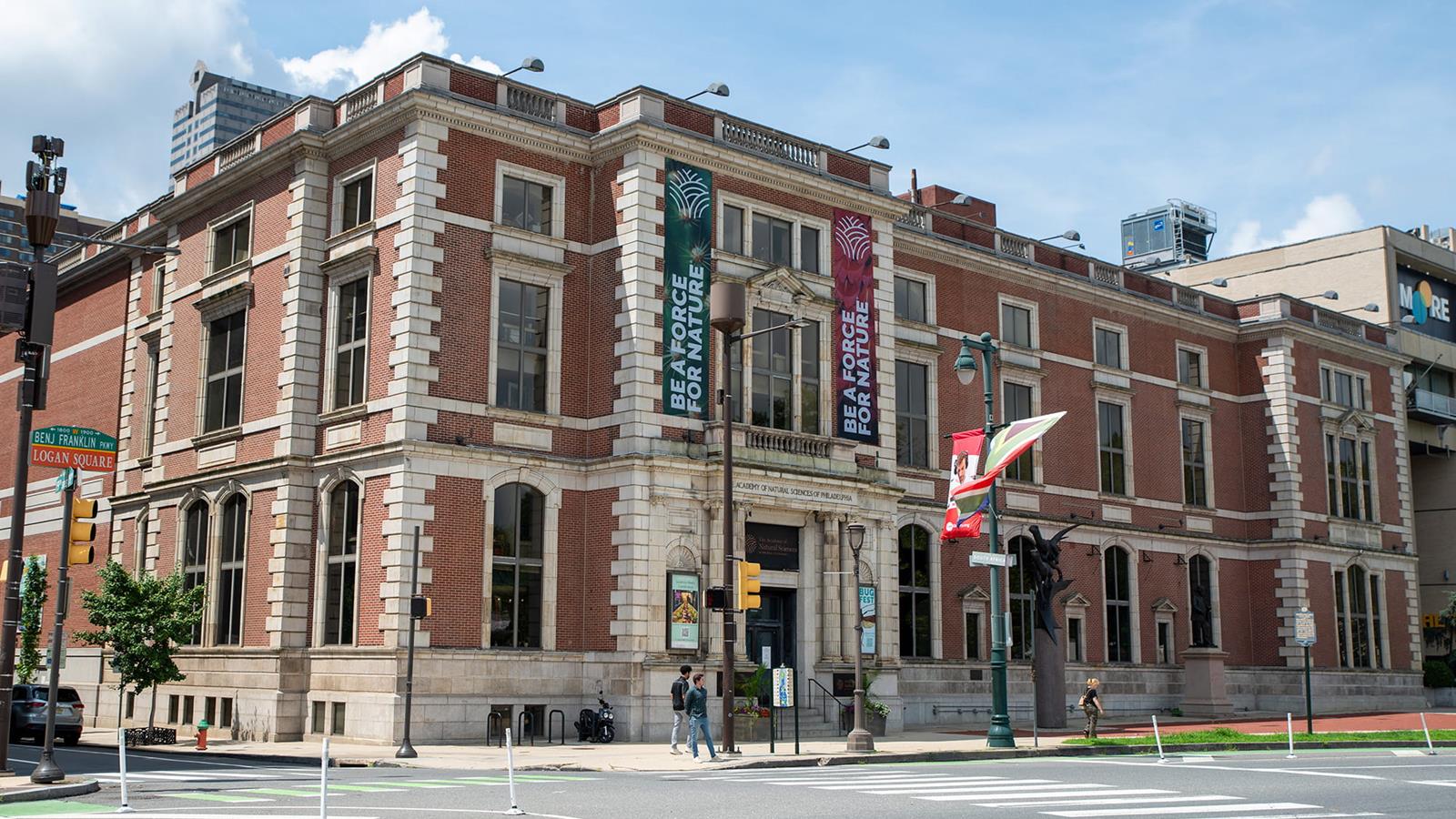
The Academy of Natural Sciences, the 200-year-old institution on Benjamin Franklin Parkway known to generations of parents and children as Philadelphia’s “dinosaur museum,” is selling its final tickets for Sunday, as Drexel University ends funding for the institution.
The impending closure is bringing families, educators and longtime supporters to the museum for one last visit while raising questions about the loss of a beloved educational resource.
This was the last weekend for visitors to see the giant Tyrannosaurus rex fossil on display and learn how the prehistoric predator used its powerful legs and teeth to capture and tear apart its prey.
It also marked a final opportunity to see a 43-foot, 2-ton mosasaur, known for its “jaws of death,” check out “Dinos After Dark” and experience virtual Jurassic adventures that allow children to imagine themselves running from dinosaurs.
The academy has long been a popular destination for school field trips across the Philadelphia region and a favorite weekend destination for families.
Parent Lana Hinson visited the museum on Friday with her children and expressed sadness over its closing.
“It’s kind of upsetting because this was the one place that was perfect for field trips, to go to with the kids, and it’s very kid- and school-friendly,” Hinson said.
“Now, where are the kids gonna go, especially the kids from the area? Like, I’m from the suburbs, but we would come here just like the city kids. My husband works in the city. Now, there is one less thing that’s for kids in an era where things for kids are being taken away. They are taking away a great learning possibility.”
The closing also forced Widener University professor Jennifer Wyse to rearrange the syllabus for one of her history courses.
“This is a first-year class about liberal arts education, and we’ve been learning quite a bit about Indigenous knowledge systems in relation to Western scientific knowledge,” Wyse said.
“When I had learned about the museum’s ‘Botany of Nations’ exhibit, I organized my whole syllabus around that exhibit. So, when I found out it was closing, we switched it so that way we could come here since it’s our last chance.”
Widener history student Jollissa Helm recalled visiting the museum frequently as a child.
“I used to come here when I was a kid, like all the time, like all the places here, and the Franklin Institute,” Helm said.
The closing carries particular weight for Helm because of her interest in history.
“History is my favorite subject,” she said. “So, just knowing that this place is over 200 years old, with all this history inside of it, is closing is just really disappointing. And it’s disappointing that we can’t do anything about it.”
On Friday, the museum was nearly packed with visitors making their way through its exhibits.
Beyond its dinosaurs, the academy is well known for displays depicting animals in their natural habitats. One shows a bobcat in mid-catch with a ruffed grouse. Another depicts Dall sheep traversing rocky slopes in an alpine tundra setting.
For some of the youngest visitors, those encounters with animals sparked ideas about what they might someday become.
Toni Gambone, a nanny, toured the museum with 3-year-old Dash, who said he loved looking at the animal exhibits and hoped to become a scuba diver when he grows up.
“Everything is on the screen today, and I want the kids to experience learning through everyday life instead of through the screen,” Gambone said.
The closing also means the loss of jobs for museum employees.
Security guard Leslie Adams said she worked at the museum for about 15 years before leaving and later returning two years ago. After the museum closes, Adams said she plans to work as a home health aide and occasionally as a security guard at a local office.
Her daughter, who also works as a museum security guard, is losing her job as well.
They brought 5-year-old kindergartner Paul Lymon to the museum. His favorite attraction was the live butterfly exhibit, where butterflies can land directly on visitors.
Other visitors came because they realized they were running out of opportunities to experience the academy for the first time.
“This is my first time coming to the museum,” said Temple University student Devon Williams, 23, who visited with college friends Eli Jiminez and Lamar Thomas.
“When I heard that it was shutting down, I got upset because I was like, I’ve never been here,” Williams said. “It’s like one of the few museums I’ve never been to. Oh my God! I can’t stop this.”
Williams, an artist who said he also enjoys research, transferred to Temple after the University of the Arts closed on Broad Street.
Hideria Wilson also visited the museum for the first, and possibly last, time with her 2-year-old daughter, Rayn Wilson.
“We didn’t have really much to do, and I knew they closed it this weekend, so I wanted to get in here before they close, to see everything they had,” Wilson said.
“It’s one of the oldest museums. I do love history, so it’s pretty sad.”
According to an Axios report, the academy’s collection includes 19 million biological specimens, fossils, archives and other scientific resources. Its collection also includes 75,000 titles of scientific literature, with volumes dating to 1529.
Outside the museum, Lynn McConville volunteered to ask visitors to help push city and state leaders to find a way to keep the academy open.
McConville said her daughter volunteered at the museum when she was young and was inspired by the experience to become a veterinarian.
“There’s various action items that we’re suggesting people do,” McConville said. “Drexel University announced the closing as a done deal. That’s it. And for the people and the citizens of Philadelphia, I mean, this is our institution too.”
She pointed to the generations of children who have passed through the museum on school trips.
“Tens of thousands of schoolchildren got their introduction to the natural sciences here at the academy,” McConville said. “Then, there are the school trips, right? So, just to announce that you’re closing it. But what about the public? What about us?”
McConville urged supporters to contact elected officials and Drexel.
“We want people to reach out to their council members, to reach out to the mayor, to reach out to the governor,” she said. “You know, reach out to Drexel University and say, ‘This is a precious resource. Philadelphia scientists spent 200 years establishing this collection. There’s nothing else like it, and we’re just going to let Drexel close it and not let it be part of our heritage? No, we shouldn’t allow it.’”
We have a natural history museum in our city. I don’t know how it survives
It’s from an era before television and certainly before the internet. Its housed in a big building that looks like a Greek Temple - a temple of science, if you will
Imagine being a rural kid (or even an urban kid) in 1920, traveling to such a place. If you were lucky, maybe you owned a book talking about dinosaurs or saber-tooth tigers. Now you saw them up-close, or were able to look at the stars through a large telescope
Now in 2026, you can see entire movies about dinosaurs, and can buy a telescope on-line that rivals the clarity of what they had in 1920.
Now people have information (really entertainment) overload, and seeing a stuffed Woolly Mammoth is absolutely meaningless to them.
I don’t think that’s true. Just the sheer size of some of the dinosaurs isn’t appreciated in photos or video the way it is in person. And seeing butterflies on TV isn’t like standing in a habitat where they might land on you.
This is very sad...
I was wondering if there is anything in the near area to take it’s place. If not, then maybe it should stay open.
I’m not saying it’s a worthless experience - but its novelty, excitement and perceived value to people in 2026 vs. 100 years ago is certainly very greatly diminished, in a world today with massive information and especially, entertainment, overload.
That looks really cool.
This is a shame.
Too bad!
I remember seeing the elephant in the rotunda of the Smithsonian natural history museum; I don’t think a picture could impress in the same way, even now. (And it smelled like moth balls.) I think I saw that before I ever saw a live elephant at the National Zoo.
The giant crystal ball - world’s largest! - in the Gem Hall is a great memory, too.
It seems that these opportunities become even more important to preserve, the more ‘virtual’ our lives and experiences become.
Our Science Museum is constantly on local news promoting touring exhibits and various activities. There are always special events happening and people go.
Commercials with kids standing next to a dinosaur femur will spark interest with the young ones. Promote it to parents as a family activity.
Marketing and promoting work.
My guess is they want to make room for the invaders headed this way.
How much are the tickets? We have a similar facility in San Francisco within Golden Gate Park. When I was a kid back in the 1950's it was free. In later decades, they began charging fees and raised them. It is now $49 per adult to enter. My wife and I went last month, and the exhibits are wonderful.
So, why can't they charge expensive tickets to keep it open in Philadelphia? The one here in San Francisco has free days each month for the poor.
The Liberty Bell enclosure was filthy and smelled like bum piss when I was there not too long ago. I would imagine it’s the same everywhere in that disgusting city.
It appears that they are citing changes in visitation following the pandemic and rising costs.
And from a child’s perspective, they’re even more impressive!
I wonder what will happen to all the dinosaurs and other things.
The rats will destroy anything they get control of no exceptions.
It will be turned into a mosque.
The last complete T Rex sold for over $50 million.
Disclaimer: Opinions posted on Free Republic are those of the individual posters and do not necessarily represent the opinion of Free Republic or its management. All materials posted herein are protected by copyright law and the exemption for fair use of copyrighted works.
