
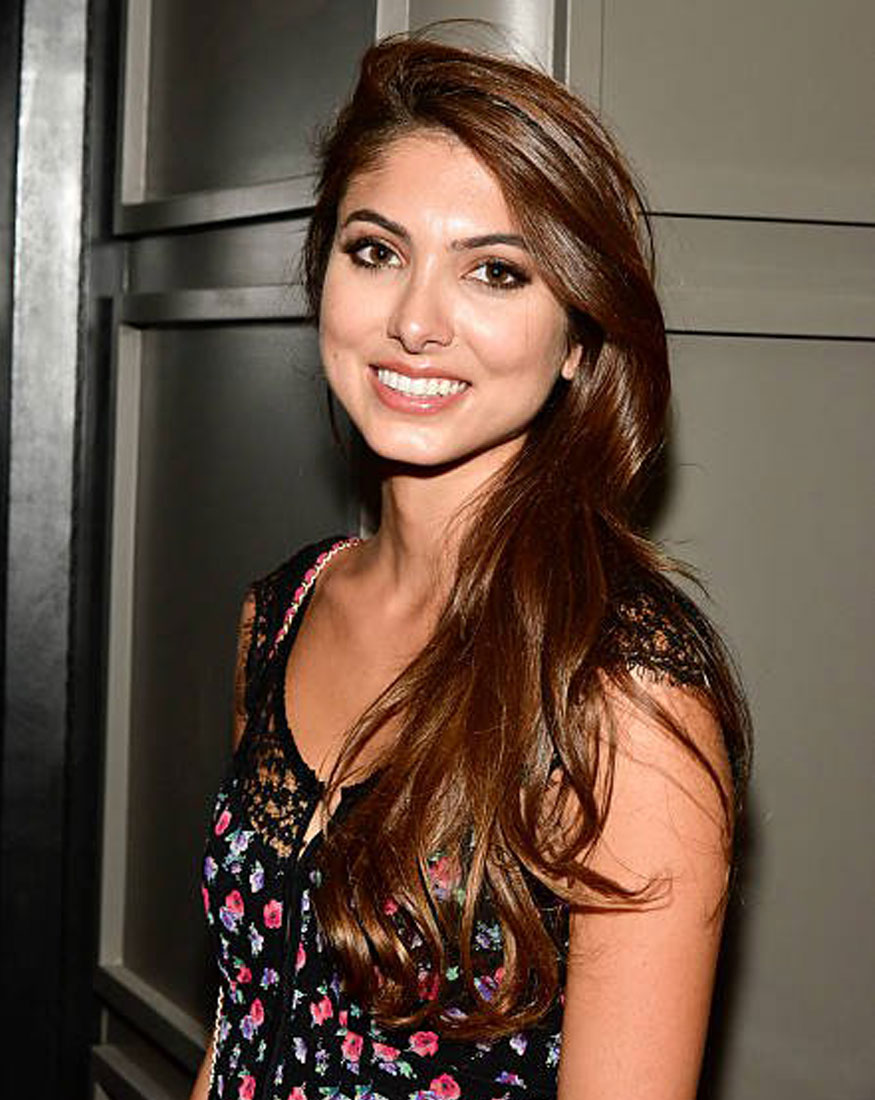
Fine looking girl. Glad she's not hidden in a shapeless bag.
Posted on 03/19/2026 3:17:18 PM PDT by MeanWestTexan
There is something extraordinary about how a young woman, born and raised in the United States, can become a voice for people she has never met in a country she has never seen, thousands of miles away.
But for Iran’s Princess Noor Pahlavi, daughter of the exiled Crown Prince Reza Pahlavi and granddaughter of the former shah, Mohammad Reza, that is the situation she finds herself in.
As the Islamic Republic regime of Iran faces daily strikes and military pressure from the US and Israel, and with its leadership decimated, many are looking to the day the regime falls.
And for Noor, those are voices she hears every day from inside Iran.
“The main messages I get from inside are just constantly asking to remind everyone not to leave the regime standing,” she told The Jerusalem Post from the US. “That’s the main fear. They’re only afraid that the regime will stay in power after all of this, and then they’ll be dealing with 47 years’ worth of devastation of the country and then a more brutal crackdown.”
It is difficult to see how much more brutal it could get. Since protests in Iran erupted on December 28 over the state of Iran’s economy, thousands of unarmed Iranians have been killed by the regime – thousands alone on the days of January 8-9 – often indiscriminately shot on the street, while horror stories abound of security forces entering people’s homes and hospitals and slaughtering them.
The name that they are chanting now is the same one the regime has spent decades trying to erase. Pahlavi. But what is unfolding now, the princess insists, did not emerge overnight.
This, Noor argued, is the culmination of decades of disillusionment. Iranians “didn’t suddenly decide to reject the Islamic Republic.” The sentiment, she said, “goes back to the very beginning.” Each generation tested whether change was possible, only to be met with “repression and increased brutality, increased bloodshed.”
Pattern unchanged since 1979 revolution
From the aftermath of the 1979 Iranian Revolution, when her family went into exile, and when “political parties were shut down, newspapers were closed, and a strict ideological system was imposed,” to the waves of protest that followed, whether in 1999, 2009, or beyond, the pattern has remained the same.
“Each generation tried to see if the system could change, and each time the answer was repression and increased brutality, increased bloodshed,” Noor explained, and over time, that process has led to a fundamental shift in how many Iranians see their own state.
“The problem isn’t just one policy or one administration. The system itself – it’s impossible to reform and has been given ample opportunities to do so. What we’re seeing today didn’t appear overnight. It’s the result of decades of people trying different paths and watching them closely one after the other.”
One sector of society did not need to spend decades trying to figure out the Islamic Republic, and the story of pre- and post-revolutionary Iran can be defined by women's experiences.
Noor points to the immediate aftermath of the revolution, when “within weeks there were protests in the streets against the compulsory hijab and against the loss of women’s rights that had previously been in place.”
That path of minimizing the status of women was well-trodden by the mullahs, the results of which were seen notably in 2022 with the death of Mahsa Amini in regime custody over breaking Iran’s hijab laws, one of the focal points of contention between Iranians and the ayatollahs who have ruled Iran.
Protests broke out after Amini’s death, resulting in thousands killed and the rise of the Women, Life, Freedom movement. Reflecting on the Mahsa Amini protests, Noor described a generation that has grown up entirely under the Islamic Republic, yet is willing to risk everything to challenge it.
“The thing that was most notable for me in that movement was seeing the youth that had no part in bringing about this government and had their whole lives ahead of them, risk their lives for a better future they might not see,” she told the Post.
“It inspired me to be more resolute in my defense of them and to use everything at my disposal to make sure they were heard. The bravery of the people in Iran gave me the resolve to fight, to hold power to account and shed light on the atrocities the regime was committing.”
Those atrocities, she added, have been particularly severe when it comes to women and children.
“We’ve witnessed unimaginable crimes being committed against the children of Iran – child marriage, rape, torture, jail, execution, abductions,” she said. “The regime even went as far as attacking schoolgirls, beating them, poisoning them, and killing them for participating in the Women, Life, Freedom movement.
“I rarely get angry, but when I witness the atrocities that this regime commits against children, it sets a fire in my chest.”
If previous uprisings were driven by demands for reform, economic relief, or social freedoms for women, Noor suggests that the threshold has now been crossed.
“Every aspect of the country has fallen into disarray to the point where life under the regime is unlivable,” she said, and the result is a population that has re-evaluated its own sense of risk.
“They’re not afraid to die anymore,” Noor told the Post. “They’d rather risk their lives fighting for a better future than continue as things stand.
“Whatever price we pay in exile isn’t anything compared to the sacrifices of the people in Iran.”
Perhaps the greatest example of the change for Iranian women over the decades comes from Noor’s personal life. Her grandmother, the former empress, Farah Pahlavi, is a figure who, while she ruled, was deeply engaged in shaping Iranian society, particularly for women.
“My grandmother takes a lot of pride in the faith that her husband had in her and the active role that she was able to play in society and in government,” Noor explained.
“She was very committed to the advancement of women’s rights. She often emphasised that progress for women depended on education, culture, and strong institutions.”
But the empress’s role was far from ceremonial, unlike her predecessors.
“Her coronation and her entry into the constitutional framework of the state marked an unprecedented moment in modern history. Rather than accepting a purely ceremonial role, she established an office through which she acted as an intermediary between citizens, institutions, and the state.”
Through initiatives in education, culture, healthcare, and urban development, Farah Pahlavi helped expand opportunities for women and wider society – all forward-thinking initiatives that have been dismantled over the five decades of Islamic rule, and one keenly felt by modern Iranians.
For Noor herself, who has worked in the private sector since leaving university, stepping into a more prominent public role has been a matter of personal obligation rather than ambition.
“When people in Iran reach out to me for help, why would I turn away?” she asked rhetorically, recapturing the sense of duty that one hears when one listens to her grandfather’s old speeches or interviews. It is a Pahlavi trait to offer yourself to serve the nation.
“I feel a duty to honor the legacy of my family… fighting for the Iranian people, for their progress and modernization and their future and their freedom,” she explained to the Post. “When you’re the daughter of someone who has dedicated his life to this nation to fight for liberty, stepping forward isn’t so much a choice – it’s dictated by your heart and that legacy.”
Yet she is careful to frame her role in relation to those still inside Iran.
“Nothing compares to the risks that people inside Iran face,” she emphasized. “Whatever we face in exile is nothing compared to what they endure.”
At the center of the current protest movement is her father, Crown Prince Reza Pahlavi, a figure whose role over the years has evolved from exiled heir to becoming a national focal point for opposition. Pahlavi has initiated a transitional plan for Iran post-regime, bringing in experts from all sectors of society, to help reverse the damage the Islamic Republic has wrought on Iran’s economy, environment, and society.
“I do take pride in the fact that millions of Iranians have put their trust in my father, but it’s not about us as individuals,” she said. “My father has offered himself as a bridge to the future,” and that idea is central to his opposition movement. Under the Iran Prosperity Project’s Emergency Phase, just four months after the fall of the regime, a referendum is planned in which the people can choose their own constitutional future.
“We want to see Iran liberated from the shackles of the past 47 years,” Noor explained. “The Iranian nation is marching towards that future with pride and unity under Iran’s true flag, the Lion and Sun.
“I believe that we’ll witness Iran rising from its ashes and see nationwide respect for the ballot box, where different political views can coexist peacefully.”
For Iranians in the diaspora, however, watching the war unfold is complex. Even when strikes target the regime, civilians are caught in the fallout, and the protest movement has slowed as the country absorbs the shock.
“There’s this interview my grandfather gave… where he said if a nation gives up its freedoms, the price to win them back later will be devastating,” the princess elucidated, arguing that price is now being paid.
“No one likes war. But this military operation is finally giving Iranians a fighting chance to reclaim their country with the world watching.
“Iranians never expected overthrowing this regime to be easy. They’re dealing with monsters that have no qualms shedding the blood of innocent people to remain in power.”
At the same time, she stressed the importance of how the war is perceived inside Iran.
“Iranians perceive the US and Israel as natural allies in their fight against the Islamic Republic,” Noor stated. “To them, this is a rescue operation of 92 million people. They understand that the regime and its apparatus are the targets of these strikes, but I hope it remains a priority to minimize the damage to the country because it will be the Iranian people who will inherit it.”
Within Iran, as pressure on the regime mounts and as Iranians worldwide celebrate Nowruz, the Persian New Year, there is a growing sense of anticipation.
“Every Iranian that I have talked with is waiting for the moment that the call to action arrives,” she said, adding that many are “staying safe in their homes until the time of action arrives.” That readiness spans generations.
“I’ve heard from elderly Iranians that they’re waiting for that call… one of them said, ‘I can’t fight myself, but standing on the front line, my body can shield a young person, give them a chance to live even a split second longer, so they could finish the job.’”
This is who Israel and the US are trying to help.
Looking ahead, Noor sees a transformed Iran as something that could reshape the wider Middle East.
A future relationship with Israel, she told the Post, will be “extremely critical,” both in terms of what Iran can learn and the scale of “damage control” required after decades of hostility and neglect; a democratic Iran, she argued, would stand as another anchor of stability in a volatile region, stating “another democratic stronghold in the Middle East is beneficial to both Israel and the world.”
For now, Iran remains suspended between what has been and what might come next, but the fundamental shift has already happened. Unlike other protest movements Iranians have witnessed, or other difficult moments the regime has faced, there is no going back from this.
From the thousands of messages the princess receives from inside Iran, that much is clear.
Unarmed people, at that.
Says the russian bot.
Noor Pahlavi was born in Washington, D.C., on 3 April 1992 to Reza Pahlavi, Crown Prince of Iran and Yasmine Pahlavi. Her father has declared her as his heir, emphasizing his belief “in the inherent equal rights between men and women”. She attended Bullis School in Maryland before graduating from Georgetown University in 2014, where she obtained a degree in psychology. She attained an MBA from the Columbia Business School in 2020. Shes a cutie.
I think he’s Lord Hawhaw reborn.
Good for her. I wish the same for her people. In, ‘The Grand Scheme of Things,’ 1979 wasn’t all that long ago.
As a Desert Storm Vet, I’m 100% behind taking out the garbage in Iran by every means possible. Let the people be FREE!
Versus our 30+ years in Afghanistan, and Brandon’s major screw-up with the escape from that mess. We’ll be hearing from them again. Count on it. Maybe not in my lifetime, but we will.
What about the political parties your grandfather shut down?
You are a disgusting liar!
Who are you and why are you always on our opponent’s side?
I think we should steer clear of installing the Pahlavi family into power. They are out of touch and their return will instantly create an opposition based on past grievances. Iran needs to move towards a representative republic...if the Pahlavi’s want to be candidates to lead they can make their case and get elected. We shouldn’t be a party to reinstalling a monarchy.
If you watched the videos of the Iranian people INSIDE Iran cheering the bombing, you’d know the answer…yes!
I left several units of my blood in Afghanistan and several toes in Iraq.
Both courtesy of Iran.
I’m for payback, too.
They’ve made it extremely clear they only want to be transitional to a secular republic.
She says as much in this interview.
You mean the commie Tudeh Party, the Islamic jihadist MEK, the People’s Mujahedin of Iran, or the Marxist Fadayan? Which ones?
“You are a disgusting liar!”
Besides having a doom and gloom personality, Karzan must not give a shit if 3 male teens are hung by the psycho-mullah regime. Maybe he likes it. I do not.
The psycho-mullahs are serial killers!
I think she wants to be careful to include the Kurds, Baloch, Azerbaijani, and others who have been part of Iran for a long time and actively persecuted by the Mullahs.
Disclaimer: Opinions posted on Free Republic are those of the individual posters and do not necessarily represent the opinion of Free Republic or its management. All materials posted herein are protected by copyright law and the exemption for fair use of copyrighted works.