Skip to comments.
NATO’s Suez moment: The Greenland drama shows the US will no longer be Europe’s guarantor
The Spectator ^
| 01/20/2026
| Tom Switzer
Posted on 01/20/2026 10:20:49 AM PST by SeekAndFind
n 1969, Charles de Gaulle told his friend André Malraux that America’s “desire – and one day it will satisfy it – is to desert Europe. You will see.” It has taken nearly six decades, but de Gaulle’s prophecy now looks uncomfortably close to fulfillment.
After years of diplomatic effort to manage, placate and charm successive American presidents – and Donald Trump in particular – European leaders are coming to a grim realization: the United States is, at best, indifferent to their interests and sensibilities and, at worst, openly hostile to them.
Some, such as Italy’s Giorgia Meloni, still believe Trump can be cajoled, that the transatlantic relationship can somehow be salvaged. Even Sir Keir Starmer was at pains this week to play down the widening rifts with Washington.
Yet among EU officials, a harsher conclusion is taking hold: this time, with Trump’s bullying of Europe over Greenland, the rupture feels real. NATO, they fear, may exist in name only, and any attempt to rationalize or excuse Trump’s conduct risks self-deception.
This is NATO’s Suez moment. Just as Britain’s withdrawal from east of Suez in the late 1960s marked the effective end of imperial pretensions, the Greenland drama may signal the unraveling of America’s post-war security compact with Europe. If Suez revealed that Britain could no longer act as a global power, Greenland may reveal that the United States no longer sees itself as Europe’s guarantor.
At first glance, none of this is surprising. Long before his Greenland gambit, Trump was a hate figure across much of Europe. His narcissism, vulgarity and bombast seemed to confirm every suspicion about America at its worst: nativist, isolationist, crudely self-interested – a fortress America led by a man with little patience for allies or alliances. His recent foreign-policy maneuvers, from Venezuela to Greenland, appear only to reinforce that caricature.
But there is a more intriguing possibility. What if Trump’s noisy blundering is not merely the product of personal crudity, but an overdue recognition of a deeper truth – that the United States and its transatlantic allies are not natural partners?
What is usually called “the West” has never been a permanent community of shared interests. Western nations share a common history, culture and political inheritance. But a shared civilization does not automatically translate into enduring political unity.
As the Welsh-Australian foreign-policy realist Owen Harries argued in Foreign Affairs, back in 1993, relations among western nations have long been marked by rivalry, division, and even bloody internecine conflict. In retrospect, the periods 1917-18, 1941-45 and the Cold War were the only moments when a united “West” possessed any real political legitimacy. Even then, the term is something of a misnomer, since the principal enemies – Germany and Austria-Hungary in the first instance, Germany and Italy in the second – were themselves core western powers.
As Harries observed, the idea of a political “West” has appealed to Europeans mainly in moments of imminent danger. “Desperation and fear,” he wrote, “have been its parents, not affinities.” Remove the sense of threat, and Europe’s instinct has historically been not solidarity with Washington, but distance from it. The feeling has often been mutual. Even before final victory in World War Two was secured in 1945, the prevailing global model was not a unified West but the “Big Three,” with Franklin D. Roosevelt frequently more suspicious of Britain than of Stalin. After the war, FDR’s successor Harry Truman abruptly terminated Lend-Lease with little apparent concern for Britain or Europe. George Orwell imagined a tripartite world, with Europe standing apart from American capitalism and Soviet communism.
As it was at the beginning of the Cold War, so it was at the end. After the collapse of the Soviet empire, Europe was again treated as a separate pole, with Asia as the third. Far from clinging to Atlantic unity, many Europeans anticipated that a post-Maastricht Europe, led by a reunified Germany, would rival – or even surpass – American power.
When fighting broke out in Yugoslavia in 1991, the European Commission president Jacques Delors captured this reflex perfectly: “We do not interfere in American affairs. We hope they will have enough respect not to interfere in ours.” That the United States had liberated Monsieur Delors’s country from one totalitarian regime and then shielded western Europe from another for four decades was, apparently, beside the point.
Soon enough, Europe proved incapable of managing the Bosnian crisis and has since become heavily reliant on Uncle Sam for its security. Yet the Soviet empire that justified NATO’s creation collapsed more than three decades ago, and the claim that today’s Russia represents a threat sufficient to sustain a revived West is strained.
Russia is a declining power: demographically weak, economically dependent on commodities and outside the world’s top economic tier. It is bogged down in the Donbas and lacks the military and economic capacity to conquer all of Ukraine, let alone the countries of the former Warsaw Pact. Russia poses little serious threat to western Europe, still less to the United States, even if military strategists share Trump’s concerns about Moscow’s ambitions in the Arctic.
Vladimir Putin is a thug and an autocrat whose regime inspires no admiration. But his ambitions are more limited than the revival of empire. The Kremlin seeks to wreck Ukraine so that it cannot join NATO and become, in political scientist John Mearsheimer’s phrase, “a western bulwark on Russia’s doorstep.”
More importantly, from Washington’s perspective, Russia is not the principal strategic challenger. China is – and Beijing is bent on overturning the status quo across East Asia. Moscow and Beijing may cooperate tactically, but they are not natural allies. They are historic rivals, divided by geography and long-standing suspicion, as the Sino-Soviet split during the Cold War amply demonstrated. What, then, is so staggering about Trump’s instinct to accommodate Russia by entering into dialogue with the Kremlin over Eastern Europe and even inviting Vladimir Putin to join his new “board of peace”? It reflects classic balance-of-power logic: an effort to prevent a durable Sino-Russian alignment against Washington.
Too many politicians in Britain and across the continent take comfort in the belief that Trump is an aberration: that America’s foreign-policy establishment remains instinctively committed to Europe. Normal service, we are assured, will resume once Trump leaves office on January 20, 2029 – if, indeed, he does.
But if a week is a long time in politics, as Harold Wilson once observed, three years is an eternity. More troubling still, history suggests that America’s commitment to Europe has surfaced only when core US interests were directly imperiled: German submarine warfare in 1917; Pearl Harbor in 1941, followed by Hitler’s reckless declaration of war; and Soviet expansionism in the late 1940s. The communist threat bound America and Europe together for four decades. Putin’s Russia does not meet that threshold.
Meanwhile, the global balance of power has shifted decisively. Washington must now reconcile its ambitions with its resources in a multipolar world. The United States is overstretched, and even American power has limits – not least when it now spends more servicing its debt than on defense.
Which brings us back to Suez. In 1956, the Eisenhower administration pulled the financial rug from beneath Britain to force Anthony Eden’s government to halt its ill-fated invasion of Egypt. Suez compelled Britain to abandon the comforting illusion that it remained a genuine global power. A decade later, Harold Wilson’s government announced the withdrawal of British forces from “east of Suez.” The Pax Britannica was over.
Seventy years on, Donald Trump appears intent on ending the Pax Americana. This does not imply American retreat, but strategic reordering: away from Europe, towards East Asia and back to the defense of the western Hemisphere. Trump’s emphasis on protecting America’s “near abroad” is not novel. The defense of the hemisphere has been Washington’s paramount priority since the 1820s. The principles underpinning the Monroe Doctrine have long gone unstated because they were assumed. And let’s remember that Greenland, the world’s largest island, is geographically North American. It is also at the centre of strategically contested Arctic sea lanes and home to rare earths.
The more pertinent question today is how Washington now views the world beyond its so-called backyard – above all Europe, East Asia and the Persian Gulf. During the Cold War, Europe occupied pride of place in American grand strategy for the simple reason that the Soviet Union posed an existential threat. In recent times, Europe has ceased to be of vital interest to the United States – not just because, as the Trump administration’s National Security Statement recently warned, it is undergoing a form of “civilizational erasure,” but because it is simply no longer a major strategic or economic theatre of global power.
Given Trump’s indifference to Europe, his bluster over Latin America and the Arctic and Washington’s pivot towards East Asia, it is little wonder that commentators on both sides of the Atlantic are being “mugged by reality,” to borrow the old neoconservative phrase. Trump is less the author of transatlantic estrangement than its accelerant and exposer. He has stripped away comforting illusions about a permanent political West and forced Europeans to confront a truth long deferred: western unity was always conditional, contingent and driven by threat.
Trump’s bluntness, to put things mildly and politely, is jarring and destabilizing. He is certainly a lout, whose conduct has shocked many old friends. Yet the more shocking truth is not that America has changed. It is that so many in Britain’s and Europe’s foreign-policy classes assumed it never would.
TOPICS: Foreign Affairs; News/Current Events
KEYWORDS: 1956; 1969; europe; eurotrash; greenland; nato; ohnoanyway; russia
Navigation: use the links below to view more comments.
first 1-20, 21-40, 41-55 next last
To: SeekAndFind
Europe deserted Europe. There isn’t any Europe to care about now...aside from maybe Eastern Europe.
2
posted on
01/20/2026 10:22:38 AM PST
by
Twotone
( What's the difference between a politician & a flying pig? The letter "F.")
To: SeekAndFind
But there is a more intriguing possibility. What if Trump’s noisy blundering is not merely the product of personal crudity, but an overdue recognition of a deeper truth – that the United States and its transatlantic allies are not natural partners?
The nugget...................
3
posted on
01/20/2026 10:25:50 AM PST
by
PeterPrinciple
(Thinking Caps are no longer being issued, but there must be a warehouse full of them somewhere)
To: SeekAndFind
Considering that de Gaulle would have sold the entire of Europe down the river as long as france got a crumb of stale pastry that is funny.
4
posted on
01/20/2026 10:26:40 AM PST
by
Harmless Teddy Bear
(The tree accused of killed Sonny Bono was planted.)
To: SeekAndFind
Trump’s bluntness, to put things mildly and politely, is jarring and destabilizing. He is certainly a lout, whose conduct has shocked many old friends. Yet the more shocking truth is not that America has changed. It is that so many in Britain’s and Europe’s foreign-policy classes assumed it never would.
You can focus on the messenger or focus on the message.
OT prophets had that problem also. The people focused on the prophet instead of the message.
5
posted on
01/20/2026 10:27:57 AM PST
by
PeterPrinciple
(Thinking Caps are no longer being issued, but there must be a warehouse full of them somewhere)
To: SeekAndFind
I can’t believe the writer actually wrote that the US was more suspicious of Britain than the USSR post WWII.
I stopped reading the article after that.
6
posted on
01/20/2026 10:28:40 AM PST
by
YeahBuddy
To: SeekAndFind
Wow, it’s like he knew Europe was just a bunch of deadbeat ingrates!
7
posted on
01/20/2026 10:28:52 AM PST
by
aynrandfreak
(Being a Democrat means never having to say you're sorry)
To: SeekAndFind
Europe went hostile toward US first.
They expect us to defend them and carry most of the load of their defense, while they openly despise us.
8
posted on
01/20/2026 10:29:11 AM PST
by
Jamestown1630
("A Republic, if you can keep it.")
To: SeekAndFind
To: SeekAndFind
History has shown that for thousands of years the cycle of war in Europe was around every 20 years, the longest period of no war was around 40 years. The United States gave Europe 80 years of peace and what did they do with it?
To: SeekAndFind
Despite the crapping on Trump, this article is more or less correct. I think the Greenland activities are more of a long game for Trump.
Yo Europe, you can play nice with Chinar, or you can hang with us. Greenland is a little test to see which way Europe wants to roll, to unzip the fly so to speak.
To: SeekAndFind
Trump is waking up the EU.
To: SeekAndFind
This is a probable outcome.
The US no longer has the ability to engage diplomatically with Europe. It’s just the way it is.
They will go their own way and build up their militaries as they deem necessary.
13
posted on
01/20/2026 10:34:52 AM PST
by
Fury
To: SeekAndFind
January 20, 2026 | Sundance
This is funny. The Wall Street Journal just realized the purpose of President Trump inviting world leaders to a new structure of global leadership.

As the outlet contemplates the mission of the “Gaza Board” they recognize the bigger intention, the nullification of the United Nations.
WASHINGTON DC – President Trump has expanded the mission of his proposed Gaza Board of Peace into a global body that would take on the role mediating conflicts currently held by the United Nations and carry a $1 billion fee for a permanent seat, according to a charter sent to prospective members.
[…] “Too many approaches to peace-building foster perpetual dependency, and institutionalize crisis rather than leading people beyond it,” the charter’s preamble says, calling for “a coalition of willing States committed to practical cooperation and effective action.”
[…] The expansive mandate underscored Trump’s accelerating push to replace the international system established by the U.S. after World War II, which he has attacked for years as ineffective, with a new structure built around himself that bypasses existing multilateral institutions. Earlier this month he pulled the U.S. out of 31 U.N. agencies and bodies, saying they operated “contrary to U.S. national interests.”
Countries that agree to join the board could serve for a three-year term, but that limit would be waived for countries that agree to contribute $1 billion in cash to the board, according to the charter, which was previously reported by Bloomberg. The charter doesn’t say how the fees will be used.
“It’s hard not to read this as an attempt to establish a precedent in Gaza that could be used elsewhere in terms of saying that Trump is going to be calling the global shots here, and you either fall in line or you’re not part of the process,” said Julien Barnes-Dacey, director of the Middle East and North Africa program at the European Council on Foreign Relations. (read more)
Figured that out all on their own, did they?
[…] “The Board of Peace is an international organization that seeks to promote stability, restore dependable and lawful governance, and secure enduring peace in areas affected or threatened by conflict,” it says.
[…] Around 60 governments have received invitations to join the board, but the reaction from most has been cautious so far. Asked Monday about the Trump plan, British Prime Minister Keir Starmer told reporters: “We’re talking to allies about the terms of the Board of Peace.”
France has been asked to join the board but plans to decline the offer for now because the charter goes beyond responsibility for Gaza and raises questions about the impact it would have on the U.N., according to a French official.
[…] Hungarian Prime Minister Viktor Orbán said on X he had been invited onto the board and had already accepted. Orbán has positioned himself as one of the loudest advocates for Trump’s peace efforts in Ukraine. “We have, of course, accepted this honourable invitation,” Orbán said.
The king of Morocco, Mohammed VI, and the president of Kazakhstan, Kassym-Jomart Tokayev, also announced they would join the board, officials from each country said on social-media posts that didn’t mention the $1 billion fee for a permanent seat.
[…] As chairman, Trump would have wide authority over the new organization, with the power to appoint and remove member states, as well as a veto over its decisions. The charter specifies that the board’s decisions will be “made by a majority of the member states present and voting, subject to the approval of the chairman, who may also cast a vote in his capacity as chairman in the event of a tie.”
It also reserves for the chairman the “exclusive authority” to create other entities to carry out the board’s mission.
The charter specifies that “Donald J. Trump shall serve as inaugural Chairman,” and it appears to outline a succession procedure that ensures he or a handpicked successor would remain in the position indefinitely.
“Replacement of the Chairman may occur only following voluntary resignation or as a result of incapacity,” it says. In that event, “the Chairman’s designated successor shall immediately assume the position of the Chairman.” (read more)
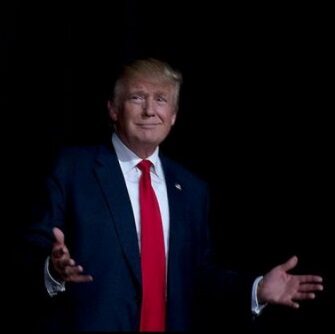
“Complicated business, folks. Complicated business.” ~DJT
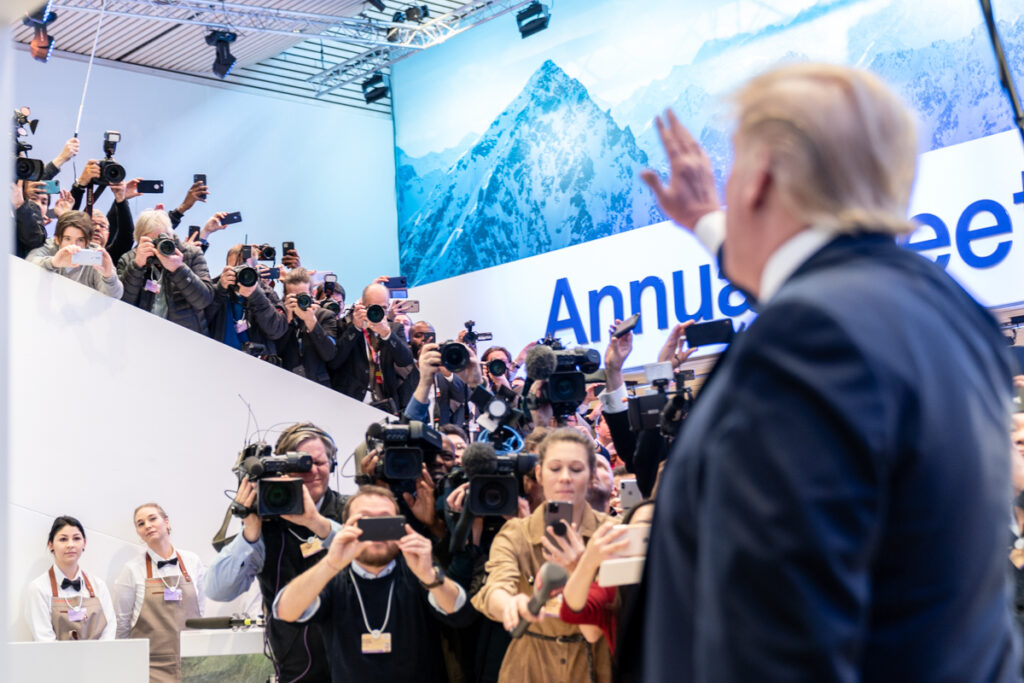
Trump’s Davos schedule, via the White House. Depart DC Tuesday evening
Wednesday in Davos:
2:10 PM – Greets WEF leadership
2:30 PM – Delivers his Davos speech
3:45 PM – Bilats and meetings
5:25 PM – Business reception
Thursday
10:30 AM – Board of Peace Charter Announcement
Then back home.
14
posted on
01/20/2026 10:37:35 AM PST
by
Bratch
To: SeekAndFind
Europe is no longer relevant
15
posted on
01/20/2026 10:39:58 AM PST
by
wny
To: Harmless Teddy Bear
De Gaulle was no fool. France had historically been at war with both Germany and the UK often enough that he knew it was best keep them both at arm’s length. That’s why France’s commitment to NATO was often lackluster at best … and why France wanted no part of many nuclear arms negotiations between the U.S. and the Soviet Union.
16
posted on
01/20/2026 10:40:12 AM PST
by
Alberta's Child
("There's somebody new and he sure ain't no rodeo man.")
To: SeekAndFind
Certain of the more perspicacious observers in Europe - I would not classify this author among them - are beginning to realize that words are one thing, actually deploying troops quite another, and that doing so in Greenland is essentially NATO's death knell. The number of troops is militarily significant, the action is diplomatically very much so.
The difficulty is that of divergent interests, and pretending that the divergence is all on the side of the "selfish" U.S. is self-comforting but entirely inaccurate. For example, a Europe so enthusiastically embracing demographic self-destruction should not be surprised at U.S. reluctance to follow suit. An "America for the Americans" attitude may be derided as isolationist but it certainly beats that of an EU which is for anything but the Europeans. These are not reconcilable approaches.
To: Harmless Teddy Bear
Yep. And every single ally hated DeGaulle. All of them. Because he was a raging a-hole.
18
posted on
01/20/2026 10:41:06 AM PST
by
rlmorel
(Factio Communistica Sinensis Delenda Est)
To: Jamestown1630
They certainly do not share democratic values with the US. The EU itself is a prime example of that.
19
posted on
01/20/2026 10:42:17 AM PST
by
rlmorel
(Factio Communistica Sinensis Delenda Est)
To: SeekAndFind
An amusing article. Trump is just us: we are - to the Europeans "crude and boisterous", good only for our power to protect them when they get themselves into trouble and ignored the rest of the time.
Meanwhile European idiocy including flooding themselves with hostile and dangerous "migrants" and acting as though that is a wonderful thing while punishing anyone who speaks against it, has wrecked their national identities and any usefulness as allies.
It's time to tell Europe to get lost and make new alliances with nations that don't hate us. Uncle Sugar is over you.
20
posted on
01/20/2026 10:42:44 AM PST
by
Chainmail
(You can vote your way into Socialism - but you will have to shoot your way out.)
Navigation: use the links below to view more comments.
first 1-20, 21-40, 41-55 next last
Disclaimer:
Opinions posted on Free Republic are those of the individual
posters and do not necessarily represent the opinion of Free Republic or its
management. All materials posted herein are protected by copyright law and the
exemption for fair use of copyrighted works.
FreeRepublic.com is powered by software copyright 2000-2008 John Robinson