Posted on 12/21/2021 5:58:07 PM PST by blam
How vulnerable is your personal supply chain? For the average American, the answer is: very.
Americans consider abundance and ready availability as birthrights so basic they’re like the air we breathe. The idea that shelves could become bare and stay bare is incomprehensible. Yet that is the world we’re entering, for a number of complex reasons.
One is that the world added not just another billion humans (now 7.9 billion), but one billion middle-class consumers, consumers who use about 100 times more energy per person than poor people. These additional billion middle-class consumers doubled the number of high-energy consuming humans in a few decades, and this enormous expansion of demand has consumed all the easy-to-extract resources of the planet. There are no cheap, easy-to-extract resources left; all that’s left is expensive to reach, extract, transport, etc., and since energy is the master resource, as its cost rises, so does the cost of literally everything that depends on energy.
Consider a poor person in a rural village. Most of their food is grown locally, and their income is so limited they do not have the means to consume much energy or items shipped halfway around the world via the global supply chain. They might have a cheap mobile phone and a few consumer items gifted to them by relatives working in the developed world, but very little of their consumption depends on long global supply chains. If those chains break, the impact on the poor villagers is relatively modest.
Compare this relative self-sufficiency to the extreme dependence on long supply chains of the average American. Very little, if any, of their everyday consumption is sourced locally, i.e., within walking distance. Every item on the shelves requires immense consumption of energy to be manufactured / produced and shipped to the shelf, and every item has a long dependency chain of intermediaries, each of which is dependent on numerous components, specialty materials, machinery and processes.
Every intermediary, and every process and source used by each intermediary, is a potential source of failure of the entire supply chain.
Complexity and supply chains are abstractions. To understand the intrinsic fragility of global supply chains, we must count the number of intermediaries in the chain from the resources extracted from the Earth to the end customer in the store aisle, and then count the intermediaries in each of those links.
Counting the intermediaries in every dependency chain between the source of what we need / want and the item on the shelf (or in the UPS / FedEx / postal service vehicle) is a measure of our dependency: the more intermediaries, the greater our vulnerability and the greater the fragility of the dependency chain.
This chain of dependencies is poorly understood outside each specialized industry. Consider semiconductors, widely touted as “the new oil,” i.e., the essential component in global production. The process of manufacturing semiconductors is extremely complex and resource-intensive, and many of the solvents, machines and components are only manufactured by one or two firms globally. If any of these links are disrupted, the entire chain of production breaks, as each is irreplaceable.
If one firm produces 80% of the global supply of a specialty solvent, the smaller firm producing the other 20% cannot quadruple production for many reasons: its facilities are limited, adding capacity is a multi-year project, the equipment to expand isn’t available, the supply of the petrochemical feedstock cannot be increased due to limitations in the storage and delivery chain, and so on.
There are many limits which are excluded from consideration when the supply chains are functioning. If we consider a system Americans take for granted–the ample supply of gasoline and diesel fuels–there are many unseen limits in the delivery system: the number of tanker trucks is limited, the number of drivers credentialed to drive the trucks is limited, intermediate storage of fuels is limited, and so on.
The system is optimized for the average driver to have less than half a tank of fuel. Should the system break down and drivers start hoarding, i.e., constantly topping off their fuel tanks, then the system cannot recover its previous stability: the system has been optimized to a narrow range of storage, tanker trucks, drivers, etc., and once the system breaks out of that narrow window, the entire chain collapses.
This is the reality of long global supply chains with dozens or hundreds of intermediaries: every supply chain has been optimized to function within a narrow window, and once any intermediary is disrupted, the entire chain breaks and cannot be restored once hoarding (at the wholesale level, over-ordering) begins. Hoarding is our instinctive response to shortages, and once the awareness of systemic fragilities and vulnerabilities rises, so too will hoarding.
There is another source of fragility in long supply chains with many irreplaceable intermediaries. Each intermediary must make a profit or it will shut down. If price increases passed along to an intermediary cannot be passed along to the next link, then the firm absorbing the increase will lose money. Since many intermediaries are small, marginally profitable firms, they cannot absorb losses for long. Once they shut down, the chain cannot be restored without replacing them, and that is a major project, as many intermediaries have specialized skills and trusted networks which cannot be replaced without local connections and sources.
Lastly, many of the global supply chain’s numerous intermediaries depend on credit markets to function, as their receivables often exceed 90 days. In other words, they often receive payment months after they delivered the goods or services, and so they rely on credit to fund day to day operations. Should credit markets seize up–a typical occurrence in crises–these intermediaries will shut down due to lack of funding.
The price to be paid for stripping the domestic economy of productive capacity will be far higher than proponents of trade can even imagine, much less calculate. The price to be paid for becoming dependent on long, complex global supply chains with hundreds of intermediaries optimized for a narrow window of functionality will also be far higher than conventional analysts can imagine, much less calculate.
How vulnerable is your personal supply chain? For the average American, the answer is: very.
How do we reduce that extreme vulnerability? One way is to consume less. Another is to reduce the number of intermediaries between the source of our essentials and our household. For example, a barrel that collects rainwater off your roof is a source of water that has no intermediary. Vegetables collected from your home garden have limited intermediaries (sources of fertilizer and seeds). A solar panel that can charge your mobile devices in daytime has no intermediary once the panel has been purchased and installed.
All the items that become sources of essentials–water barrels, solar panels, fertilizers–could become costly or scarce, as each requires massive amounts of energy to produce. Obtaining sources is different from stockpiling the end products. Both are worthy of consideration. So is moving to a less dependent locale and reconfiguring one’s life to consume less and reduce the number of intermediaries between your household and the sources of what you need.
An ounce of prevention is worth a pound of cure.
Therefore I have stocked up an ounce at a time and ready for the end times 🤪
I’ve felt that with the proliferation of computers and gaming, the interest of younger folks in “hands-on” trades has really diminished in the last 20 yrs. So we’re that much more vulnerable to disruptions that require trades people.
The idea that shelves could become bare and stay bare is incomprehensible. Yet that is the world we’re entering, for a number of complex reasons. …Nothing complex about it. The leader of the “free world” is a hardcore leftist, right now. And when that happens, things start looking like the old USSR . . .
Everyone has weak points, depending on their circumstances.
bookmark
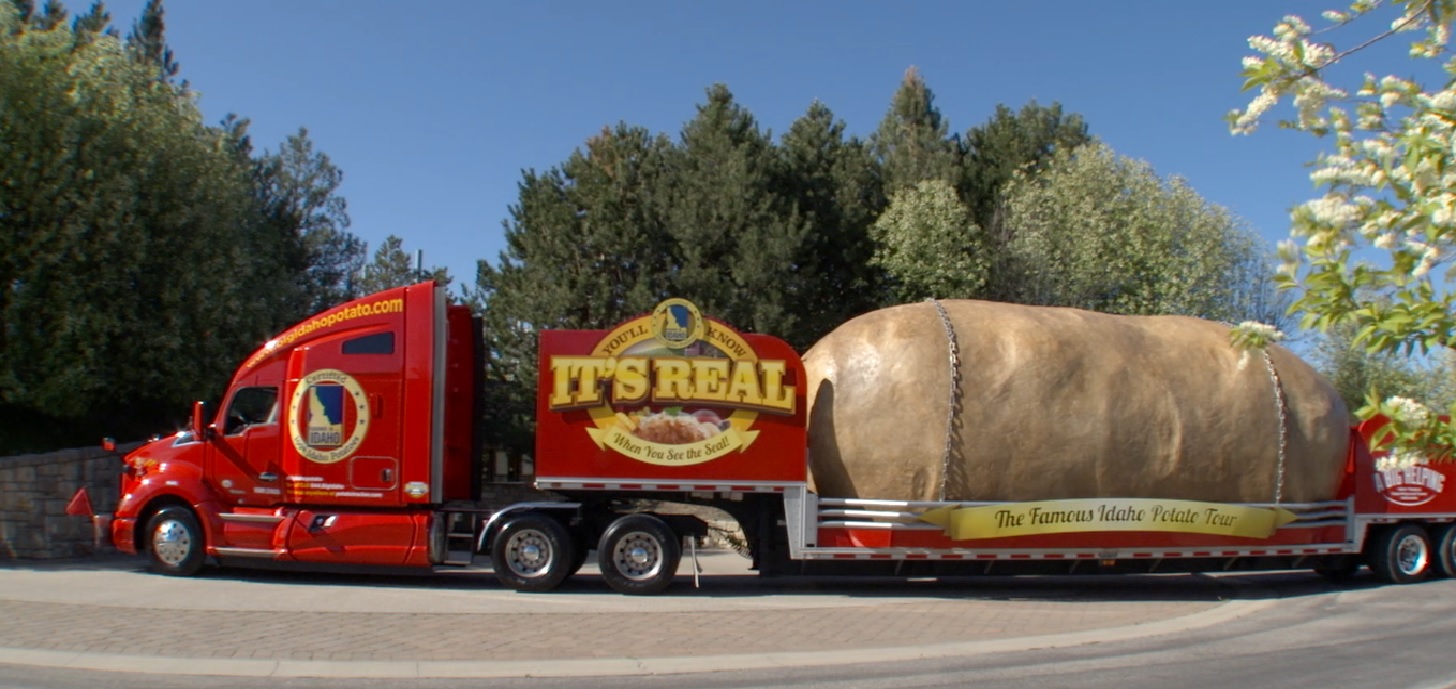
The latest french fry shortage is an example of fragile global supply chains as weather volatility increases.
My “personal supply chain” goes from the fridge to the frying pan and from the pantry to the mixing bowl. It’s a short and highly stable supply chain.
I’m very vulnerable. Twinkies and Little Debbies don’t grow on trees, you know. I could brew my own beer but I’m too darned lazy.
Prepper ping
Found a cattle farmer near me that sells direct to the public at grocery store equivalent prices. I’ll be able to harvest some meat goats next year unless they’re all does. I do have a yearling buck I could take but I never banded him. Got a bunch of heirloom garden seeds for this coming Spring and will be a gardening fool.
Other than that, I heat with wood, gasoline I can’t make and everything else comes from china. The only china stuff I buy is aftermarket auto parts because even the good names have gone to china.
*BUMP* for morning coffee...while I can still get it! ;)
I just started 3 1/2 gallons of apple wine/cider. Ends up at about 11-12 ABV. Of course I make it with store bought apple juice. Note to self, plant apple trees.
“Very few people have a short supply chain.”
Even more, especially Team Brandon, should be on a VERY short LEASH!
Loves me some Charles Hugh Smith. But you already knew that. Another *BUMP* for morning coffee. :)
I think someone is yanking my supply chain...
“Note to self, plant apple trees.”
But don’t go crazy on this! I have three that are coming into decent production and that is WAY more than the two of us need, and I live near an orchard, so there’s little to no re-sale value in them for me, either.
Of course, we’ll be making our own cider in the future. ;)
This past season the plum tree EXPLODED (Dwarf Mount Royal) which was kind of fun; I made gobs of Plum Butter (canned), and a few tarts & crumbles. I guess Plum Wine would be a good use in the future, too. ;)
Right. Consider a poor person in a rural village buying inexpensive goods from China on Amazon.
I want to start raising meat rabbits but my wife says no.
We have so much survival food in the garage we can only park one car in there. Not to mention the blue water containers which are filled and the chickens and garden frame for greens. I just had a good mess of collards and made a spinach, chard and kale salad. All on a half acre suburban lot in Atlanta.
Disclaimer: Opinions posted on Free Republic are those of the individual posters and do not necessarily represent the opinion of Free Republic or its management. All materials posted herein are protected by copyright law and the exemption for fair use of copyrighted works.