Posted on 10/07/2008 11:42:32 AM PDT by palmer
By Gillian Tett
Published: January 19 2007 02:00 | Last updated: January 19 2007 02:00
Last week I received an e-mail that made chilling reading. The author claimed to be a senior banker with strong feelings about a column I wrote last week, suggesting that the explosion in structured finance could be exacerbating the current exuberance of the credit markets, by creating additional leverage.
"Hi Gillian," the message went. "I have been working in the leveraged credit and distressed debt sector for 20 years . . . and I have never seen anything quite like what is currently going on. Market participants have lost all memory of what risk is and are behaving as if the so-called wall of liquidity will last indefinitely and that volatility is a thing of the past.
"I don't think there has ever been a time in history when such a large proportion of the riskiest credit assets have been owned by such financially weak institutions . . . with very limited capacity to withstand adverse credit events and market downturns.
"I am not sure what is worse, talking to market players who generally believe that 'this time it's different', or to more seasoned players who . . . privately acknowledge that there is a bubble waiting to burst but . . . hope problems will not arise until after the next bonus round."
He then relates the case of a typical hedge fund, two times levered. That looks modest until you realise it is partly backed by fund of funds' money (which is three times levered) and investing in deeply subordinated tranches of collateralised debt obligations, which are nine times levered. "Thus every €1m of CDO bonds [acquired] is effectively supported by less than €20,000 of end investors' capital - a 2% price decline in the CDO paper wipes out the capital supporting it.
"The degree of leverage at work . . . is quite frankly frightening," he concludes. "Very few hedge funds I talk to have got a prayer in the next downturn. Even more worryingly, most of them don't even expect one."
Since this message arrived via an anonymous e-mail account, it might be a prank. But I doubt it. For, while I would not normally write an article about responses to an article (it is the journalist's equivalent of creating derivatives of derivatives) I am breaking this rule, since I have recently had numerous e-mails echoing the above points. And most of these come from named individuals, albeit ones who need to stay anonymous, since they work for institutions reaping profits from modern finance.
There is, for example, a credit analyst at a bulge-bracket bank who worries that rating agencies are stoking up the structured credit boom, with dangerously little oversight. "[If you] take away the three anointed interpreters of 'investment grade', that market folds up shop. I wonder if your readers understand that . . . and the non-trivial conflict of interest that these agencies sit on top of as publicly listed, for-profit companies?"
Then there is the (senior) asset manager who thinks leverage is proliferating because investors believe risk has been dispersed so well there will never be a crisis, though this proposition remains far from proven. "I have been involved in [these] markets since the early days," he writes. "[But] I wonder if those who are newer to the game truly understand the impact of a down cycle?"
Another Wall Street banker fears that leverage is proliferating so fast, via new instruments, that it leaves policy officials powerless. "I hope that rational investors and asset prices cool off instead of collapse, like they did in Japan in the 1990s," he writes. "But if they do, monetary policy will be useless."
To be fair, amid this wave of anxiety I also received a couple of "soothing" comments. An analyst at JPMorgan, for example, kindly explained at length the benefits of the CDO boom: namely that these instruments help investors diversify portfolios; provide long-term financing for asset managers and reallocate risk.
"Longer term, there may well be a re-pricing of assets as the economy slows and credit risk increases," he concludes. "But. there is a very strong case to be made that the CDO market has played a major role in driving down economic and market volatility over the past 10 years." Let us hope so. And certainly investors are behaving as if volatility is disappearing: just look at yesterday's remarkable movements in credit default swaps. But if there is any moral from my inbox, it is how much unease - and leverage - is bubbling, largely unseen, in today's Brave New financial world. That is definitely worth shouting about, even amid the records now being set in the derivatives sector.
Just as leveraging drove up financial asset prices, deleveraging drives them down. When you hear them say "banks won't lend" they really mean banks won't roll bad debt and they certainly won't assume bad debt from other banks (lend money so a borrower can pay off some other creditor). The system is frozen because deleveraging has wiped out all the assets. We are broke but we still owe the money. Guess what, it ain't gonna get paid.
Finally from the original article:
"I hope that rational investors and asset prices cool off instead of collapse, like they did in Japan in the 1990s," he writes. "But if they do, monetary policy will be useless."
We didn't and Japan will be a picnic compared to what we will have, providing we avoid a complete financial collapse.
Leverage ping!
The argument for the utility of CDS’s seems to be that they limit volatility and spread risk and thereby greatly reduce the risk and the consequences of default on the underlying obligation.
Is it fair to say that the current mess is a complete and unanswerable refutation of that argument, or is that too simplistic?
Regards,
Yes they spread risk, and limit volatility of specific instruments. When you do that, however, you make the entire financial system a highly leveraged coutnerparty to that. Thinking about that is a deep existential question and ought to make your head hurt thinking about what it means, if anything. So, instead of having individual bankruptcies to flush out capital misallocation, you make the entire fiancial system march in lock step. To save individual buffalo from going over the cliff, we have roped them altogether so the whole herd has to go over the cliff. The herd is in the process of going over the cliff.
What folks don't understand is that because of leverage, we levaraged up asset values to unsustainable levels and used the book value as an asset for more leverage. At the end of the day though, liabilities have to be repaid from the income stream generated by productive assets, and you can ony draw off a fraction of production to pay liabilities (because labor and materials have to be paid) and above that the whole system collapses.
We are about to enter into the mother of all mud wrestling contests to find out who will end up with the call rights on production by our economy.
I assume an organization’s book value must at least account for that organization’s leverage. But I can’t assume anything these days. But obviously the book value of an asset (security) would not show any of the leverage used by the party that issued the security.
It is simply stunning that bright people can behave so stupidly. I don’t think they were stupid. I think they were in denial.
I rode motorcycles for 10 years. Addicting. I loved it. I quit after I fractured my ankle in the last crash.
Most people who rode motorcycles said they accepted the risk. It was worth it. I was the ONLY person who told the truth about it. I said, “I don’t accept the risk. I ignore the risk. I’m in denial.” I didn’t “accept” the risk I could be paralyzed or lose a limb. I chose to ignore the risk and pretent I could overcome all risks with training, by staying alert and never riding while impaired. I was kidding myself and I knew I was kidding myself. I knew that if I ever had an accident that left me paralyzed from the waist down, the first words out of my mouth would have been, “If I thought that would really happen, I never would have ridden!”
I had to ignore the risk to feed my addiction to riding.
The point is, they were all in monster denial. They had to know the risk. They absolutely had to, but they were in denial to feed their addiction to wealth and easy profits.
That said, the key line from the article has to be...
“But if they do, monetary policy will be useless.”
Scary.
But, I have advised some folks I work with to exit the stock markets........
The crazy thing is...the company I work for has retirement plans with AIG.....Ha!! I never joined up...and got harassed about it...by the AIG Rep...to boot.
Right now...it's a "waterfall". And I've no sense of where or when we "turn". And I trade rather actively......
Currently in 98% cash.......
I was chatting with a friend today. He was concerned because his defined benefit pension may have dropped too far below the funding requirement. Which means it may be subject to complex rules the Pension Benefit Guaranty Corporation administers. So he is looking forward to retiring on about 50% less right now. He is very lucky. He is fully vested and over age 65. And, he is still working.
People with 401(k) programs have to take their risks and swim with sharks in the big pond. People will be very angry tonight for the Big Debate. The audience may be looking for blood. Get your popcorn ready.
No big deal. Nothing to see here. Time to move on.
Article illustrates the dangers of excessive leverage. The extreme case (although realistic) cited is what tips the balance and starts the deleveraging ball rolling, but the vast majority of financial leverage is well beyond salvaging at this point (asset value is zero and the borrowers can’t pay what they owe). That’s why I’m afraid this meltdown will continue (with some bumps) until the cheap credit is gone and interest rates can rise to realistic levels (or Bernanke decides hyperinflation is ok).
Interesting article. Very interesting thread. Thanks to all posters.
In case I didn’t already ping you to this article. The relationship to the bank thread (why don’t banks come clean) is that they made the loans to the hedge funds referred to in the article. Those loans are worthless now and not coincidentally, there are no news stories about hedge funds collapsing yet since that would make bank insolvency undeniable.

When the lenders and the investors were two completely different groups then the lenders could be counted on to limit how much leveraging they would allow the investors that borrowed from them. Now that the investors and lenders are the same companies, I can see where a financial company could convince itself to loan itself and leverage itself into oblivion.
I thought this was supposed to be a free market where risk takers were rewarded for ... taking risks.
I guess in the end the CEOs of all of these financial institutions deserve their platinum parachutes: although they claimed that what they were doing was minimizing risk, they instead maximized risk to unimaginable levels. That kind of chutzpah deserves whatever it can grab!
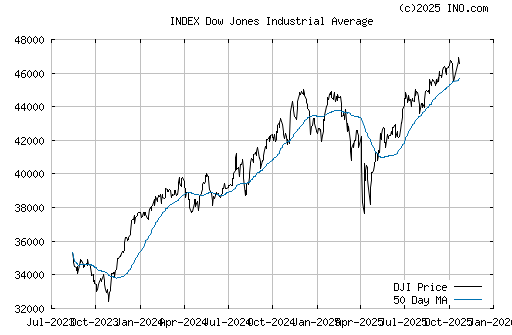
From this ......

To this ....

None of these financial whizkids have ever been thru a mess. Remember the 1980's when farmers wore red handkerchiefs around their necks at the local foreclosure auctions...better buy up some cloth because "local self help" is the only way out of this wreck. My advice to Wall Street is "Jump! You f*ckers!"
Every leveraged institution spread its risk. There were too many of these institutions. Spread risks accumulate in every financial institution on the globe, from Iceland to China, turning huge number of them toxic.
Now some of them are using their disaster to their advantage. Save me or the world financial system would go down.
In a way, they behave like N. Korean regime.
Good point!
12 13 digit numbers(trillion)
Disclaimer: Opinions posted on Free Republic are those of the individual posters and do not necessarily represent the opinion of Free Republic or its management. All materials posted herein are protected by copyright law and the exemption for fair use of copyrighted works.