Posted on 07/09/2007 6:24:11 AM PDT by 3AngelaD
This author is the Nelson Poynter Scholar for Journalism Values
It's one of the age-old debates in journalism circles. Can a journalist tell a lie to reveal the bad behavior of others? Or, put another way, when might a journalist obscure the truth of his identity in pursuit of the truth on a story? It's more than an academic exercise when a journalist chooses to use the deception tool.
You'll find a very personal take on this in a recent essay in the Los Angeles Times. The writer is Ken Silverstein, who once wrote for that paper and is now Washington editor of Harper's Magazine. Silverstein defends his use of deception for a July story in Harper's. He misrepresented his identity "pretending to be the representative of a London-based energy company with business interests in Turkmenistan" in reporting on D.C. lobbyists who would eagerly sell their services for dubious reasons to questionable clients...
Silverstein's essay is intended both to defend his use of deception in reporting this story and to condemn those journalists who eschew the possibility of using some form of lying. Silverstein said he expects the targets of his investigation -- the lobbyists who were willing to sell their services -- to challenge his methods. But he was disappointed at the criticism of Washington Post media columnist Howard Kurtz, "who was apparently far less concerned by the lobbyists' ability to manipulate public and political opinion than by my use of undercover journalism."
Silverstein's L.A. Times essay recounts the history of the use of deception in undercover journalism and the turn away from such methods in the wake of the Food Lion v. ABC News case. Silverstein also takes a shot at the Washington press corps in general for being too timid when it comes to considering the use of deception...
I've written many times about the use of deception, including the ABC News v. Food Lion case and the use of hidden-camera reporting in general. I've also written guidelines for journalists to use when considering the use of deception or misrepresentation in their reporting process.
I'm not an absolutist on these matters of truth versus lies. I believe there are some situations -- rare, exceptional cases -- when deception may be justified. If you meet multiple thresholds...
When is it justified? That’s pretty obvious. It’s always justified.
That’s why they do it so much. The real question is when is not lying justified? Apparently, never.
Nellie Bly. Deception has a long history.
Mrs VS
Too bad the Guy who made you is.
I don’t see why journalists should be held to a higher standard than Our Nations Finest. The police conduct undercover operations, drug and underage alcohol buys, fake lotteries to get marks to collect their “prize” (and get arrested), and otherwise knowingly misrepresent their identities and motives, all the time. Honor indeed.
Lying and Journalism should not be spoken in the same sentence.
Lying is what has ruined the credibility of the printed news.
Who are these people who believe it is their right to print the news with such a slant that their lie is what is told.What gives them the right to make this decision.
As for me I want the truth. Give me the truth, I am old enough to make my own decisions -—based on truth.
They may not be the best decisions, but its my right.

It is never justified to lie if you are a journalist-not ever. If you can not find the information supporting your position then perhaps you are wrong. If you wish to express your opinion, write editorials.
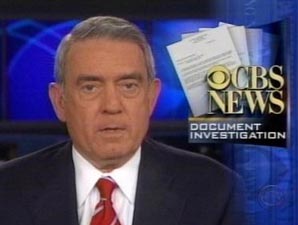
YES, THEY CAN.......Dan Rather School of Journalism......
Especially lying by omission, a particular talent of theirs.
Especially in the old 'Three Mesquiteers' series. That was some of his best stuff.
He did good work in the three mesquiters series, although not an original.
Why, when they're on the LEFT, of course.
Hmmm......You didn't know that already?
- John
This isn't always the case, especially in investigative journalism, because the information is often there to be found---it's just not always in the best interest of certain parties to make that information known to a reporter.
Then if any one at all is to have the privilege of lying, the rulers of the State should be the persons; and they, in their dealings either with enemies or with their own citizens, may be allowed to lie for the public good. But nobody else should meddle with anything of the kind; and although the rulers have this privilege, for a private man to lie to them in return is to be deemed a more heinous fault than for the patient or the pupil of a gymnasium not to speak the truth about his own bodily illnesses to the physician or to the trainer, or for a sailor not to tell the captain what is happening about the ship and the rest of the crew, and how things are going with himself or his fellow sailors.
— Plato
Apparently Journalists believe they are comparable with heads of state.
A classic example of manufacturing the news rather than reporting it.
The real question is when is not lying justified? Apparently, whenever it helps Republicans/Conservatives or never.
There...fixed it
Disclaimer: Opinions posted on Free Republic are those of the individual posters and do not necessarily represent the opinion of Free Republic or its management. All materials posted herein are protected by copyright law and the exemption for fair use of copyrighted works.