Posted on 05/02/2005 5:14:57 AM PDT by LesbianThespianGymnasticMidget
The former president of the United States, Jimmy Carter, is accusing his own country for the erosion of the Non-Proliferation Treaty (NPT).
"The United States is the major culprit in this erosion of the NPT," wrote Carter in an article published in the American daily International Herald Tribune Monday.
"While claiming to be protecting the world from proliferation threats in Iraq, Libya, Iran and North Korea, American leaders not only have abandoned existing treaty restraints but also have asserted plans to test and develop new weapons, including antiballistic missiles, the earth-penetrating "bunker buster" and perhaps some new "small" bombs.'' "They also have abandoned past pledges and now threaten first use of nuclear weapons against non-nuclear states,'' he said.
The opinion piece published ahead of the NPT review conference in New York, said "we can only be appalled at the indifference of the United States and the other nuclear powers'' about the NPT.
In the run-up to the conference last year, a coalition of nuclear-capable states - including Brazil, Egypt, Ireland, Mexico, New Zealand, South Africa, Sweden and eight NATO members - voted for a new agenda resolution calling for implementing NPT commitments already made.
"Tragically, the United States, Britain and France voted against this resolution,'' said Carter the founder of the think-tank 'Carter Center' in Atlanta.
Proposing corrective actions, Carter suggests that all nuclear weapons states should agree to no first-use, but the United States, as the sole superpower, should take the lead on this issue.
Carter opines that Israel's nuclear arsenal is enticing other Middle Eastern states to join the nuclear club.
"Iran must be called to account and held to its promises under the Non-Proliferation Treaty." "At the same time, we fail to acknowledge how Israel's nuclear status entices Iran, Egypt and other states to join the community of nuclear-weapon states.'' Carter concludes that if the United States and other nuclear powers ''are serious about stopping the erosion of the NPT, they must act now on these issues.'' 260/1412
Mr. Carter, as usual, has missed a good opportunity to shut up.
The Energeezer Busybody goes on and on and on...
The more this guy opens his mouth, the more I'm left to wonder how this guy ever managed to sit in the Oval Office to begin with.
Published on Friday, October 18, 2002 by CommonDreams.org
Carter's Less-Known Legacy
by Stephen Zunes
With all the liberal columnists singing the praises of Jimmy Carter in honor of his winning the 2002 Nobel Peace Prize, I’d like to contribute a somewhat dissident note. Only somewhat, however. I am very pleased Carter won the Nobel Peace Prize and believe it is well deserved. I also enjoyed the subtle send-up by the Nobel committee and the not-so-subtle criticism by the committee’s chairman in contrasting this former American president with the current American president.
However, though criticism of Carter’s presidency has often centered upon his alleged weak governing, the sad truth was that his administration was a disaster when it came to the areas for which he is now best known: peace, international law and human rights.
President Carter, who came to office in early 1977, not long after Indonesia invaded and annexed the tiny island nation of East Timor, increased military aid to the Indonesian dictatorship by 80%. This equipment including OV-10 Bronco counter-insurgency aircraft that was crucial in the rounding up of much of the country’s civilian population into concentration camps. Most of the 200,000 East Timorese deaths as a result of Indonesia’s occupation took place during the Carter Administration, in large part as a result of this military aid.
Carter also dramatically increased military aid to the Moroccan government of King Hassan II, whose forces invaded its southern neighbor, the desert nation of Western Sahara, barely a year before the former Georgia governor assumed office. Carter fought Congress to restore military aid to Turkey that had been suspended after their armed forces seized the northern third of the Republic of Cyprus in 1974. Carter promised that the resumption of aid would give Turkey the flexibility to withdraw. Turkish occupation forces remain there to this day.
All three of these U.S. allies were in violation of repeated demands by the UN Security Council that they unconditionally withdraw from these occupied territories.
Under President Carter, the United States vetoed consecutive UN Security Council resolutions to impose sanctions against the apartheid regime in South Africa. Ignoring calls from the democratic South African opposition to impose such pressure, Carter took the line of American corporate interests by claiming U.S. investments – including such items as computers and trucks for the South African police and military – somehow supported the cause of racial justice and majority rule. (Barely five years after Carter left office, the United States imposed sanctions against South Africa by huge bipartisan Congressional majorities and no longer vetoed similar UN efforts.)
When the people of the African country then known as Zaire rebelled against their brutal and corrupt dictator Mobutu Sese Seko, Carter ordered the U.S. air force to fly in Moroccan troops to help crush the popular uprising and save the regime.
Carter sent military aid to the Islamic fundamentalist mujahadeen to fight the leftist government in Afghanistan in the full knowledge that it could prompt a Soviet invasion. According to his National Security Advisor Zbigniew Brzezinski, it was hoped that by forcing the Soviets into such a counter-insurgency war would weaken America’s superpower rival. This decision, however, not only destroyed much of Afghanistan, but the entire world is feeling the ramifications to this day.
As president, Carter opposed Palestinian statehood, refused to even meet with Palestinian leaders, and dramatically increased military aid to the right-wing Israeli government of Menachem Begin. When Israel violated an annex to the Camp David Accords by resuming construction of illegal settlements on the occupied West Bank, Carter refused to enforce the treaty despite being its guarantor. Carter also dramatically increased military aid to the increasingly repressive Egyptian regime of Anwar Sadat.
Meanwhile, Carter ordered that the evidence his administration had acquired of a joint South African-Israeli nuclear test be covered up to protect their governments from international outrage.
In May 1980, pro-democracy protestors seized the center of the South Korean city of Kwangju, challenging the U.S.- backed dictatorship of Chun Doo Hwan. Carter ordered the release of South Korean troops under U.S. command at the request of the dictator in order for them to re-take the city for the regime, massacring thousands. (When former South Korean dictator Syngman Rhee made a similar request that his troops be released from U.S. command two decades earlier, President Dwight Eisenhower refused.)
President Carter ignored pleas from Salvadoran archbishop Oscar Romero to not send arms and advisors to the junta whose forces were massacring many hundreds of peasant leaders, trade unionists, priests, human rights workers and other dissidents. Carter continued his military support of the junta even after Romero himself was assassinated while saying Mass, a shooting carried out under the orders of a top Salvadoran general. One of Carter’s last acts as president was to approve a record level of arms transfers to the junta just weeks after Salvadoran troops – under orders from high-ranking officers – raped and murdered four American churchwomen.
Carter was the president who enacted Presidential Directive 59, which authorized American strategic forces to switch to a counterforce strategy, targeting nuclear weapons in their silos, indicating a dangerous shift in nuclear policy from deterrence to one of a first-strike.
He supported the Shah of Iran to the end, even as the dictator ordered his forces to fire onto thousands of unarmed demonstrators. Carter dismissed Iranian anger at the 1953 U.S.-led overthrow of the country’s constitutional government by saying that it was "ancient history," a particular ironic comment in reference to a 4000-year old civilization.
Carter was also a strong supporter of Philippine dictator Fernando Marcos, Pakistani General Zia al Huq, Saudi King Faud and many other dictators. He blocked human rights legislation initiated by then-Congressman Tom Harkin and others. He increased U.S. military spending, militarized the Indian Ocean, and withdrew the SALT II Treaty from the Senate before they even took a vote.
It is certainly true that Jimmy Carter has made many positive contributions to the world since leaving the presidency. He did not simply join corporate boards like his predecessor Gerald Ford. Most leaders – as they have gotten older and more experienced in foreign affairs – have tended to become less idealistic and more prone to support military solutions to conflict. Carter, however, has gone in the opposite direction. And there were undoubtedly some positive achievements even while he was president for which we should also be grateful.
At the same time, we should not whitewash the past.
Stephen Zunes is an associate professor of Politics and chair of the Peace & Justice Studies Program at the University of San Francisco.
source:
http://www.commondreams.org/cgi-bin/print.cgi?file=/views02/1018-06.htm
So, Mr. Carter, would these countries have changed ANYTHING if our actions had been different?
Could it be that Jimma "Gubber" Carter and Billy "Gubber" Carter switched places at death - and it's Billy down their shooting off his mouth?
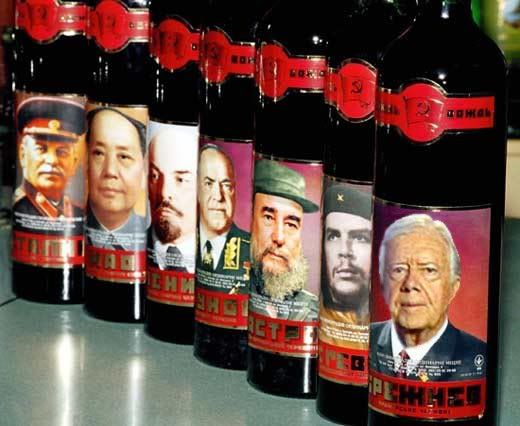
The US of A Communist Party could not really have voted this guy in a president could they?
Yep they could - just keep those welfare checks coming.
Hmm, the NYC Police Dept said that iPods intice criminals to steal them from people on the subway. Apparently, it's not the criminals causing crime, it's the would be victims & their wares.
"most anti American president ever?"
Yes.
One wonders how this silly man ever fooled enough of the American people to be elected president.
How many times have we heard this?
"Carter blames U.S.?"
Man, I wish this weasel would just crawl back into his den.
Mr Zunes needs to work on some of his facts.
Carter hated the Shah of Iran, and never supported him. If he had, we might not be in the mess we are now with this WOT.
Just look at the quality of the last 2 Democrat presidents.
Not much!
Both were con men in their own ways.
Both created recessions for America and international troubles abroad.
Reagan and Bush had to clean up their messes before promoting their own agendas.
We must remember the American people had little information at the time of Carter's terror reign, er...I mean presidency. No internet, no cable news, only the leftist controled media.
Carter is the root of the outlandish behavior we see of Democrats today. He further opened the cracks of looney-ness and enjoyed every minute of doing it.
Still does.
In 'Reagan's War', Peter Schweizer documents how Jimmy Carter sought the assistance of the Soviet Union to undermine the 1976 reelection bid of Gerald Ford, as well as Ronald Reagan's 1980 and 1884 Presidential campaign in return for promises of favorable treatment.
People like this are seen overseas as having no respect for their own country. It does nothing but fuel further hatred against the United States.
The analogy is simple. If I speak poorly about my own family then I can't expect my friends to have a good impression of them.
Don't ever air your dirty laundry.
This is a socialist, peanut-brained simpleton who gave away the Panama Canal and thinks himself a "statesperson."
Disclaimer: Opinions posted on Free Republic are those of the individual posters and do not necessarily represent the opinion of Free Republic or its management. All materials posted herein are protected by copyright law and the exemption for fair use of copyrighted works.