Click here: to donate by Credit Card
Or here: to donate by PayPal
Or by mail to: Free Republic, LLC - PO Box 9771 - Fresno, CA 93794
Thank you very much and God bless you.
Posted on 11/17/2026 7:53:09 AM PST by SunkenCiv
Phys.org reports that the remains of an infant who suffered from cyclopia, a rare birth condition affecting the developing brain and facial bones, have been discovered in southern Peru at a Nazca cemetery dated to between A.D. 325 and 440. Elsa Tomasto-Cagigao of Pontifical Catholic University and her colleagues explained that most children born with the condition die before or soon after birth. The remains of this child were found in a ceramic vessel with the remains of another infant who did not have any skeletal abnormalities. Genetic analysis of the remains indicate that both children were girls, but they were not maternally related. The baby with cyclopia had a smaller than expected skull with a single eye socket in the center of the forehead, no nasal bones or nostrils, and the openings of her optic nerves had fused. Her shoulders were unusually curved, and two of her spinal bones were malformed. She also had an extra copy of chromosome 13, which could explain her rare developmental condition, the researchers concluded. Read the original scholarly article about this research in PNAS. For more on the Nazca culture, go to "Mapping the Past: The Paracas Textile."
(Excerpt) Read more at archaeology.org ...
|
|
Click here: to donate by Credit Card Or here: to donate by PayPal Or by mail to: Free Republic, LLC - PO Box 9771 - Fresno, CA 93794 Thank you very much and God bless you. |
Photographic views of selected cranial and postcranial elements showing the morphological traits observed in individual JA13A.Credit: Proceedings of the National Academy of Sciences (2026). DOI: 10.1073/pnas.2625042123
Here's one of those inimitable 'O rly?' sidebars:
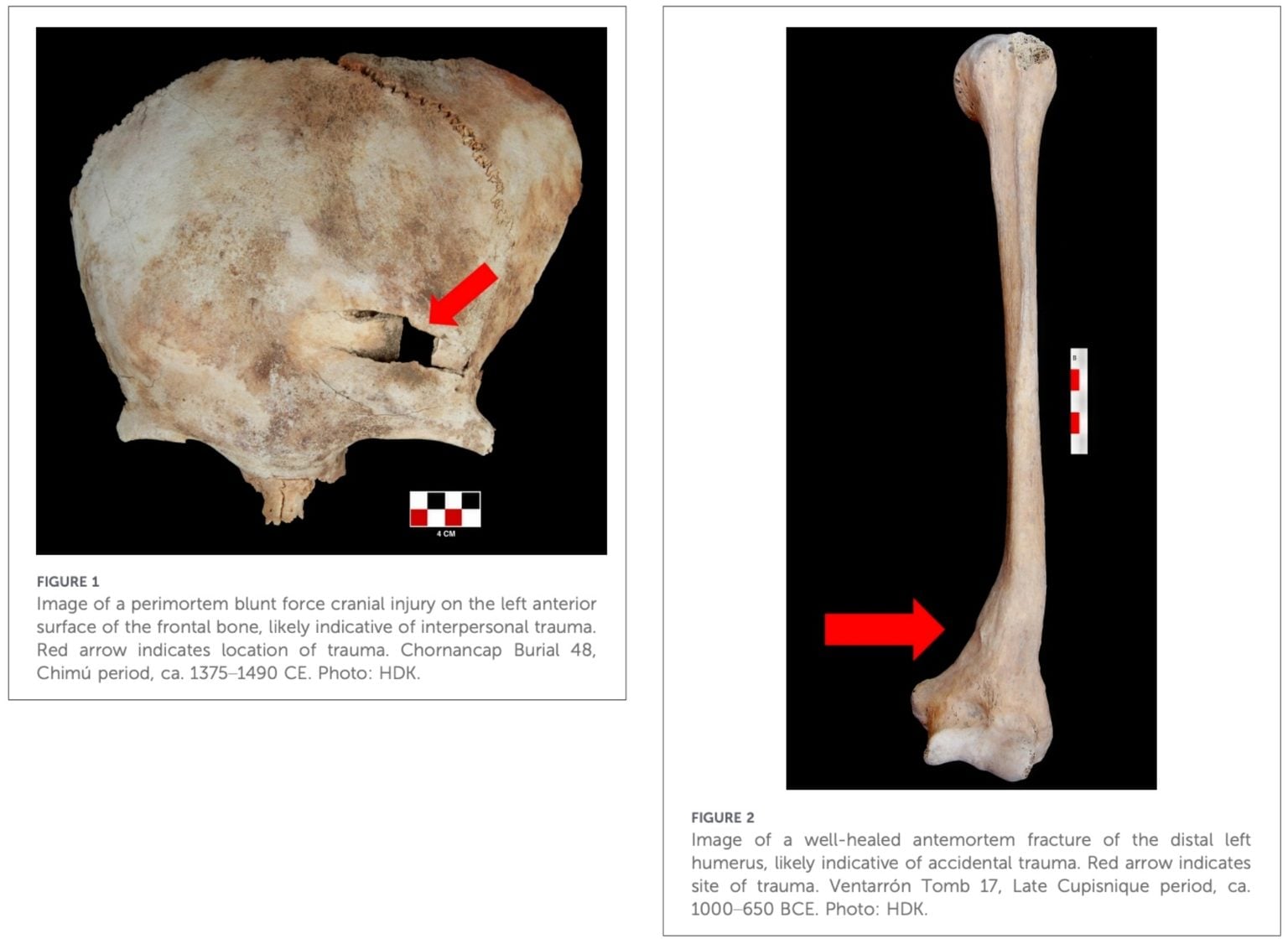
According to a Science Alert report, Thomas Snyder of New York University and Haagen Klaus of George Mason University analyzed the remains of more than 1,600 individuals recovered from different sites in Peru's Lambayeque Valley. The individuals lived between about 1500 B.C. and A.D. 1500. During this period, a series of El Niño events brought drought and flooding. Previous studies have shown that El Niño events led to mass ritual sacrifices by the Moche and Sicán peoples of the Lambayeque Valley. The researchers suggest that ecological stress may have also brought on violence between people in competition for resources, as has been observed in human remains unearthed at other archaeological sites in the Andes Mountains. Examination of the skeletal remains identified wounds on the skulls of 25 individuals that are thought to be associated with violence, and wounds on the bodies of 77 individuals that Snyder and Klaus posit are associated with accidents. They said that no statistical relationship linked environmental stress with violence or accidents in the sample, however. Rather, they suggest that communities in the Lambayeque Valley may have turned to the ocean as an alternative source of food. "In Lambayeque there's 6,000 years of creative adaptations to El Niño and longer-term changes in climate, and widespread violence wasn't one of them," Snyder concluded. Read the original scholarly article about this research in Frontiers in Environmental Archaeology. To read about a ritual game played by ancient Peruvians, go to "Bringing Back Moche Badminton."
Figure 1 is an example of a cranial injury, most likely due to violence between people, while Figure 2 shows the kind of bone damage the researchers associate with accidental injury.Snyder & Klaus, Frontiers in Environmental Archaeology, 2026
BTW, based on what's been accumulating in the 'On Deck' folder here, this is shaping up to be 'Ancient Autopsies' week.
Sidebar #2 -- Still Precolumbian, but not from the Andes:
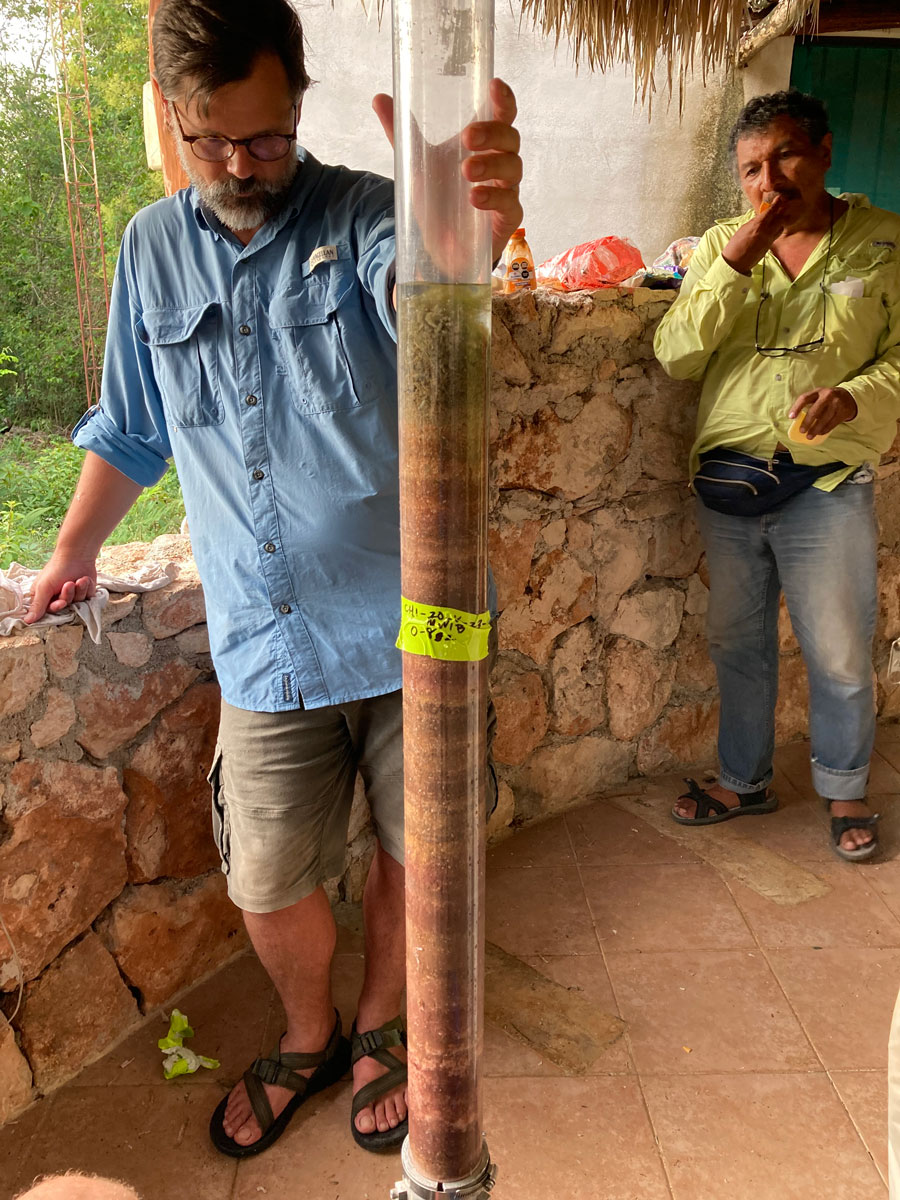
Reuters reports that mercury contamination has been identified at additional Maya sites. The Maya used the red pigment cinnabar, which contains mercury, in ceremonies and funerary rites, and to paint murals and decorate temples. A previous study confirmed mercury contamination at the Maya site of Tikal in Guatemala. Now, Matt Waters of Auburn University and Savanna Wooten of the Jones Center at Ichauway have identified mercury in core samples taken from lake beds at the sites of Coba and Xcach, which are located on Mexico's Yucatán Peninsula. The study found a mercury spike at Coba beginning in A.D. 250 that lasted about 150 years. At Xcach, a spike in mercury occurred between A.D. 125 and 200, with a second spike around 250. A third peak occurred between A.D. 535 and 820, around the end of the Maya Classic period and the collapse of some Maya cities. "Our study shows that modern toxicology and pollution regulations were far exceeded at the most toxic levels for centuries around Coba and Xcach," Waters said. "Furthermore, we measured multiple biological markers in the sediments for bacteria, algae, cyanobacteria, shelled organisms, and insect midges, which all decreased or vanished in the lakes, meaning the mercury had made its way into multiple levels of the food chain," he added. This suggests that residents of these sites may have been exposed to mercury by consuming contaminated water and fish. Read the original scholarly article about this research in Science Advances. To read about a very rare liquid form of mercury found beneath a pyramid in Teotihuacan, go to "Mythological Mercury Pool," one of ARCHAEOLOGY's Top 10 Discoveries of 2015.
Researcher Matt Waters stands next to a sediment core sample pulled from an ancient Maya Lowlands lake.Auburn University
Sidebar #3 -- Still Precolumbian, but from North America:
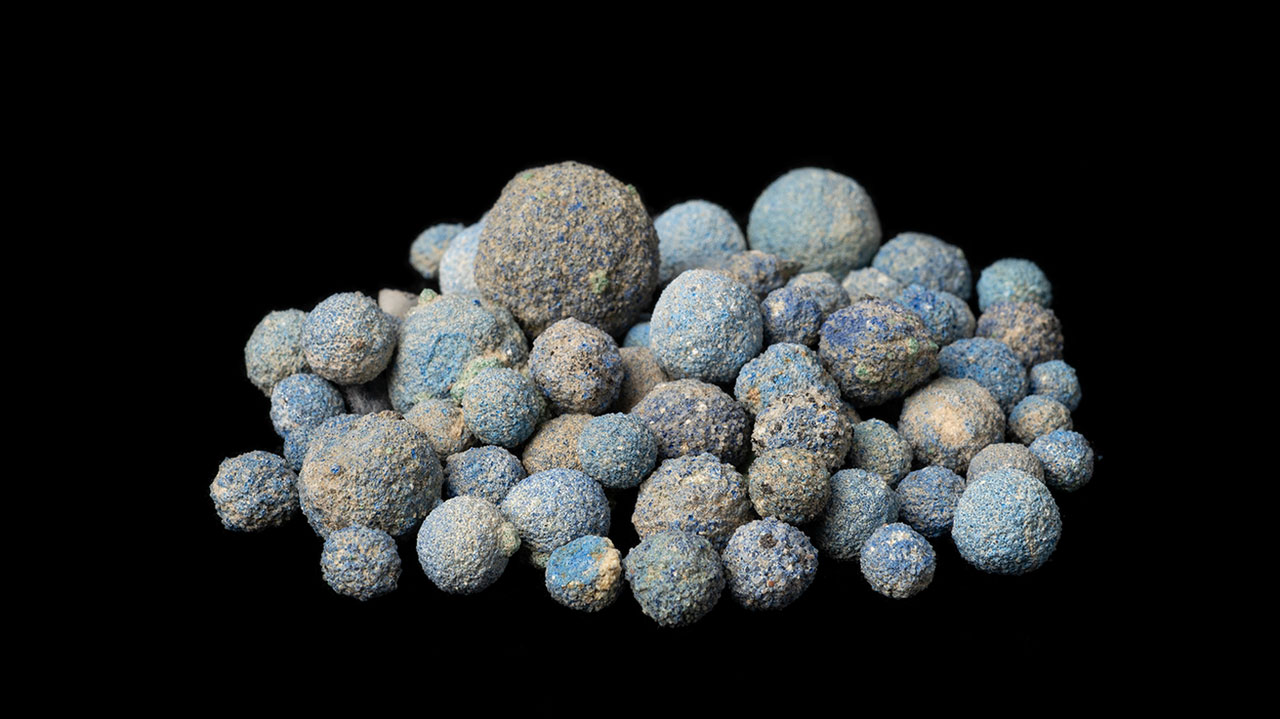
According to a statement released by the University of New Mexico, a team of researchers led by Kari Schleher of the University of New Mexico identified geological sources of azurite used by Ancestral Pueblo communities some 1,400 years ago. Azurite is a copper mineral with a vivid blue color used as a pigment or paint. The scientists analyzed two samples of azurite obtained from sources in New Mexico and Utah known to have been mined by Ancestral Pueblo people. Then they analyzed the isotopes of lead, strontium, and copper in 12 azurite specimens recovered in the Four Corners region. Most of these samples were found to have collected in the Lisbon Valley. Two of the samples came from the Zuni Mountains in New Mexico. "We were able to show the Pueblo people would travel from modern-day New Mexico up to today's central Utah 1,400 years ago," Schleher said. Future research will include more samples of azurite held at the New Mexico Mining Museum, and the team also plan to consult local oral histories on mine use and traditional territories, she added. Read the original scholarly article about this research in the Journal of Archaeological Science: Reports. To read about the use of azurite as a pigment in the Roman world, go to "Painting by Roman Numerals."
AzuriteUniversity of New Mexico
It's going to be more graves than gravy about this week's GGG pings. Appropriate that this topic starts out in the original home of the potato, underdone or not.
"There's more of gravy than of grave about you, whatever you are!" -- Ebenezer Scrooge to the ghost of Jacob Marley
I cannot imagine the horror that struck the poor mother who gave birth to that horribly deformed baby.
I’d agree, but I haven’t seen the mother yet. Clinton would still date her regardless.
I would say it’s a little late to look for suspects.
Digging up graves. I wonder if people are alright with them digging them up in a couple hundred years to “study” them?
If you believe those people are still in their graves and Earthly remains, maybe not.
Poor little thing. At least her earthly life was naturally short and she was able to be with the Lord right away without a life of suffering in this vale of tears.
Disclaimer: Opinions posted on Free Republic are those of the individual posters and do not necessarily represent the opinion of Free Republic or its management. All materials posted herein are protected by copyright law and the exemption for fair use of copyrighted works.