Skip to comments.
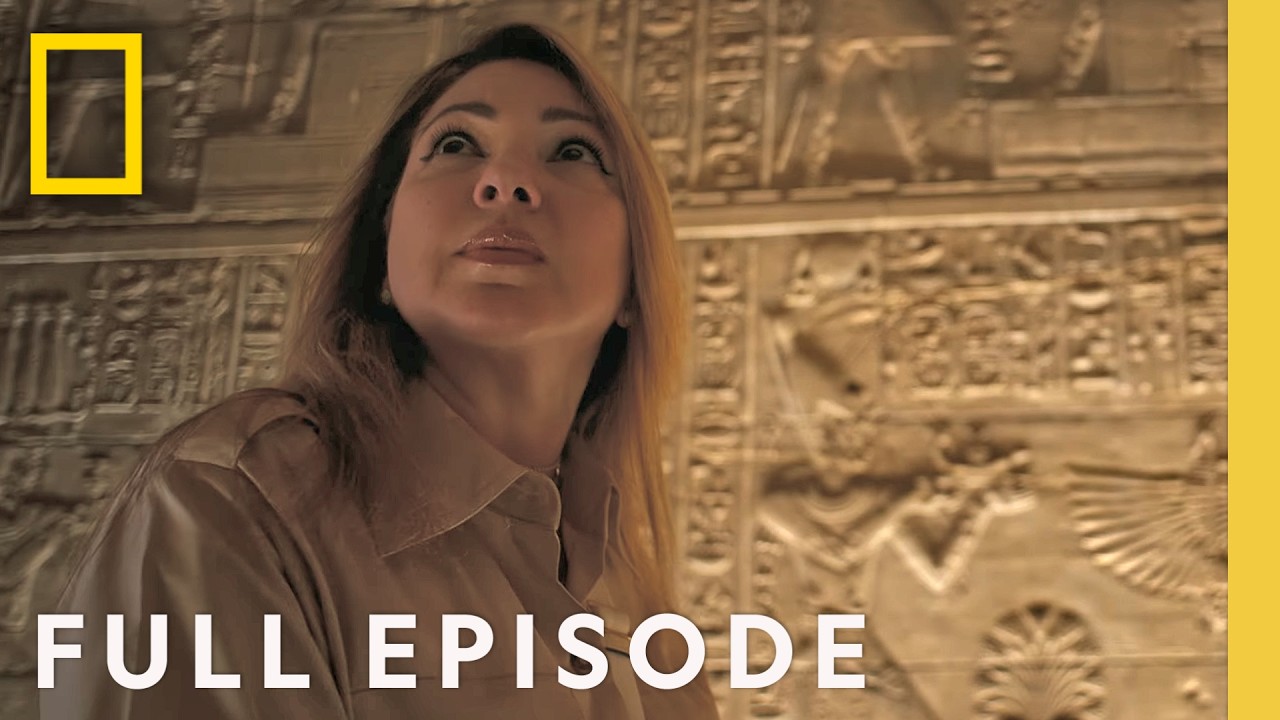
Cleopatra's Final Secret (Full Episode) | Documentary Special | National Geographic [1:06:19]
YouTube ^
| September 24, 2026
| National Geographic
Posted on 09/27/2026 12:58:09 PM PDT by SunkenCiv
Where was Cleopatra buried? In this National Geographic documentary special, lawyer-turned-archaeologist Kathleen Martinez searches for Cleopatra’s lost tomb. After over 20 years of searching, her excavations now lead in an unexpected new direction, a submerged site miles offshore in the Mediterranean. She has enlisted Titanic discoverer Bob Ballard, the Egyptian Navy, and a team of archaeologists and divers to help her explore this mysterious location that may finally answer over a thousand year old secrets. Cleopatra's Final Secret (Full Episode)
Documentary Special | National Geographic | 1:06:19
National Geographic | 26.5M subscribers | 717,495 views | September 24, 2026
(Excerpt) Read more at youtube.com ...
TOPICS: History; Science; Travel
KEYWORDS: bobballard; cleopatra; godsgravesglyphs; kathleenmartinez; romanempire; taposirismagna; zahihawass
1
posted on
09/27/2026 12:58:09 PM PDT
by
SunkenCiv
To: StayAt HomeMother; Ernest_at_the_Beach; 1ofmanyfree; 21twelve; 24Karet; 2ndDivisionVet; 31R1O; ...
Had to wait two hours and quick-and-dirty up a doodad to make some simple stylistic change, but the transcript looks great and will follow in a few minutes.

2
posted on
09/27/2026 1:00:05 PM PDT
by
SunkenCiv
(TDS -- it's not just for DNC shills and jihadists anymore -- oh, wait, yeah it is.)
To: E. Pluribus Unum

Video Transcript Summary
Cleopatra’s Final Secret is a National Geographic documentary special (approximately 67 minutes) following lawyer-turned-archaeologist Kathleen Martinez’s more than 20-year quest to locate the lost tomb of Cleopatra VII, the last active ruler of Egypt’s Ptolemaic dynasty.
Background and Motivation
Cleopatra has long fascinated the world, but much of her popular image comes from Roman accounts written by her conquerors. These portray her primarily as a seductress, “eastern witch,” or harlot (e.g., stories of bathing in asses’ milk or hiding in a carpet to meet Julius Caesar). Martinez, experts such as Egyptologist Salima Ikram, and others argue this is propaganda that obscures her real accomplishments: she was highly educated, spoke multiple languages (up to nine), skilled in statecraft, economics, and mathematics, and ruled effectively in a male-dominated era when true female pharaohs were rare.
Martinez approaches the mystery of Cleopatra’s burial like a criminal case, drawing on her legal training. Roman custom was to parade defeated leaders in triumph in Rome; instead, only a statue of Cleopatra was displayed. She believes Cleopatra deliberately arranged a secret burial (possibly with Mark Antony) to prevent her body from falling into Roman hands and to die as a “daughter of Isis,” the goddess with whom she strongly identified. Ancient sources (including Plutarch) indicate she prepared a tomb near a Temple of Isis. Traditional theory places it in Alexandria near the royal palace, but the location remains unknown and no contemporary visitors are recorded as having seen it.
Focus on Taposiris Magna
After studying records and visiting candidate Isis temples, Martinez settles on Taposiris Magna, an overlooked ruined temple complex about 30 miles west of Alexandria. It is large, architecturally significant, and historically mysterious (few inscriptions, limited prior study). She secures excavation permission after a dramatic confrontation with then-antiquities official Zahi Hawass, becoming one of the first archaeologists from the Dominican Republic licensed to dig in Egypt. Initial permits are short (two months), and the team (mostly male) is skeptical.
Key Land Discoveries
Early seasons yield little, but persistence pays off:
- Foundation deposits (plates) with Greek and hieroglyphic inscriptions confirming the temple was dedicated to Isis—the first solid proof of its purpose.
- Hundreds of bronze coins, many bearing Cleopatra’s image and name, found as offerings in the mammisi (birth house) chapel.
- A Ptolemaic stela fragment linking the site to other important Isis temples (e.g., Philae) and elevating Taposiris Magna’s historical status.
- Later finds include burial shafts with mummies (some once gold-leafed), pottery, artifacts, and a possible portrait head of Cleopatra (unconfirmed).
These establish direct Ptolemaic/Cleopatra-era connections and show the site was far more important than previously thought.
The Tunnel and Shift Offshore
A major breakthrough is a sophisticated, hand-carved tunnel system (roughly 1.3 km / over 4,000 feet long, reaching depths of ~25 meters in places). It features precise engineering marks from ~2,000 years ago and runs from under the temple toward the Mediterranean, blocked by modern roads and resorts. Martinez theorizes it was a sacred or processional passage that once continued to the sea or a now-submerged structure.
Underwater Expedition
To pursue the tunnel’s seaward path, Martinez partners with oceanographer Bob Ballard (discoverer of the Titanic), the Egyptian Navy, and dive teams. Surveying miles offshore, they locate a previously unknown submerged ancient port associated with Taposiris Magna. Discoveries include:
- Large man-made structures and towering columns (over 21 feet / ~6+ meters high) with precise square edges.
- A highly polished stone floor covering a large area (~100 m × 100 m in reports).
- Amphorae, multiple anchors, and other maritime artifacts.
This indicates Taposiris Magna was not only a major religious center but also a significant maritime trading hub, making it a more plausible location for a royal tomb. Geological context (earthquakes and a major tsunami in AD 365) explains how coastal and nearshore structures sank.
Overall Narrative and Tone
The film intercuts excavation footage, historical reenactments/context about Cleopatra’s life (her rise, alliance with Caesar, relationship with Antony, and final defeat), expert commentary, and Martinez’s personal journey—from childhood interest in archaeology, to practicing law, to risking her career on this “crazy” project. It emphasizes perseverance against skepticism, the challenges of archaeology (especially for an outsider and woman leading a team), and the slow, evidence-based rewriting of history. youtu.be No definitive tomb is found. The documentary presents the tunnel, artifacts, and submerged port as major advances that strengthen Martinez’s hypothesis and expand understanding of the site, while leaving the ultimate mystery open. It frames the search as ongoing and highlights how new evidence continues to challenge long-held assumptions about Cleopatra.
3
posted on
09/27/2026 1:15:32 PM PDT
by
E. Pluribus Unum
(The right of the Democrats to embezzle elections shall not be infringed. )
Transcript pt 1
[Distant singing]
[Kathleen Martinez] My god. It goes down, like, more than two meters.
[Kathleen] We need to know what is in there.
[Newscaster 1] An archeologist in Egypt claimed today to be on the verge of finding the burial place of Cleopatra.
[Newscaster 2] One of the greatest treasures of all time.
[Newscaster 3] But the final burial spot has remained a mystery for centuries.
[Kathleen] For 20 years I’ve been searching for Queen Cleopatra.
[Narrator] Cleopatra has long been a figure of fascination.
[Kathleen] She’s captivated our collective imagination for 2,000 years.
[Narrator] Idolized by some and defamed by others.
[Kathleen] But we don’t have the full story of Queen Cleopatra.
[Narrator] For two decades, archeologist Kathleen Martinez has been searching for her final resting place...
[Kathleen] I’ve sifted through the lies and the myth to find the truth.
[Narrator] ...sweeping away convention...
[Kathleen] There is a big mystery in this temple.
[Narrator] ...and building her case.
[Explorer] She came at it as if she was a criminal lawyer trying to figure out whodunnit.
[Colleague] People tell her you are crazy, but to have the good things, you must be crazy, you must be risky.
[Colleague] She’s a fighter, she never gives up.
[Narrator] Kathleen’s investigation is rewriting our understanding of one of the most famous women to have ever lived.
[Kathleen] One day I will come face to face with Queen Cleopatra. I want to look at her and say, “You haven’t been forgotten.”
When you start a normal day excavating, you don’t know what will happen during that day of excavation. Most of the time we’ll not find anything. Archeology is hard, complicated. But I never imagined that it would take me years, years of excavations to reach the most important discoveries we have today. It’s an entrance, we can see an entrance.
[Narrator] The location of Cleopatra’s tomb is one of the greatest mysteries of the ancient world. Now, after decades of searching, Kathleen Martinez may have uncovered a major clue.
[Kathleen] Okay, look. Oh, god. So creepy, look.
[Narrator] A shaft leading to a tunnel buried beneath the walls of a ruined temple.
[Kathleen] At the end of the tunnel, there is a wall, but it’s almost completely covered with water. It took us more than three weeks to reach the bottom. It goes all the way, 25 meters, and then opens up, going to the north and to the south. Imagine how long it must have taken them to build and chisel by hand these tunnels. And this is the original line that the engineer 2,000 years ago drew for the workers that were chiseling this tunnel.
[Narrator] In ancient Egypt, colossal passages like this were a huge undertaking. Excavated by hand over months or even years. Whatever this tunnel was for, it had to be important.
[Don Lemon] A fascinating story, it’s a surprising discovery, this morning in Egypt, an ancient tunnel found beneath a temple that could now lead to Cleopatra’s tomb!
[Newscaster 1] They are starting an excavation in Egypt hoping to unearth Cleopatra’s tomb.
[Newscaster 2] They found the entrance using ground-penetrating radar, and when they got inside of it, they realized that it is massive.
[Narrator] The tunnel reaches to the edge of the temple site, beyond which, it’s blocked by modern developments.
[Kathleen] We think the tunnel goes beneath a highway, beneath a modern resort and continues to the Mediterranean Sea. Why would there be a tunnel leading us to the sea?
[Narrator] For Kathleen to investigate the tunnel further, she’s going to need help.
[Bob Ballard] I thought I was going back to the Battlefield of Midway, and I got derailed when I got a phone call from an amazing individual who I didn’t know, her name was Kathleen Martinez.
[Narrator] To find out where the tunnel leads, Kathleen has recruited legendary deep-sea explorer, Dr. Bob Ballard.
[Bob] The first shipwreck I ever discovered was the Titanic. Bingo, yeah! Haaa! Oh, I love it! I love it! But since then I’ve discovered many, many chapters of human history. And so I’m genuinely excited about all aspects of it. Why was there a tunnel and why was it pointing out to sea?
[Narrator] Bob and his team are hoping to find out exactly where the tunnel leads by conducting a search underwater.
[Bob] Well, we’re at what’s gonna become basecamp for the expeditions. Over the next month this is gonna be transformed into a real command center. This is not a simple hole in the ground, this is a very sophisticated tunnel. The database that we collect will grow and grow and grow, until we finally know what’s out there. So, stay tuned.
[Narrator] Kathleen is used to gathering evidence. This is a case she’s been building for over two decades.
[Kathleen] I dedicated years studying Queen Cleopatra. I read everything that has been written about her. Cleopatra was a remarkable woman.
[Narrator] Crowned at 18, Cleopatra was born into the Ptolemaic Dynasty, a Macedonian-Greek line of pharaohs, begun by Alexander the Great, some 250 years earlier. Her father, Ptolemy XII, named her as an heir before his death. She was destined to rule alongside her younger brother, normal practice for the Ptolemies, but unusually, she soon asserted her seniority over him.
[Salima Ikram] What Cleopatra achieved was really extraordinary, regardless of her sex. She spoke nine languages, she knew about statecraft, she had a sense of, you know, mathematics, economy. So, really, she was the full package.
[Narrator] True female leaders were incredibly rare in the ancient world. In 3,000 years of Egyptian history, only a handful of women ruled in more than name.
[Kathleen] She accomplished so much in a time when women were so restricted. When I understood her life, I realized that she was a different character than the Romans portrayed her.
[Narrator] The version of Cleopatra handed down to us by history was provided almost entirely by the people responsible for her downfall: the Romans.
[Salima] History is written by the victors, and this is what happened in the case of Cleopatra. The Romans wrote the history saying that she was a great seductress, she was a whore, she was this awful eastern witch. And this fake news becomes real news that persists for centuries.
[Narrator] Over time, the legends surrounding Cleopatra became as famous as the woman herself. A seductress. A harlot, who bathed in asses’ milk. So conniving, she gained an audience with Julius Caesar by hiding in a carpet. But despite the staying power of these stories, there’s no evidence at all to support them.
[Kathleen] It was a malignant campaign, propaganda against her, and she doesn’t deserve to be remembered that way. She was a woman who achieved things that no other woman had before. But history is not fair with her, and I decided to find out the truth. The real Cleopatra. Since I was a kid, I wanted to be an archeologist. My father told me no, you’re not going to lose your time, studying archeology does nothing, you have to choose a real profession, a real career. I have my own law firm since I was 21 years old. But I never forgot about archeology and Queen Cleopatra.
[Narrator] In 2004, Kathleen Martinez decided to pursue her dream.
[Kathleen] My father told me not to go to Egypt. He said to me that I was risking my career for this crazy project of searching for the tomb of Queen Cleopatra. But I knew that this is what I wanted to do. I can’t describe the emotions and the feelings that I had when I arrived in Egypt.
[Horns honking] I was able to see with my own eyes where Cleopatra once lived.
[Narrator] Kathleen was determined to rewrite Cleopatra’s story, based not on Roman propaganda, but hard evidence.
[Kathleen] I have a degree in archeology, but the ideas that come to my mind are not 100% as an archeologist, because my main training is as a criminal lawyer. As a criminal lawyer, we encounter many mistakes and assumptions.
[Narrator] One part of Cleopatra’s story in particular stood out to Kathleen.
[Kathleen] It was the mystery of her death that fascinated me.
[Narrator] The Roman accounts of Cleopatra’s death suggest that she died in Alexandria, buried somewhere near the royal palace.
[Dr. Yasmin El Shazly] The accounts we have say that she was buried in the royal quarters in Alexandria, but no historians have mentioned visiting her grave, and the location of her tomb remains a mystery.
[Salima] So, where is Cleopatra?
[Narrator] For Kathleen, the story of Cleopatra’s burial doesn’t add up. The Romans defeated her, and custom at the time was for the leader of a conquered nation to be captured, taken to Rome, and paraded in symbolic triumph.
[Salima] If Cleopatra had been taken to Rome, she would have been mutilated, and her body would have been, you know, maybe left to the birds to peck at, or even burned. But instead, a statue of Cleopatra was paraded through the streets of Rome as if she had been there and was this prisoner.
[Kathleen] I believe she would have done anything to stop her body from being in the hands of the Romans, so she prepared a way to be smuggled away from Alexandria. What if Cleopatra was buried somewhere else entirely?
[Narrator] Kathleen studied the ancient records, including that of Roman historian Plutarch, who wrote in detail about Cleopatra’s death.
[Kathleen] This text, it’s really important, because here Plutarch confirms that Cleopatra built a tomb very close to the Temple of Isis. And this was my first clue.
[Salima] For the ancient Egyptians, the kings and the queens were, in fact, divine incarnations on Earth, and Cleopatra’s sort of patron deity was Isis. Isis as a goddess was, of course, power, the great mother, and great of magic. So really the fact that she was shown as Isis meant that she was representing the safety and security of Egypt.
[Kathleen] The divine connection between Cleopatra and Isis could be the way to reveal her tomb. After years of research, I thought, I had to test my theory.
[Narrator] Kathleen began her search by investigating all the temples near to where Cleopatra died.
[Kathleen] I visited all of those temples, one by one. Dismissing them if they were very small or if they were not a temple of Isis. There was one temple that sometimes appears in the map, very few, and most of the time it is not shown in ancient maps. And I wondered what if? On the last morning, I went to Taposiris Magna. There was almost no information about the temple. Who built it? But there was something about the scale, the size, and the architecture of the temple. It had the conditions to be the final resting place of Queen Cleopatra.
[Narrator] But despite Kathleen’s hunch, there was no proof that the temple was dedicated to Isis. Unusually, its walls bear no inscriptions at all, and 200 years of investigation had failed to discover who built the temple, or why. Taposiris Magna, like Cleopatra’s whereabouts, is a mystery.
4
posted on
09/27/2026 1:17:37 PM PDT
by
SunkenCiv
(TDS -- it's not just for DNC shills and jihadists anymore -- oh, wait, yeah it is.)
Transcript pt 2
[Zahi Hawass] Many years ago, Kathleen Martinez came to visit me. She was very cunning. She was very smart.
[Kathleen] Dr. Zahi was the only person who could give me the permits to excavate Taposiris Magna. I went into his office. I get to, to his desk. He, he told me, “You have two minutes. What do you want?”
[Zahi] I asked her, is she an archeologist? She said, “No. I am a lawyer.” I said to her, “How a lawyer can be interested in archeology?”
[Kathleen] Yes, I’m a lawyer. But I also have a degree in archeology. I wanted to explain this idea I had, and I started explaining, but he was not looking at me.
[Zahi] I tell her, “Go to hell. Who are you? You are just a lawyer.”
[Kathleen] I hit his desk.
[Zahi] I never found in my life anyone like that.
[Kathleen] And he looked at me angry, very angry.
[Zahi] Said, “I know Cleopatra was buried inside the temple of Taposiris Magna.”
[Kathleen] And then I, I told him that I will discover the tomb of Queen Cleopatra.
[Zahi] I said to myself, when I was young, I was also obsessed with Cleopatra.
[Kathleen] I saw that at that moment, Dr. Zahi Hawass changed the idea that he had about the project.
[Zahi] And I said to Kathleen, “Kathleen, we are going to work inside the temple.”
[Kathleen] I receive the first license to any archeologist from the Dominican Republic to work in Egypt. It was the greatest news.
[Narrator] Kathleen Martinez was granted a temporary license to dig at Taposiris Magna.
[Kathleen] If there is 1% of a chance that the last queen of Egypt could be buried there, it’s my duty to search for her. I had to prove that the temple was dedicated to Goddess Isis. So there I was, not only from a not-known country or without background in archeology, but also as a woman. And I have to lead this team of archeologists, all men, and convince them to follow my decisions. Today or tomorrow, we’re going to be able to, to explore. It’s so exciting!
[Narrator] Not everyone shared Kathleen’s optimism.
[Kathleen] Normally the expedition receives a year of approval. In my case, they only gave me two months. In archeology, two months is nothing.
[Mohammed Nabil] Well, my professors in the university, they all thought that this site is finished. They thought that we are joking to look for the queen’s tomb in Taposiris Magna.
5
posted on
09/27/2026 1:17:58 PM PDT
by
SunkenCiv
(TDS -- it's not just for DNC shills and jihadists anymore -- oh, wait, yeah it is.)
Transcript pt 3
[Kathleen] Everybody here at the site was disappointed we didn’t find anything. We didn’t even find pottery or nothing. Everything was difficult for me at that time. I, I was losing my team. They didn’t believe in me. They confronted me and told me, “You’re not going to find anything.” We get into the last week of the project, I haven’t discovered anything. I continued working with Mohammed Nabil in one of the new locations I chose to excavate. Suddenly, a chamber started to open. My own team started to think that maybe I could be right.
[Narrator] Just enough for Kathleen’s permit to be extended and to return the following year.
[Mohammed] We start the digging again, and I realize that this is something strange, and I start to notice this piece of blue glass.
[Kathleen] Everybody started jumping, even some of the team members cried.
[Mohammed] It was the foundation plates. I consider the foundation plates like the black box of the plane. Nobody can doubt on it. It tells you who built this place and in what time it was built.
[Kathleen] These are foundation plates. This is very, very hard to see, but there are inscriptions there in Greek and hieroglyphics. The most important thing is that to whom this temple was dedicated, and it was dedicated to Goddess Isis. Everything changed for, from that moment, because at the beginning it was only a theory, but then with archeological evidence I was able to prove what no other archeologist or Egyptologist has been able to prove. And that was just the start.
[Narrator] Within weeks of the foundation plates, Kathleen uncovered more extraordinary finds—hundreds of bronze coins.
[Zahi] When Kathleen found the coins, a lot of coins, that has the face and the name of Cleopatra. This really what made me to continue.
[Narrator] The coins were found inside the temple’s mammisi chapel and were an offering to the Goddess Isis.
[Kathleen] I’m gonna cry. I’m so happy.
[Narrator] Kathleen Martinez, an outsider in the world of archeology, had found a direct link from Taposiris Magna to Queen Cleopatra.
[Newscaster 1] In Egypt, real-life treasure hunters may be on the verge of one of the most important archeological discoveries of modern times: the tomb of Cleopatra.
[Newscaster 2] The latest discoveries in a land blessed with an embarrassment of archeological riches.
6
posted on
09/27/2026 1:18:14 PM PDT
by
SunkenCiv
(TDS -- it's not just for DNC shills and jihadists anymore -- oh, wait, yeah it is.)
Transcript pt 4
[Narrator] One of the most striking discoveries was a fragment of a massive stone tablet, or stela, etched with historical details.
[Kathleen] Taposiris Magna has been told not important, an unfinished temple, not known, and this discovery changed it all. The discovery of this stela inside Taposiris Magna established the temple as one of the most important ones worshiping Isis in Egypt. Finding the stela totally rewrites the history of Taposiris Magna.
[Narrator] The stela is Ptolemaic and predates Cleopatra, but is identical to one found at a temple with a known link to the queen, Philae. Not long after she was crowned, Cleopatra was exiled by her younger brother, plunging the country into civil war. Unbound, Cleopatra appealed to the Roman leader Julius Caesar, who was in Egypt to restore peace. He supported her claim to the throne, and the two formed an alliance which became a passionate affair.
[Salima] Cleopatra was really an astute politician, an intelligent woman, but a lot of what comes down to us, in terms of literature, is related to Cleopatra’s intimate relationships. This sometimes winds up driving the narrative, which is not quite fair, I think, because what it does is it sort of sidelines anything that Cleopatra herself had to offer, other than sex. She was actually a very, very clever strategist.
[Narrator] Cleopatra is said to have taken Caesar on a tour up the Nile, showing him the wonders of her already ancient Egypt.
[Kathleen] Can you imagine when Cleopatra also came with Caesar 2,000 years ago?
[Mohammed] On their famous journey, yes.
[Kathleen] Yes.
[Mohammed] Visiting all the holy temples in the Nile.
[Kathleen] It’s beautiful.
[Narrator] One of the sites they are said to have visited is the most important temple dedicated to the Goddess Isis, in the south of Egypt at Philae.
[Kathleen] We are in the sanctuary of Isis. Very few people could enter, only the priest, priestesses of Isis, kings, and queens. So once, more than 2,000 years ago, Cleopatra was right here with Julius Caesar.
I believe that the most important religious center for Isis in the south was Philae, and the most important one in the north was Taposiris Magna.
[workers singing]
[chanting]
[Narrator] Since Kathleen’s realization that Taposiris Magna was the most important Isis temple in the north of Egypt, her search has taken on an even greater determination.
[Kathleen] This is beautiful.
[Woman] Yes, it’s very beautiful.
[Narrator] With thousands of artifacts since recovered from the site.
[Kathleen] And you still have all of this?
[Man] Yes, yes, yes.
[Mohammed] This place was full of people, crowded with people 2,000 years ago, speaking another language, having another culture, and you suddenly enter this place, full of magic.
[Worker] Kathleen, another coin here.
[Kathleen] Another coin?
[Worker] Yes.
[Kathleen chuckles] Okay.
[Kathleen] Oh!
[Worker] Another three coins.
[Kathleen] Three coins.
[Worker] Yes.
[Kathleen laughs]
[Narrator] In victory, the Romans deliberately destroyed images of Cleopatra, leaving only a handful of likenesses to have survived.
[Kathleen] Usually, these kinds of coins are portraying our queen.
[Narrator] Only seven statues thought to be Cleopatra have ever been found, each depicting the queen in her Greek or Egyptian style.
[Kathleen] That’s the nose, mouth, and the chin. Yes, this is Cleopatra.
[Narrator] With so few images of Cleopatra in existence, every coin found offers a rare glimpse of her, as she wished to be seen.
[Kathleen] This is so beautiful. There have been incredible discoveries that validate my theory, but still the most important objective is to discover the tomb of Queen Cleopatra. But you have to understand that I am putting together a puzzle.
7
posted on
09/27/2026 1:18:37 PM PDT
by
SunkenCiv
(TDS -- it's not just for DNC shills and jihadists anymore -- oh, wait, yeah it is.)
Transcript pt 5
[Narrator] Tantalizingly, the team has uncovered tombs at Taposiris Magna, some containing rich offerings, meaning people of high status were buried here. Kathleen believes that Cleopatra was, too.
[Kathleen] You can never assume. You have to go all the way and be sure. This is what happened with previous excavations, that they assumed there was nothing, and by inches, I discover, I made big discoveries, where they, where they stopped. So I don’t want this to happen to me. I want to go all the way to the bottom and be sure when I leave an area that it’s completely excavated.
[Narrator] Kathleen’s determination and tenacity mirror that of her heroine. After a three-year union with Cleopatra, Julius Caesar was brutally assassinated. Cleopatra lost her protection, and a dangerous power vacuum was created in Rome. An uneasy alliance was formed between the two men seen as his successors, his nephew Octavian and Mark Antony, his most trusted general. To keep Egypt safe, Cleopatra needed Rome’s backing. She had to choose a side.
[Salima] Cleopatra might not have had an army, but she did have riches, and so she could buy an army, and she wanted one of the best.
[Kathleen] Mark Antony was the leader of the fifth legion, which was one of the most powerful, lethal legions that the Romans had.
[Yasmin] She knew he wanted wealth, and she wanted military power.
[Salima] Cleopatra decided that she would go to meet with Antony.
[Yasmin] So, to show him her wealth, she makes a very dramatic entrance.
[Salima] She stage-managed beautifully.
[Kathleen] Cleopatra prepared this incredible boat with luxuries that nobody has ever seen before.
[Salima] Cleopatra’s boat itself had silver oars and a golden stern, so the whole thing was glittering.
[Kathleen] Cleopatra came showing Mark Antony all the possibilities if they start an alliance together. She came with these ideas that nobody ever had, things that looked kind of craziness, but were very effective. I see her as a mastermind who had to solve all kinds of problems. She was unique. A true leader in the region.
[Salima] As first dates go, it was quite phenomenal.
[Yasmin] It was a very intelligent move.
8
posted on
09/27/2026 1:18:54 PM PDT
by
SunkenCiv
(TDS -- it's not just for DNC shills and jihadists anymore -- oh, wait, yeah it is.)
Transcript pt 6
[Narrator] This alliance changed the course of history. But it would eventually lead to Cleopatra’s downfall. After weeks of preparations, the team is ready to start the next phase of their investigation, to try and identify where the tunnel might lead.
[Kathleen] The tunnel is huge, the length is almost two, three kilometers. This is a huge human effort.
[Narrator] Kathleen has unearthed one of the longest ancient tunnels ever found in Egypt. Now it has been scanned and forensically mapped, she’s ready for Bob Ballard to find out why it’s pointed out to sea.
[Bob] Why did you pick this one over all those other temples?
[Kathleen] Because it has no information, there was no information about this temple at all. Why?
[Bob] Why did they leave this one out?
[Kathleen] Yes.
[Bob] That’s your training in law.
[Kathleen] Exactly.
[Bob] And crime scenes.
[Kathleen] And crime scenes. Why? This is not normal.
[Bob] People kept saying she didn’t know what she was talking about, that she was wrong, and I’ve had people say that to me, so I sympathized with her. I’ve always had a dream, and so I’m sympathetic to people who have dreams.
[Narrator] For Kathleen, this tunnel could be a major development in the search for Cleopatra.
[Kathleen] Welcome! A tunnel like this would have been the perfect way for Cleopatra to have her body moved after her death. I was searching and then I found this shaft.
[Bob] I mean it must have been a dream come true.
[Kathleen] Nobody would make a construction like this without a purpose.
[Narrator] Cleopatra understood that her new power came with potentially grave consequences.
9
posted on
09/27/2026 1:19:16 PM PDT
by
SunkenCiv
(TDS -- it's not just for DNC shills and jihadists anymore -- oh, wait, yeah it is.)
Transcript pt 7
[Narrator] After she began her relationship with Mark Antony, his rival Octavian was deeply concerned.
[Yasmin] Cleopatra was a powerful woman who was capable of ruling a very powerful country. In Rome, this kind of ambition in a woman was seen as a threat.
[Salima] Egyptian women were far more privileged in the ancient world than any other sort of civilization, especially against the Romans. The Romans and the Greeks were dreadful to women. So, in Egypt, you could own property, you could buy and sell things, you could inherit, you could run your own business, you could divorce.
[Narrator] In short, Cleopatra was someone the Romans considered dangerous, a woman in a position of power.
[Kathleen] Cleopatra knew how much the Romans hated her, so she could not go to these monumental tombs of other pharaohs, or to a pyramid. I believe she prepared a way to be smuggled inside the tunnels to Taposiris Magna.
[Bob] Someone was hiding something, and that someone was probably Cleopatra.
[Kathleen] That’s what I believe.
[Bob] Yes. And so she is coming up with the best strategy to make sure you never find her tomb.
[Kathleen] Yes, and this, she could easily do it through the tunnels.
[Bob] Yes.
[Narrator] The scans suggest the tunnel may stretch out under the Mediterranean Sea. If it does, the question is, why?
[Kathleen] I think that part of Taposiris Magna could be underwater today.
[Narrator] In the 4th century, a huge earthquake and tsunami all but destroyed Alexandria. Swathes of the city and the region’s coastline were lost to the sea.
[Kathleen] The most famous cartographers in the world, Italian, French, have drawn these maps. Ancient maps confirm the existence of this peninsula.
[Jonathan] Yep.
[Kathleen] The other maps also show... one or two islands connected to the temple.
[Jonathan] This is big.
[Bob] So the idea is to do a recon of this area. Alright, I think we have a plan.
[Narrator] Bob’s plan is to find the line of the submerged tunnel, find out where it leads, and to what.
[Bob] I’ve found a lot of things in the ocean, but I’ve never had an arrow like this one. This is an important discovery waiting for us offshore.
[Narrator] Kathleen’s search for Cleopatra is now both on land and at sea. Her team is tripling in size.
[Kathleen] I have never done anything this big. Everybody’s arriving. We have scientists. Hello. We have underwater archaeologists. Welcome.
[Man] How are you?
[Kathleen] We have archaeological teams. Really very excited. I couldn’t sleep last night.
[Archaeologist] Yeah, all of us like this, yes, yes, of course.
[Kathleen] I hope I can bring many bones for you to study.
[Archaeologist] Yeah. I hope, too.
[Bob] And my mission is to support what you’re doing.
[Ibrahim] Thank you so much. It’s an honor to meet you.
[Bob] No, it’s an honor to meet you.
[Kathleen] We are sending divers to explore areas that are of interest for our search.
[Ibrahim] It’s a real adventure, huh? You know that.
[Bob] We met with the navy.
[Ibrahim] Yeah.
[Bob] They begin tomorrow.
[Ibrahim] Oh, this is good.
[Bob] To guide your dive program, yes.
[Kathleen] Finally, we’ve got everything we need to move forward.
[Bob] The beauty of looking for Cleopatra... she really existed. So that’s the beauty of it, she’s somewhere.
10
posted on
09/27/2026 1:19:34 PM PDT
by
SunkenCiv
(TDS -- it's not just for DNC shills and jihadists anymore -- oh, wait, yeah it is.)
Transcript pt 8
[Narrator] Out at sea, the team quickly learns that visual signs of the tunnel, a collapse or an entrance, are impossible to locate. Instead, Bob has instructed the Egyptian Navy to work along the projected line it would have taken.
[Narrator] Using multiple sonar scanners, the navy is able to create a detailed picture of the seafloor. Their team will only have four weeks to map and explore the area.
[Narrator] Once the scans have identified an area of interest, Bob will send divers to explore the site. Their hope? To find structures which may have been above sea level during Cleopatra’s lifetime.
[Mike] So, last night, the navy came and dropped by the, dropped the data off for us to process and investigate. We got really excited because we saw some very interesting features. These are rectilinear blocks. They’re on the order of 60 meters long from end to end, and they’re about a couple of meters high. They really stand out against the local reef.
[Bob] I think we need to get there as soon as we can. So, let’s suit up.
[divers chanting]
[Bob] The moment of discovery is addictive, and I’ve been lucky over my life to have a lot of those amazing moments, and you just want more of them. So, I’m hoping for some amazing moments here.
[Kathleen] What? What are you seeing?
[Kathleen] Oh.
[Kathleen] Blocks?
[Kathleen] Natural blocks.
[Kathleen] Oh.
[Bob] There’s definitely real estate out there that appears to have sunk beneath the sea, to which the tunnel is pointing, so our job is to find it. Yup, just keep the momentum going. In very shallow water, your sonar can only see a narrow band, maybe three meters of water visibility, so this is actually a lot more difficult than you think.
[Bob] What we’re looking for is a submerged landmass, and our mapping exercise will tell us if there’s something there or not. What I worry about is running out of time.
[Bob] Fundamentally, you saw nothing that looked like man-made?
[Diver] No, no. Absolutely not.
[Bob] If Cleopatra’s trying to hide her location, you don’t put a sign on it.
[Jonathan] Very rectangular, very regular, but I mean, just without a doubt, it’s natural.
[Islam] We, we don’t have anything.
[Bob] We are running out of time.
[Kathleen] It was impossible.
[Bob] I’m concerned because of... everything.
[Man] Yeah, yeah.
[Bob] But this is not easy, definitely not been easy.
11
posted on
09/27/2026 1:19:58 PM PDT
by
SunkenCiv
(TDS -- it's not just for DNC shills and jihadists anymore -- oh, wait, yeah it is.)
Transcript pt 9
[Narrator] By 34 BC, times were about to get tough for Cleopatra, too. She found herself in the eye of a political storm. While she ruled Egypt, Mark Antony went to war, handing the new lands and Roman territories to their children, to proclaim Cleopatra Queen of Kings.
[Salima] In Rome, the ideal woman was quiet, subservient, and basically did what her lord and master told her to. So, when Mark Antony hails Cleopatra as being Queen of Kings, this goes against everything that Rome stood for.
[Narrator] Octavian, Mark Antony’s rival, was outraged, believing the couple were a threat to Rome itself.
[Yasmin] Cleopatra is seen as dangerous, and she’s perceived as conniving and sinister.
[Salima] Octavian was terrified of the potential of Mark Antony and Cleopatra coming to claim Rome as part of Egypt.
[Narrator] Instead of accusing fellow Roman Mark Antony, Octavian focuses his anger on the foreign and female Cleopatra.
[Salima] Octavian was not known as being a great military commander, but he was a very astute politician, and he knew the value of propaganda. This is just laying the baseline for what Octavian wants to do. Dipping a spear into pig’s blood and then hurling it in the direction of the east, saying, you know, “I declare war on Cleopatra and Egypt.”
12
posted on
09/27/2026 1:20:22 PM PDT
by
SunkenCiv
(TDS -- it's not just for DNC shills and jihadists anymore -- oh, wait, yeah it is.)
Transcript pt 10
[Narrator] After almost four weeks of searching at sea, the team has found nothing. And they’re nearing the end of the dive season.
[Jonathan] How many left now? Five? -Five. -Five days.
[Narrator] Frustrated at the lack of progress, Kathleen orders a recalibration of the tunnel’s exact path.
[Kathleen] What is the GPS point of that one, so Paola can place it on land?
[Narrator] Trying to be as precise as possible with the few days they have left.
[Kathleen] We, we are applying the laser to find out where the tunnel runs.
[Narrator] They use the scans to pinpoint a new search area and send the navy to investigate.
[Kathleen] So are they covering from that kilometer over there?
[Bob] All the way down, right now.
[Kathleen] This is the most important area to explore.
[Bob] So this is this new feature.
[Mike] This is the new feature.
[Bob] Zoom in maybe a little. So that is very unusual.
[Kathleen] What could it be?
[Bob] I have no idea. The question is, was it crafted by human action? Because that is unique.
[Ibrahim] Look at this, it is not normal.
[Bob] That’s not normal.
[Man] That’s not normal.
[Bob] And so that’s, I want to make sure that’s where they dive.
[Jonathan] And that’s the, that’s the new target, right?
[Ibrahim] These are for...
[Jonathan] Yeah.
[Kathleen] Wow!
[Bob] Look at that. Nowhere else have we seen that.
[Narrator] Colossal structures, arranged in rows, and over 21 feet high tower over the seafloor.
[Bob] I’ve been doing this for 50 years, I’ve been underwater. I’ve never seen anything like this. This is clearly, looks like it’s man-made. Typically man-made when you have those very precise square edges.
[Jonathan] There’s no way that’s natural. There’s not a chance.
[Kathleen] Oh, my god!
[laughs]
[Jonathan] I have never seen anything like it.
[Narrator] And more finds quickly follow.
[Diver] Lucky man!
[Kathleen] Anchors?
[Diver] Yeah.
[Kathleen] Oh, we found anchors.
[laughs]
[Narrator] Then incredibly, the team discover a defining feature of human construction.
[Kathleen] A surprise?
[Jonathan] Smooth stone.
[Narrator] A highly polished floor.
[Narrator] With the discoveries of amphora, multiple anchors, a polished floor, and towering columns, the team believe they have uncovered an ancient port, lost to the sea at Taposiris Magna.
[Kathleen] This is one of those moments that you feel so alive. I’m trying to reach Bob!
[Man] Kathleen, Kathleen wants to talk.
[Kathleen] Hello, Bob.
[Bob] Hello! How are you?
[Kathleen] You know the news? It couldn’t be better than this. There’s a great visibility, the divers are down, they’ve discovered a port.
[Bob] Oh. I have a very big smile on my face, so. I’m chilling the wine as we speak.
There is an island with a harbor. It has a tunnel leading from the temple, we think, to that very spot. This doesn’t get any better. You got it.
[Kathleen] Thank you.
[Bob] You got it.
[Kathleen] Thank you so much.
[Bob] It’s yours.
[Kathleen] Oh, my god! Wow! After 2,000 years. Nobody has ever been there.
[Man] No?
[Kathleen] We are the first ones.
13
posted on
09/27/2026 1:21:00 PM PDT
by
SunkenCiv
(TDS -- it's not just for DNC shills and jihadists anymore -- oh, wait, yeah it is.)
Transcript pt 11
[Narrator] Back on land, the team use the scan data to create a detailed model, trying to piece together what the site might have looked like during Cleopatra’s lifetime.
[Bob] So, this is a picture back into time, before this whole area subsided.
[Kathleen] Yes.
[Bob] You also have coral growing on top of it. So what we need to do next is to drill in to see what that column is actually made of.
[Kathleen] We don’t know what the coral could be hiding.
[Bob] Yeah.
[Kathleen] It could be easily columns.
[Bob] Yeah.
[Kathleen] It could be statues.
[Bob] Let’s look at what we know. We have found a port that the tunnel is pointing at.
[Kathleen] It’s getting exciting.
[Bob] Well, I am just trying to wonder who, who walked through this place. Going back into time and imagining this being occupied by humans. We certainly know from all the dating we’re able to do that this was the time of Cleopatra.
14
posted on
09/27/2026 1:21:19 PM PDT
by
SunkenCiv
(TDS -- it's not just for DNC shills and jihadists anymore -- oh, wait, yeah it is.)
Transcript pt 12
[Narrator] As well as re-mapping the ancient coastline, Kathleen believes that the discovery may bring us closer than ever before to understanding the circumstances surrounding Cleopatra’s death. After three years of rising tensions, Cleopatra and Mark Antony prepare to take on the might of Rome. 150,000 men and 900 ships faced off in an enormous battle.
[shouting]
[Salima] The really great battle that was the turning point was the Battle of Actium in 31 BC. Antony and Cleopatra were defeated by Octavian.
[Narrator] Roman historians wrote in detail about what happened next.
[Salima] Antony is defeated in battle, he’s a broken man. Then Antony takes a sword, hurts himself and bleeds, but does not kill himself. His bleeding body is transported to Alexandria. Cleopatra is locked up in the massive mausoleum, and then according to the stories, he dies in her arms.
[Narrator] It is certainly a bold and romantic account, but one that Kathleen believes is flawed.
[Kathleen] There’s no way that a general will attempt to kill himself so poorly. He killed people on a daily basis with his own hands. He knew how to kill.
[Yasmin] These Roman sources want to humiliate Mark Antony, and they show him as a cowardly figure.
[Salima] In a way it’s rather a pathetic end for someone who was supposed to be such a brave general like Mark Antony. We have to remember, history is written by the victors. At the age of 39, Cleopatra’s world was collapsing around her, her empire was gone, and her great love and husband, Mark Antony, lay dead. At this point, the worst thing that could happen would be to be taken in chains to Rome as a trophy to be cat-called, to be harassed, and to lose her dignity as queen and goddess in front of the Romans.
[Narrator] The fact that Cleopatra wasn’t paraded through Rome suggests that somehow she managed to take control of her own death.
[Kathleen] She was not afraid to die. She just wanted to do it in a way that she felt she will be together with Mark Antony for that eternal life.
[Narrator] There’s no evidence of how Cleopatra died, but as with so much of her story, an unshakeable myth quickly emerged.
[Yasmin] Killing herself with the bite from a venomous cobra was one of the most dramatic and infamous in history.
[Salima] She chose death with dignity and honor.
[Narrator] Kathleen’s theory is that after her death, Cleopatra’s body was brought to Taposiris Magna and carried through the tunnel, before being laid to rest within the walls, hidden and out of reach of the Romans. And she plans to keep searching until she finds proof.
15
posted on
09/27/2026 1:21:47 PM PDT
by
SunkenCiv
(TDS -- it's not just for DNC shills and jihadists anymore -- oh, wait, yeah it is.)
Transcript pt 12
[phone ringing]
[Kathleen] Hello? Hello? Yes. What do you have? Oh, great, okay, I’m coming. Okay, we make a discovery.
[Narrator] After the end of the sea expedition, the team turn their attention back to the temple. Close to one of the walls, radar scans have flagged an anomaly.
[chatter]
[chatter]
[Kathleen] Wow!
[Narrator] The team have started to unearth parts of an extremely rare foundation deposit.
[Kathleen] Wow!
[worker speaking foreign language] Oh, my god! Wow! Wow!
[Narrator] Kathleen believes it was placed there during a ritual ceremony, when the walls of Taposiris Magna were built.
[Mohammed] In archaeology, you never know what will happen in the next second of the excavation, and this is the greatness of digging and doing archaeology. We have been inside this room for hundreds of times, without knowing that all this treasure is under our feet.
[Kathleen] Most of the things that we have discovered are all from the time of Queen Cleopatra. Oh, my god. And there are more coming out. It seems like a... small treasure. Ha! -Another coin? -Yes.
[Narrator] Many of the finds are specifically datable to the time of Cleopatra.
[Kathleen] These small coins are the ones that Cleopatra implemented, so all the Egyptians were able to see her image. Wow. 48, 49, 50, 51.
[All] Wow!
[laughter]
[Kathleen] We discovered more than 230 coins.
I believe this is Cleopatra’s dad. This is Ptolemy XII Auletes, this is what I believe.
[Narrator] For Kathleen, this specific find makes the connection personal; Cleopatra means “glory of the father.”
[Narrator] But the most extraordinary find is yet to come.
[chatter]
[chatter]
[Kathleen] Oh, my god!
[all talking]
[all talking]
[laughter]
[Worker] Yes!
[excited laughter]
[excited laughter]
[Kathleen] Oh, my god!
[ululation]
[laughter]
[laughter]
[coughing]
[Kathleen] Look at this.
[Mohammed] Oh, my god! Oh, that’s magnificent.
[Kathleen] Look at this.
[Mohammed] Beautiful, Kathleen, beautiful. -Look. -Yes.
[Kathleen] Look at the hair.
[Mohammed] Yes. It’s tiny but full of details.
[Kathleen] Beautiful Queen Cleopatra.
[Mohammed] Yes.
[Kathleen] There are only seven in the world.
[Mohammed] Yes.
[Kathleen] And now...
[Mohammed] For the queen.
[Kathleen] For Queen Cleopatra, because the Romans...
[Mohammed] Destroyed all.
[Kathleen] Yes, they, they want to vanish Cleopatra from history. Then we, we found...
[Mohammed] The eighth.
[Kathleen] The eighth.
[Mohammed] Magnificent.
[Kathleen] With this discovery, we have changed history. And with these details and everything, it’s complete.
[Mohammed] Well, it’s very beautiful, Kathleen. I’m very happy for you.
[Kathleen] For all of us.
[Mohammed] Yes, exactly. But it started with your dream, you know.
[Narrator] Kathleen will work with independent experts to confirm the bust’s identity. Although some are yet to be convinced, Kathleen has no doubt that given the statue’s features, crown, location, and datable coins, this is indeed Cleopatra.
[Kathleen] I finally am face to face with my heroine.
[Bob] Your driving engine is your passion, and you get knocked down, and the only thing that’s gonna get you up is your passion, your dream. I wanted to be Captain Nemo. Kathleen wanted to be Cleopatra.
[laughter]
[Zahi] Kathleen came with an idea, the idea that really captured my head and my heart. The idea of the search for Cleopatra. You know, she has passion, if you have passion for anything small, you make it big.
[Narrator] By relentlessly following the evidence, Kathleen Martinez has shown that the great queen was really here, and perhaps still is.
[Kathleen] Cleopatra. She was special, not only for women at that time, but even for women today.
[speaking foreign language] Cleopatra. She opened up the world for all of us.
[chatter]
[Man] Cleopatra.
[Kathleen] She lost her life, she lost Egypt, but she won in another form, because she has never been forgotten.
16
posted on
09/27/2026 1:22:23 PM PDT
by
SunkenCiv
(TDS -- it's not just for DNC shills and jihadists anymore -- oh, wait, yeah it is.)
To: SunkenCiv
Turns out she was a man all along.
17
posted on
09/27/2026 1:40:15 PM PDT
by
BenLurkin
(The above is not a statement of fact. It is opinion or satire. Or both.)
To: SunkenCiv
“(Kathleen) She was not afraid to die. She just wanted to do it in a way that she felt she will be together with Mark Antony for that eternal life”.
...lawyer-turned-archaeologist Kathleen Martinez’. Says a lot.
I would think a seasoned archaeologist would not be so enamored of any person in the ancient days they find (ancient days because they don’t do modern days or else they’d think this too). I have seen them admire great figures in history but not in a way that moves them to romantic notions about them. They are pretty realistic.
IF Cleopatra thought she’d spend eternity with her love, Marc Antony after her many exploits including a very impressive guy, Julius Caesar that belief would only be noted to be a romantic notion based on a beliefs of her time but I think Cleopatra herself was not one to be lost in a dream of romance.
I think many archaeologists would recognize this and consider it more likely Cleopatra lived in a time when untimely death was not all that uncommon in her sphere of things.
Cleopatra is believed to have ordered the death of her brother Ptolemy XIV, possibly to secure her power after his reign. Additionally, she was involved in political intrigues that included the elimination of rivals during her rule.
She had shown courage throughout her life. Death might have not be the fear that some have who do not experience untimely deaths so often as these rulers did to become callous to it.
As for her love of Antony I have read some felt it might have had more to do with political ambitions. Going into the afterlife fearless because she was going to be with him seems to me to be a romantic idea and not the clinical view of someone who has analyzed so many artifacts, architecture, and environmental remains. I think archaeologists seek to understand various aspects of human culture, such as social structures, technology, economy, and beliefs but I think the romanticising of it to this degree is a bit unprofessional.
18
posted on
09/27/2026 2:28:26 PM PDT
by
Beowulf9
Disclaimer:
Opinions posted on Free Republic are those of the individual
posters and do not necessarily represent the opinion of Free Republic or its
management. All materials posted herein are protected by copyright law and the
exemption for fair use of copyrighted works.
FreeRepublic.com is powered by software copyright 2000-2008 John Robinson