Posted on 09/03/2026 11:32:16 AM PDT by MtnClimber
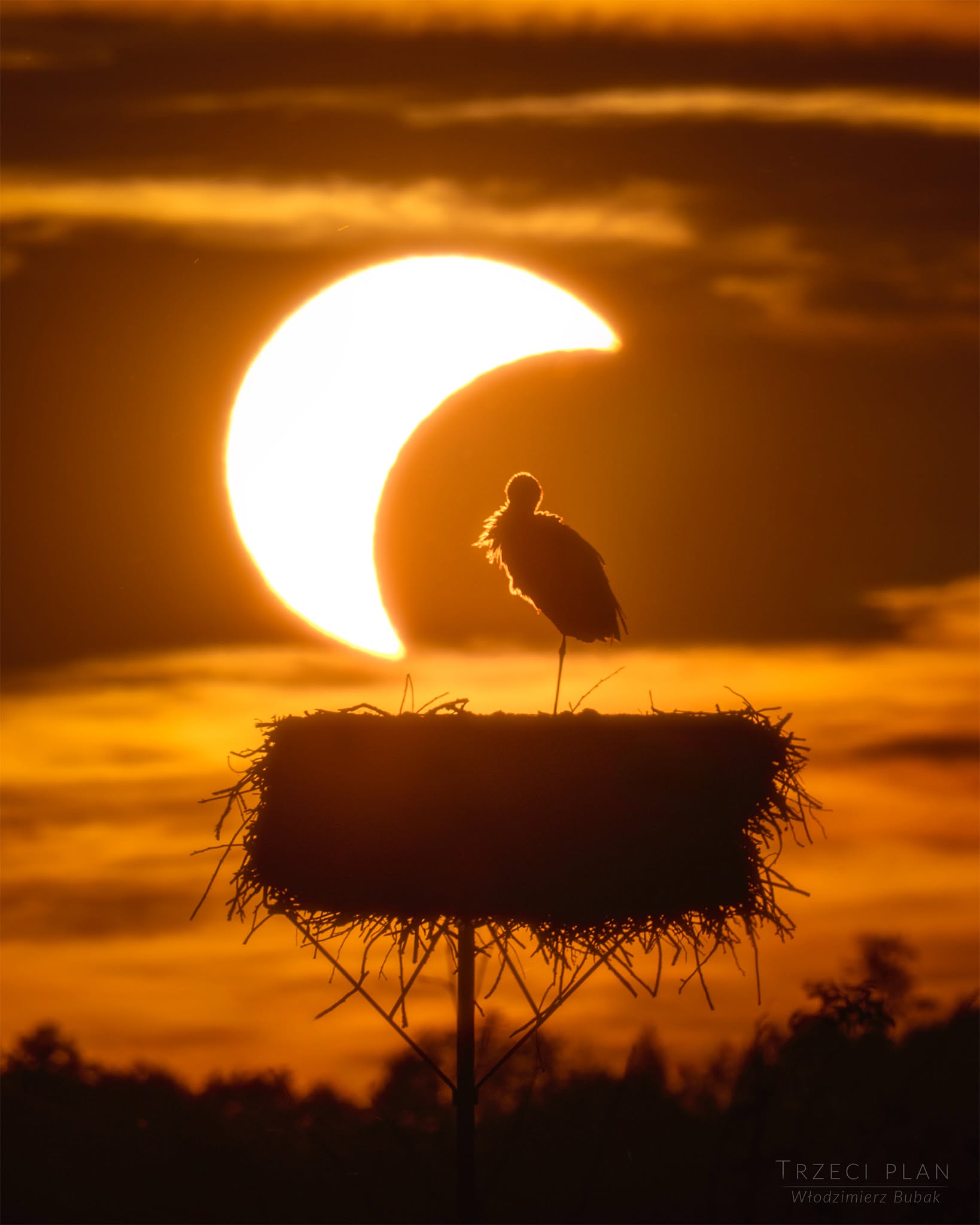
Explanation: How do animals react to a total solar eclipse? The featured image shows a stork roosting on her nest in Poland at a partial phase of the recent total solar eclipse. If you are lucky enough to experience a total eclipse somewhere quiet and close to nature, you may be able to notice unusual daytime animal behaviors. During totality, you may hear nighttime sounds like crickets and frogs and see fireflies. In the dark, most birds are quiet. Thinking that it is time to go to bed, ducks and other waterfowl prepare to sleep on one leg, with their heads turned around and their beaks tucked into their back feathers (they don't really sleep with their heads tucked under one wing). When sunlight returns at the end of totality, songbirds greet the new "morning" with their dawn songs. The crickets and frogs go quiet again. Animals and people resume their lives, only briefly disturbed by the chance alignment of our Sun and Moon.
For more detail go to the link and click on the image for a high definition image. You can then move the magnifying glass cursor then click to zoom in and click again to zoom out. When zoomed in you can scan by moving the side bars on the bottom and right side of the image.
🪐 🌟 🌌 🍔
But the stork is upset at the moon.
I have been receiving advertisements lately for booking a trip to Egypt next year to watch the eclipse over the pyramids. Egypt is on my bucket list but not during an eclipse.
Next year’s eclipse will be visible in southern Spain also. In 2028 there will be a total eclipse visible in Australia and New Zealand (not quite as long but still much longer than most solar eclipses).
Google says there is a total solar eclipse on the planet about once every 18 months.
Our family was watching the total eclipse in Texas a while ago. We were at a picnic site close to home, and a number of other groups were having a great picnic, too. When it got nearly pitch black, a little dog from one of the groups who had been obediently sitting with the group, got up and started waking around. He started sniffing the food, and helped himself to the tastiest ones. When it started to get lighter, he headed back to the group, likely licking his chops.
Cool picture!
The one in 2026 was on August 12.
The one in 2027 will be on August 2.
The one in 2028 will be on July 22.
But the next one after that will be on Nov. 25, 2030, and the one after that not until March 30, 2033.
Disclaimer: Opinions posted on Free Republic are those of the individual posters and do not necessarily represent the opinion of Free Republic or its management. All materials posted herein are protected by copyright law and the exemption for fair use of copyrighted works.