Posted on 09/03/2026 6:34:26 AM PDT by MtnClimber
During his campaign for office last fall, our new Mayor Zohran Mamdani promised to make groceries “affordable” for New Yorkers; but he provided few specifics. Some specifics then emerged in late July, when Mamdani issued a big press release on his proposed public grocery store project. We learned that there are plans for five municipally-owned stores — one in each borough of the City — and that the groceries these stores will sell, or at least a “core basket” of them, will be “30% cheaper.” We know that the groceries will be “30% cheaper” because the Mayor’s press release says so multiple times:
Today [July 28], Mayor Zohran Kwame Mamdani, Deputy Mayor for Economic Justice Julie Su and New York City Economic Development Corporation (NYCEDC) announced that a core basket of everyday groceries will be 30 percent cheaper at the five new municipal grocery stores. . . . “A trip to the grocery store shouldn’t spell dread for New Yorkers [said Mayor Mamdani]. That’s why we are guaranteeing a 30% discount on the most common and most critical groceries. . . .”
Well OK, 30% cheaper than what? Remarkably, the Mayor’s press release never says what benchmark will be used to measure the claim of “30% cheaper.” As most everyone (other than our economically illiterate Mayor and Deputy Mayor for “Economic Justice”) knows, basic groceries can sell for remarkably different prices at different stores. Price differentials between stores of 30%, and even much more, are common.
It happens that back a few months ago in February 2026, Consumer Reports commissioned a big study from something called the Strategic Resource Group to compare prices between and among all the big grocery store chains in the U.S. The results of the study are reported in a February 20 article headlined “Most and Least Expensive Supermarkets.” CR says this about the methodology:
Price comparisons were conducted for CR by the Strategic Resource Group, a consultancy in New York. Prices were collected in person from store shelves in late summer 2025. Within metro areas, all prices were collected within a 48-hour period. The amounts shown reflect sale prices and discounts available to shoppers using free store loyalty cards but don’t reflect manufacturer coupons or savings available only through smartphone apps.
To be fair, the study was conducted in six metropolitan areas, and New York was not among them. The areas sampled were Boston, Chicago, Dallas/FW, Denver, LA/Southern California, and Virginia Beach. However, the price differentials between the most and least expensive chains were in the same range in each of the six regions, so there is no reason to think that New York would be much different.
The results:
[T]he difference between the highest- and lowest-priced in each city was more than 33 percent. . . .
The article contains a chart listing all the major national chains, each compared against the largest, Walmart, as the benchmark.
There are some 34 major chains in CR’s chart. Most of the chains have some regional emphasis, and are not present in every city. Here in lower Manhattan, of the chains on the list, the two with the biggest local presence are Whole Foods (a subsidiary of Amazon) and Trader Joe’s (a subsidiary of the Germany-based Aldi). According to CR’s chart, Whole Foods’ average prices were some 39.7% higher than Walmart’s for the same basket of goods, and Trader Joe’s prices were some 24.6% higher.
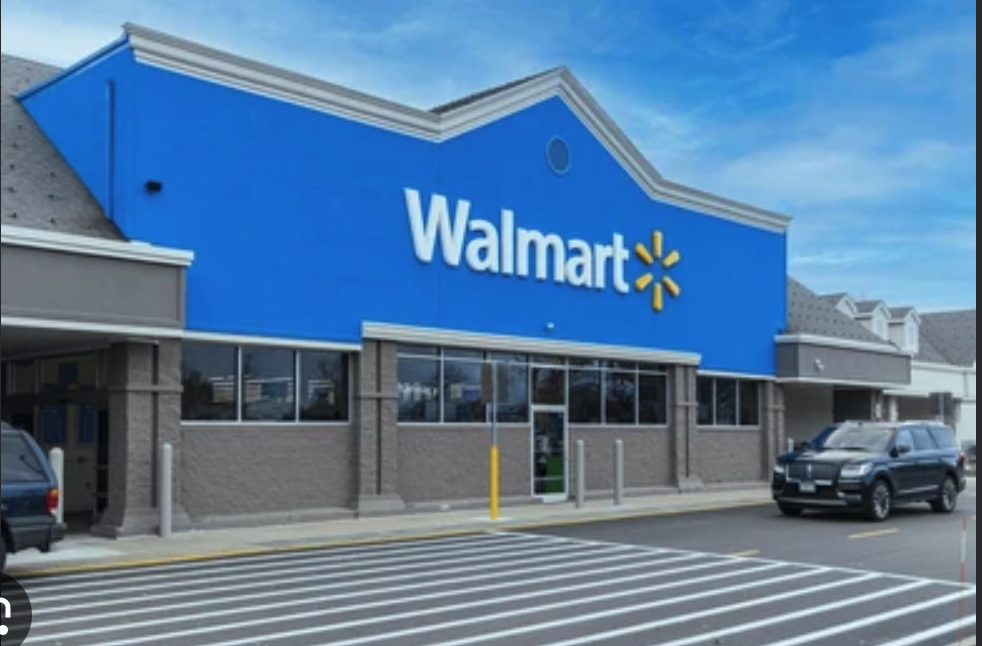
So then, why don’t we New Yorkers get our groceries for about 30% off just by shopping at the local Walmart? That’s because there is not one single Walmart in New York City. And it’s not like Walmart hasn’t tried. But despite repeated efforts over the years, Walmart has been completely and effectively prevented from opening any stores in the City. There isn’t actually any specific statute that bans or targets Walmart by name. It’s just that every time Walmart has picked a site and tried to get a project going, local activists rise up and protest, and get the local politicians on their side, until Walmart backs down. In the most recent years, Walmart has mostly given up trying. But here is an article from from NPR back in 2011 describing the process, headline “New York City Officials To Walmart: Keep Out.” The article describes a City Council hearing held at that time with respect to a very preliminary Walmart plan to develop a store in the (low income) East New York neighborhood in Brooklyn. Excerpt:
And so the flogging began — with testimony from professors about how Walmart can drive smaller stores out of business, and impassioned pleas from small-business owners worried about the competition, and unions concerned about the low wages.
And thus the politicians in New York City, who now suddenly claim to be all about “affordability,” have been completely responsible for forcing their constituents to pay price premiums of easily 30%, by being more responsive to the pleas of special interests like small store owners and labor unions than to the needs of the people for inexpensive groceries. And the 30% may well be understating the premium, because there isn’t a Whole Foods or a Trader Joe’s on every corner, and many people end up shopping at local groceries and bodegas that could easily charge yet an additional 20-30% premium.
The interesting question is how it comes to be that Walmart charging 30% less than other stores is unfair and evil, but the City itself doing the same thing is “social justice,” or something like that. Walmart, through the magic of various kinds of innovations like bulk buying and expert inventory management and logistics can somehow manage to charge 30% less and still make a profit and pay taxes. The City grocery stores are likely to cost a few hundred million taxpayer dollars to get off the ground, and then lose multiple millions of taxpayer dollars per year each. In what world is this a good tradeoff? Once again, I find myself completely unable to comprehend the logic of the Left.
A final point: One of the main opponents of Walmart entering New York City has been the United Food & Commercial Workers labor union, which is the main union for supermarket workers. It’s easy to see how that union could be upset, because Walmart is almost entirely non-union, and could threaten the jobs of their members. However, New York City has very high local minimum wage requirements, which Walmart would be required to comply with. Walmart underprices the competing chains in other cities, like Chicago and LA, that also have high local premium minimum wage requirements. And the other big chains mentioned here, Whole Foods and Trader Joe’s, are also almost entirely non-union. So the argument that keeping Walmart out is needed to protect laborers does not hold up.
So I say to Mayor Mamdani, just end the crazy opposition to Walmart in New York City, and you can get your 30% discount groceries without really having to lift a finger. You can devote your time to other things like collecting the garbage or cleaning up the parks.
|
Click here: to donate by Credit Card Or here: to donate by PayPal Or by mail to: Free Republic, LLC - PO Box 9771 - Fresno, CA 93794 Thank you very much and God bless you. |
I bought three bananas a few days ago, left them in a bag, and forgot about them.
I made banana bread out of them. Banana bread is cheap, reliable, and keeps quite a long time.
In Houston Walmart is not the cheapest grocery store. It is the easiest to get to sometimes, and ubiquitous.
The HEB affiliated warehouse store Joe V’s Smart Shop is generally cheaper.
You’re full of it. I shop at Walmart and Aldi and save a lot of money. I buy my groceries at Walmart and my meats at Aldi. SNAP purchases are not subsidizing the stores. It provides good food and good employees.
I have two groups of banana plants. When one produces a stalk of bananas then I have so many I cannot eat them all. I give them away to my neighbors. Same with a peach tree and a mango tree. They produce so much at once that I have to give most away.
5 stores for how many million people?? LOL
Another possibility is a negative rate tax on UPC-labeled healthy canned [veggies] and bagged food [beans, rice, flour, cheese] (that would be non-rebatable to reduce on fraud).
Everything I said is true.
This is why Walmart spends big bucks supporting illegal immigration and Democrats. Without the indirect taxpayer support, it would go broke.
Your cognitive dissonance in support of the Democrat-loving Walmart is strong.
Everything I said is factual.
You just don’t like the facts because you enjoy taxpayer subsidized cheap prices.
And presumably all those fine cheap Chinese goods.
Here in Florida 60 miles south of Tampa I have a tree that produces small fruits that taste like apricots.
Unfortunately, the squirrels have become aware of it.
I don’t see it listed here:
https://www.epicgardening.com/florida-fruit-trees/
That list seems suitable for zone 9 Florida.
I have two other plants that are supposed to produce fruit but haven’t.
I think one is a Bermuda (Surinam) cherry.
One of my former neighbors had a fig tree. My two fig ‘trees’ died.
5 stores for how many million people?? LOL
Yes, but it ends up in subsidies for all of the other Grocery stores. Where does that money come from?
Who do they point a finger at and take from next?
Socialism is a disease of greed and power, not an answer for a society that wants freedom. There is no freedom without responsibility. The failure of people to accept responsibility is what leads to socialism, and then society failure and the Stalins, Mao’s, and Hitlers.
No one wants to hear that 29.3% of Walmart employees are on Medicaid and the percentage on SNAP is undoubtedly higher as the median pay is less than what is required to be on welfare.
Nor do they want to hear that Walmart takes in 25% of all SNAP payments made by our nation.
It would literally go broke but for keeping its costs down due to welfare subsidies of its employees and the welfare money it takes in.
In short, the reason Walmart is cheap is because the taxpayer supports it.
“Walmart....plurality of its employees are on Medicaid and other taxpayer subsidies.”
The employees have federal/state entitlements, such as Medicaid funded birthing. The Walmart employees are entitled to the equal protection of the law. The PPACA expanded Medicaid coverage based on income alone.
“Nor do they want to hear that Walmart takes in 25% of all SNAP payments made by our nation.”
The government chose to offer SNAP. Would it not make sense for its beneficiaries to shop at a low-priced store?
“Walmart”
What would you like the government to do?
Make the store pay 100% for employee medical benefits?
Walmart would raise its prices. The employees’ health care costs would be paid by its customers at the cash registers instead of by payments to the federal government.
That would be a wash.
However, the CPI would go up as a result and Social Security payouts would get adjusted upwards.
Forcing Walmart to pay for all employee health care costs would costs the federal government billions more in Social Security payouts.
Walmarts are the epicenter of crime wherever they exist.
In our travels (and BRIEF stops) through urban areas I can see that.
Our local WM is clean, safe, well-stocked and the best prices for just about anything fresh, frozen or on the shelf.
Yes, but there are Targets all over the place. I have a 10 minute walk to work from the LIRR, and I pass 2 of them!
Yes, there are a few decent Walmarts, but even there the crime is hidden. There have been law enforcement studies and hands down, Walmarts always rank in the top tier of criminal concentration.
Not saying that everyone who shops at Walmart is of a criminal element, but the criminal element “shops” at Walmart at high rates.
“Walmart”
Rural folks long had to pay higher prices than city folks because there was less competition.
Sam Walton decided circa 1962 that if he offered better prices than the rural stores taking advantage of lack of competition that he could build a very nice business, and that’s what he did.
Walmart took over rural retailing and then came to the suburbs.
“What would you like the government to do?”
Given that I write 7 figure checks to the government every year, most of which goes to fund entitlement programs, I would like the government to stop entitlement programs, which would force WalMart and other leaches to pay fair wages, cause illegals to leave, and balance the budget.
Yeah, prices would go up at Walmart, but not as much as taxes would go down.
Both Trader Joe’s and Whole Foods also accept food stamps. So, to apply your logic, taxpayers are subsidizing more expensive foods.
Want to talk about cutting taxpayer subsidies for foods, let’s shut down the post and base exchanges.
And since your bring in Medicaid, be sure to include those getting taxpayer paid health care at the VA as well.
Disclaimer: Opinions posted on Free Republic are those of the individual posters and do not necessarily represent the opinion of Free Republic or its management. All materials posted herein are protected by copyright law and the exemption for fair use of copyrighted works.