Click here: to donate by Credit Card
Or here: to donate by PayPal
Or by mail to: Free Republic, LLC - PO Box 9771 - Fresno, CA 93794
Thank you very much and God bless you.
Posted on 09/02/2026 10:54:15 AM PDT by SeekAndFind
Seventy-five years ago this week, President Harry S. Truman exulted when he heard the first report that the atomic bomb he had ordered dropped over Hiroshima, Japan, by a B-29 bomber, had exploded as planned and on target, most likely devastating most of the large city.
Truman was on the ocean, returning to Washington from the Potsdam Conference in Germany, where he had secured Joseph Stalin's promise to declare war on Japan around August 10. An article in the press the day after the first atomic attack depicted Truman, his voice "tense with excitement," personally informing his shipmates about the atomic attack. "The experiment," he announced, "has been an overwhelming success."
Missing from this account was Truman's burst of triumphalism when the news of the bombing first reached the ship: "This is the greatest thing in history!"
Truman's official announcement, released while he was still at sea, again showed pride in America's achievement. The atomic bomb, he declared, represented "a harnessing of the basic power of the universe." America had "won the greatest scientific gamble in history." And Japan had now been repaid for Pearl Harbor "manyfold."
From that moment on, Truman rarely (some would say, never) looked back from a different angle, inevitably responding to questions about ordering two bombs dropped over Japan—from the media or in sometimes hostile letters to him at the White House—by affirming that decision, or even with what we would now call "doubling down."
He said he "didn't have any doubt" about the wisdom of the decision—unlike those he pictured as "eggheads" or "Monday morning quarterbacks."
(Excerpt) Read more at newsweek.com ...
|
|
Click here: to donate by Credit Card Or here: to donate by PayPal Or by mail to: Free Republic, LLC - PO Box 9771 - Fresno, CA 93794 Thank you very much and God bless you. |
August 5, 2020.
My Dad was on the tip of the spear heading for Japan. Dad was on the USS Wadsworth DD516, the Wadsworth entered the war starting w Bougainvillea, 7 Battle Stars and the Wadsworth was awarded the PUC for their Picket Line duties at Okinawa.
Dad was a quiet man, never spoke of the war until someone made negative comments about usage of the nukes or Prez Truman allowing their use. That’s where the tip of the spear comment came from.
Dad’s opinion was that Harry Truman saved his life bec the Wadsworth was in the mouth of the tiger, he saw the devastation of Japanese suicide planes on picket line ships. Ships limping to rear areas or being towed off the picket line knowing Okinawa was just the opening act to what awaited the Navy when they invaded Japan’s home islands.
He was not in Tokyo Bay for the surrender, the Wadsworth was outside the Bay in case the Japanese surrender was a ruse. Once the surrender was in place, the Wadsworth went to Sasebo for 4 months. But enroute to Sasebo they emptied cargo storerooms by dumping war-time parts and supplies into the ocean. When they ported in Sasebo, they brought on wood to make beds in the storerooms for walking wounded prisoners of war for return to AU and NZ. Those on stretchers, they would put on the decks to transport to the hospital ships in the harbor, then the hospital ships proceed to AU or NZ.
Dad saw Nagasaki 3 weeks after the bomb dropped. For a couple days, the ship would drive a Deuce/2 truck to and threw Nagasaki to “see what the new bomb could do”.
No one in the family would have ever known he was in Nagasaki. But I worked in a nuke power plant and just a passing comment about how little radiation I got during our 2 or 3rd refueling outage, compared to when I replaced pressurizer heaters on our two plants on the my ship. That’s when he asked me how much radiation he prob got when he drove thru Nagasaki n told my brother, Mom and I how he saw it.
His description of the drive to n thru Nagasaki is prob a several paragraph story itself.
He was in graves registration. He started in New Guinea and worked his way from place to place.
The guy only had one eye, so he couldn’t be in the infantry, so he picked up people, buried them, dug them up again and buried them again. It was grotesque work.
And just because he couldn’t be in the infantry, doesn’t mean he did not get shot at. There were three brothers in that family who went to war. One brother went into Normandy, the other up the Boot of Italy…and he went to the pacific. His was the worst of the three. The stuff those guys went through as “kids” was just horrible.
JFK did some real stuff in the war. As did GHWB.
It’s OK to not like their politics. It is not OK to call those two, at least, soy boys.
It saved millions of lives.
Deaths in Hiroshima and Nagasaki, 300,000. Chinese deaths in the Japanese rape of Nanking 300,000.
I'm not a big fan of estimates on the atom bomb deaths. The 1946 estimates by the Manhattan Project were 78K Hiroshima and 35K Nagasaki. Perhaps underplayed so that the U.S. doesn't look evil. Estimates since the 1970s (after it became fashionable to say the U.S. is all things evil) are 140K Hiroshima and 70K Nagasaki.
I don't like either estimates because I don't like people playing with numbers to send a message, in either direction.
This I know for sure from poxy measurements:
1) Total Japanese deaths from the island hopping: not enough for Japan to surrender.
2) Total deaths from firebombing mainland Japan (plus prior deaths): not enough for Japan to surrender.
3) Total deaths from 1st atom bomb (plus prior deaths): not enough for Japan to surrender.
4) Total deaths from 2nd atom bomb: enough for Japan to surrender, and that's what mattered most.
US projected dead was 250,000+ if we had to invade mainland Japan.
that’s not the point- a lot more people would’ve died if the US & allies attacked the Jap mainland, in the effort to get them to surrender, then died after the bombs were dropped, which ultimately led to their surrender...
RE: How about 81 years ago this week. I see they’re relying on chatgtp
Look at the DATE the article was written.
RE: Why not target the Japanese 16th Army headquarters in Kyushu?
This issue was raised during a lecture by World War II historian Victor Davis Hanson. I’ll try to summarize what I understood from his response to the question…
Hiroshima and Nagasaki were chosen because they were ideal demonstration targets—intact, militarily significant cities whose destruction could be clearly measured—while Kyushu’s 16th Army headquarters did not meet the criteria the Target Committee and Truman relied on.
The choice was driven by military logic, psychological impact, and technical constraints, not by a desire to maximize civilian casualties.
The Target Committee emphasized that the atomic bomb’s effects had to be scientifically observable and psychologically shocking. That meant:
The city had to be large, densely built, and mostly undamaged so the blast and fire effects could be unmistakable.
The target needed military or industrial value, not a purely civilian area.
The bomb had to be dropped visually, requiring predictable weather and geography.
Hiroshima was described as the “largest untouched target” still functioning as a military center. As for Nagasaki… it was not the first choice—it was used only because cloud cover prevented bombing Kokura.
Your idea—destroying the Kyushu command structure before an invasion—sounds strategically compelling. But it I think it fails the criteria the U.S. planners actually used.
Kyushu was already heavily bombed and militarily dispersed
By mid‑1945, U.S. firebombing had devastated much of Japan’s urban and military infrastructure. Tokyo was “practically rubble,” and Kyushu’s major cities had also been hit. A dispersed headquarters or partially destroyed city would not provide the clear, dramatic demonstration the bomb was intended to produce.
A military HQ—even a large one—would not fill that area. The Target Committee insisted on a dense urban zone so the bomb’s power would be undeniable.
The Interim Committee explicitly stated the goal was to make a “profound psychological impression on as many of the inhabitants as possible.”
Destroying a headquarters—even a major one—would not have produced nationwide shock. Japan had already lost many headquarters to conventional bombing and STILL refused to surrender,
Hiroshima and Nagasaki were mixed military-industrial cities, not purely civilian:
Hiroshima housed the Second Army Headquarters, responsible for defending southern Japan.
It contained major military supply depots and industrial plants.
Nagasaki was a major shipbuilding and arms-production center.
The U.S. did not select “civilian cities” in the abstract—they selected military cities that were still intact enough to demonstrate the devastating power of the atomic bomb.
Truman and team believed Japan would fight to the last man, as seen at Iwo Jima and Okinawa.
The bomb was intended to:
Force immediate surrender
Avoid an invasion expected to kill hundreds of thousands of Americans and millions of Japanese
Demonstrate overwhelming power to Japan and the Soviet Union
A tactical strike on Kyushu’s 16th Army would not have achieved these strategic goals. Unfortunately, many innocent people had to die to save the lives of EVEN MORE innocent people. In life, we are not given easy choices…
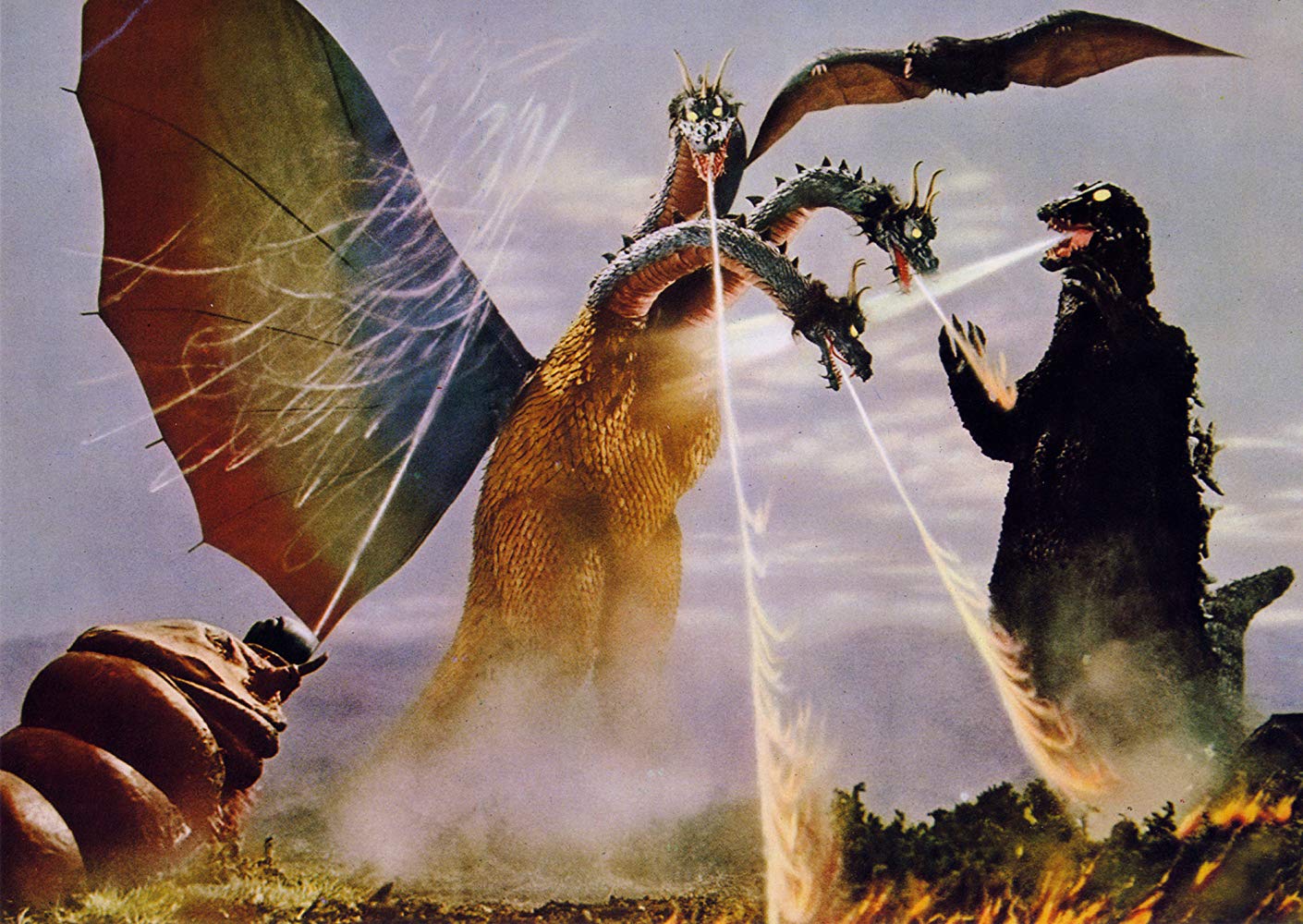
I especially liked the the Ghidorah (Monster Zero) character.
Regret? Ha! It was the original FAFO
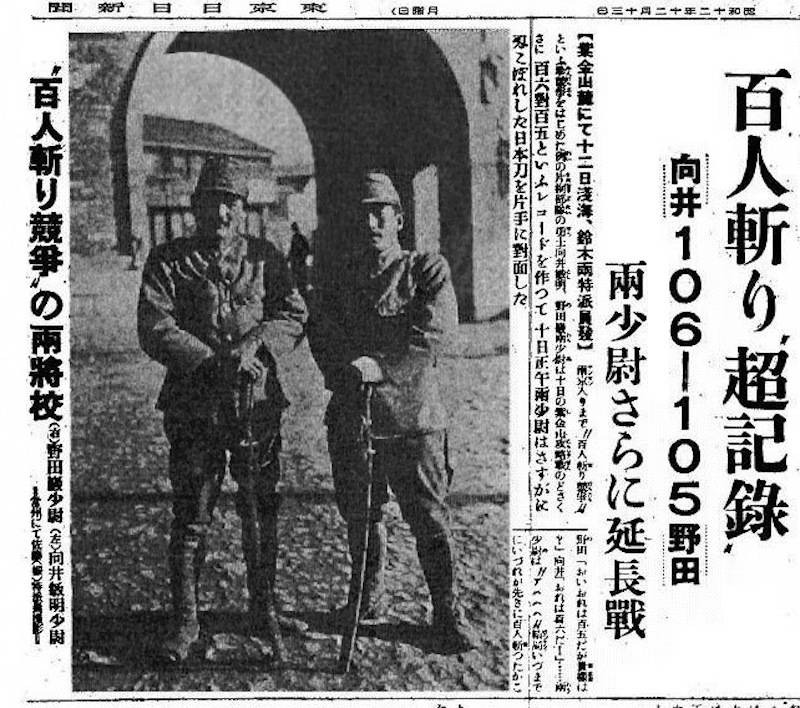
The Empire of Japan was a horror show that had been going on for sixty years at that point.
They had been given several opportunities to surrender and had every time decided instead to double down.
Until they realized their "wait them out" strategy was not going to work. There was no making it too expensive for the Allies. Not when they could send a single plane with a single bomb and blow up a good portion of a city.
There is no way to win a war of attrition when one side can do that.
“His decision probably saved more lives than it took, especially with the Soviets bearing down on northern Japanese territory.”
Also, Curtis Lemay. He was ready to bring the B-17s, B-24s, & Lancaster bombers from Europe to join with the B-29s and burn every bit of Japan to the ground.
My father and most of his brothers served in the Pacific in WW2, and they said the same things as your father. Three of my mother’s brothers also served in the Pacific and they also were of the same opinions.
None of them held a grudge against the Japanese, and were only sorry that it was necessary to drop the bomb.
You will find it below for your edification and education.
Read this carefully as it may save your life or the life of a relative or friend. In the next few days, some or all of the cities named on the reverse side will be destroyed by American bombs. These cities contain military installations and workshops or factories which produce military goods. We are determined to destroy all of the tools of the military clique which they are using to prolong this useless war. But, unfortunately, bombs have no eyes. So, in accordance with America’s humanitarian policies, the American Air Force, which does not wish to injure innocent people, now gives you warning to evacuate the cities named and save your lives. America is not fighting the Japanese people but is fighting the military clique which has enslaved the Japanese people. The peace which America will bring will free the people from the oppression of the military clique and mean the emergence of a new and better Japan. You can restore peace by demanding new and good leaders who will end the war. We cannot promise that only these cities will be among those attacked but some or all of them will be, so heed this warning and evacuate these cities immediately.
Since we have so many mind readers (especially at Newsweak), I can only say, who knows? I am sure that he regretted that the Japanese forced him to take their lives, but it saved hundreds of thousands of US lives, and also millions more Japanese. So I suspect he probably hated that he had to do it, like a Policeman hates to take an armed suspect down when given no choice. I am sure it haunted him, considering how decent of a person he was. Most of today’s politicians wouldn’t give a sh*t if it kept them in power.
If only Harry Truman had been President on 9/11. I’m sure we would have nuked Mecca on 9/12.
Well, to be truthful, even after the 2d A-bomb drop, most of the Japanese High Command was hesitant to surrender, and there was even a coup planned by mid-senior officers to take over from the High Command, gain control over the Emperor, and refuse to surrender. In the end, it took a direct Imperial Command from the Emperor to order the surrender.
Disclaimer: Opinions posted on Free Republic are those of the individual posters and do not necessarily represent the opinion of Free Republic or its management. All materials posted herein are protected by copyright law and the exemption for fair use of copyrighted works.