Skip to comments.
The Mysterious Tombs of Xanthos [8:44]
YouTube ^
| July 17, 2026
| Scenic Routes to the Past (Garrett Ryan, Ph.D)
Posted on 08/10/2026 10:41:01 AM PDT by SunkenCiv
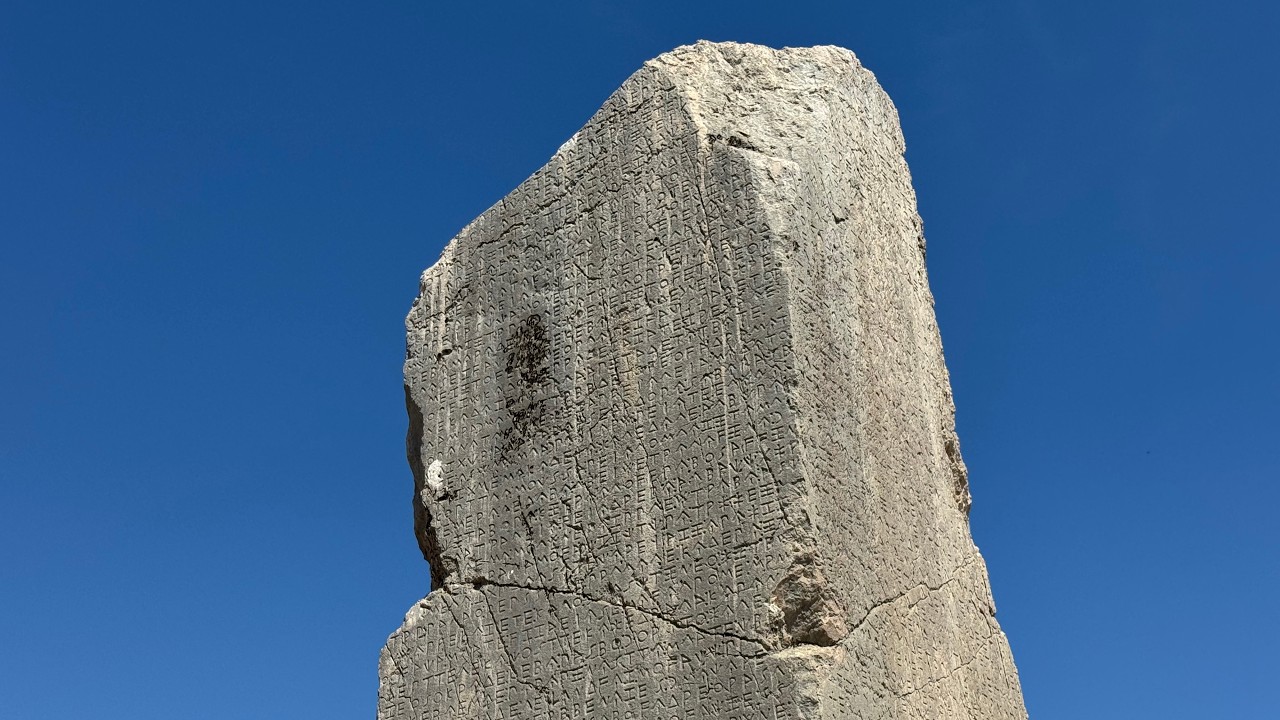
Xanthos, the ancient center of Lycia, boasts the longest extant Lycian inscription, an array of pillar tombs, and a Roman theater adapted for bullfighting in late antiquity. The Mysterious Tombs of Xanthos | 8:44
Scenic Routes to the Past | 61.4K subscribers | 16,252 views | July 17, 2026
Chapters
0:00 Introduction
0:42 Theater
2:03 Harpy Tomb
3:03 Lycian Acropolis
4:22 Inscribed Pillar
5:33 Roman Agora
6:13 Nereid Monument
6:55 Decumanus Maximus
7:56 East Basilica
(Excerpt) Read more at youtube.com ...
TOPICS: History; Science; Travel
KEYWORDS: arykanda; garrettryanphd; godsgravesglyphs; limyra; lycia; lycian; lycians; patara; pinara; romanempire; xanthos
Message from Jim Robinson:
Dear FRiends,
We need your continuing support to keep FR funded. Your donations are our sole source of funding. No sugar daddies, no advertisers, no paid memberships, no commercial sales, no gimmicks, no tax subsidies. No spam, no pop-ups, no ad trackers.
If you enjoy using FR and agree it's a worthwhile endeavor, please consider making a contribution today:
Click here: to donate by Credit Card
Or here: to donate by PayPal
Or by mail to: Free Republic, LLC - PO Box 9771 - Fresno, CA 93794
Thank you very much and God bless you,
Jim
1
posted on
08/10/2026 10:41:01 AM PDT
by
SunkenCiv
To: StayAt HomeMother; Ernest_at_the_Beach; 1ofmanyfree; 21twelve; 24Karet; 2ndDivisionVet; 31R1O; ...
2
posted on
08/10/2026 10:41:48 AM PDT
by
SunkenCiv
(The Demagogic Party is just a collection of violent, rival street gangs.)
To: SunkenCiv
Who’s buried in Xanthos Tomb?................
3
posted on
08/10/2026 10:47:19 AM PDT
by
Red Badger
(Iryna Zarutska, May 22, 2002 Kyiv, Ukraine – August 22, 2025 Charlotte, North Carolina Say her name)
To: SunkenCiv
A Harpy Tomb? I’ve gotta watch this.
To: SunkenCiv
where is lycia? a roman province as I recall and probably in the east. but I don’t recall exactly where.
5
posted on
08/10/2026 1:13:40 PM PDT
by
ckilmer
(`61)
To: ckilmer
6
posted on
08/10/2026 5:36:51 PM PDT
by
SunkenCiv
(The Demagogic Party is just a collection of violent, rival street gangs.)
To: Red Badger; ComputerGuy
If I ever have a tomb, uh, I will want to include a Roomba.
More to come. Not that, some more Lycia vid links.
7
posted on
08/10/2026 6:38:48 PM PDT
by
SunkenCiv
(The Demagogic Party is just a collection of violent, rival street gangs.)
To: SunkenCiv; ComputerGuy
Wouldn’t that be a Toomba?...............
8
posted on
08/10/2026 6:42:27 PM PDT
by
Red Badger
(Iryna Zarutska, May 22, 2002 Kyiv, Ukraine – August 22, 2025 Charlotte, North Carolina Say her name)
To: ckilmer
9
posted on
08/10/2026 6:42:58 PM PDT
by
Red Badger
(Iryna Zarutska, May 22, 2002 Kyiv, Ukraine – August 22, 2025 Charlotte, North Carolina Say her name)
Transcript
Chapter 1: Introduction
Xanthos, the most important Lycian city, had a long and eventful history. Twice, first during Cyrus the Great’s conquest of Asia Minor, and again half a millennium later, when the city was besieged by Caesar’s assassin, Brutus, the inhabitants of Zanthos preferred death to surrender. During the Roman imperial era, however, Xanthos became a quietly prosperous provincial center. Most of the extent buildings date to the Roman and Byzantine periods. These are surrounded, however, by Lycian tombs up to 500 years older.
Chapter 2: Theater
The theater is a Roman remodeling of an earlier Greek-style structure. Sometime in the imperial era, the lower rows were removed and a barrier built so that gladiator matches and beast hunts, and also apparently bull fights, could be staged here. Many of the upper seats were removed later when the theater was pillaged for stone to build the Byzantine walls. Entering the theater, from this vantage point, you can see how high the Roman wall was. This really could have contained lions and bulls. Here, protected by its ferocious guardian, is the so-called theater tomb. This is an authentic Lycian tomb, but it was moved here in the Roman period. An interesting example of cultural appropriation.
Chapter 3: Harpy Tomb
The so-called harpy tomb was built in the early 5th century BC, likely for the dynast ally of the Persian Akimemed dynasty. Cabernis may have died, in fact, fighting for the Persians at the battle of Solomus. His tomb, in any case, reflects Persian influence. The pillar is a monolith. The bosses on the sides were used to lift it into place. The tomb chamber was hollowed out of the top. The reliefs, these are copies. The originals are in the British Museum, were carved on the marble slabs that formed the upper walls of the tomb chamber and held in place by the 20-ton capstone. The aonomous harpies may actually represent the sirens or figures from the Lycian or Persian traditions. In late antiquity, a hermit lived inside the tomb chamber.
Chapter 4: Lycian Acropolis
All of Xanthos stands on a rocky plateau over the Xanthos River. The hill above the theater, the so-called Lycian Acropolis, is one of the high points on that plateau. We’re now walking through the Byzantine walls. Most of the extent remains on the Acropolis date to the early Byzantine period. This extensive mansion, for example, with its mosaics and paristle court, is late antique. But beneath the late Roman ruins are Lycian remains. We’ll see a few momentarily. These polygonal walls are believed to belong to an elite Lycian residence.
Chapter 5: Inscribed Pillar
The inscribed pillar is another tomb likely set up in the late 5th century BC. The tomb chamber on top is no longer extent. The slabs that made up its walls are now in the Istanbul Archaeology Museum, while its crown is in the British Museum. The pillar itself, fortunately too massive to move, has inscriptions in three languages. The shortest inscription is a Greek epigram, glorifying the deceased as a champion wrestler and a warrior who sacked many cities and slew seven hoplites in a single day. The rest is in two local languages. Of these, Lycian A, now just called Lycian, has the greater presence on the monument. This, in fact, is the longest known Lycian inscription at 250 lines. The Lycian inscription praises the deceased and discusses his heirs. The inscription in Lycian B, now known as Milyan, has not been wholly deciphered; it seems to relate to sacred matters.
Chapter 6: Roman Agora
Though centuries newer than the Lycian tombs around it, the Roman Agora has survived less well since the stone blocks of its buildings were much easier to scavenge and reuse. The porticos that ringed it have almost vanished, as has the basilica that was built inside it in late antiquity. At the entrance to the site is this Hellenistic arch. It bears an inscription of the Sucid King Antiochus III consecrating Patara to the gods of Lycia. Until 1842, the Nariad monument, the most spectacular tomb ever built in Zanthos, stood here. Unlike the Greeks.
Chapter 7: Nereid Monument
and Romans, the Lycians had no taboo against burying the dead inside the walls of their cities. When the dynast Arbinos, who had ruled much of Lycia on behalf of the Persians, died around 400 BC, his tomb was set up here in the heart of Zanthos. It took the form of an Ionic Greek temple on a tall podium and was partly decorated by Greek artists who are responsible for the statues of the female nymphs that gave the tomb its name.
Chapter 8: Decumanus Maximus
This monumental street, which led east from the city center, has been dubbed the Decummanus Maximus by the archaeologists. It was lined on both sides by colonnades and shops. As you can see, work is continuing. Within a few years, I expect much more will be visible. Ahead and to our right was the upper Agora, the main commercial center of the Roman city. Along one side of the upper Agora was the civil basilica, an imposing two-story structure with shops in its lower floor. The hall above had both commercial and legal functions. It was likely here, for example, that the Roman governor tried cases when he visited Zanthos. The East Basilica was the largest of Zanthus’ five late antique churches.
Chapter 9: East Basilica
Its massive scale and three aisles are still evident and impressive. Most of its decoration, however, including its fine opus sectile floors, is now invisible in the apse, not the enthronon with its bishop’s cathedral. The church was used until the 11th century when its dwindling congregation retreated into the baptistry. Soon after, the city was abandoned and the 2,000-year story of Xanthos came to an end.
10
posted on
08/10/2026 8:41:35 PM PDT
by
SunkenCiv
(The Demagogic Party is just a collection of violent, rival street gangs.)
The sprawling ruins of Patara, capital of Lycia under the Romans, are only partially excavated. This video explores some of the site's many highlights. Patara: Roman Capital of Lycia | 11:10
Scenic Routes to the Past | 61.4K subscribers | 12,128 views | June 26, 2026
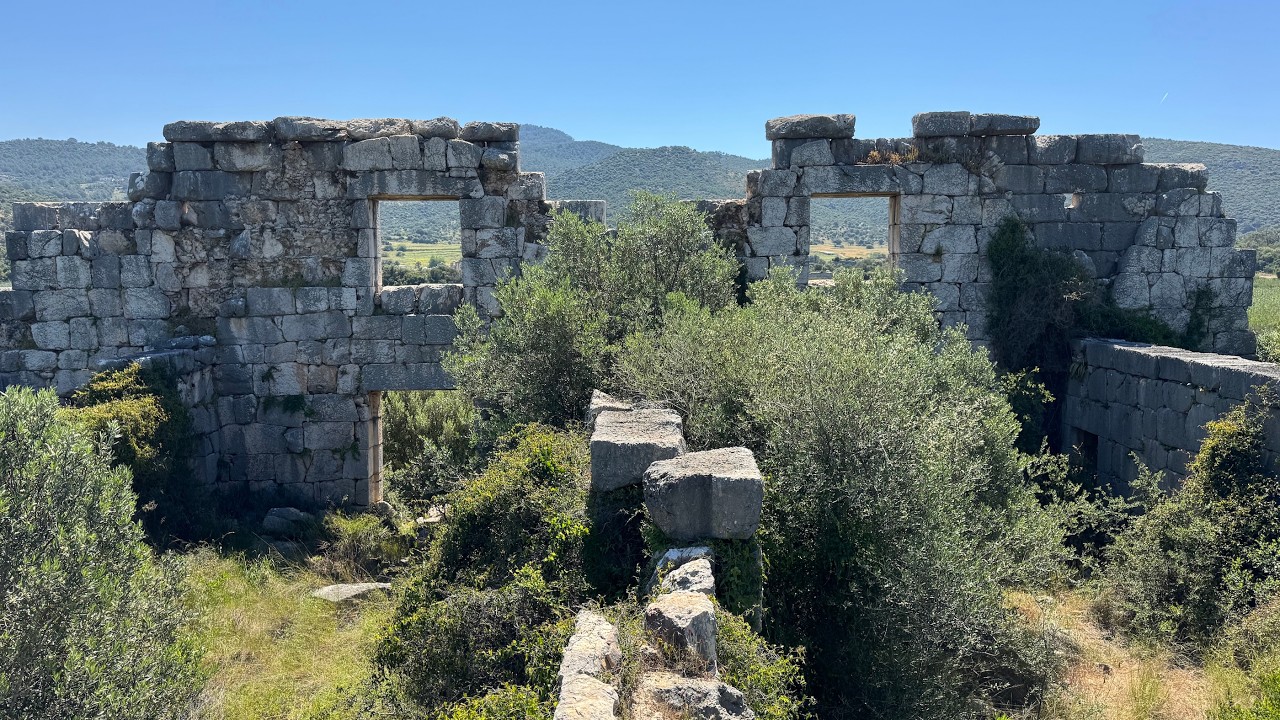
Chapters
0:00 Introduction
0:59 Theater
1:32 Bouleuterion
2:48 Agora
3:26 Monumental street
4:10 Baths
6:24 Lighthouse
7:04 Granary of Hadrian
7:59 Mausoleum
8:36 Temple
9:39 Arch of Modestus
10:13 Harbor Baths
YouTube transcript reformatted at textformatter.ai *may* follow.
11
posted on
08/10/2026 8:43:25 PM PDT
by
SunkenCiv
(The Demagogic Party is just a collection of violent, rival street gangs.)
The ancient city of Limyra, now partly submerged by a changing water table, contains the Cenotaph of Gaius Caesar, the intended heir of Augustus. Limyra: Empty Tomb of a Roman Prince | 6:42
Scenic Routes to the Past | 61.4K subscribers | 14,628 views | June 12, 2026
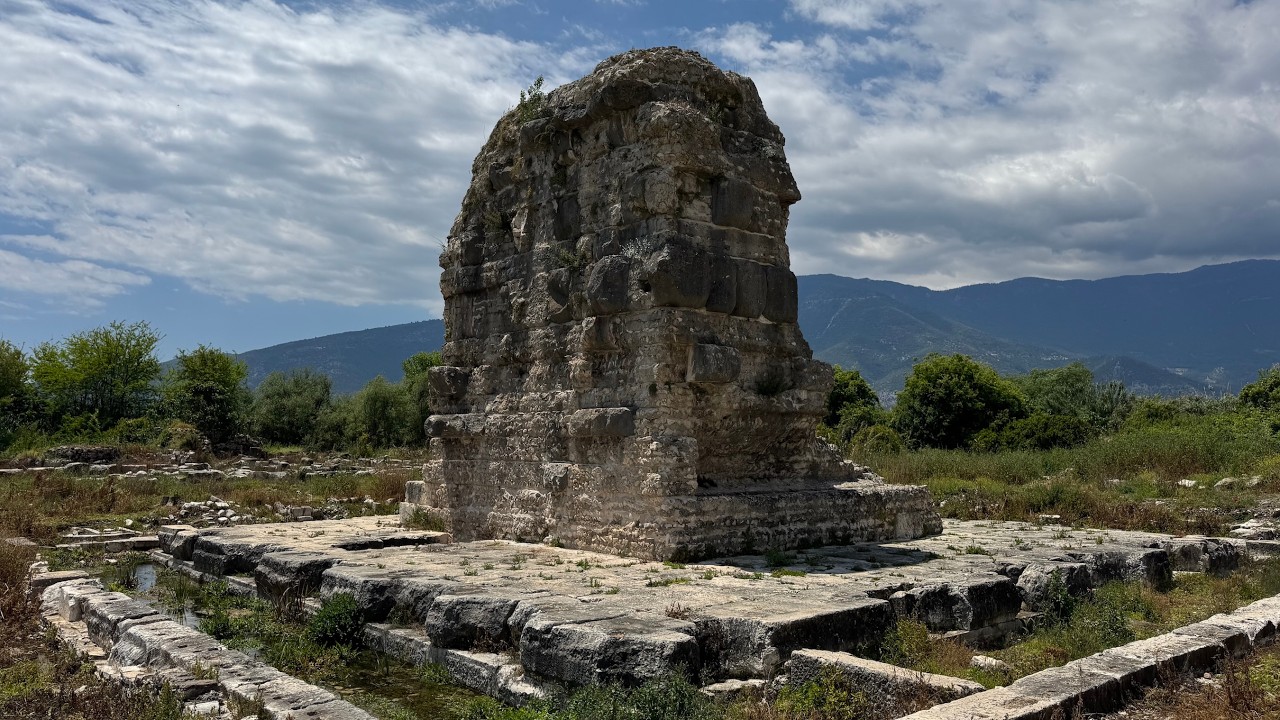
Chapters
0:00 Introduction
0:40 Ptolemaion
1:43 Sunken street
3:22 Cenotaph of Gaius Caesar
4:32 Theater
5:57 Citadel
YouTube transcript reformatted at textformatter.ai *may* follow. First sentence, "The city of Limyra had two lives, one Lycian, one classical."
12
posted on
08/10/2026 8:47:20 PM PDT
by
SunkenCiv
(The Demagogic Party is just a collection of violent, rival street gangs.)
13
posted on
08/10/2026 8:51:23 PM PDT
by
SunkenCiv
(The Demagogic Party is just a collection of violent, rival street gangs.)
The Lycian and Roman city of Pinara, seldom visited by tourists, is one of the most spectacular sites in Turkey. Pinara: Abandoned for 1000 Years | 13:29
Scenic Routes to the Past | 61.4K subscribers | 15,757 views | June 5, 2026

Chapters
0:00 Introduction
0:28 Theater
1:55 Lower Terrace
3:20 Temples
5:33 Upper Terrace
7:56 Red Cliff
10:45 Lycian necropolis
12:54 Conclusion
YouTube transcript reformatted at textformatter.ai *may* follow.
14
posted on
08/10/2026 8:52:10 PM PDT
by
SunkenCiv
(The Demagogic Party is just a collection of violent, rival street gangs.)
To: SunkenCiv
15
posted on
08/11/2026 6:58:10 AM PDT
by
oldtech
(oltech)
Disclaimer:
Opinions posted on Free Republic are those of the individual
posters and do not necessarily represent the opinion of Free Republic or its
management. All materials posted herein are protected by copyright law and the
exemption for fair use of copyrighted works.
FreeRepublic.com is powered by software copyright 2000-2008 John Robinson

