Skip to comments.
Egypt uncovers lost Byzantine-era city in the western desert
AP ^
| July 4, 2026
| SAMY MAGDY
Posted on 07/05/2026 6:22:30 AM PDT by george76
A well-preserved Byzantine-era residential city in the western desert is one of two major archaeological finds announced by Egypt ..
The recent discoveries at the Dakhla Oasis and at the Marina el-Alamein archaeological site, near Alexandria, are the latest findings which the Egyptian government hopes will boost the country’s vital tourism sector, partially driven by antiquities sightseeing.
...
The Tourism and Antiquities Ministry said that the first discovery reveals details of daily life, urban development and economic activities in the Dakhla Oasis in the fourth century, when Egypt was part of the Byzantine empire.
...
A basilica church dating back to the mid-fourth century stands at the settlement’s head, overlooking its main streets, along with remains of two watchtowers to safeguard the outskirts
...
A heavily fortified structure with thick defensive walls, and many houses consisting of reception halls and vaulted roofs were found
...
house of Tisous, identified as a church deacon and dating to the second half of the fourth century, which archaeologists believe served as a house church before the construction of the city’s basilica.
Archaeologists also uncovered bread ovens, kitchens and stone grinding tools that had been apparently used to produce food. Also found were well-preserved bronze coins bearing portraits of Byzantine emperors, Latin inscriptions and Christian symbols, alongside a group of gold coins dating to the reign of Roman emperor Constantius II, who ruled between 337 and 361
(Excerpt) Read more at apnews.com ...
TOPICS: Arts/Photography; History; Outdoors; Religion
KEYWORDS: byzantine; byzantineempire; christian; christiansymbols; coins; constantius; constantiusii; dakhlaoasis; egypt; emperor; epigraphyandlanguage; godsgravesglyphs; marinaelalamein; roman; romanemperor; romanempire; romans; symbols
1
posted on
07/05/2026 6:22:30 AM PDT
by
george76
To: george76
The Fourth Century was the period of 301 to 400 AD. That city wasn’t part of the Byzantine Empire. It was part of the Roman Empire. The empire split in 395 so maybe you could say it was part of the Eastern Roman Empire for about 5 years. But with that quibble aside, these stories are a good reminder of the lesson of “Look on my works, ye mighty, and despair.” Cities that were bustling hubs disappear into nothing. Palmyra is another one. Hell, the population of Rome itself fell to about 35,000 in the 6th Century and large parts of that city became ruins. Discovering a city like this just opens up a wealth of knowledge about what the trade routes were and what that part of the world was like.
2
posted on
07/05/2026 6:59:58 AM PDT
by
Opinionated Blowhard
(When the people find that they can vote themselves money, that will herald the end of the republic.)
To: Opinionated Blowhard
> these stories are a good reminder of the lesson of “Look on my works, ye mighty, and despair.” <
You make an excellent point.
The Romans thought their empire was eternal.
So there was no need any corrective action.
Same applies to the British empire.
And now to the American empire?
To: Leaning Right
The Roman and British empires eroded and declined due to their elites embracing hedonistic decadent values and the irreplacable genetic loss of their best due to constant wars. All of which led to a loss of vibrancy. Sadly a clear, large minority in America is on the same downside. It will be a hard fight for decent, hard working patriotic Americans to maintain power and avoid the fate of Rome and Britain.
4
posted on
07/05/2026 7:42:13 AM PDT
by
allendale
Sidebar:
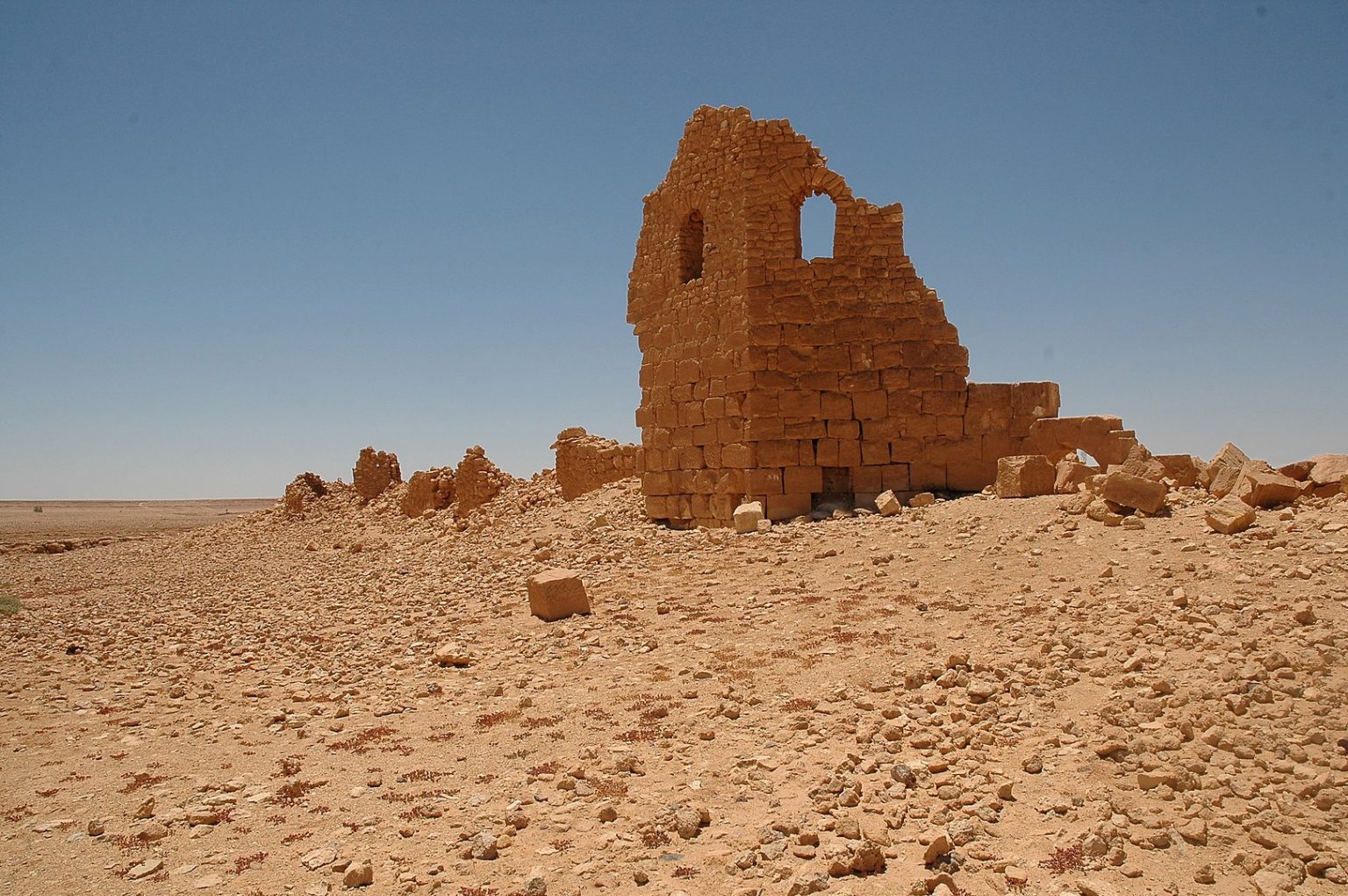
The Limes Africanus refers to a series of fortifications and defensive lines that delineated the southern border of the Roman Empire in Northern Africa.
There is no supporting text to propose that each of the Limes operated as a singular or coordinated defensive line, nor was the North African Limes ever referred to as Limes Africanus by the Romans (modern invention).
The Limes served to protect the coastal provinces from raids by the native peoples of the Sahara, and to control trade through taxation of goods that came from Sub-Saharan Africa.
Unlike the Limes in other parts of the Empire that had continuous border fortifications, the Limes Africanus consisted of several independent sections from different periods in Roman history, including the Fossa regia, the proposed Fossatum Africae, the Limes Mauretaniae, the Limes Tripolitanus, and a fossatum located in Tunisia.
The Fossa regia, also called the Fosse Scipio is arguably the earliest of the North African Limes, constructed by the Romans after their final conquest of Carthage at the end of the Third Punic War in 146 BC...
During Diocletian's reign (from AD 284 to 305), the Limes Tripolitanus was partially abandoned, and the defence of the area was delegated to the Limitanei soldiers in frontier districts. The Limes Tripolitanus survived as an effective defence though to the Byzantine period, where it was restructured in AD 533 by the Byzantine Emperor Justinian.
Gheriat el-Garbia on the Limes Tripolitanus.Image Credit : Marco Prins -- CC BY-SA 3.0
5
posted on
07/05/2026 8:09:58 AM PDT
by
SunkenCiv
(There are no strange bedfellows. Politics are always and only about power.)
To: StayAt HomeMother; Ernest_at_the_Beach; 1ofmanyfree; 21twelve; 24Karet; 2ndDivisionVet; 31R1O; ...
6
posted on
07/05/2026 8:10:43 AM PDT
by
SunkenCiv
(There are no strange bedfellows. Politics are always and only about power.)
To: Opinionated Blowhard
I guess in a couple thousand years, they’ll be digging up New York City and saying, “How could such a great culture that built this city collapse the way it did.
All of us who know will be long gone.
To: george76
Ironic, since the invading Arab Muslims genocided the Byzantines along with the Copts. Modern Egypt has absolutely nothing to do with the ancient version.
8
posted on
07/05/2026 8:36:22 AM PDT
by
montag813
To: Opinionated Blowhard; SunkenCiv
It happens faster than people think. Population, 50,000 ca 1880
"Hamilton [Nevada] became White Pine County’s first seat and built up quickly, stores, saloons, even a brick courthouse. But the silver didn't last, and fire sealed its fate. A blaze in 1873 wiped out much of the town. Another in 1885 burned the courthouse. After that, the county seat moved to Ely." (Nevada Ghost Towns and Historic Sites)
Before:

After: 70 years later, 1953, the facade of the same building on the left, above; even much less there, last time I visited, ca 2000.

9
posted on
07/05/2026 6:49:26 PM PDT
by
ApplegateRanch
(Mother Nature needs to give El Nino a good spanking!)
To: Leaning Right
We don’t have an empire. It is mostly an empire of influence, not military power like the others.
10
posted on
07/05/2026 7:59:59 PM PDT
by
nwrep
To: george76
For some reason this made me think of Indiana Jones.
11
posted on
07/06/2026 10:00:23 AM PDT
by
rdl6989
Disclaimer:
Opinions posted on Free Republic are those of the individual
posters and do not necessarily represent the opinion of Free Republic or its
management. All materials posted herein are protected by copyright law and the
exemption for fair use of copyrighted works.
FreeRepublic.com is powered by software copyright 2000-2008 John Robinson
