Posted on 07/02/2026 9:19:08 AM PDT by fella
Scientific American Sold as Publisher Divests Itself of the Bud Light of Science Journals
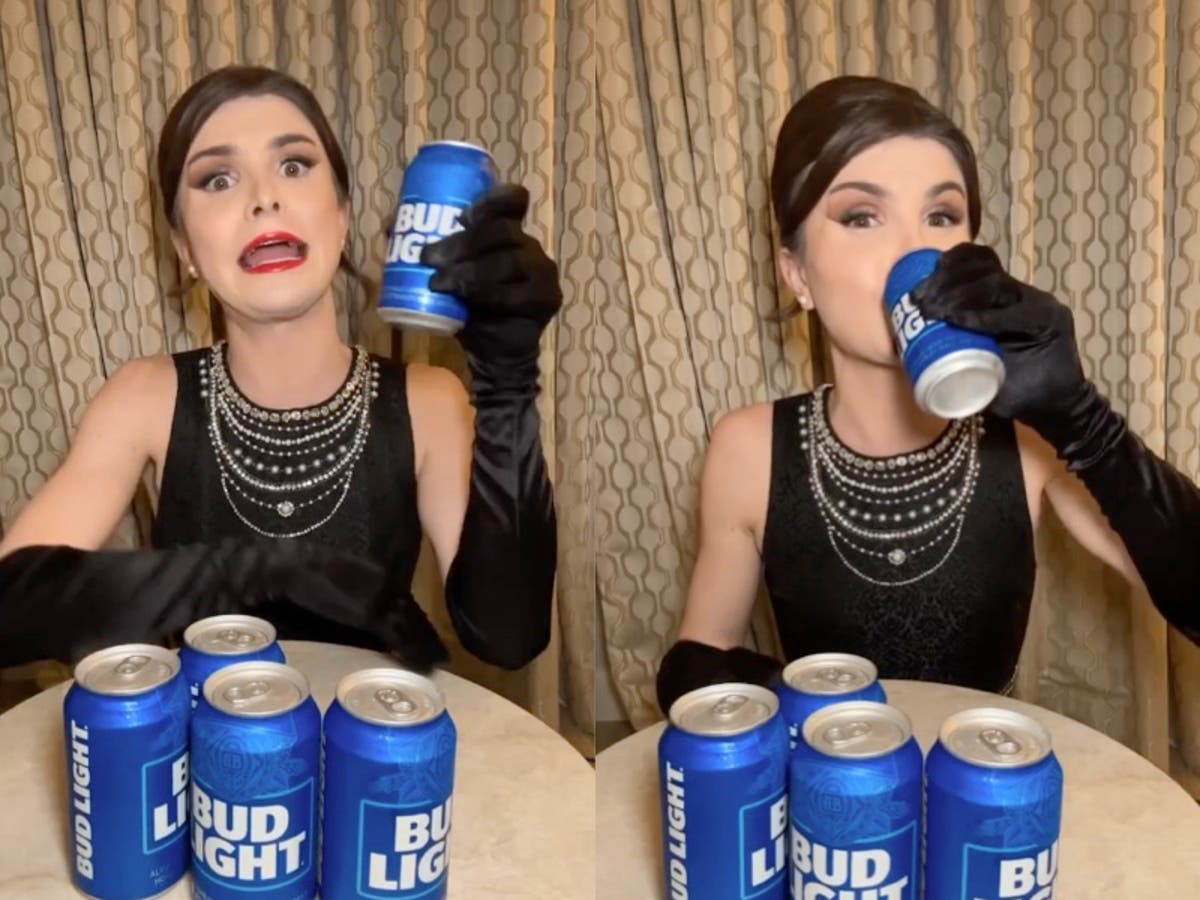
Hopefully, the new owners will reboot the publication’s priorities. Otherwise, they will find it harder to rebrand the product than Bud Light.
I have been following the antics of Scientific American, the Bud Light of science journals, for quite some time now.
The low-lights from the magazine’s stack of articles include:
Scientific American colluding with other media to normalize “climate emergency” terminology, despite vast swaths of scientific evidence showing the Earth’s climate has continuously changed over 4 billion years.
The magazine pushing “birth parent” terminology, which is utter nonsense in the face of real biology.
The magazine offering a ridiculous take on football injuries…tying them to racism
Endorsing Kamala Harris for President.
(Excerpt) Read more at legalinsurrection.com ...
Socialist American is more accurate.
It used to be an actual science magazine and was very interesting.
I read it diligently along with the Smithsonian Magazine for years. Things change.
“It used to be an actual science magazine and was very interesting.”
Yes- back when I was 10. Later on I was reading a SciAm article about Viet Nam, and they told me that the bombing raises enough dirt in the air to “fill the White House a dozen times an hour” or something close to that. How scientific!
I used to read it in HS long ago.
Hard to believe its not even fit to line bird cages.
The NYT and WP already have that use covered.
The leftists are specialists at infiltrating solid institutions—like the old Scientific American—and turning them into toxic propaganda trash.
It was a great magazine. Lefties got ahold of it and ruined it. Sad to see it go, but it was no longer worth the paper it’s printed on.
My brother and I worked through most of the “Amateur Scientist” projects. We built a lot of cool apparatus, and could then improvise our own. Of course, the magazine had actual scientific content back in the 1960s.
Back in the day, I subscribed. I’d read it cover to cover, including the regular columns, in addition to the swath of articles.
Then, I started noticing that every month’s new issue would have one “odd” article, pushing an agenda. I kept subscribing, still valuing the other articles, plus the regular columns.
Then, there were two agenda articles per issue. I stopped subscribing.
For today’s sale of the current pub, I presume ALL the articles PLUS the columns are woke agenda pieces.
Good riddance.
When I was young (a long time ago back in the 1980s), Scientific American was a great magazine that translated scientific concepts into more understandable language. I loved reading it. I stopped reading it in my early 20s and did not realize that it turned into a political rag. So when I got a copy a couple years ago, I was - as the phrase goes - “shocked and saddened” to see how far it had fallen. But I shouldn’t have been. So many formerly respectable publications have turned into political rags that its not worth reading them anymore. Not that I read women’s magazines, but most of the old, established women’s magazines are trashy, gossipy, hardcore political rags these days if they haven’t gone bankrupt. Zero class. Tech magazines are “Tech in Name Only” unless you consider bashing Trump and articles on gamer misogyny to be tech.
Used to love it in the 60’s and 70s.
Anyone remember Metamagical Themas by Douglas Hofstadter?
Great stuff!
Add National Geographic to the stack. They used to be a wonderful magazine. They went woke starting in the mid-90s.
You’re right. More recently, I pick up old copies at my local library...free...and can pick and choose...
Yes, I actually had a subscription at one time back in the stone age.................
In recent decades, it was drastically dumbed down, with most articles written by "science journalists" who know the buzzwords but have no first-hand knowledge of what they talk about. Moreover, most of these "science journalists" were more interested in the social issues aspect of science, such as whining about how there aren't enough black or hispanic scientists, or writing smear pieces that are hit jobs on distinguished scientists who expressed politically incorrect views (e.g. James Watson).
In its present stage, I'm not sad to see it go, as far as I'm concerned it was dead in the water over a decade ago.
Scientific American was such wonderful, formative, memorable part of my childhood. It was the most beautifully organized and presented documentary of the latest of scientific research. My parents gave me a subscription until I left home, at age 23 or so.
It’s organization was superb. They would have excellent pictures, graphs, diagrams. If the text of the article didn’t get you, the pictures would. Underneath the picture was a short paragraph that explained what the picture, or graph, was showing. If you found that interesting, you could look right adjacent to the picture and jump into the text of the article in the middle. Then you could move through the actual article outward, from whatever part that resonated with your interests.
Then there were the columns. Mathematical Games, and The Amateur Scientist. I actually built several of the Amateur Scientist projects, and they worked. That led to other things, for me.
Mathematical Games was a treasure. Martin Gardner was a brilliant editor and teacher. The excitement I felt, at the beginning of my sophomore year in high school, as I read about the John Horton Conway’s “Game of Life,” is something I still flash back to sometimes, in the fall, 55 years later. We had just enough access to computer power at that time to allow us to program the Game of Life on a computer with very limited memory.
Then, over time, as the 70s dragged on, the magazine began to change. More articles about political issues. Overpopulation, the nuclear arms race. The tradeoff between missile guidance accuracy (the “CEP”) and international “stability.”
Then in the ‘80s, the SDI set Scientific American off. They went on what seemed like a crusade. Many articles debunking SDI as impossible, as provocative. I particularly remember several articles by MIT’s Kostas Tsipis.
During that time, Scientific American devoted its gatefold ad space to a hortatory adulation of Les Aspen. I couldn’t understand it. Why was my favorite science magazine writing what amounted to an article about a senator. Turns out he was either on, or soon going to be on, the Senate Armed Services Committee, and so would be involved in SDI policy.
I never again had a subscription, but I sometimes bought a single issue at a Barnes & Noble, or Waldenbooks. It seemed to be declining in the importance of the things it covered.
I do remember reading about “hypertext” in Scientific American, sometime in the early 1980s. I couldn’t really make sense of the concept at the time, but even then I had pretty limited one-on-one access to computers, even though I was a working engineer.
The magazine changed hands at some point. It’s publisher, W.H. Freeman, got rid of it for whatever reason. Probably the management figure who championed it aged out, retired. His successor didn’t feel the same way about the magazine as he did.
Once they started to “go political,” let politics into their pages, they started to go downhill for me. And I wasn’t even that much of a conservative either, although I certainly wasn’t a liberal.
It was for me the first practical, concrete demonstration of Conquest’s Second Law of politics: “Any organization not explicitly right-wing sooner or later becomes left-wing.”
“Frank Vrancken Peeters, CEO of Springer Nature, said: “Scientific American and ... are respected and loved science media brands with a long and valued history, and we are grateful to the teams who have built and sustained them”
i’ve never seen so many different bullshirt lies packed into a single sentence!
Disclaimer: Opinions posted on Free Republic are those of the individual posters and do not necessarily represent the opinion of Free Republic or its management. All materials posted herein are protected by copyright law and the exemption for fair use of copyrighted works.