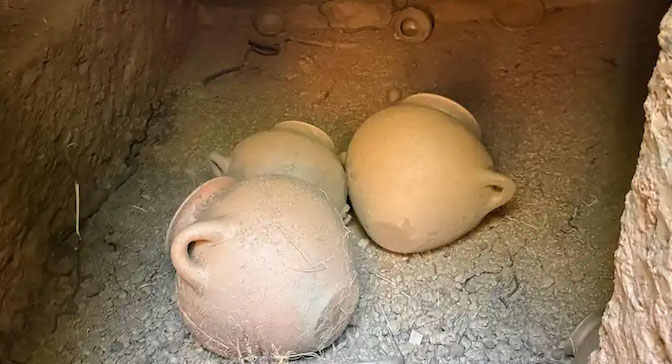
Interior of newly discovered Etruscan tomb, San Giuliano necropolis, ItalySoprintendenza Archeologia Belle Arti Paesaggio Etruria Meridionale
Posted on 06/18/2026 6:40:19 AM PDT by SunkenCiv
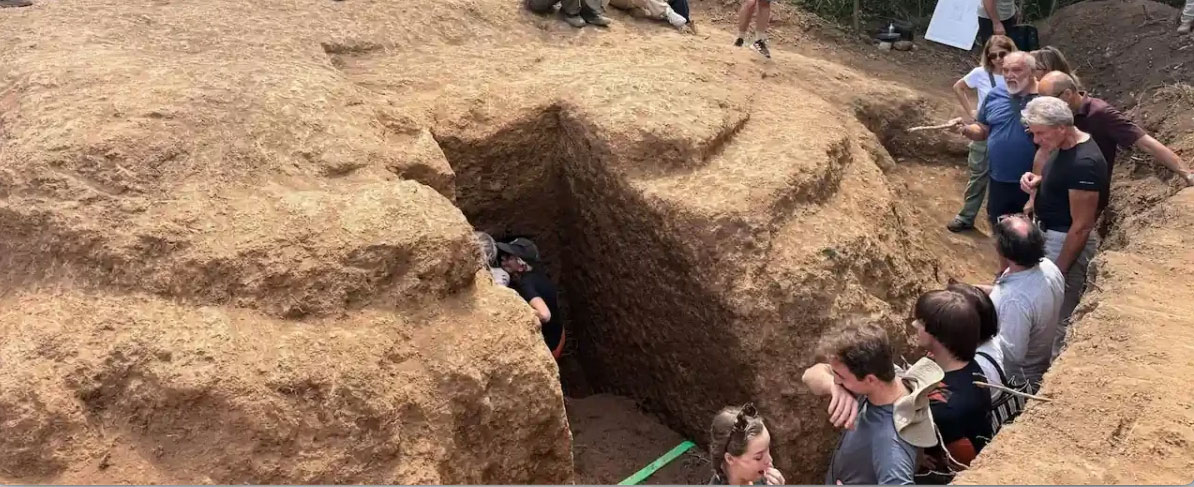
According to a report in La Brújula Verde, a second intact Etruscan tomb has been discovered in central Italy's San Giuliano necropolis by a team of researchers led by Davide Zori of the San Giuliano Archaeological Research Project (SGARP) and Baylor University. More than 600 tombs have been identified in the area, but most of them have been looted since the Roman conquest of the region in the third century B.C. The slab closing this tomb had remained in its original position, with no signs of tampering. The remains of at least two individuals have been found inside the tomb, with a spearhead next to one of the sets of skeletal remains. Pottery, Etruscan chalices, and a Greek flask for holding perfumed oil were also found in the burial. Zori credits the monitoring strategy adopted by SGARP, with the collaboration of the municipality of Barbarano Romano and the local community, for the preservation of the tombs. To read about the discovery of a lavish Etruscan burial, go to "The Tomb of Silver Hands."
(Excerpt) Read more at archaeology.org ...
Interior of newly discovered Etruscan tomb, San Giuliano necropolis, ItalySoprintendenza Archeologia Belle Arti Paesaggio Etruria Meridionale
The earlier find topic was posted last July.
Soprintendenza Archeologia Belle Arti Paesaggio Etruria Meridionale
https://www.scribd.com/document/897121148/Orientalizing-Period-Glossary-Voice
The Orientalizing Period of Etruscan civilization, spanning from 730/720 to 580 BC, marks a significant cultural transition influenced by trade with Phoenician and Greek merchants, leading to socio-political and economic developments. This era saw the emergence of aristocratic families, urbanization, and the establishment of monumental tombs, reflecting the integration of Eastern cultural practices and the rise of complex societal structures. The period also facilitated the exchange of goods and ideas, contributing to the development of Etruscan identity and societal norms.
Its a fervent hope that somewhere the Roman history of the Etruscans still exists and will be found.
Very cool.
Thanks for the thread, SunkenCiv!
More here for anyone interested...
Backround, articles, info on the project.
I'd be surprised if it (or a substantial fragment) were found, but I'd also be surprised if it isn't. A number of monastic finds are probably waiting, palimpsests the original texts of which can be read using modern tools.
Thanks!
Disclaimer: Opinions posted on Free Republic are those of the individual posters and do not necessarily represent the opinion of Free Republic or its management. All materials posted herein are protected by copyright law and the exemption for fair use of copyrighted works.