
Posted on 06/15/2026 7:36:49 PM PDT by Red Badger
The concept is designed to fit within existing airport gates and airline operations.
The configuration also supports a twin-aisle cabin layout. Electra
A hybrid-electric aviation company has unveiled a new conceptual aircraft design for next-generation airliners.
Electra’s conceptual aircraft uses a wide “double-bubble” fuselage that allows the body of the aircraft to contribute more lift, while two underwing turbofan engines produce thrust as well as electricity to power electric tail fans that ingest and re-energize slower-moving air over the fuselage.
Latest configuration could deliver up to a 17 percent efficiency
The technique is known as boundary layer ingestion. Electra’s analysis found that the configuration could deliver up to a 17 percent efficiency improvement beyond gains expected by 2050 from advanced structures, engine technologies, and aerodynamic improvements.
“The value of electrification in this concept is that it lets us put the propulsion where it couldn’t go before but does the most good,” said Dr. Parker Vascik, Director of Product Strategy at Electra.
“We can radically improve how the airframe and propulsion system work together while keeping the aircraft grounded in real airline and airport operations. The goal is not just efficiency on paper, but concepts that we can actually build, certify, and use.”
The company also revealed that the concept is designed to fit within existing airport gates and airline operations, use standard jet fuel or sustainable aviation fuel, and avoid reliance on airport charging infrastructure or untested fuel types. The configuration also supports a twin-aisle cabin layout within a narrowbody aircraft class, unlocking improved passenger comfort and more efficient boarding and deplaning.
The concept is developed as part of NASA’s Advanced Aircraft Concepts for Environmental Sustainability (AACES) 2050 program.
“This concept builds on years of research into how airframe shape and propulsion placement can work together to improve aircraft efficiency,” said Dr. Alejandra Uranga, Electra’s Chief Engineer for Research and Future Concepts.
“What is different now is the ability to use electrification and distributed propulsion to more deeply integrate those systems. Designing the aircraft as a whole system is essential to realizing the full potential of future commercial aircraft.”
NASA’s open-source Aviary multidisciplinary design adopted
In addition to the concept, Electra developed 11 technical papers documenting the models, methods, and findings behind the study. The company also adopted NASA’s open-source Aviary multidisciplinary design and optimization tool and developed an electrified aircraft design suite intended for public use. Together, these contributions are intended to help advance the broader aviation research community, not just push forward a single aircraft concept, according to a press release.
Electra’s AACES 2050 team brought together leaders across industry and academia, including American Airlines, Honeywell Aerospace, Lockheed Martin Skunk Works, Hinetics, the Massachusetts Institute of Technology Department of Aeronautics and Astronautics, the University of Michigan Department of Aerospace Engineering, and the University of California, Irvine’s Aircraft Systems Laboratory, as per the release.
“Through AACES, NASA is pushing the industry to think boldly, to use our novel propulsion technologies to unconstrain design thinking for the next generation of commercial aviation,” said Marc Allen, CEO of Electra.
“The third era of aviation will bring radical change to how people and places connect, whether applied to aircraft entering service this decade, future regional platforms, or commercial transport by mid-century. Electra’s focus as the hybrid electric leader is to keep American aviation, and NASA, leading the way.”
HYBRID-ELECTRIC AIRCRAFT PING!............
Great. Now I want some bubble gum.
how many here are ready to invest their hard earned money in this?
“conceptual “ ...
They are calling it the “Electra”? I guess they are counting on all of us old-timers croaking and everybody forgetting about “whirl flutter.”
Electra’s financing includes: Prysm Capital. Lockheed Martin. Honeywell. And institutional investors and venture capital firms.
It’s similar to how SpaceX was being financed before the IPO. Early investors like this are the ones who will be selling their SpaceX shares once their lockup period ends. Which with SPCX is 366 days after the IPO.
Ha.I had to look that one up.
“Whirl flutter, or why the wing fell off of my Lockheed Electra.”
How do I escape Li battery fires?
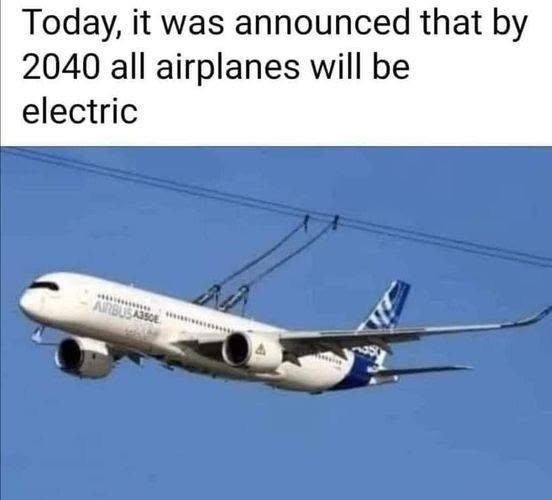
Parachute................
Doncha know...
1. Same principle as the “NACA” scoops so popular on muscle cars in the 60s and 70s. The NACA duct design extracted the slower boundary layer air without the aerodynamic penalty of a blunt scoop that would protrude into the faster free-stream flow. The duct’s shape allows the air to be:
* Captured from the low-energy boundary layer
* Decelerated further through the duct’s contours
* Pressure recovered so it can still be useful for cooling/ventilation
This makes them much more efficient than a traditional scoop that would create drag by disturbing the main airflow over the hood.
So NACA ducts are elegant partly because they work with the boundary layer rather than fighting the main aerodynamic flow — they extract air that’s already “slow” without creating additional drag. That’s why they became so popular on race cars and performance vehicles where aerodynamics matter.
2. They’ve invented a diesel-electric locomotive in the sky:
* Turbofans generate thrust and electrical power
* Electrical power drives the rear electric fans
* Those fans provide additional propulsive benefit
Will they have a lonesome whistle? Maybe they can borrow the Airbus underwing fuel port design to make the whistle.
You got it!!
My dad used to fly in Electras when the wings were falling off. Fortunately, I was only 10 years old at the time and did not know about it.
“How do I escape Li battery fires?”
No need to escape because they won’t have any batteries. It’s a train-style diesel-electric propulsion system. Make electricity in the wing engines to power the electric motors in the rear. Don’t store electricity in batteries.
“Doncha know...”
My eyes glaze over whenever I read something that sounds vaguely like engineering or physics. I just hope that the ones who need to know, do know. They can keep their Moments of Inertia and their Angular Masses.
“Don’t store electricity in batteries”
Good Plan....
The eVTOL aircraft that Archer Aviation and Joby Aviation are creating are battery powered.
These look like a cross between a drone and a helicopter, and maybe seat four passengers. The government is eager to see eVTOLs succeed. War Department thinks that they will be useful.
https://www.youtube.com/watch?v=2rmzXH45f-k
https://www.youtube.com/watch?v=kNiUfwHJF6E&list=RDkNiUfwHJF6E&start_radio=1
Disclaimer: Opinions posted on Free Republic are those of the individual posters and do not necessarily represent the opinion of Free Republic or its management. All materials posted herein are protected by copyright law and the exemption for fair use of copyrighted works.