Posted on 05/28/2026 12:31:14 PM PDT by MtnClimber
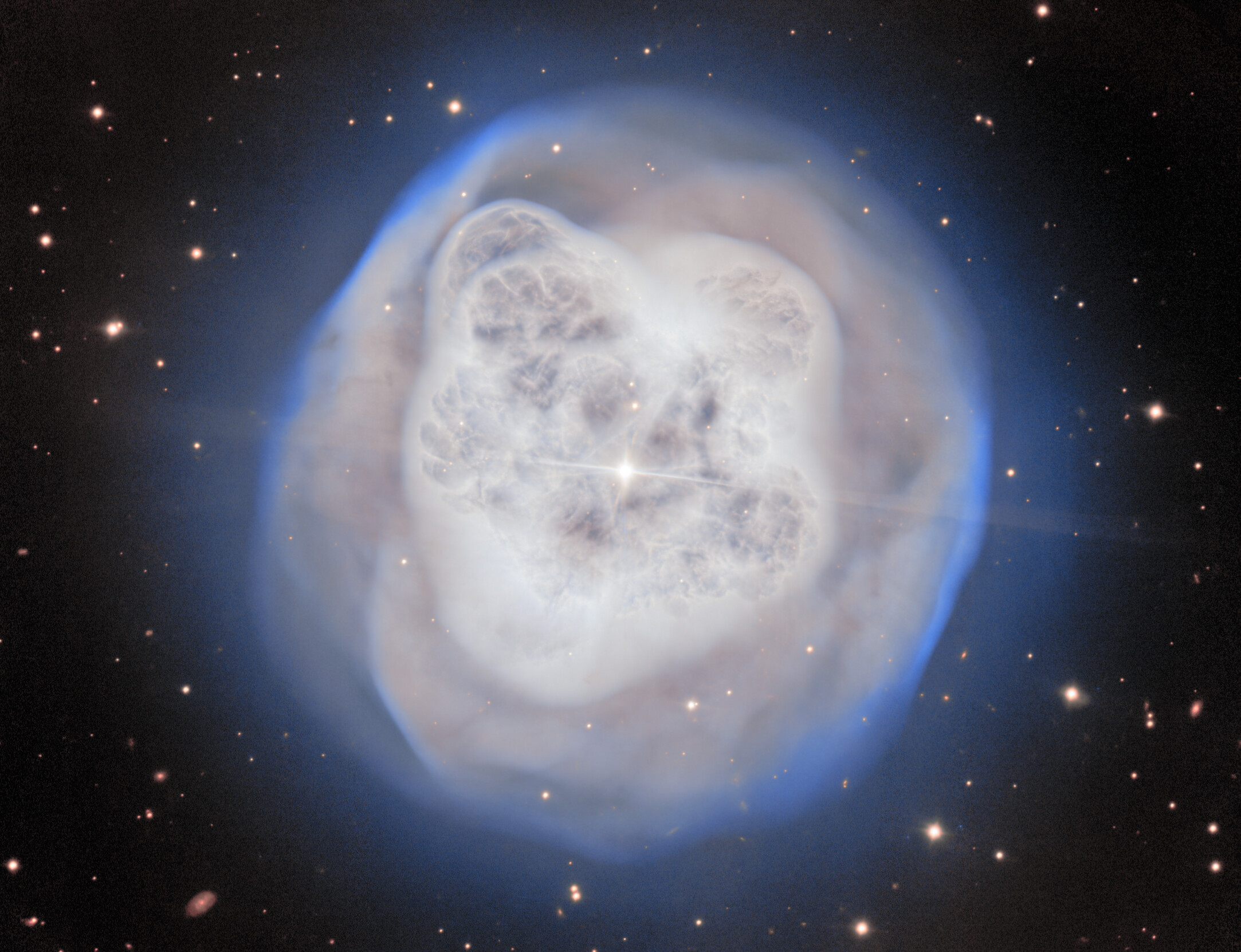
xplanation: What do you see in this crystal ball? The featured image shows NGC 1514, known as the Crystal Ball Nebula, observed by the Gemini North telescope on Maunakea, in Hawai'i. NGC 1514 is 1,500 light-years away and was discovered by William Herschel in 1790. This planetary nebula is formed when a star becomes a red giant and ejects its outer gas layers. The ejected shell of gas is heated up by the core of the star to temperatures hotter than the surface of our Sun: that makes the gas shine, creating beautiful images like this one. The slightly asymmetrical shape of the Crystal Ball Nebula reveals a secret: the bright star in the center has a companion. As the two stars orbit each other with a period of about nine years, they shape the gas around them. In about 10,000 - 25,000 years the nebula will be dissipated by their stellar winds.
(Excerpt) Read more at apod.nasa.gov ...
For more detail go to the link and click on the image for a high definition image. You can then move the magnifying glass cursor then click to zoom in and click again to zoom out. When zoomed in you can scan by moving the side bars on the bottom and right side of the image.
🪐 🌟 🌌 🍔
Thanks for also posting on our FB page.
Just curious. Can you estimate the miles from top to bottom, or is there no way to figure it? Would it be in light years?
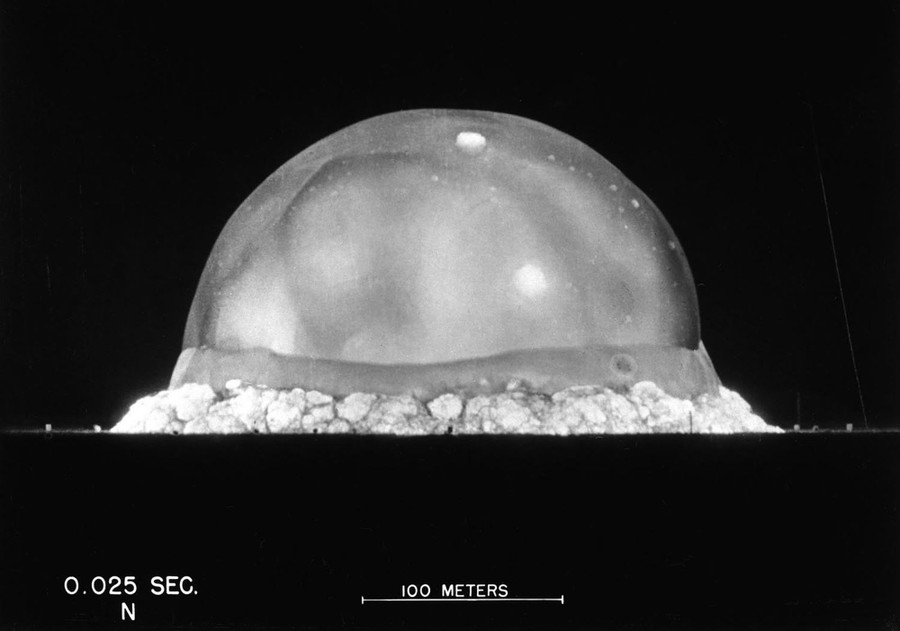
I’ve never seen anything like that before.
Nice picture but you won’t get that with your backyard telescope. This is a big boy telescope on Mauna Kea, 8.1 meters in diameter.
Cool. Yeah, it DOES look like that…
Yeah, I probably wouldn’t even see it in my 4.5” refractor.
“Nice picture but you won’t get that with your backyard telescope.”
All of that color in the image and others that NASA gives us. We live in the middle of a galaxy and when I look at the night sky, I don’t see a colorful milky way.
Wow.
A supernova is a kind of nuclear explosion, though on an immensely larger scale, so perhaps it makes sense that they would have some similarities....
Wow, never seen the like.
Looks like a very high radiation output.
It reminds of the cyst on my left elbow.
I hope it doesn’t give you burning or exploding pain! :-)
Disclaimer: Opinions posted on Free Republic are those of the individual posters and do not necessarily represent the opinion of Free Republic or its management. All materials posted herein are protected by copyright law and the exemption for fair use of copyrighted works.