Posted on 05/04/2026 8:55:27 PM PDT by Red Badger
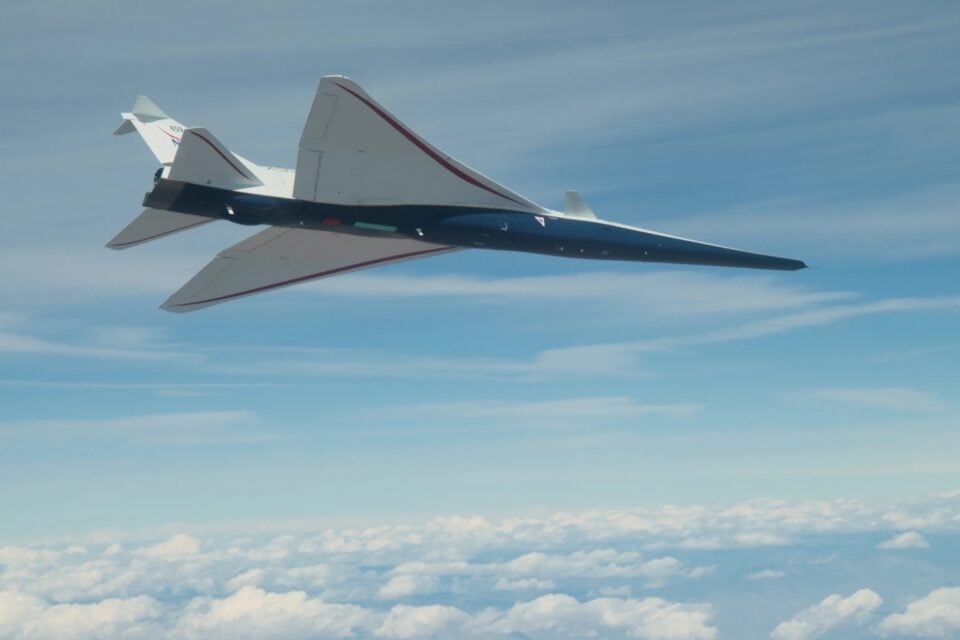
The X-59 soared over California’s Mojave desert as it prepares for quiet supersonic flight.
NASA’s X-59 performs a bank-to-bank auto roll maneuver during a test flight over California’s Mojave desert. NASA / Lori Losey
NASA pilots recently put the X-59 supersonic aircraft through the wringer—performing roller-coaster-style climbs and descents, among other actions, as part of its ongoing test campaign.
The space agency released a video of its experimental aircraft performing a series of maneuvers as it soared over California’s Mojave desert. The X-59, built by aerospace contractor Lockheed Martin, is designed to break the sound barrier without the explosive, thunder-like clap that comes with traveling at supersonic speeds.
The recent series of tests is helping NASA gather data on how the aircraft operates in flight, as well as gain more insight into its performance. This process is known as envelope expansion, whereby engineers test a new vehicle beyond its validated limits.
VIDEO AT LINK...........
You might want to pack a barf bag
X-59 took to the skies for its inaugural flight on October 28, 2025, spending around one hour in the air before landing near NASA’s Armstrong Flight Research Center in Edwards, California. For its first flight, the aircraft operated slower than the speed of sound at 230 miles per hour (370 kilometers per hour) and a maximum altitude of about 12,000 feet (3.6 kilometers).
Since its debut, NASA has been flying the aircraft faster and higher to validate its performance. During a recent flight on April 14, X-59 completed a series of maneuvers as it was pushed to higher altitudes and near-supersonic speeds. Some of the in-flight tests included pitching the aircraft up and down to better understand aerodynamic forces and characterize stability and control during what’s known as the rollercoaster maneuver. Pilots also rolled the aircraft from one side to the other, tipping its wings toward the right and slowly rolling them back to the left, in the bank-to-bank maneuver.
The flutter excitation maneuver introduced deliberate vibrations into the aircraft’s structure to make sure it maintains safe margins across the flight envelope. To evaluate the aircraft’s longitudinal stability, pitch response, and trim characteristics, pilots perform a controlled, wings-level pitch-down movement. Pilots also extended the aircraft’s landing gear at a controlled airspeed and configuration so that engineers can measure the aerodynamic, structural, and handling qualities of its gear deployment. Extending the landing gear can cause sudden changes in drag, pitch, vibration, and airflow.
Super fast, but super quiet
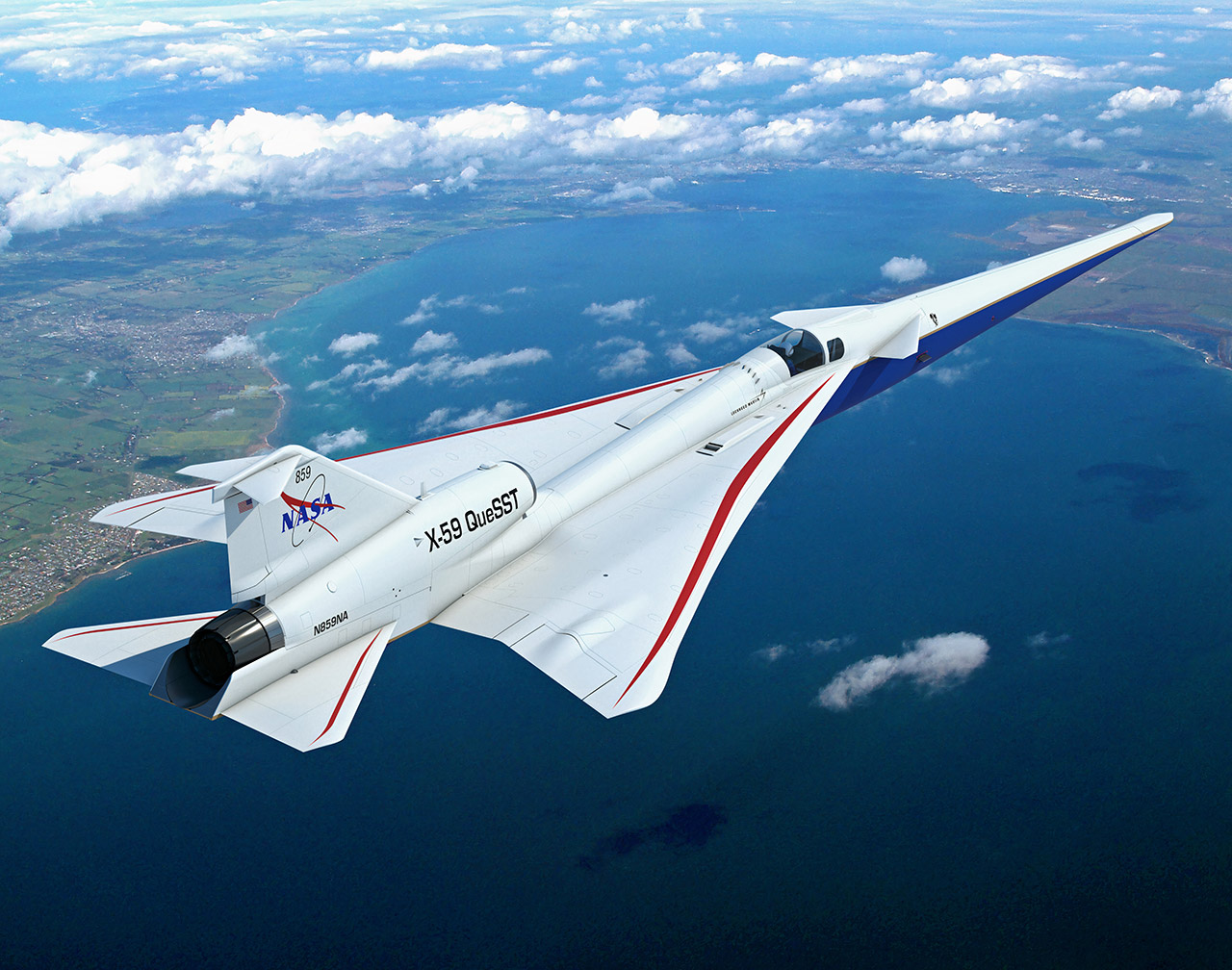
The X-59 measures 99.7 feet (30.39 meters) long, with a wingspan of just 29.5 feet (9 meters) and a needle-like nose. The ultimate goal is to allow supersonic aircraft to once again fly over land in the United States.
When planes fly faster than the speed of sound, Mach 1, or about 767 miles per hour (1,234 kilometers per hour), they create a loud, explosive noise, known as a sonic boom, due to the shock waves created by the extreme speeds. In 1973, the Federal Aviation Administration prohibited supersonic flights of non-military aircraft over land so as not to startle people living in cities where supersonic jets fly overhead.
NASA began developing its quiet supersonic aircraft nearly a decade ago, paying $518 million to Lockheed Martin to build X-59. The aircraft’s sharp design is meant to reduce the pressure change that flows over the ground, while the engine is mounted on top to reduce the amount of noise from the plane that reaches the ground. Instead of producing a sonic boom, the X-59 is designed to mitigate the noise and release a sonic thump as it breaks the sound barrier, according to NASA.
As part of its test campaign, NASA eventually plans on flying X-59 over selected U.S. communities to collect data on how people perceive the aircraft’s so-called sonic thumps.
AVIATION PING!...............
Many, many moons ago, I was stuck in the back of a plane. I was nauseous before I boarded the plane. People speaking several different languages around me wanted to trade seats. I did not want to move any more than necessary. I took out the air sickness bag and opened it up. Everyone ceased interacting with me.
I have used the “take out the air sickness bag method” several times since. It almost always has the same effect, especially with those passengers who will not stop talking.
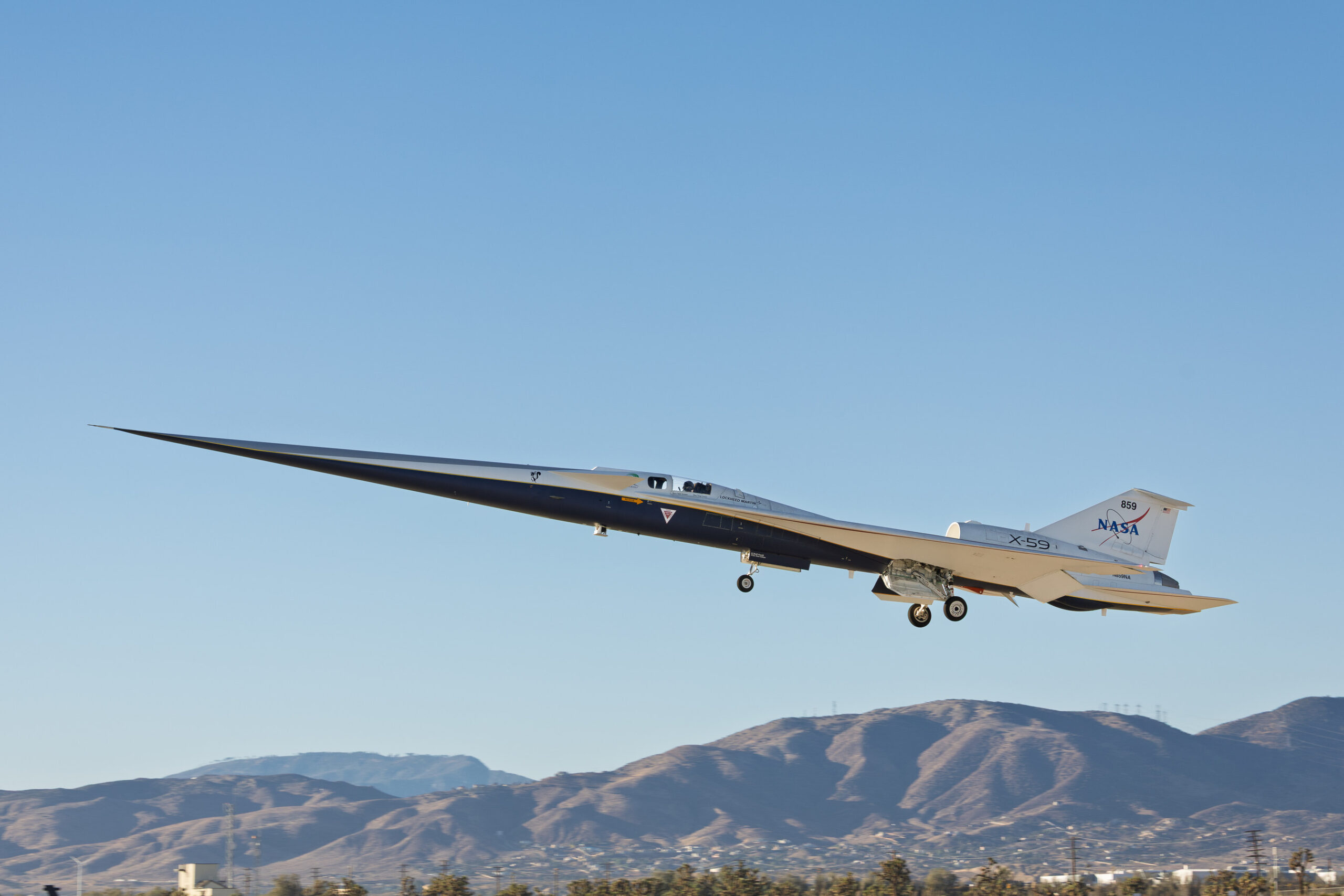
Geez what do you call the “nose” wheel in this thing?
Sweet looking aircraft, very futuristic looking. What do they say, if it looks good, it flies good...:)
I can’t see what its purpose is. Doesn’t transport passengers and certainly not designed for warfare.
Shop vacuum castor wheel.
I have the "annoying" part in quotes, because I wouldn't mind hearing sonic booms at all.
When I was a little kid, I used to hear them back in the late Fifties/early sixties, from military aircraft, and when I was in the Navy, they used to put on excellent airshows that included supersonic flight deck level flybys that we were able to watch from the flight deck.
There was something uniquely alien, bizarre, and cool about seeing an F-14 Tomcat, wings swept back approaching at flight deck level at supersonic speed.
When it approached, you could see flashes of compression that appeared and disappeared in the blink of an eye. The speed that they approached at was, for me, speed I had never seen in anything that gave it an alien appearance...not of this Earth.

What looks like mist in the image above would appear and disappear in what I guess would be a tenth of a second...if you blinked, you would miss it! Then in a flash, the plane would sweep by in front of you without a sound. Which was creepy and amazingly fantastic and cool at the same time. Zero sound. As I said, it appeared alien and unearthly.
Then, about a second later, depending on the speed of the plane...WHAM!
If you were looking the wrong way and weren't expecting it, is sure made you jump, even if you had heard it before!
Brought back the wasp waist of the F-106.
I remember those days as well. Couldn't figure out what the problem was that they were stopped
Many thanks for posting the video link, deks! BTTT
Hahahaha too many housewives lost control of their bladders when they heard them at lower altitudes, and they banded together to make their voices heard!
I live in the flight path of an old Air Force base with high traffic, and I love the sound of jets, but...there are libtards all over with their “Stop Private Jet Expansion at ANY airport” signs on their yards...:)
Good. I hope it makes them grit their teeth!
The XB-70 Valkyrie had a similar nose wheel issue: huge nose overhang relative to the nose gear. Makes ground taxiing “interesting.”
I've pulled off wilder stuff in a single engine Cessna.
Not at that speed, of course.
Given the number of private jets that fly into environmental conferences, WEF, and other left wing gatherings of the ultra rich new world order crowd, I could probably get on board with that. There's a jet that leaves about 11 PM from the local airport that is multiple levels louder than the usual planes - I'd also be on board with noise restrictions on that plane.
As for sonic booms -I grew up near an air force base that also hosted a naval reserve base.I'd occasionally get blasted out of bed on a Saturday morning by the weekend warriors who went supersonic before they got out over the rural countryside and up to a reasonable altitude.
Did you notice the bad altitude control? You would have busted a check ride for that.
EC
I grew up in Palmdale CA - family moved there in ‘62 when I was 5 years old and I lived there till ‘75.
So many sonic booms! I loved them. But sometimes they were so big it seemed they would break windows. Maybe they did!
Disclaimer: Opinions posted on Free Republic are those of the individual posters and do not necessarily represent the opinion of Free Republic or its management. All materials posted herein are protected by copyright law and the exemption for fair use of copyrighted works.