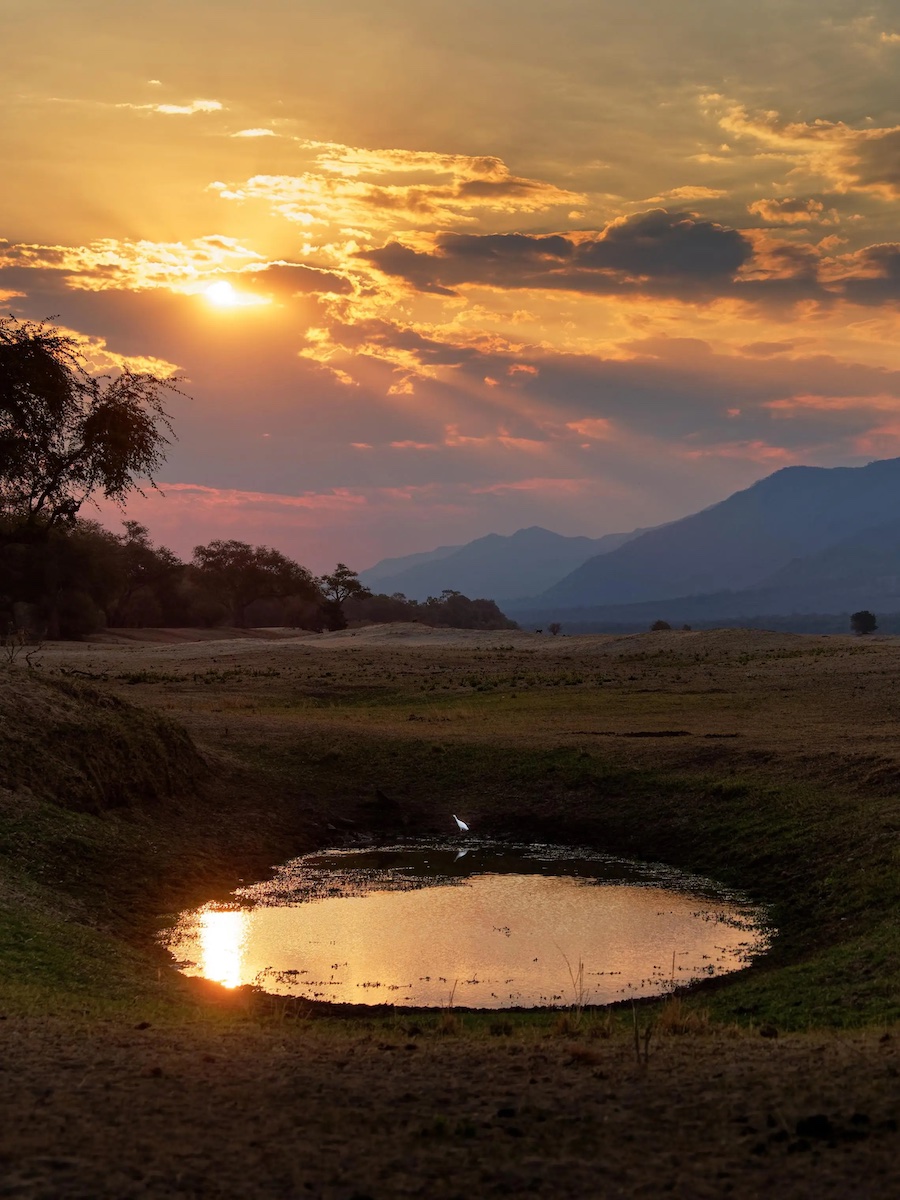
Pools like this in sub-Saharan Zimbabwe are ideal breeding locations for mosquito vectors.© Martin and Ondrej Pelanek
Posted on 05/04/2026 7:54:02 PM PDT by SunkenCiv
According to a statement released by the Max Planck Institute of Geoanthropology, an international team of researchers compared models for the distribution of three major mosquito complexes, paleoclimate models, and places where early humans lived in sub-Saharan Africa between 5,000 and 74,000 years ago. The resulting map indicates that people avoided or died out in areas where Plasmodium falciparum-induced malaria, a disease transmitted by mosquitoes, was likely prevalent. "The effects of these choices shaped human demography for the last 74,000 years, and likely much earlier," said Andrea Manica of the University of Cambridge. "By fragmenting human societies across the landscape, malaria contributed to the population structure we see today. Climate and physical barriers were not the only forces shaping where human populations could live," she explained. Read the original scholarly article about this research in Science Advances. For more on the study of ancient illness, go to "Dawn of a Disease."
(Excerpt) Read more at archaeology.org ...
Pools like this in sub-Saharan Zimbabwe are ideal breeding locations for mosquito vectors.© Martin and Ondrej Pelanek
Though Spanish Jesuits are often credited with discovering quinine, indigenous communities knew of it long before Europeans arrived [/caption]
In France, quinine was used to cure intermittent fevers of France's King Louis XIV at the court of Versailles. In Rome, the powder was tested by the Pope's private physician and distributed for free by the Jesuit priests to the public. But in Protestant England, the drug was met with some scepticism, as some doctors labelled the Catholic-promoted concoction a "papal poison". Oliver Cromwell allegedly died of malarial complications after refusing "Jesuit Powder". Nevertheless, by 1677, cinchona bark was first listed by the Royal College of Physicians in its London Pharmacopoeia as an official medicine used by English physicians to treat patients.
To fuel their cinchona craze, Europeans hired locals to find the precious "fever tree" in the rainforest, scrape its bark with a machete and take it to cargo ships awaiting in Peruvian ports. Increased demand for cinchona quickly led the Spanish to declare the Andes "the pharmacy of the world", and as Canales explained, the cinchona tree soon become scarce.The Tree That Changed the World Map
Vittoria Traverso | 28 May 2020
Ask Rachael Carson.
At our high school, the kids read Silent Spring over the summer. So the kids did the research and found that eagle populations had stabilized before the ban on DDT and malaria deaths were low. After it was banned, the enviros took credit for the eagles and cared not one bit for the millions of poor people who died.
So the conclusion that banning it was about killing as many people as possible certainly seemed plausible.
p
Disclaimer: Opinions posted on Free Republic are those of the individual posters and do not necessarily represent the opinion of Free Republic or its management. All materials posted herein are protected by copyright law and the exemption for fair use of copyrighted works.