Posted on 05/02/2026 11:29:52 AM PDT by Red Badger
SAN BERNARDINO, Calif. – Federal taxpayers helped build a $2.2 billion solar plant — now electricity customers are on the hook to keep it running.
The Ivanpah Solar Power Plant, a sprawling facility near the California-Nevada border built with billions in federal support during the Obama-era economic stimulus program, is stuck in a costly dilemma.
Both the Trump and Biden administrations — along with the utility company that buys its power — have sought to shut it down, saying it underperforms, produces expensive electricity and has been overtaken by cheaper energy sources. But California regulators have refused to allow it to close, warning that closing the plant could strain the power grid.
The result is a costly standoff rooted in years of government decisions: shutting it down could leave taxpayers responsible for hundreds of millions of dollars tied to a $1.6 billion federal loan, while keeping it open means higher electricity costs for consumers.
“This project makes no economic sense to keep afloat, and the market itself has shown that,” Daniel Turner, founder of the energy advocacy group Power The Future, told Fox News Digital.
“This is a boondoggle, like most of California’s large projects are a boondoggle,” he said, arguing it is being kept alive for political reasons, with costs ultimately passed on to customers.
“At some point, you have to stop throwing good money after bad,” he added.
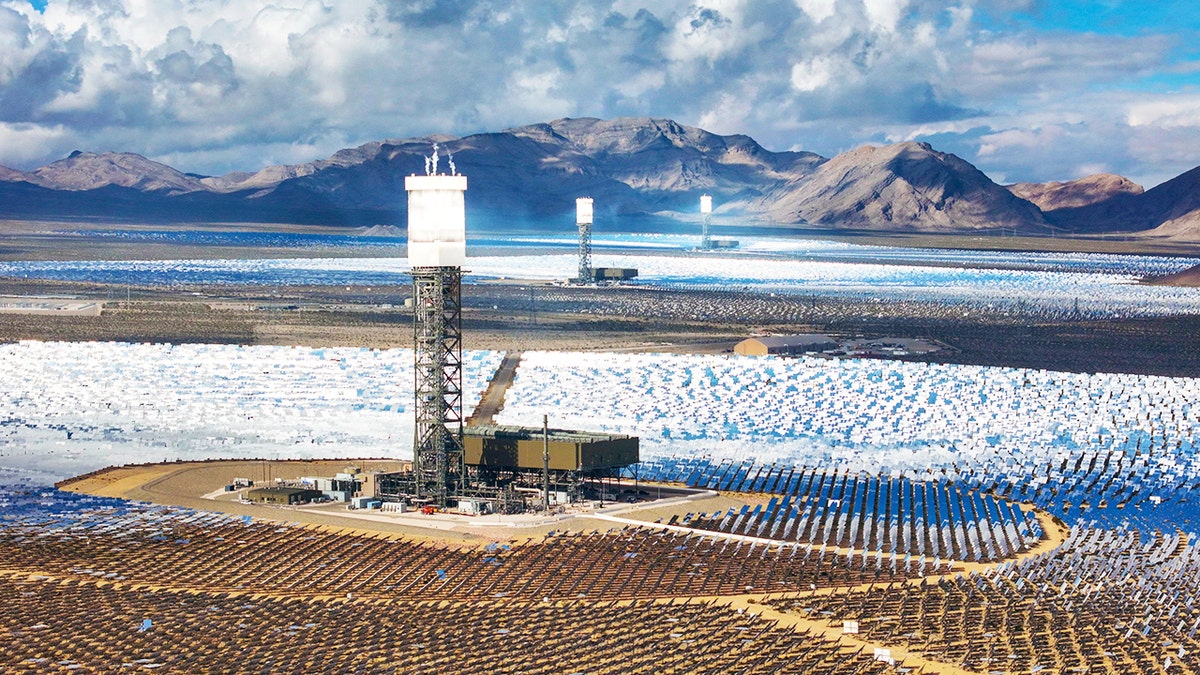
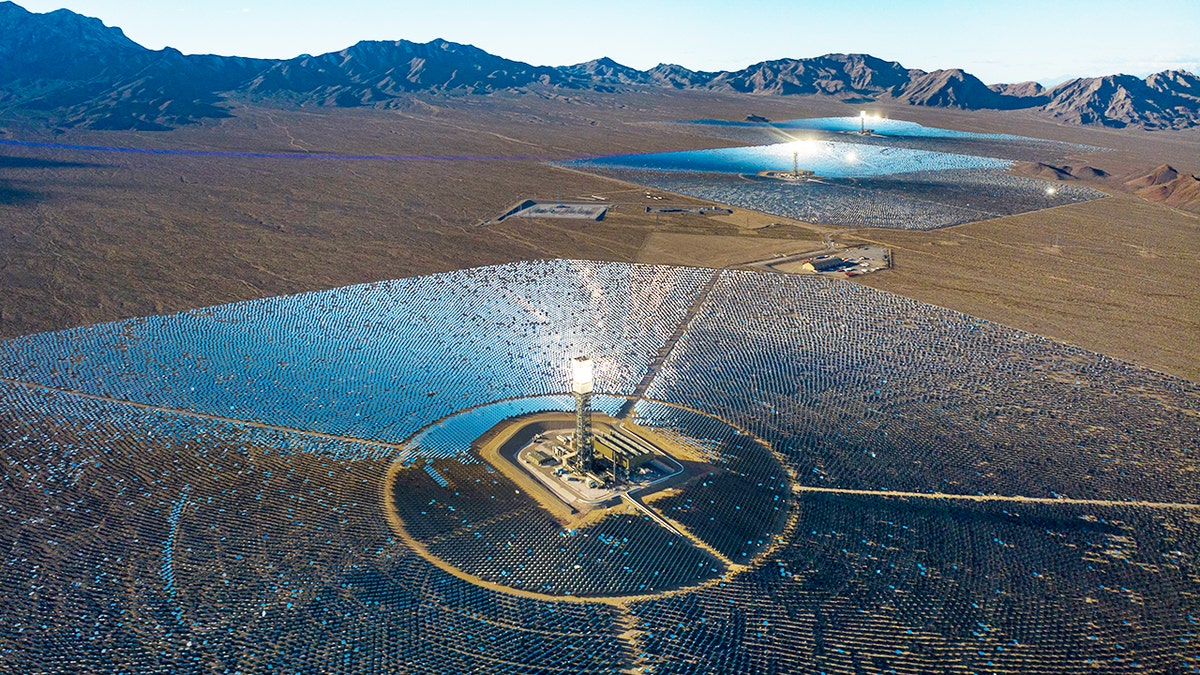
Rising out of the Mojave Desert, the more than 4,000-acre facility still looks like the future. It has roughly 350,000 mirrors — mounted on more than 170,000 heliostats — which stretch for miles and reflect blinding sunlight into three towering structures that glow eerily white against the barren terrain.
But more than a decade after it opened, the technology behind it has been overtaken by cheaper, more efficient solar alternatives — turning what was once a symbol of clean energy progress into a costly problem. The project has also faced scrutiny over its environmental impact, with thousands of birds killed after flying through the plant’s concentrated solar beams — along with the destruction of large areas of desert land and displacement of desert tortoises.
The costly tradeoff
Roughly $730 million to $780 million of the $1.6 billion federally backed loan tied to the project remains outstanding, according to federal data. In addition, the U.S. Department of the Treasury provided a $539 million grant to help build the facility, covering about 30% of construction costs.
At the same time, some analysts estimate the plant’s electricity could cost customers roughly $100 million more per year than power from newer solar alternatives.
That leaves policymakers facing a stark choice: shut it down and risk sticking taxpayers with hundreds of millions in losses tied to the loan, or keep it running and continue passing higher costs on to electricity customers.
Critics argue that without government backing and long-term contracts, the plant would likely struggle to remain economically viable.
Even the federal government and the utility paying for the power have tried to walk away.
Officials under both the Trump and Biden administrations, along with Pacific Gas & Electric (PG&E) — which buys electricity from the plant — have supported shutting it down. PG&E has described the contracts as part of an effort to reduce “uneconomic resources” in its energy portfolio, according to regulatory filings.
California regulators, however, have refused.
The California Public Utilities Commission rejected efforts to terminate the plant’s contracts, citing concerns about grid reliability as electricity demand rises, including increased demand from data centers.
In its decision, regulators warned that shutting down Ivanpah could strand more than $300 million in ratepayer-funded transmission and infrastructure tied to the project, while also creating potential risks for grid reliability — particularly as uncertainty grows around how quickly new energy projects can be built.
PG&E, meanwhile, has argued that terminating the contracts would save customers money compared with continuing to purchase electricity from the facility.
The dispute highlights a broader challenge facing the energy sector — how to balance reliability, cost and past investments as demand rises and technology evolves.
Outdated technology, shifting market
Standing near the site, the scale of the project is unmistakable.
The plant uses a technology known as concentrated solar power, in which computer-controlled mirrors reflect sunlight onto boilers atop nearly 460-foot towers, creating visible beams of concentrated light and causing the structures to glow brightly. The heat is then used to produce steam, which drives turbines to generate electricity.
When it opened in 2014, the technology was considered cutting-edge. However, rapid advances in photovoltaic solar panels and battery storage have since made cheaper, more flexible alternatives widely available.
The project was fast-tracked during the Obama-era stimulus push, prompting concerns about the speed of its environmental review. It was part of a broader federal effort to boost the economy following the 2008 financial crisis and expand renewable energy.
It represented a significant scale-up of relatively new technology, expanding from smaller pilot projects to a nearly 400-megawatt facility — a leap that introduced uncertainties about long-term performance.
But the industry moved on faster than expected.
Cheaper and more efficient photovoltaic solar panels, often paired with battery storage, quickly overtook the concentrated solar technology used at Ivanpah — leaving the plant at a competitive disadvantage.
“The technology used at Ivanpah is no longer really competitive with a new solar farm that uses conventional solar panels,” Severin Borenstein, an energy economist at the University of California, Berkeley, told Fox News Digital.
Borenstein said the project reflects the risks of investing in emerging energy technologies at scale.
“When this plant was planned, solar thermal looked like a promising approach,” he said. “But photovoltaic costs fell much faster than anyone anticipated, and that changed the economics entirely.”
Borenstein explained the project was part of a broader wave of experimentation in early clean energy development, noting that while some technologies — including solar panels, batteries and wind power — became dramatically cheaper over time, Ivanpah “fell into the latter category,” with costs failing to drop as expected.
“That doesn’t mean it was a bad idea to build it originally,” he said.
Borenstein added that once those shifts occur, large infrastructure projects can be difficult to unwind.
“These are long-lived assets with long-term contracts,” he said. “Even if they no longer make economic sense, you can’t easily just walk away.”
Mark Jacobson, a Stanford University energy systems expert, contended the technology itself is not inherently flawed but lacks key features used in newer systems.
“There’s no role for a concentrated solar plant without storage,” Jacobson told Fox News Digital, noting that modern systems typically store energy for use at night — something Ivanpah cannot do.
Jacobson added that while the plant may no longer be competitive with new projects, that does not necessarily mean it should be shut down.
“It’s already built,” he said. “So the question is whether it’s cheaper to keep it running than to replace it.”
In addition to the $1.6 billion federal loan guarantee, the project received a roughly $539 million Treasury grant covering about 30% of construction costs, along with tax credits, accelerated depreciation and other federal incentives.
California’s renewable energy mandates also required utilities to purchase power under long-term contracts, helping ensure demand even as newer technologies emerged.
Ivanpah is not the first federally backed clean energy project to face scrutiny. Solar company Solyndra collapsed in 2011 after receiving $535 million in federal loan guarantees.
The Ivanpah project drew backing from major private investors, including NRG Energy and Google, which invested hundreds of millions of dollars in its development.
But the project’s financing structure spreads risk unevenly. Federal loan guarantees, taxpayer-funded grants and long-term power contracts help stabilize returns for investors, while leaving taxpayers and electricity customers exposed to potential losses and higher costs.
Operational challenges have also been documented. A 2025 audit by California regulators identified recurring forced outages and equipment issues that could affect reliability.
NRG Energy, which operates the facility, told Fox News Digital it remains committed to running the plant under existing agreements and providing renewable energy to California.
Although Ivanpah has a nameplate capacity of nearly 400 megawatts, solar plants typically operate below full capacity because they only generate electricity when the sun is shining. Even so, the facility has underperformed.
In 2023, it operated at roughly a 17% capacity factor, according to data from Lawrence Berkeley National Laboratory — well below the 25% to 30% levels originally expected.
Real-world impact
While the facility spans thousands of acres in a remote stretch of desert, it feeds electricity into the broader grid rather than a specific community and has drawn relatively limited public attention despite its scale and cost. The town of Baker, for example, is the nearest town to the facility on the California side, but it is about 50 miles away from the plant.
For some residents and business owners in the region, however, rising electricity prices remain a growing concern.
“During the summer it can be anywhere from $10,000 to $12,000 … in the winter anywhere from $6,000 to $8,000,” said Lazarus Dabour, owner of the Mad Greek restaurant in Baker.
“It still restricts your bottom line when your overhead from more electricity goes up. It’s a big factor,” he said.
“Our electricity is too high here in Baker,” said Eddie Bravo, a local store worker who said his bills can reach between $650 and $750 in the summer.
He said he notices the plant when he travels to Las Vegas, but “[doesn’t] know much about it.”
Despite the scale of the project, many people passing through the area said they were largely unaware of the facility or the controversy surrounding it.
Some expressed frustration with rising energy costs, while others took a more neutral view.
“It seems like it’s doing its job … it’s definitely working,” said Gregory Simons, a truck driver from Rancho Cucamonga who was stopped at a gas station near the Nevada state line.
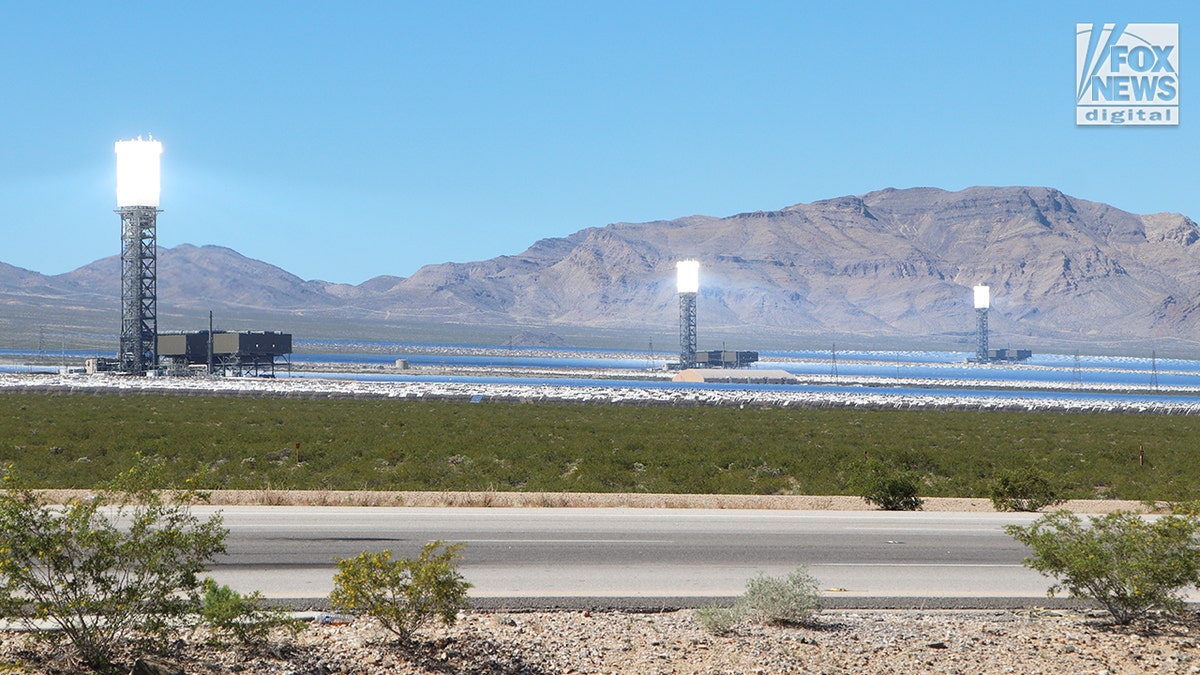
Just across the road, newer solar facilities sit quietly on the desert floor, using photovoltaic panels to generate electricity more simply and at lower cost — highlighting how quickly the industry has shifted away from Ivanpah’s technology.
More than a decade after it opened, the plant now stands as a symbol of how quickly energy technology can evolve — and the cost of getting it wrong when a project becomes too expensive to shut down and too costly to justify keeping it running.
Top scientists were shocked by this unexpected discovery.
Top men......................
Still smokin’ when they hit yer plate.
This Solar Plant Accidentally Incinerates Up to 6,000 Birds a Year
https://www.sciencealert.com/this-solar-plant-accidentally-incinerates-up-to-6-000-birds-a-year
I don’t believe anything in this story at all. Everybody KNOWS that “green” energy is the cheapest, most reliable source of energy. It’s a well-known fact!
(you know I’m kidding)
He was correct. Bankruptcies all around, courtesy of Obama and Chu and a bunch other 'fine' Democrats. Many more projects which all have gone bust, after the Democrat donors cashed out, to stick the public with debt.
Democrats are so easily scammed by a guy with several letters after his name that it’s no wonder.
Just call it green envy................
They must really cook the specs these facilities in order to sell them. I have a two-year-old home system that is rated at 12.8KW, and even on some partly cloudy days, it will crank out over 13.2KW during the midday hours. Of course, it doesn't charge at night, but that's what the batteries are for.
No need for the quote marks. Also, instead of boondoggle, grift, scam, criminal conspiracy, money laundering -- all good choices.
The Palo Verde nuclear powerplant outside of Phoenix covers about the same amount of real estate and generates a consistent 4000 MW base load. The overpriced, bird killing eyesore that is out in the California desert won’t even produce its designed capacity of 400 MW.
Yes, another crapp design set up to fund the DNC. Like the BulletTrain and any CaCaLand “homeless” program.
You think “Learing” centers stole? Not in the same league.
it must have been “shovel ready”
Didn’t Obama throw a pile of taxpayer money at someone for a clean coal power planet that never got built ?
But his election was HISTORIC!
and there’s this:”
“Yes, the Ivanpah Solar Electric Generating System uses natural gas burners every morning to preheat its boilers and start up the turbines before the sun provides enough energy.
While intended as a minimal boost, this process has required substantial use of natural gas—at times exceeding 1 billion cubic feet annually, with boilers running for several hours, to ensure the plant can efficiently bring its solar systems online.
Key Details Regarding Ivanpah’s Natural Gas Use:
Startup and Standby:
The plant uses natural gas in the morning to bring turbines to operating temperature and during cloudy weather to keep the system active.
Significance of Usage:
While meant to remain under a 5% share of total generation, reports indicate the actual usage has been higher, with operators requesting to burn more gas than originally projected.
No Thermal Storage:
Because Ivanpah does not use molten salt or other thermal storage to maintain heat overnight, it requires the burner to re-heat the system each morning.Goal: The primary goal is to ensure the plant starts up quickly in the morning and does not go completely offline during passing clouds.”
Obama-era ‘clean energy’ solar power plant still uses fossil fuels – and kills thousands of birds annually
Disclaimer: Opinions posted on Free Republic are those of the individual posters and do not necessarily represent the opinion of Free Republic or its management. All materials posted herein are protected by copyright law and the exemption for fair use of copyrighted works.